Why GCC Companies Are Choosing India-Based Software Outsourcing Partners for AI and Product Development
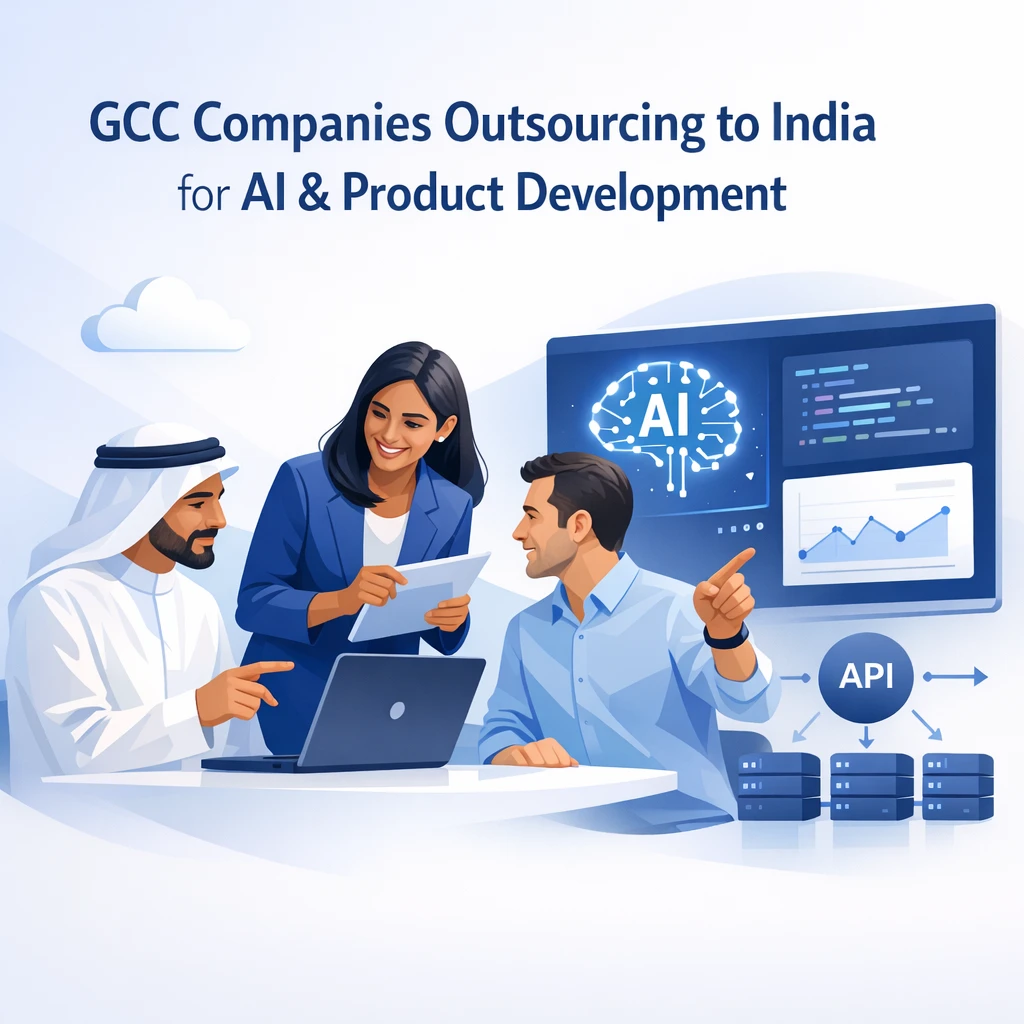
As GCC enterprises accelerate digital initiatives, many are turning to India-based software outsourcing partners to build AI-powered products, platforms, and transformative software. This article digs into practical reasons, implementation guidance, and real-world examples that help CEOs, CTOs, founders, and product leaders decide when and how to collaborate with global partners like Triostack Technologies to deliver scalable software from India.
Introduction
Global GCC companies are increasingly looking beyond their borders to source software development for AI and product development. The reasons are multifaceted: access to a vast talent pool, cost efficiency, faster time-to-market, and the ability to scale teams with disciplined governance. India remains a preferred hub due to mature engineering ecosystems, strong English communication, robust IT services infrastructure, and proven delivery models. This article explores the landscape, how to approach engagements, and practical steps to execute successfully with India-based partners while maintaining control, IP protection, and strategic alignment with GCC business goals.
What is the Topic?
The topic centers on strategic partnerships between GCC-based firms and India-based software outsourcing providers for AI development and product engineering. It covers architectural approaches, remote delivery models, governance, and the practical realities of working with distributed teams to deliver SaaS, CRM, ERP, custom software, AI features, and data-driven products.
Why it Matters in 2026
In 2026, AI and product-led growth strategies demand rapid experimentation, modular architectures, and robust operations. GCC companies face unique market expectations, including regulatory compliance, localization needs, and high expectations for security and reliability. India-based outsourcing partners bring not only cost and scale but also mature practices in data engineering, MLOps, cloud-native development, and telecommunication-grade UX that align with GCC digital ambitions. Remote delivery makes this collaboration viable across time zones while preserving strong client engagement and knowledge transfer.
Current Industry Challenges
- Talent scarcity for AI/ML and cloud-native roles within GCC markets, pushing firms to seek global pools of expertise.
- Rising project costs and lengthy time-to-market for AI features and enterprise software.
- Fragmented software supply chains and the need for scalable DevOps practices across multiple products.
- Quality and security expectations, including data residency, privacy, and regulatory compliance.
- Localization and multilingual UX requirements for regional markets in the GCC and beyond.
How the Technology Works
At a high level, successful AI and product development collaborations hinge on a few core technical patterns: modular architectures, mature data ecosystems, continuous delivery, and governance that protects IP while accelerating velocity. India-based partners typically combine front-end, back-end, cloud, and AI/ML capabilities with robust QA, UX design, and analytics to deliver end-to-end solutions.
Architecture Overview
Consider a typical AI-enabled product as a stack of four layers: user experience, application services, data and ML, and infrastructure. In a GCC–India engagement, you often see clear separation of concerns with an API-first approach, containerized services, and a data platform that supports experimentation and production workloads. Below is a representative architecture pattern used in successful engagements.
Step-by-Step Workflow
- Discovery & Strategy: Align on business outcomes, regulatory constraints, localization needs, and a product roadmap with phased milestones.
- Architecture & Planning: Define the target architecture, data governance model, and high-level tech stack. Establish security and IP controls up front.
- Kickoff & Sprints: Initiate with a detailed sprint plan, risk register, and a transparent communication cadence.
- Delivery & QA: Implement features in increments with automated tests, code reviews, and continuous integration and delivery.
- Validation & Compliance: Ensure regulatory alignment, localization, data residency, and security controls before production.
- Production & Growth: Monitor performance, gather user feedback, and iterate with new features and optimizations.
Business Use Cases
The following examples illustrate practical scenarios where GCC organizations partner with India-based teams to deliver AI and product development outcomes.
- AI-powered customer support: A UAE-based healthcare clinic built a triage chatbot and clinician-assist features to streamline patient intake and diagnosis workflows while ensuring HIPAA/GDPR-aligned privacy practices.
- Logistics optimization: A Dubai-based logistics company implemented route optimization, real-time fleet tracking, and predictive maintenance using ML models deployed via a cloud-native microservices architecture.
- Retail analytics: A Saudi retail business developed an AI-driven pricing and demand forecasting platform to optimize inventory and promotions across channels.
- CRM and ERP modernization: A UK SaaS company migrated and modernized its CRM/ERP suite, introducing cloud-native modules, AI-assisted workflows, and a unified data model.
Industry Applications
Across GCC markets, AI and product development projects touch several key industries. Common patterns include:
- Healthcare IT: patient portals, telemedicine, and predictive risk scoring
- Logistics & supply chain: routing, demand forecasting, and asset monitoring
- Finance & insurance: fraud detection, customer analytics, and regulatory reporting
- Retail & e-commerce: recommendation engines, dynamic pricing, and omnichannel experiences
Benefits
- Access to a large and diverse engineering talent pool with expertise in AI, data engineering, cloud, and UX
- Faster time-to-market through scalable teams and mature delivery frameworks
- Cost efficiency without compromising quality, enabled by optimized resource utilization and experience with global clients
- Strong governance, security, and IP protection practices, with clear NDA and ownership terms
- Global delivery flexibility with timezone overlap that supports frequent collaboration and continuous feedback
Challenges
- Managing cross-cultural communication and aligning on product vision across regions
- Ensuring data residency and regulatory compliance across GCC and international markets
- Maintaining consistent UI/UX standards across localized experiences
- Balancing speed with security and governance in AI deployments
Common Mistakes
- Underestimating the importance of data governance and model validation early in the project
- Trying to clone an on-premise stack in the cloud without proper architecture design
- Poor vendor selection criteria that focus only on price rather than capabilities and cultural fit
- Lack of clear IP ownership and security agreements up front
Best Practices
- Define success with measurable outcomes and align with business KPIs
- Adopt a modular, API-first architecture to enable rapid integration and scale
- Establish a robust data governance framework, including data lineage, access controls, and privacy controls
- Implement secure DevOps practices, automated testing, and continuous monitoring
- Maintain a transparent governance model with clear IP ownership and NDA terms
Build vs Buy: A Practical View
Many GCC companies face a decision between building custom AI/product capabilities in-house or partnering with an external provider. The choice often hinges on time-to-market, domain expertise, and the need for scalable practices. The table below highlights key trade-offs.
| Aspect | In-House Build | Outsourcing Partner (India-based) |
|---|---|---|
| Time-to-value | Typically longer due to hiring and onboarding | Faster access to established teams and playbooks |
| Cost | Capex and Opex; potential cost overruns | Predictable costs with scalable engagement models |
| Quality & expertise | Dependent on internal talent pool | Access to specialized AI/ML, data engineering, and cloud expertise |
| Control & IP | High internal control but higher risk of siloed knowledge | IP ownership clearly defined under NDA; risk managed through governance |
| Scalability | Develop internal ramp-up constraints | Elastic teams to match project needs and roadmaps |
Estimated Development Cost (Typical SMB Ranges)
The following ranges are indicative for SMBs planning software projects in the 5k to 200k USD band. Actual pricing depends on scope, features, complexity, data needs, and regulatory requirements.
| Project Type | Typical Range (USD) |
|---|---|
| Business Website | 5k – 15k |
| Customer Portal | 10k – 40k |
| CRM | 15k – 100k |
| ERP | 40k – 200k |
| AI Chatbot | 5k – 25k |
| AI Automation | 15k – 80k |
| SaaS MVP | 20k – 80k |
| Enterprise Web App | 30k – 200k |
Pricing is influenced by data requirements, AI model complexity, security controls, localization, and post-deployment support. When engaging with a partner, clarifying these factors up front helps prevent scope creep and aligns expectations with business outcomes.
Recommended Technology Stack
Below is a representative stack favored for GCC-focused AI and product development engagements with India-based partners. It emphasizes cloud-native practices, modular design, and strong UX.
- Frontend: React or Vue, TypeScript, responsive UI, accessible components
- Backend: Node.js or Python Flask/FastAPI, microservices
- AI/ML: Python, PyTorch or TensorFlow, MLflow for MLOps
- Data & Analytics: PostgreSQL, Snowflake or BigQuery, Apache Spark
- Cloud & DevOps: AWS or Azure or GCP, Kubernetes, CI/CD pipelines
- Security & Compliance: IAM, encryption, DLP, auditing, data residency controls
- QA & UX: automated UI tests, accessibility, product analytics
Future Trends
Several shifts will influence GCC–India collaborations in the near term:
- Continued emphasis on AI governance and responsible AI frameworks
- Industry-specific accelerators and domain-specific AI templates
- Enhanced data localization and privacy-preserving ML techniques
- Hybrid delivery models combining onshore business-facing roles with offshore delivery
- Stronger integration with ERP/CRM platforms and process automation suites
How Triostack Delivers Projects Globally from India
Triostack Technologies leverages a mature, globally oriented delivery model designed for GCC, UAE, and Western markets. The approach emphasizes collaboration, transparency, and predictability while maintaining exceptional quality.
Agile & Sprint Cadence
We align with your sprint cycles, ensuring weekly check-ins, backlog refinement, and cross-functional collaboration to keep teams aligned and informed.
Collaboration Tools & Channels
Communication and collaboration are backbone elements of remote delivery. Our typical toolchain includes Slack or Teams for daily communication, Zoom or Google Meet for meetings, Jira or ClickUp for project management, and GitHub or GitLab for code hosting and reviews.
Deployment & Environments
We use CI/CD pipelines with cloud staging environments and production deployments. Infrastructure as code, automated testing, and security scans are integral parts of the process.
Quality Assurance & Security
QA is embedded across the lifecycle with automated and manual testing, performance testing, and security assessments. We maintain rigorous NDA and IP ownership protections, with clearly defined data handling policies and access controls.
Timezone Overlap & English Communication
Triostack balances timezones to maximize overlap with GCC markets. Our teams maintain clear English communication standards, with client-facing PMs who provide regular status updates and issue tracking.
Dedicated Project Managers & Long-Term Support
Each engagement includes a dedicated project manager and access to long-term support, updates, and maintenance as part of a scalable engagement model.
Why UAE Businesses Outsource to India
- Cost Efficiency: Competitive rates without compromising delivery quality
- Large Talent Pool: Deep expertise across AI, ML, cloud, and product engineering
- Faster Hiring: Ability to ramp up teams quickly for project spikes
- Flexible Team Scaling: Elastic capacity to match project needs
- High Quality Engineering: Proven track record with global clients
- Strong Communication: English-speaking engineers and client-facing stakeholders
Case Studies (Realistic Scenarios)
Dubai-based Logistics Company
Challenge: A logistics provider sought to optimize routing, fleet management, and delivery visibility. They required a modular platform with real-time analytics and a scalable backend.
Approach: Triostack collaborated with the client to design a microservices architecture, built data pipelines for telemetry and routing data, and delivered a frontend dashboard for operations teams. The engagement included a secure API layer, role-based access, and continuous deployment to a cloud environment.
Outcome: The client gained improved operational visibility and a scalable platform with a roadmap for additional modules, while maintaining data security and compliance across operations.
UAE Healthcare Clinic
Challenge: The clinic needed a patient portal with telemedicine features, appointment scheduling, and AI-enabled triage support, while ensuring patient data privacy and regulatory compliance.
Approach: An end-to-end product was developed with a focus on usability, secure data handling, and robust integration with existing EHR systems. AI triage features helped streamline patient intake and pre-screening.
Outcome: The portal improved patient engagement and reduced administrative workload, enabling clinicians to focus more on care delivery.
Saudi Retail Business
Challenge: The retailer required a data-driven pricing and demand forecasting solution to optimize inventory and promotions.
Approach: The team built data pipelines, a forecasting engine, and dashboards for merchandising teams. Localization considerations and Arabic language support were integrated into the UI and data models.
Outcome: The retailer achieved more informed pricing decisions and better stock optimization across channels.
Australian Startup
Challenge: The startup needed an AI-powered analytics platform to deliver insights to enterprise customers with a focus on security and compliance.
Approach: The engagement included building a cloud-native analytics backend, data governance layers, and a plug-and-play integration framework for customer data sources.
Outcome: The startup accelerated its go-to-market with a scalable analytics product that integrated cleanly with client ecosystems.
UK SaaS Company
Challenge: Modernize a CRM platform with AI features and a modern UI while maintaining compatibility with existing integrations.
Approach: Implemented a modular front-end and microservice-driven backend, introducing AI-assisted workflows and a migration path for legacy modules.
Outcome: The client achieved a more flexible product capable of evolving with market demands and improved user adoption.
Future Work & Recommendations
For GCC businesses planning software projects in the USD 5k to 200k range, the following practical steps help maximize ROI when partnering with India-based providers like Triostack:
- Start with a well-scoped MVP that validates core AI capabilities and business value
- Define data governance and IP terms to avoid ambiguity later
- Establish a transparent sprint cadence with weekly demos and clear acceptance criteria
- Prioritize security, compliance, and localization from day one
- Adopt a collaborative culture with regular business reviews and knowledge transfer sessions
Frequently Asked Questions
- What is the typical engagement model for GCC–India projects?
- Engagements commonly use a mix of staff augmentation, dedicated teams, and outcomes-based contracts. This enables flexibility while maintaining accountability.
- How do we protect IP when outsourcing?
- IP protection is enforced through NDAs, explicit ownership terms, access controls, and secure development environments. Legal reviews finalize terms before project kickoff.
- What about data residency and privacy?
- Data residency and privacy are addressed through cloud-region selection, encryption, and compliance controls tailored to your regulatory requirements.
- How do you ensure communication quality across time zones?
- Maintaining overlapping hours, dedicated client-facing PMs, and structured reporting helps ensure clarity and timely feedback.
Businesses planning similar solutions often benefit from experienced software development partners like Triostack Technologies. If you're considering a similar software project, Triostack can help you design, build, deploy and maintain a scalable solution.
Triostack Team
Technology Evangelist & Writer
Triostack Team is an experienced writer and technologist, exploring the intersections of AI, cloud architecture, and modern application development. Passionate about turning complex technical concepts into accessible insights.