App Monetization Strategies: How To Make Money From an App?
Building an app that people love is only half the job. The other half is turning that usage into revenue without driving your users away. In 2026, the app economy is mature enough that copying a competitor's monetization model rarely works — the right approach depends on your audience, your usage pattern, and how much value you deliver per session.
This guide walks through the monetization models that are actually working today, and how to decide which one fits your app.
Why Monetization Strategy Should Be Decided Before Development
Monetization is not a feature you bolt on after launch — it shapes your architecture, your onboarding flow, and even your UI. An app built around a subscription paywall needs a very different first-run experience than one built around rewarded ads. Deciding early avoids expensive rework and lets your product and pricing teams design around the same goal.
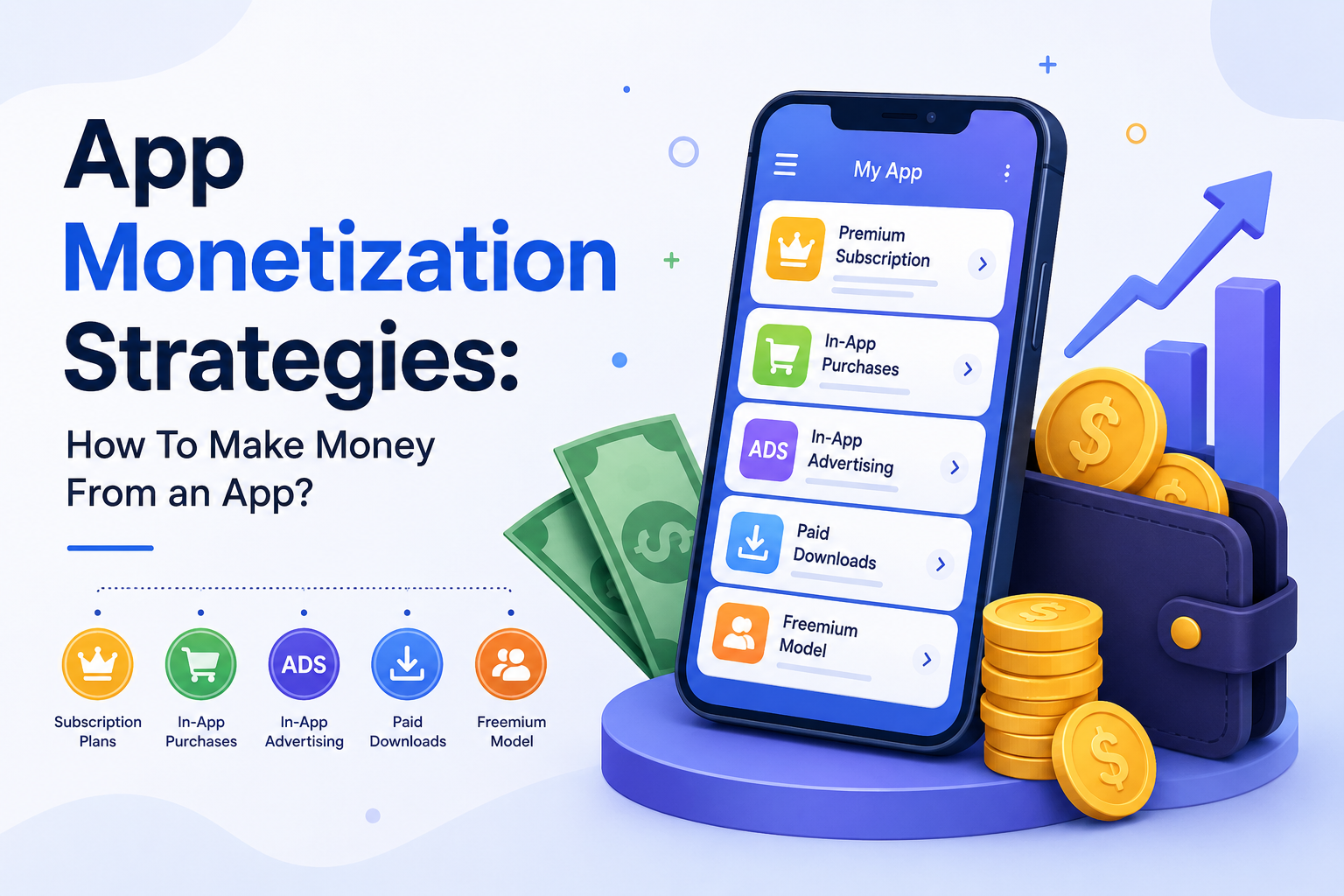
Popular App Monetization Models
In-App Advertising
Advertising works best for apps with high daily usage and low willingness to pay — think casual games, utilities, and content apps. Banner ads, interstitials, and rewarded video ads each have a different impact on user experience; rewarded ads tend to perform best because users opt in for a clear benefit.
In-App Purchases & Freemium
The freemium model gives away a core experience for free and charges for extra content, features, or convenience. It works well when there is a natural sense of progression — levels, cosmetics, storage, or capacity — that users want to unlock.
Subscription Model
Subscriptions have become the dominant model for apps that deliver ongoing value: fitness plans, productivity tools, streaming content, and SaaS-style utilities. Recurring revenue is predictable, but it demands continuous value delivery to keep churn low.
Paid App / One-Time Purchase
Charging upfront works for niche, high-utility apps with a clear value proposition and little need for ongoing content updates — professional tools and specialized utilities are common examples.
Affiliate & Sponsorship
Apps with strong niche audiences can monetize through affiliate links, sponsored content, or brand partnerships without interrupting the core experience with ads.
Choosing the Right Model for Your App
- Look at how frequently users open your app — high frequency favors ads or subscriptions.
- Look at the depth of value per session — deep, ongoing value favors subscriptions.
- Consider your audience's willingness to pay upfront versus over time.
- Test more than one model with a subset of users before committing site-wide.
Common Mistakes That Kill Monetization
The most common failure is monetizing too aggressively before establishing trust — showing paywalls or ads before a user has experienced real value. Another frequent mistake is picking a single model and never revisiting it as the user base and usage patterns evolve.
Conclusion
There is no universal best monetization strategy — only the model that matches how your specific users experience your app. Start with the model that fits your usage pattern, instrument it properly, and be willing to adjust as real user data comes in.
Frequently Asked Questions
Which app monetization model earns the most money?
Subscriptions typically generate the highest lifetime value for apps that deliver ongoing utility, but the "best" model depends entirely on your app category and audience.
Can I combine multiple monetization models in one app?
Yes — many successful apps combine a freemium core with occasional ads for free users and a subscription tier that removes ads and unlocks premium features.
How early should I decide on a monetization strategy?
Ideally during the product planning stage, since it directly influences your onboarding flow, feature gating, and technical architecture.

Triostack Editorial Team
Technology Evangelist & Writer
Triostack Editorial Team is an experienced writer and technologist, exploring the intersections of AI, cloud architecture, and modern application development. Passionate about turning complex technical concepts into accessible insights.