A Comprehensive Guide To Mobile App Development in 2025 - 2026
Mobile app development has moved well past the era of "build it and they will come." In 2025-2026, users expect fast, personalized, and reliable experiences from the first tap, and the bar for what counts as a well-built app keeps rising. This guide covers the full picture: how apps get built, which platform approach to choose, what trends matter right now, and what it actually costs.
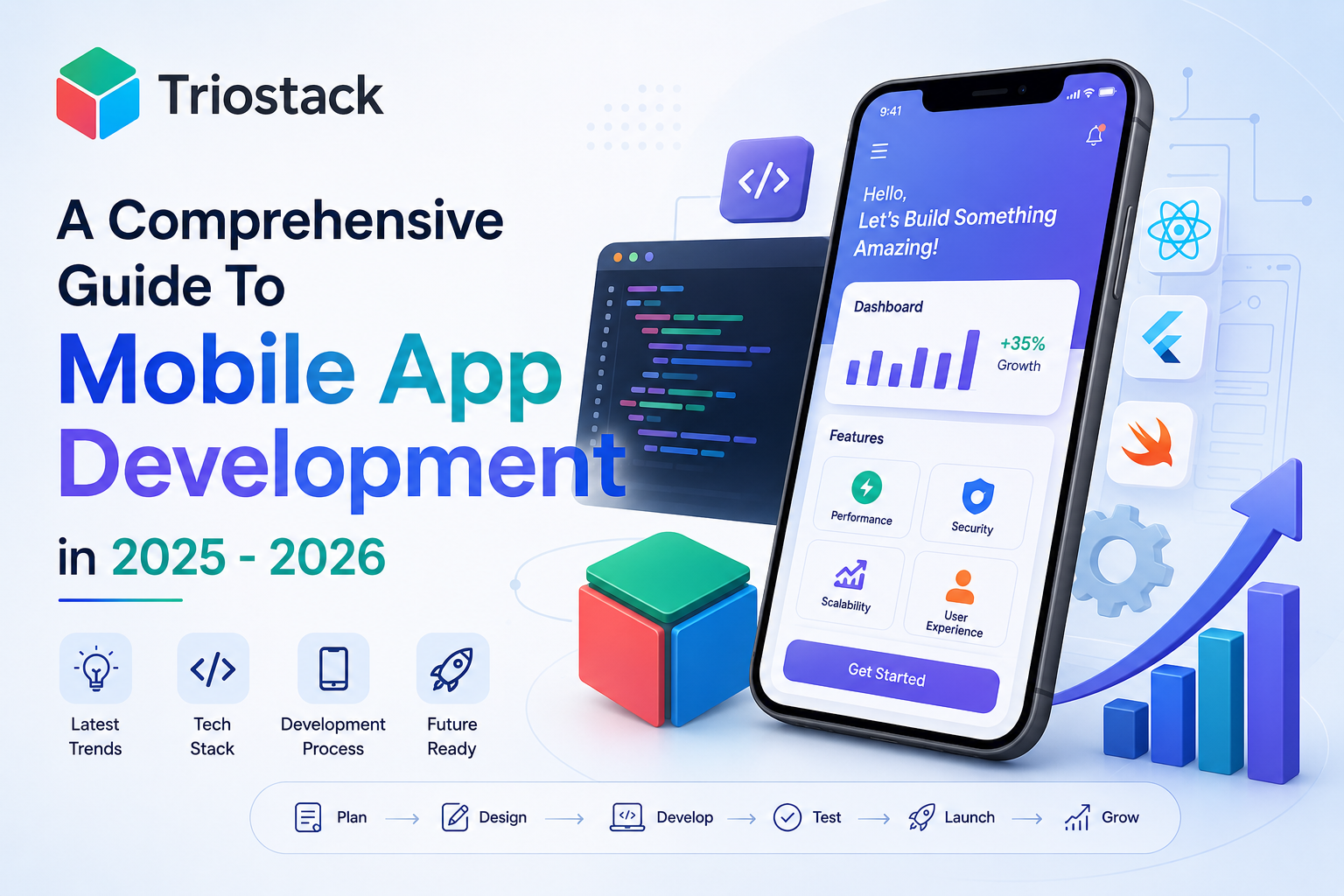
Key Stages of the Mobile App Development Lifecycle
Discovery & Strategy
Every solid app starts with a clear problem statement, target audience, and success metrics. Skipping this stage is the single biggest cause of scope creep later in the project.
UI/UX Design
Wireframes and prototypes let stakeholders validate flows before a single line of code is written, catching usability issues when they are cheap to fix.
Development & Integration
This is where the app takes shape — front-end screens, back-end APIs, third-party integrations (payments, maps, notifications), and the data layer all come together.
QA & Testing
Functional testing, device compatibility testing, performance testing, and security testing all happen before release, ideally continuously rather than as a single phase at the end.
Launch & App Store Optimization (ASO)
A technically great app can still fail to get discovered without proper store listing optimization, keyword research, and a launch plan.
Post-Launch Support
Crash monitoring, user feedback loops, and regular updates are what keep an app relevant months and years after launch.
Native vs Cross-Platform: Which to Choose in 2026
Native development (Swift/Kotlin) still wins for apps that need deep platform integration, top-tier performance, or heavy use of device-specific APIs. Cross-platform frameworks like React Native and Flutter have matured significantly and are now a strong default for most business apps, letting teams ship to iOS and Android from a single codebase without a major compromise on experience.
Emerging Trends Shaping Mobile Apps in 2025-2026
- On-device AI features for privacy-friendly personalization and faster responses.
- Super-app style ecosystems bundling multiple services into one application.
- Increased use of biometric and passwordless authentication.
- Deeper integration with wearables and health data.
- Stricter data privacy expectations driving privacy-by-design architecture.
How Much Does It Cost to Build a Mobile App
Costs vary widely based on complexity, platform choice, and feature scope. A simple MVP with core functionality typically sits at the lower end of the investment range, while a feature-rich app with custom backend infrastructure, AI features, and complex integrations requires significantly more time and budget. The right approach is to scope an MVP first, validate it in the market, then invest further based on real usage data.
Conclusion
Mobile app development in 2025-2026 rewards teams that plan deliberately — choosing the right platform strategy, respecting the full development lifecycle, and building for the trends users already expect rather than chasing every new feature.
Frequently Asked Questions
Should I build native or cross-platform in 2026?
Choose native if you need maximum performance or deep OS-specific integration; choose cross-platform if you want to reach iOS and Android faster with a single codebase and a healthy budget.
How long does it take to build a mobile app?
An MVP typically takes a few months from discovery to launch, while a full-featured app with complex integrations can take considerably longer.
What is the biggest mistake teams make when building a new app?
Building too many features before validating the core value proposition with real users.
Triostack Editorial Team
Technology Evangelist & Writer
Triostack Editorial Team is an experienced writer and technologist, exploring the intersections of AI, cloud architecture, and modern application development. Passionate about turning complex technical concepts into accessible insights.