Artificial Intelligence (AI) - The Next Big Thing in Logistics
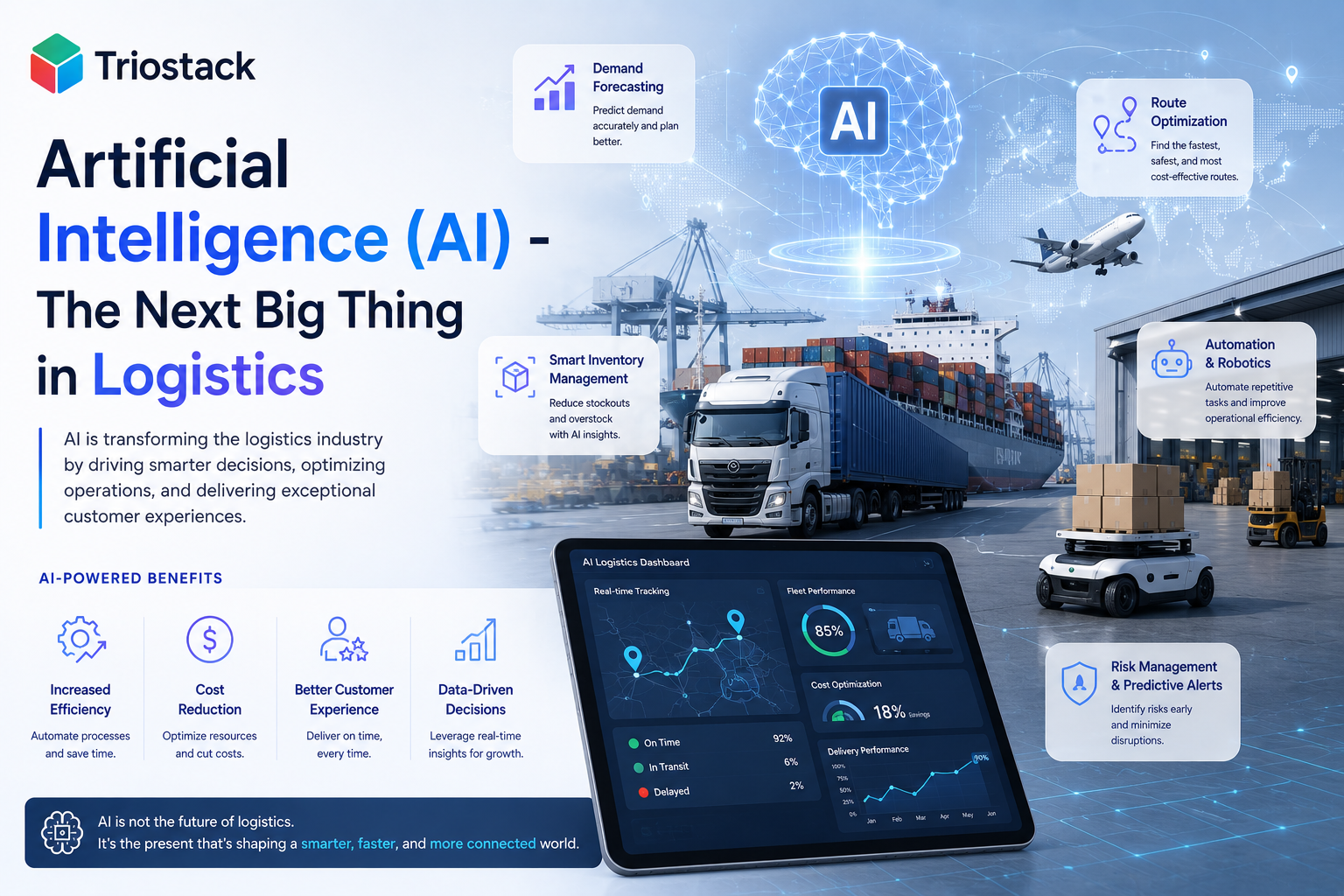
Logistics runs on tight margins and thin tolerance for error, which is exactly why artificial intelligence is having an outsized impact on the industry. From forecasting demand to routing trucks and predicting equipment failure, AI is shifting logistics from reactive operations to predictive ones.
Where AI is Already Transforming Logistics
Demand Forecasting
Machine learning models trained on historical order data, seasonality, and external signals like weather or local events produce far more accurate demand forecasts than traditional statistical methods, reducing both stockouts and excess inventory.
Route Optimization
AI-powered routing engines factor in real-time traffic, delivery windows, vehicle capacity, and driver availability simultaneously, cutting fuel costs and improving on-time delivery rates well beyond what manual dispatch planning can achieve.
Warehouse Automation
Computer vision and robotics, guided by AI, are automating picking, packing, and inventory counting in warehouses, reducing manual labor costs while improving accuracy and throughput.
Predictive Maintenance
Sensor data from trucks and warehouse equipment, analyzed by AI models, can flag likely failures before they happen, avoiding costly unplanned downtime and emergency repairs.
Benefits of AI Adoption in Supply Chains
- Lower operational costs through more efficient routing and inventory management.
- Fewer stockouts and less excess inventory thanks to more accurate forecasting.
- Reduced downtime from equipment failures caught before they escalate.
- Faster response to disruptions like weather events or supplier delays.
Challenges to Watch Out For
AI models are only as good as the data feeding them — fragmented or poor-quality data across legacy systems is the most common blocker to successful adoption. Integration with existing warehouse management and transportation management systems also requires careful planning, and change management with frontline staff is often underestimated.
How to Start Your AI in Logistics Journey
Start with a single, well-defined use case — demand forecasting or route optimization are common starting points because the ROI is measurable and the data requirements are relatively contained. Prove value there before expanding to more complex applications like warehouse robotics or network-wide optimization.
Conclusion
AI in logistics is no longer an experimental bet — it's becoming table stakes for staying competitive on cost and delivery reliability. Companies that start with a focused, high-value use case and build data discipline around it will be best positioned to scale AI across their supply chain.
Frequently Asked Questions
Is AI adoption in logistics only for large enterprises?
No — cloud-based AI tools have made forecasting and route optimization accessible to mid-sized logistics operators, not just large enterprises with in-house data science teams.
What is the easiest AI use case to start with in logistics?
Demand forecasting and route optimization are typically the easiest starting points due to clearer ROI and more contained data requirements.
Does adopting AI in logistics require replacing existing systems?
Not necessarily — many AI solutions integrate with existing warehouse and transportation management systems rather than requiring a full replacement.

Triostack Editorial Team
Technology Evangelist & Writer
Triostack Editorial Team is an experienced writer and technologist, exploring the intersections of AI, cloud architecture, and modern application development. Passionate about turning complex technical concepts into accessible insights.