Telemedicine 2.0 - A Comprehensive Guide On What Healthcare Providers Need To Know?
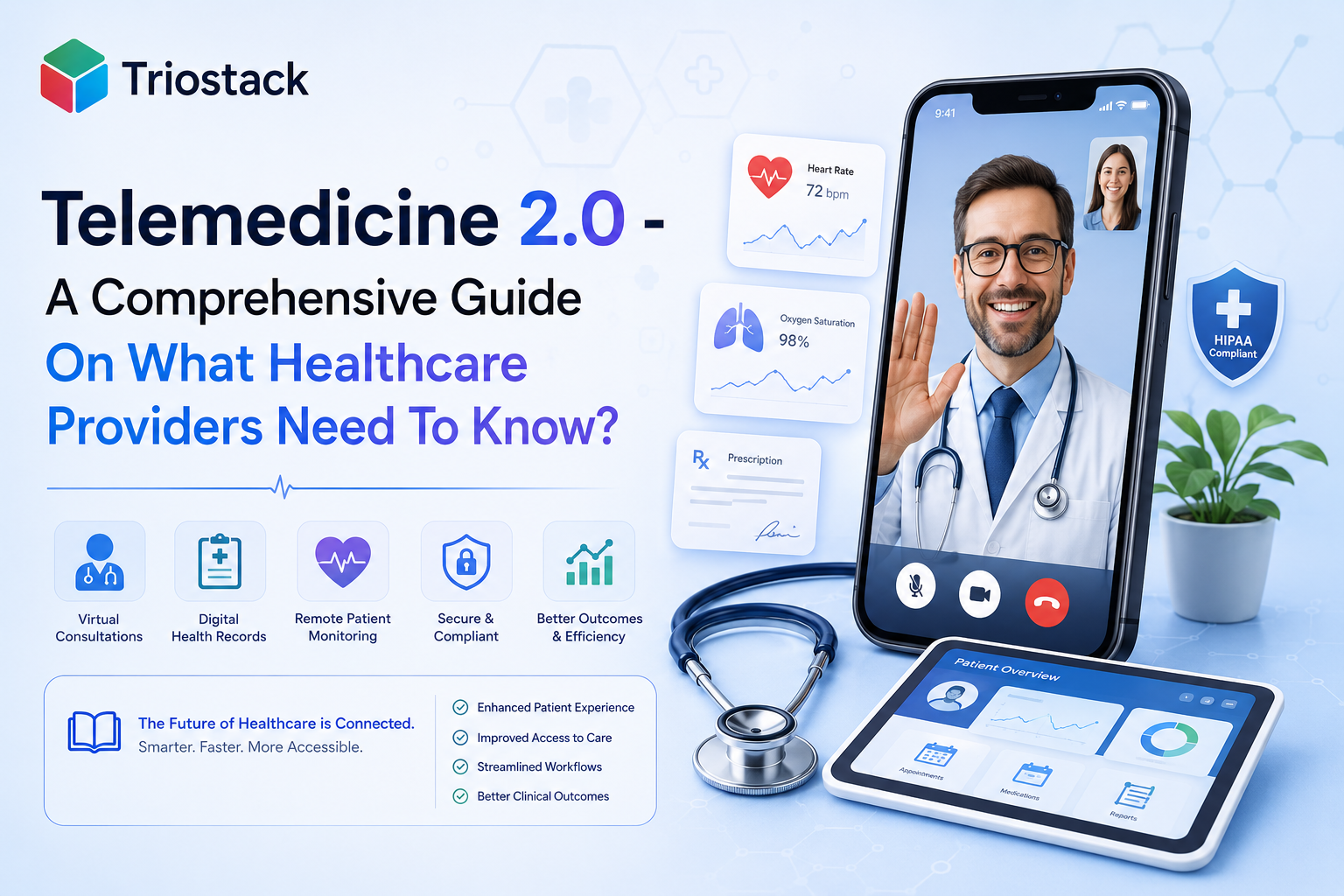
Telemedicine's first wave was about proving that remote care was possible at all. Telemedicine 2.0 is about making remote care as clinically capable, secure, and integrated as an in-person visit — and increasingly, patients and regulators expect nothing less.
What Makes Telemedicine 2.0 Different
The first generation of telehealth tools were largely video-calling layers bolted onto existing workflows. Telemedicine 2.0 platforms are built around continuous care: they connect directly to electronic health records, support remote monitoring devices, and use data to flag patients who need attention before a scheduled visit.
Core Features Healthcare Providers Should Prioritize
Video Consultation & Triage
Reliable, low-latency video with built-in triage questionnaires helps route patients to the right level of care before the consultation even starts.
EHR/EMR Integration
A telemedicine platform that doesn't sync with existing electronic health records creates duplicate work and clinical risk. Two-way integration is now a baseline requirement, not a nice-to-have.
Remote Patient Monitoring
Connected devices — blood pressure cuffs, glucose monitors, pulse oximeters — feed real-time data into the platform, letting providers monitor chronic conditions between visits.
e-Prescriptions & Pharmacy Integration
Direct e-prescribing integrated with pharmacy networks removes friction from the most common outcome of a telehealth visit.
Compliance and Data Security (HIPAA/GDPR)
Healthcare data is among the most sensitive categories of personal information, and regulators treat it accordingly. Any telemedicine platform needs end-to-end encryption, strict access controls, detailed audit logging, and a data retention policy that satisfies HIPAA in the US or GDPR in Europe, depending on where patients are located. Compliance needs to be designed into the architecture from day one — retrofitting it later is expensive and risky.
Choosing a Telemedicine Development Partner
- Verify experience with HIPAA/GDPR-compliant healthcare software specifically, not just general app development.
- Ask about their approach to EHR/EMR interoperability standards like HL7 and FHIR.
- Check their track record integrating remote monitoring devices and wearables.
- Confirm they can support your organization's post-launch compliance audits.
Conclusion
Telemedicine 2.0 is less about replacing in-person care and more about extending clinical attention continuously, safely, and in compliance with the regulations that protect patients. Providers who invest in the right platform now are positioned to deliver better outcomes at lower cost.
Frequently Asked Questions
Is Telemedicine 2.0 only relevant for large hospital systems?
No — clinics and independent practices increasingly adopt these platforms to extend care between visits and stay competitive with larger providers.
What is the biggest compliance risk in telemedicine platforms?
Inadequate access controls and audit logging around patient data, which can lead to HIPAA or GDPR violations even if the core video technology is secure.
Do telemedicine platforms need to integrate with wearables?
It depends on the use case, but for chronic disease management, remote monitoring integration significantly improves clinical value.

Triostack Editorial Team
Technology Evangelist & Writer
Triostack Editorial Team is an experienced writer and technologist, exploring the intersections of AI, cloud architecture, and modern application development. Passionate about turning complex technical concepts into accessible insights.