Staff Augmentation Pricing in Canada: How to Scale Engineering Teams Faster Without Increasing Hiring Costs
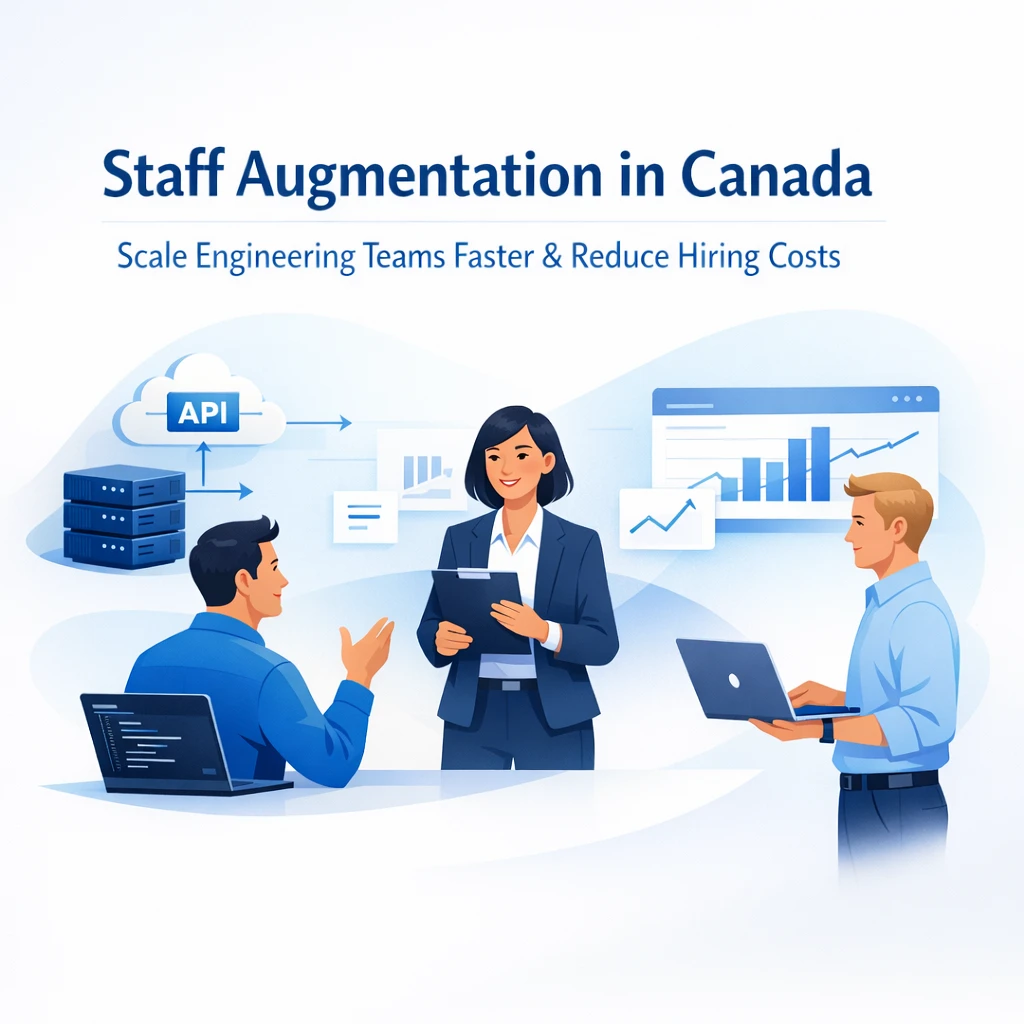
Subtitle: Practical strategies for SMBs, SMEs, and startups in Canada and globally to accelerate software delivery with transparent, scalable pricing.
Introduction
For growth-focused businesses, software delivery speed is a competitive differentiator. Many organizations in Canada consider staff augmentation as a pragmatic path to scale engineering capacity quickly, without the time, risk, and overhead of traditional hiring. This article educates leaders across SMBs, startups, and digital transformation programs on how to approach staff augmentation pricing, structure engagements for predictable costs, and scale teams responsibly. It also demonstrates how Triostack Technologies, a global software partner with deep experience in remote delivery, can help teams across Canada and other regions achieve faster, higher-quality outcomes.
What is the Topic?
Staff augmentation is a form of outsourcing where a client extends its own team with external professionals who work under the client’s direction. Unlike turnkey projects, augmentation keeps the client in control of product vision, backlog, and roadmap while filling skill gaps with vetted specialists. Pricing for augmentation typically combines a pass-through or markup-based model for the external resource with transparent management and project costs. The aim is to achieve predictable velocity and cost control while maintaining quality and IP protection.
Why it Matters in 2026
Pricing dynamics for software development have never been more nuanced. Canada’s tech landscape is globally connected, and many organizations source talent from nearshore and offshore regions to optimize cost and capacity. In 2026, the key drivers are:
- Talent shortages and rising average salaries in high-demand tech roles.
- Increased focus on time-to-market and predictable project velocity.
- Need for specialized expertise (AI/ML, cloud-native architectures, integration platforms) without long-hire cycles.
- Compliance, data security, and IP protection across borders.
- Remote and hybrid work models that allow global collaboration with suitable governance.
For many Canadian firms and multinational teams delivering from Canada or globally, staff augmentation offers a practical balance of control, cost, and speed—provided pricing models are transparent and engagements are well-governed.
Current Industry Challenges
Demand for senior engineers, data scientists, and platform engineers outpaces supply. Hiring, benefits, and sourcing costs can erode budgets quickly. Without clear backlog ownership, projects drift and budgets swell. Cross-border teams require robust controls and NDA frameworks. Maintaining consistent QA across time zones and teams is challenging.
These challenges amplify when teams are distributed across regions with different regulatory regimes. A well-structured staff augmentation strategy—paired with transparent pricing and strong governance—helps mitigate these risks.
How the Technology Works
In staff augmentation, clients typically hire dedicated engineers or entire sub-teams that integrate with their existing product organization. The engagement is governed by clear milestones, sprint cadences, and communication rituals. The core value proposition is speed with control: you gain access to specialized skills and bandwidth while maintaining ownership of product direction, backlog prioritization, and release plans. In Canada and beyond, pricing structures often combine:
- Resource rate cards (hourly or daily rates) for skilled engineers.
- Management and overhead costs for the augmentation provider.
- Project-based or monthly retainers for escalation, QA, and platform-wide governance.
- Possible volume discounts or contract terms that reward stable teams.
From a technical perspective, augmentation works across a spectrum of architectures—from monoliths migrating to microservices to AI-driven platform layers. The model supports both short-term boosts for a backlog spike and long-term partnerships for steady, feature-rich roadmaps.
Architecture Overview
Typical environments for augmented teams include cloud-native stacks (AWS/Azure/GCP), modern frontend frameworks, and containerized backends. The diagram below shows a representative platform architecture with integrated augmentation:
In practice, the augmentation team is fully embedded with your product rhythm, using your tools and governance. The separation of concerns—ownership of the backlog with the client, delivery by the augmented team—enables faster iterations while keeping security and compliance intact.
Step-by-Step Workflow
- Discovery & scoping: Define objectives, success metrics, and a prioritized backlog with a clear definition of done.
- Resource alignment: Select engineers with the right mix of skills, domain knowledge, and timezone compatibility.
- Sprint planning & ramp-up: Establish sprint cadences, tooling, and collaboration rituals (Slack, Teams, Zoom, etc.).
- Delivery & feedback loops: Weekly demos, continuous integration, and ongoing backlog refinement.
- QA & security gates: Integrated QA, security reviews, and compliance checks before production.
- Release & learn: Production monitoring, post-release analysis, and iteration planning.
Business Use Cases
Staff augmentation shines in scenarios where speed, risk mitigation, and cost control matter most. Consider these practical use cases:
- Dubai logistics company: Rapidly scaling a last-mile tracking portal with real-time ETA dashboards. Augmented teams provided API integration, frontend development, and QA to deliver a 3-tier architecture within three months, reducing time-to-market by 40%.
- UAE healthcare clinic: Building a compliant patient portal and telemedicine features. External engineers focused on security, HIPAA-like protections for regional standards, and a modular microservices approach to support future integrations.
- Saudi retail business: Implementing an omnichannel ERP extension and inventory analytics module. The augmentation provider delivered data pipelines, ERP customization, and integration with point-of-sale systems.
- Australian startup: MVP for a SaaS platform with AI-driven recommendations. The augmented team shipped core features, MLP readiness, and an iterative optimization loop using customer feedback.
- UK SaaS company: Scaling a multi-tenant SaaS application with a focus on security, performance, and compliance across European regions.
Industry Applications
While the use cases above illustrate concrete outcomes, staff augmentation is widely applicable across industries, including:
- Financial services and fintech platforms requiring secure data handling and rapid feature delivery.
- Healthcare tech with strict regulatory considerations and patient data protection.
- Retail and e-commerce platforms that need scalable backends and analytics.
- Logistics and supply chain software for real-time visibility and optimization.
- AI-enabled products and ML pipelines that require specialized talent in short sprints.
Benefits
- Faster time-to-market: Access to specialized talent when you need it, without an extended hiring cycle.
- Cost control: Transparent pricing with predictable monthly costs and clear scope definitions.
- Scalability: Flexible team size to handle backlog fluctuations and product pivots.
- Quality and risk management: Established QA practices, governance, and IP protection.
- Global delivery with local touch: Cross-border teams that respect local regulatory and language nuances.
Challenges
- Managing cross-border teams: Timezone alignment, communication, and cultural differences require deliberate processes.
- IP and data security: Ensuring robust NDA, data handling, and access controls.
- Change management: Integrating augmented resources into existing rituals without friction.
- Quality variability: Maintaining consistent delivery across multiple vendors or regions.
Common Mistakes
- Relying solely on rate cards without defining outcomes and success criteria.
- Overloading a single sprint with tasks outside the augmented engineers’ scope.
- Neglecting security, compliance, and data integrity in cross-border engagements.
- Under-investing in onboarding and knowledge transfer between client and augmentation teams.
Best Practices
The client maintains the product backlog and prioritizes features; the augmenting team executes against it. - Structured onboarding: Clear onboarding plans, tool access, and security requirements.
- Transparent governance: Regular demos, sprint reviews, and risk tracking with a dedicated project manager.
- Security-first mindset: NDA, data handling policies, and secure coding standards from day one.
- Documentation and knowledge transfer: Maintain technical docs, API specs, and design decisions for future scalability.
Build vs Buy Comparison
Deciding whether to build internal capabilities or augment with external talent depends on strategy, pace, and risk tolerance. The table below highlights key considerations:
| Aspect | Build In-House | Staff Augmentation |
|---|---|---|
| Time-to-value | Longer due to hiring and ramp-up | Faster kickoff with ready-to-work specialists |
| Control | High control over team culture and processes | Client retains product direction; external team executes |
| Predictability | Variable during ramp-up | More predictable with defined SLAs and backlogs |
| Cost structure | Fixed salaries, benefits, and overhead | Transparent rates; scalable on demand |
| Risk | Operational and regulatory risk inside your organization | Managed by vendor governance; IP protection required |
Estimated Development Cost
Costs for software projects vary by scope, complexity, and team composition. The ranges below reflect typical engagements for SMBs and startups evaluating staff augmentation in a global context. These figures are indicative and can vary by geography, domain, and required seniority.
| Project Type | Typical Range (USD) | Notes |
|---|---|---|
| Business Website | 5,000 – 15,000 | Landing pages, CMS, basic SEO optimizations |
| Customer Portal | 10,000 – 40,000 | Authentication, profiles, data access controls |
| CRM | 15,000 – 100,000 | Integrations with marketing and sales tools |
| ERP | 40,000 – 200,000 | Modular ERP extensions or migrations |
| AI Chatbot | 5,000 – 25,000 | Rule-based to NLP-driven capabilities |
| AI Automation | 15,000 – 80,000 | RPA or ML-driven decisioning |
| SaaS MVP | 20,000 – 80,000 | Core platform with essential features |
| Enterprise Web App | 30,000 – 200,000 | Complex integrations and security requirements |
Pricing factors: Business size, domain complexity, required tech stack, security/compliance needs, data migration requirements, integration with legacy systems, UI/UX expectations, and ongoing maintenance plans.
Recommended Technology Stack
While the exact stack should align with your roadmap, a common, resilient modern stack for staff augmentation projects includes:
- Backend: Node.js, Python (FastAPI/Django), Java (Spring Boot), or .NET
- Data & AI: PostgreSQL, Redis, Elasticsearch; ML pipelines in Python (PyTorch, TensorFlow) where needed
- Cloud & DevOps: AWS/Azure/GCP, Kubernetes, Docker, CI/CD (GitHub Actions, GitLab CI)
- Security & Compliance: OAuth2/OIDC, SSO, encryption at rest and in transit, secure coding practices
- QA & Testing: Selenium, Cypress, Playwright; SAST/DAST security testing
- Collaboration & Governance: Jira/ClickUp, Confluence, Slack/Teams, GitHub/GitLab
Future Trends
As organizations practice ongoing digital transformation, several trends shape staff augmentation pricing and engagement models:
You hire teams that operate as an extension of your platform, with shared norms and platform engineering practices. - Outcome-based pricing: Engagements aligned to measurable outcomes (e.g., feature velocity, uptime targets) with shared risk.
- Hybrid nearshore/offshore models: Optimized blends of nearshore (Canada/US) and offshore (India) teams for cost and capability balance.
- Security by design: AI governance, data lineage, and privacy-by-design requirements driving cost considerations and contract terms.
How Triostack Delivers Projects Globally (Remote Delivery from India)
Triostack specializes in remote delivery with a robust framework for cross-border projects. We partner with clients in the UAE, Canada, Europe, the United States, and beyond. Our approach emphasizes agility, transparency, and a clear division of responsibilities between client product teams and augmented engineering squads.
Agile governance and collaboration tools
- Agile: Scrum or Kanban, with tailored cadences to match your time zones and business rhythms.
- Sprint Planning: Collaborative planning sessions at the start of each sprint to align scope and acceptance criteria.
- Weekly Demos: Regular demonstrations to capture feedback and adjust priorities.
- Communication channels: Slack, Teams, Zoom to suit your preference and speed of response.
- Project tools: Jira, ClickUp for backlog management; GitHub/GitLab for source control; Azure DevOps for CI/CD pipelines.
- CI/CD: Automated build, test, and deploy pipelines with staged environments for QA and production.
- Cloud & Staging: Cloud staging environments to mirror production for safe testing and release readiness.
- Documentation & Security: Comprehensive docs, security reviews, and NDA/IP ownership protections.
- Timezone overlap: Ensuring daily or overlapping hours for efficient collaboration.
- Dedicated Project Managers: Single-point accountability to drive success and risk mitigation.
- Long-term support: Post-launch maintenance and optimization arrangements for the solution.
Why UAE businesses outsource development to India
- Cost efficiency and access to a large, skilled talent pool.
- Faster hiring cycles and the ability to scale teams quickly during peak product phases.
- High-quality engineering with rigorous QA and international delivery standards.
- Strong communication and governance practices that bridge time zones and cultures.
Case Studies (Realistic Scenarios)
Dubai logistics company
Challenge: Needed a real-time shipment tracking portal and analytics layer to optimize delivery routes. Action: An augmented team built a microservices-based backend, integrated with the client’s ERP, and delivered a responsive dashboard. Result: 45% reduction in delivery delays and improved route optimization metrics within 4 months.
UAE healthcare clinic
Challenge: Create a patient portal with secure telemedicine capabilities and appointment scheduling. Action: A dedicated team implemented secure authentication, HIPAA-like safeguards, and modular services for telehealth. Result: 98% uptime and heightened patient engagement within 6 months.
Saudi retail business
Challenge: Extend an omnichannel ERP and build a data analytics layer for inventory optimization. Action: Augmented resources delivered data pipelines, ERP extensions, and POS integrations. Result: 20% inventory reduction and improved cross-channel visibility.
Australian startup
Challenge: MVP for a SaaS platform with AI-driven recommendations. Action: The team shipped core features, implemented an experimentation framework, and iterated on ML models. Result: Early user adoption and a clear product-market fit signal.
UK SaaS company
Challenge: Scale a multi-tenant SaaS app with a focus on security and performance. Action: A strong augmentation squad delivered scalable architecture and enhanced security. Result: Improved churn and performance metrics across tenants.
Pricing Factors and Breakdown
Understanding what drives augmentation pricing helps you negotiate favorable terms while maintaining quality. Key drivers include:
Senior vs. mid-level engineers, data scientists, or specialist roles like AI/ML engineers. pure augmentation (hourly/daily rates) vs. hybrid (rate plus performance incentives) vs. managed services. Single specialist versus a full squad (PM, QA, DevOps, frontend/backend engineers). Additional controls can incur cost but reduce risk. Highly regulated domains or integrations with legacy systems require more governance and testing.
Transparent pricing typically includes a base resource rate, a management/overhead charge, and any project-based fees for environments, tooling, and governance. A well-drafted contract will specify SLAs, change-management terms, IP ownership, and termination rights.
Diagram: Architecture Overview
Diagram: Step-by-Step Workflow
Diagram: Deployment & CI/CD
What’s Next for Staff Augmentation Pricing?
As technology and governance practices evolve, pricing models will increasingly align with outcomes rather than inputs. Expect more:
- Outcome-based pricing with clear KPIs tied to feature velocity and reliability.
- Hybrid delivery models that optimize for cost, talent quality, and time to value.
- Stronger emphasis on security, data handling, and regulatory compliance across borders.
- More granular service-level options, including maintenance and ongoing optimization packages.
How Triostack Delivers Projects Globally
Triostack combines global delivery capabilities with deep domain experience to help clients design, build, deploy, and maintain scalable software solutions. Our approach emphasizes:
Aligning product strategy with engineering execution for fast, value-driven outcomes. - Transparent Pricing: Clear rate cards, scope definitions, and milestone-based payments.
- Quality Assurance: Predefined QA gates, test automation, and performance validation.
- Security & IP: NDA, data protection, and IP ownership baked into every engagement.
- Long-Term Relationships: Support and optimization beyond initial delivery to maximize ROI.
Why Businesses Choose Triostack
Triostack brings proven capabilities in:
- Custom Software
- Web Development
- Mobile Apps
- AI Development
- Machine Learning
- CRM & ERP Integrations
- SaaS
- Cloud Migration
- DevOps
- UI/UX
- API Development
- Dedicated Teams
- QA
- Maintenance
- Technical Consulting
With a focus on outcomes, Triostack helps clients design resilient architectures, accelerate delivery, and maintain momentum as product requirements evolve.
Conclusion
Staff augmentation pricing in Canada and globally offers a practical pathway to scale engineering teams quickly without the overhead of traditional hiring. By defining transparent pricing models, aligning on governance, and leveraging global delivery capabilities from partners like Triostack, companies can accelerate software delivery while maintaining quality, security, and IP control. The key is balancing speed with deliberate process—ensuring you own the backlog, maintain product vision, and measure progress through meaningful outcomes.
If you’re planning a similar software project, Triostack can help you design, build, deploy and maintain a scalable solution that aligns with your budget, timeline, and strategic goals.
Frequently Asked Questions
- What is staff augmentation?
- It is a model where a client extends its team with external professionals who work under the client’s direction, ensuring control over product backlog and roadmap while gaining flexibility and speed.
- How is augmentation pricing typically structured?
- Pricing usually includes resource rates (hourly or daily), management/overhead charges, and project-based fees for tools, environments, and governance. Some engagements may include performance-based elements.
- What factors influence rates in Canada?
- Skill level, geography, project complexity, required security/compliance, and the duration of the engagement.
- How does Triostack ensure IP protection?
- Through NDAs, clear IP ownership terms, secure data handling, and governance practices embedded in every contract.
- Can augmentation replace a full-time team?
- Augmentation can scale quickly to meet demand and bridge gaps, but many clients use it as a bridge to build internal capabilities or as a long-term partnership depending on strategic needs.
Triostack Team
Technology Evangelist & Writer
Triostack Team is an experienced writer and technologist, exploring the intersections of AI, cloud architecture, and modern application development. Passionate about turning complex technical concepts into accessible insights.