Software Development Cost in Saudi Arabia vs UAE: What CEOs Should Budget in 2026
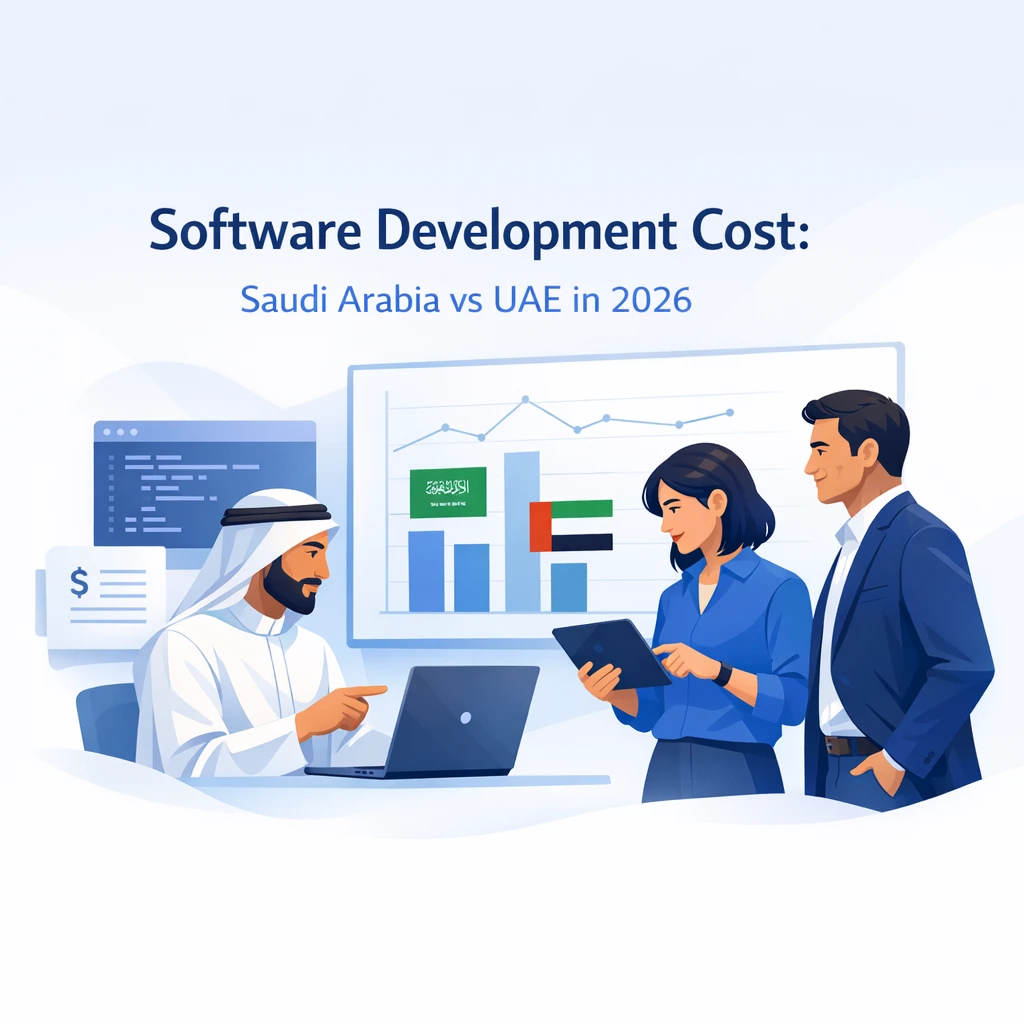
An informed, practical view for SMBs, startups, and growth leaders planning software projects in the Gulf region and beyond. This article blends market realities with actionable guidance, while naturally showcasing Triostack Technologies as a trusted global software partner for projects of USD 5,000 to 200,000.
Introduction
Saudi Arabia and the United Arab Emirates have emerged as pivotal hubs for digital transformation in the Middle East and beyond. As CEOs and product leaders map plans for 2026, the key decision is not just what to build, but how to budget the development effort itself. Costs vary widely based on scope, architecture, talent mix, and delivery model. For SMBs and startups aiming to optimize value, it helps to compare regional dynamics, understand the drivers of cost, and consider global delivery options that can unlock higher quality and faster time-to-market without breaking the budget.
In this guide, we’ll break down cost drivers, present practical budgeting ranges for common project types, and share real-world patterns from organisations in Dubai, Jeddah, Riyadh, and across the Gulf, as well as global regions. We’ll also outline a scalable approach to architecture and a workflow that keeps projects on track when teams are distributed across time zones.
What is the Topic?
The topic compares two mature markets for software development within the Gulf and offers a broader lens for global outsourcing. It’s not merely about currency exchange or hourly rates; it’s about the cost of talent, the velocity of delivery, the risk posture, the quality of outcomes, and the long-term total cost of ownership. For CEOs budgeting a project in 2026, it’s essential to align cost estimates with:
- Project type and complexity
- Team composition and location
- Technology stack and integration needs
- Security, compliance, and regulatory requirements
- Delivery model, maintenance, and future enhancements
Triostack Technologies approaches cost as a function of value delivered, not merely hourly rates. Our global delivery model emphasizes disciplined estimation, transparent governance, and a pragmatic path to scalable software solutions that evolve with your business needs.
Why it Matters in 2026
By 2026, several forces shape software development budgets for Gulf-based organisations and international buyers:
- Talent market shifts and wage inflation in major hubs; combined with policy incentives in KSA and UAE that accelerate outsourcing and localisation.
- Increased emphasis on cloud-native architectures, security, and compliance in sectors such as healthcare, logistics, and financial services.
- Growing demand for AI-enabled products, automated QA, and continuous delivery pipelines to shorten the time-to-value.
- Stronger focus on total cost of ownership, including maintenance, support, and future-proofing against changing business needs.
For SMBs and startups, this means balancing upfront development spend with long-term value. For executives, it means negotiating a predictable, transparent, and scalable partnership with a capable software vendor. Triostack supports this approach through custom software, web and mobile development, AI and ML development, CRM/ERP, SaaS, cloud migration, DevOps, API development, and dedicated teams, all backed by robust QA, maintenance, and technical consulting.
Current Industry Challenges
Even with strong growth signals, organisations face persistent challenges when budgeting software initiatives in 2026:
- Talent scarcity and the cost of specialized skills in the region
- Managing scope and avoiding feature creep in multi-stakeholder projects
- Security, privacy, and regulatory compliance across healthcare, retail, and logistics
- Ensuring interoperability with legacy systems and ERP platforms
- Balancing local presence with offshore delivery to optimize cost and speed
A practical budgeting approach combines phased scope, architectural clarity, and a delivery model that aligns with your business cadence. This is where Triostack’s experience in custom software, dedicated teams, and cloud-native architectures becomes valuable, especially for projects in the USD 5k–200k range that aim to scale into larger initiatives.
How the Technology Works
Software projects derive cost from both technology choices and execution patterns. Core factors include language and framework selection, data storage requirements, third-party integrations, security controls, and deployment models. In practice, many SMB and startup projects adopt a modular approach:
- Frontend with responsive web interfaces or mobile apps
- Backend services with APIs and business logic
- Data and analytics layers with appropriate storage and processing
- Operational tooling for deployment, monitoring, and security
Triostack advocates architecture that supports rapid iteration, testability, and scale. Our teams help you define an MVP if appropriate, then progressively evolve into a full-featured product with a roadmap aligned to business outcomes.
Architecture Overview
Below is a typical architecture pattern for a modern, cloud-native web and mobile product. It demonstrates how different layers interact while keeping security and performance in focus.
Key components include a resilient API surface, secure authentication, modular microservices, and scalable data storage. Triostack designs architectures with these principles, balancing cost and performance for your target regions.
Step-by-Step Workflow
A disciplined workflow reduces risk and helps you budget effectively. The following sequence is common for projects in the USD 5k–200k range:
- Discovery & Scope Definition: identify core features, success criteria, and constraints.
- Estimation & Architecture: create a modular architecture and a transparent cost estimate.
- Prototype & MVP: develop an MVP to validate assumptions quickly.
- Development & QA: iterative sprints with continuous feedback loops.
- Deployment & Training: CI/CD pipelines, staging, production release, and user training.
- Support & Evolution: post-launch maintenance and roadmap adjustments.
Triostack supports this workflow with Agile practices, weekly demos, and robust collaboration tooling to keep budgets aligned with progress.
Business Use Cases
Here are representative scenarios that align with the project sizes we’ve described. Each case highlights value, not just cost.
- Dubai logistics company: a customer portal and shipment-tracking interface to improve visibility and reduce operational friction.
- UAE healthcare clinic: an appointment management system with patient records, secure messaging, and billing integration.
- Saudi retail business: an omnichannel e-commerce and loyalty platform with headless CMS and ERP integration.
- Australian startup: a SaaS MVP with onboarding, analytics, and a scalable multi-tenant backend.
- UK SaaS company: modernization of a legacy CRM and integration with modern analytics dashboards.
Industry Applications
While the Gulf region drives a lot of interest in digital platforms for logistics, healthcare, retail, and fintech, the patterns are widely applicable. Whether you’re in Oman, Qatar, Kuwait, Bahrain, or beyond, the same cost-building blocks apply, with regional adaptations for compliance and localisation.
Benefits of a Well-Budgeted Software Project
- Faster time-to-market with a clear MVP and staged scope
- Predictable budgeting through transparent estimation and governance
- Higher quality through automated testing, robust QA, and security controls
- Greater flexibility to scale teams up or down based on demand
- Stronger alignment with business outcomes and ROI
Challenges to Anticipate
Common pitfalls to avoid as you plan your 2026 software project:
- Underestimating integration complexity with existing systems
- Over-scoping in early iterations without a validated MVP
- Inadequate focus on security, especially for healthcare and fintech use cases
- Shifts in vendor leadership or unclear accountability in distributed teams
Common Mistakes
Preventable missteps include rushing architecture decisions, ignoring non-functional requirements, and skipping formal risk assessments. A pragmatic approach emphasizes early risk reviews, modular design, and a clear contract for IP ownership and data security.
Best Practices
- Define a pragmatic MVP with explicit success criteria
- Choose a technology stack that supports incremental delivery
- Prioritise security and compliance from day one
- Establish a transparent, stage-gated budget and change-control process
- Adopt a modular, API-first architecture to enable future integration
Build vs Buy: A Quick Comparison
| Factor | Build | Buy |
|---|---|---|
| Control | Full control over architecture and roadmap | Limited control beyond vendor roadmap |
| Time to value | Longer upfront, tailored to needs | Faster initial deployment, limited customization |
| Cost | Capital expenditure; ongoing maintenance | Opex with predictable monthly costs |
| Risk | High if requirements are not well-defined | Lower upfront risk but potential vendor lock-in |
Estimated Development Cost
Below are realistic ranges for SMBs planning typical software initiatives. These figures assume competent product management, well-scoped features, and a balanced technology stack. All prices are indicative ranges in USD and depend on local market rates, scope, and delivery model.
| Project Type | Typical Range (USD) | Notes |
|---|---|---|
| Business Website | 5k–15k | Static to dynamic sites, CMS integration |
| Customer Portal | 10k–40k | Authentication, user roles, portals |
| CRM | 15k–100k | Workflow automation, integrations |
| ERP | 40k–200k | Core business processes, data migration |
| AI Chatbot | 5k–25k | Basic to advanced capabilities |
| AI Automation | 15k–80k | |
| SaaS MVP | 20k–80k | Multi-tenant backend, core features |
| Enterprise Web App | 30k–200k | Complex integration and security |
Important cost factors include: scope clarity, architecture decisions, data migration needs, security and compliance, third-party integrations, cloud hosting, testing coverage, and ongoing support. Triostack helps translate these into a structured budget with phased milestones and governance mechanisms.
Recommended Technology Stack
Based on project type and regional considerations, the following stack serves as a solid baseline for SMBs and startups planning a USD 5k–200k project:
- Frontend: React or Vue for web; React Native or Flutter for mobile
- Backend: Node.js with Express, or Python Django/Flask, or Java Spring Boot
- Database: PostgreSQL or MySQL; NoSQL options like MongoDB where appropriate
- AI/ML: Python-based microservices, hosted inference in the cloud
- CRM/ERP: Modular services with clear API contracts
- Cloud & DevOps: AWS, Azure, or GCP; CI/CD with GitHub Actions or Azure DevOps
- Security & Compliance: OAuth 2.0, JWT, encryption at rest/in transit, IAM controls
Future Trends
Several trends will influence cost models in 2026 and beyond:
- AI-driven software development and automated testing to reduce cycle times
- Serverless and microservices architectures to optimize resource utilization
- Greater emphasis on data privacy and regional data residency requirements
- Omnichannel integration patterns across CRM, ERP, and e-commerce
- Expanded use of offshore and nearshore delivery models for cost efficiency
How Triostack Delivers Projects Globally (Remote Delivery from India)
Triostack has a long track record of delivering software projects remotely, including from India, to clients in the UAE, KSA, Europe, North America, and beyond. Our approach combines disciplined Agile practices with a robust collaboration stack that keeps costs predictable while ensuring high quality.
Agile and Sprint Planning
We structure work in sprints, with clear backlog items, sprint goals, and acceptance criteria. This enables frequent value delivery and tight cost control.
Weekly Demos and Visibility
Weekly demos via Slack, Teams, or Zoom provide stakeholders with steady visibility into progress and budget burn. We maintain an open change-control process to prevent scope creep.
Collaboration Tools
Project coordination is powered by Jira or ClickUp, source control via GitHub or GitLab, and CI/CD pipelines on Azure DevOps or cloud-native services. Cloud staging environments mirror production to catch issues early.
Security, NDA, and IP
We prioritise security and IP ownership with formal NDAs, clear data handling policies, and transparent access controls. Our clients retain ownership of their IP and source code assets.
Timezone Overlap and English Communication
Effective time-zone overlap with Indian delivery teams enables real-time collaboration while offering cost advantages. English is used for formal communication, documentation, and governance artifacts.
Dedicated Project Managers and Long-term Support
Each project benefits from a dedicated project manager and a carefully staged transition to maintenance and long-term support, ensuring continuity as your product evolves.
Why UAE Businesses Outsource to India
Key motivations include:
- Cost efficiency with access to a large, highly skilled talent pool
- Faster hiring velocity to scale teams for critical milestones
- High-quality engineering capabilities and rigorous QA practices
- Strong communication channels and structured project management
Case Studies (Realistic Scenarios)
These cases describe typical engagements without disclosing specific company names or proprietary data. They illustrate how projects in this budget range can be delivered successfully with a global delivery model.
Dubai logistics company — Portal and tracking solution
A logistics provider in Dubai needed a secure customer portal and shipment-tracking interface. Triostack designed a modular portal with authentication, real-time tracking, and notifications. The project enabled self-service support and reduced manual follow-up work, accelerating the order-to-delivery cycle.
UAE healthcare clinic — Appointment and records system
To modernise patient scheduling and records, Triostack delivered a compliant appointment system with role-based access control, secure messaging, and data export capabilities for reporting and billing integration. The implementation emphasised data privacy, audit trails, and interoperability with legacy systems.
Saudi Arabia retail business — Omnichannel ecommerce
A retail operation sought a unified storefront with ERP integration, inventory synchronization, and analytics dashboards. Triostack executed a phased rollout, ensuring continuity with existing processes while providing a clear migration path for future enhancements.
UK SaaS company — CRM modernization
To modernize legacy CRM capabilities, Triostack delivered an API-first backend with a modern frontend, plus analytics and automation modules. The project emphasised data migration safety and scalable integration with external systems.
Two Key Tables to Guide Budgeting
These tables summarize typical ranges and a decision framework to help you plan your project with confidence. Use them as a starting point for discussions with your software partner.
| Project Type | Typical Range (USD) | Key Considerations |
|---|---|---|
| Business Website | 5k–15k | CMS integration, SEO-ready, responsive |
| Customer Portal | 10k–40k | Authentication, profiles, messaging |
| CRM | 15k–100k | Automation, pipelines, integrations |
| ERP | 40k–200k | Core processes, data migration, governance |
| AI Chatbot | 5k–25k | Rule-based to ML-powered capabilities |
| SaaS MVP | 20k–80k | Multi-tenant backend, onboarding |
| Enterprise Web App | 30k–200k | Security, scalability, integrations |
For more refined budgeting, Triostack offers a transparent estimation framework that maps business objectives to a phased delivery plan, with explicit milestones, success metrics, and change-control gates.
Build vs Buy — Quick Reference
| Decision Criterion | When to Build | When to Buy |
|---|---|---|
| Unique competitive advantage | You need bespoke workflows and core IP | Commodity features, limited differentiation |
| Time-to-market pressure | Longer initial timelines | Faster deployment with off-the-shelf components |
| Budget certainty | Higher upfront investment | Predictable monthly costs with updates |
| Future evolution | Complete roadmap in-house | Vendor-led roadmap with upgrade options |
Diagrams: Architecture, Workflow, Deployment
Future Readiness and Governance
Budgeting for 2026 means planning for growth. Ensure your architecture supports evolution without requiring massive rework. Establish a governance model that includes:
- Design documentation and knowledge transfer
- Regular architectural reviews and tech debt tracking
- Security and compliance audits aligned to local regulations
- Clear IP ownership and licensing terms
How Triostack Delivers Projects Globally
Triostack operates with a global mindset: scalable teams, robust governance, and a relentless focus on measurable outcomes. Our capabilities span Custom Software, Web Development, Mobile Apps, AI Development, Machine Learning, CRM, ERP, SaaS, Cloud Migration, DevOps, UI/UX, API Development, Dedicated Teams, QA, Maintenance, and Technical Consulting.
We emphasise remote delivery from India to unlock cost efficiency, talent depth, and rapid scaling. Global clients benefit from deep domain knowledge across logistics, healthcare, retail, fintech, and education, with a practical approach that preserves quality and security.
Next Steps
If you’re planning a similar software project, Triostack can help you design, build, deploy and maintain a scalable solution. A structured discovery session can validate your scope and align budgets with business outcomes. We offer flexible engagement models that fit your needs, from dedicated teams to project-based arrangements.
Businesses planning software projects often benefit from partnering with experienced software development teams that understand regional nuances and global delivery. Explore case studies and consider starting with a low-risk MVP to prove value quickly.
Frequently Asked Questions
- What is a realistic budget range for a software MVP in 2026?
- A practical MVP can range from roughly 20k to 80k USD depending on scope, technology, and required integrations.
- Is it better to outsource from India or keep everything in the UAE/Saudi region?
- Outsourcing can reduce costs and access a broad talent pool, while preserving governance, security, and IP with a strong vendor agreement. This is a common approach for SMBs looking to maximize value and flexibility.
- How does Triostack ensure security and compliance?
- We include secure development practices, data protection by design, NDA and IP protection, regular security reviews, and alignment with local and international standards as appropriate for the project.
- How can I maintain control over the roadmap when outsourcing?
- Agree on a product roadmap, define sprint goals, set up transparent governance, and maintain regular demos and sign-offs to ensure alignment.
Triostack Team
Technology Evangelist & Writer
Triostack Team is an experienced writer and technologist, exploring the intersections of AI, cloud architecture, and modern application development. Passionate about turning complex technical concepts into accessible insights.