Software Development Cost in Saudi Arabia vs UAE: Pricing, Timelines, and Vendor Selection for 2026
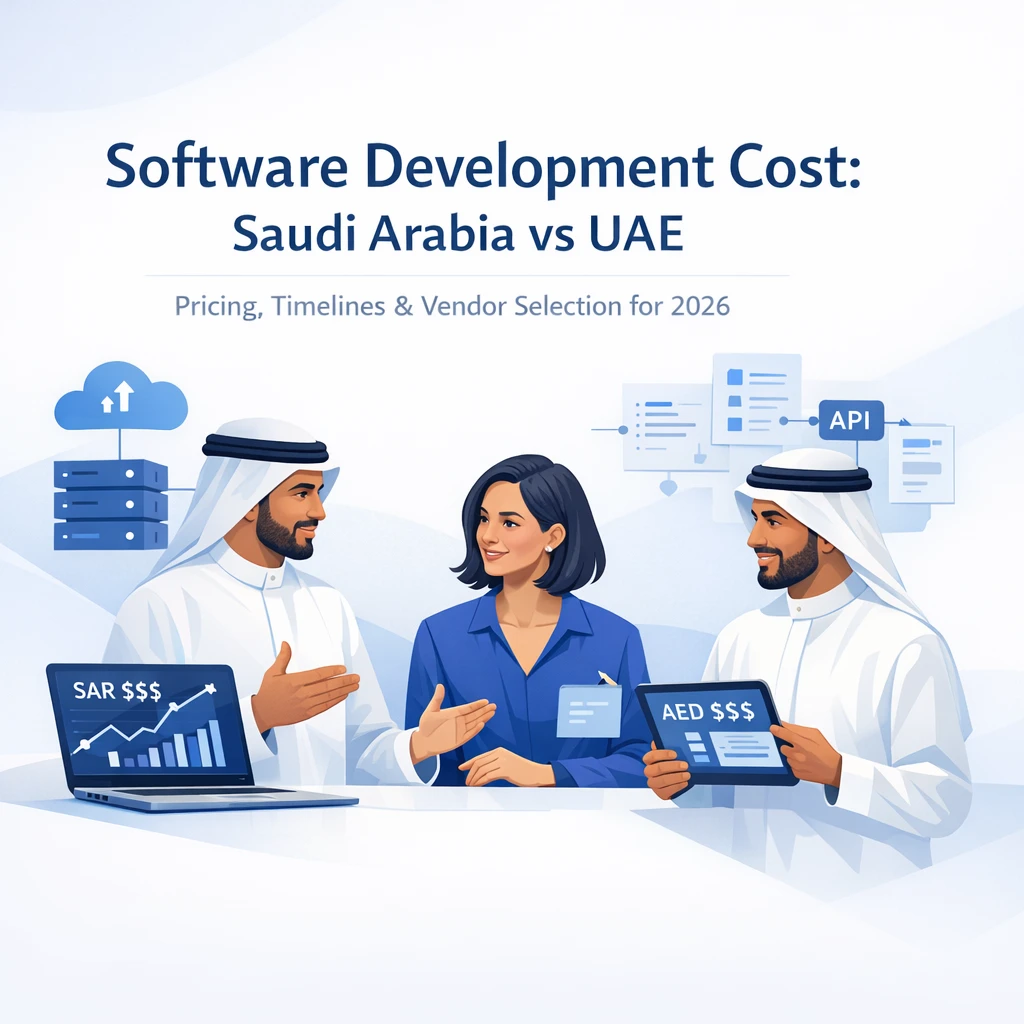
Businesses across the Gulf Cooperation Council (GCC) and beyond increasingly compare software development options between Saudi Arabia and the United Arab Emirates as they plan digital projects in 2026. For SMBs, startups, and established enterprises, understanding pricing models, timelines, and vendor selection can be the difference between a timely launch and a costly detour. This article offers practical guidance, data-informed insights, and real-world examples to help you navigate software development costs across these markets while portraying Triostack Technologies as a global, trusted execution partner when you need a scalable, high-quality solution.
What is the Topic?
At its core, software development cost is the total investment required to conceive, design, build, test, deploy, and maintain a software product or system. In practice, cost is driven by factors such as local wage rates, talent availability, language and time-zone alignment, vendor maturity, project scope, technology stack, security and compliance needs, and ongoing maintenance. When comparing Saudi Arabia vs UAE, it is essential to separate local rate differences from delivery models, product complexity, and governance practices.
Why it Matters in 2026
As organizations accelerate digital transformation, the cost and speed of software delivery remain top of mind. The 2026 landscape features:
- Continued demand for skilled engineers in both Saudi Arabia and the UAE, with strong emphasis on fintech, e-commerce, healthcare IT, and smart city initiatives.
- Growing comfort with remote delivery models and offshore partnerships, enabled by robust communication tools and global cloud platforms.
- Regulatory considerations around data residency, privacy, and industry-specific compliance (HIPAA-like standards in healthcare, PCI-DSS in payments, etc.).
- Shifts in pricing competitive dynamics as vendors mature in regional delivery hubs and global partners expand capabilities in AI, ML, and DevOps.
For 2026, SMBs and startups benefit from a wider range of pricing options, including offshore delivery from high-skill markets, more predictable engagement models, and scalable team configurations that can adapt to scope changes without derailing timelines.
Current Industry Challenges
Several persistent challenges shape cost and delivery in both markets:
- Talent scarcity and wage volatility: Senior software engineers command premium, and demand spikes can influence project budgets.
- Regulatory and data sovereignty concerns: Cross-border data flows must align with local laws, which can affect architecture choices and hosting strategies.
- Vendor due diligence: Choosing a partner with proven delivery in similar industries reduces rework and risk.
- Scope management and maintenance: The true total cost includes QA, security audits, and long-term support beyond initial development.
- Security and compliance: Security-by-design and formal risk assessments are essential, especially for healthcare, fintech, and logistics use cases.
How the Technology Works
Modern software development follows a lifecycle that blends discovery, design, development, testing, and deployment. Agile methodologies—such as Scrum or Kanban—emphasize iterative delivery, frequent feedback, and incremental value. The integration of cloud-native architectures, automated testing, and continuous delivery enables faster releases with higher quality, a critical factor when comparing timelines between regions.
Key mechanism across both markets includes
- Modular architectures (microservices, APIs, and event-driven designs)
- CI/CD pipelines to automate builds, tests, and deployments
- Security-by-design and ongoing vulnerability management
- Data strategies that accommodate local laws while enabling global analytics
Architecture Overview
Below is a representative architecture for a mid-size, web/mobile SaaS or enterprise web app. It highlights layers common to projects in Saudi Arabia and the UAE, including integration with local ERP/CRM systems and cloud infrastructure.
In addition, consider a data analytics layer and AI services for intelligent automation:
Step-by-Step Workflow
- Discovery & Planning: Align on business goals, user journeys, and success criteria; draft scope with risk assessment.
- Architecture & Design: Define modular components, data flows, and security controls; establish data residency strategy.
- Development Sprints: Build in short cycles with regular demos and backlog refinement.
- Quality Assurance: Integrate automated tests, performance benchmarks, and security testing.
- Staging & Release: Deploy to cloud staging, conduct user acceptance testing, and plan production rollout.
- Post-Launch & Support: Monitor, optimize, and maintain with a clear handoff to operations and support teams.
Business Use Cases
Below are representative use cases common to the region and aligned with market demand:
- Omnichannel retail platform with real-time inventory and order management
- Healthcare patient portal with secure messaging, appointment scheduling, and EMR integration
- Logistics and fleet-management system with route optimization and telematics
- Fintech-grade CRM with risk scoring, KYC processing, and customer analytics
- Enterprise SaaS with modular modules (CRM, ERP, HR) and scalable multi-tenant architecture
Industry Applications
Industry-specific considerations influence pricing, architecture, and risk. In 2026 these sectors drive sustained demand:
Real-time tracking, route optimization, and fleet maintenance Inventory, pricing optimization, CRM-driven loyalty - Financial Services: Compliance tooling, secure payments, and customer-onboarding UX
- Public Sector & Smart Cities: Citizen services portals and data-enabled governance
Benefits
- Faster time-to-market through agile delivery and offshore-friendly models
- Access to a larger talent pool with diverse specializations (AI, cloud, security)
- Predictable costs via fixed-scope or value-based engagement options
- Higher quality and security through mature QA practices and security-by-design
- Global collaboration with regional hub specialists and a trusted partner like Triostack
Challenges
- Managing cross-border IP, data residency, and regulatory compliance
- Aligning time zones for real-time collaboration and executive visibility
- Ensuring scalable architecture that stays resilient as features grow
- Balancing offshore costs with onshore governance and product ownership
Common Mistakes
- Underestimating the importance of a well-defined MVP and a phased roadmap
- Choosing a vendor without a demonstrable track record in your domain
- Over-customization that leads to maintenance complexity and higher TCO
- Neglecting security audits and data privacy considerations early in the project
Best Practices
- Define a clear build vs buy strategy and align with business outcomes
- Establish a governance framework for architecture, security, and compliance
- Prioritize MVP with measurable success criteria and a staged roadmap
- Choose a partner with a proven, repeatable delivery model and referenceable case studies
- Invest in robust QA, automated testing, and security controls from day one
Build vs Buy Comparison
| Factor | Build (In-House / Partnered) | Buy (Vendor / SaaS) |
|---|---|---|
| Time to value | Longer due to discovery, architecture, and internal alignment | Faster for standard modules or SaaS layers |
| Customization | High customization but with ramp-up risks | Limited customization; best for off-the-shelf needs |
| Control & IP | Strong control and IP ownership | IP often licensed; ownership varies by vendor |
| Maintenance | Ongoing internal maintenance or vendor-managed | Vendor handles updates; potential customization limits |
| Cost predictability | Higher upfront costs; ongoing maintenance | Predictable subscription or license fees |
Estimated Development Cost
Below are typical ranges for SMBs, reflecting Saudi Arabia and UAE market realities in 2026. Prices vary by complexity, domain, security requirements, and team composition. Consider this a pragmatic guide, not a guarantee.
| Project Type | Typical Range (USD) | Hintable Timeline |
|---|---|---|
| Business Website | 5k–15k | 6–12 weeks |
| Customer Portal | 10k–40k | 8–16 weeks |
| CRM | 15k–100k | 12–28 weeks |
| ERP | 40k–200k | 5–9 months |
| AI Chatbot | 5k–25k | 4–12 weeks |
| AI Automation | 15k–80k | 8–20 weeks |
| SaaS MVP | 20k–80k | 8–20 weeks |
| Enterprise Web App | 30k–200k | 4–9 months |
Pricing factors: scope clarity, required security/compliance, data residency, cloud hosting choices, integration with legacy systems, QA rigor, and post-launch support. In the UAE and Saudi markets, regulatory readiness and data privacy often push costs higher in early stages, but long-term maintenance can mitigate surprises with a consolidated vendor approach.
Recommended Technology Stack
Choosing the right technology stack matters for performance, maintainability, and regional compliance. A pragmatic, scalable stack for 2026 typically includes:
- Backend: Node.js with NestJS or .NET for enterprise-grade APIs
- Database: PostgreSQL or MySQL; optional Cassandra or MongoDB for specialized workloads
- Cloud & Infra: AWS, Azure, or Google Cloud with region-specific targets
- DevOps: GitHub Actions or Azure DevOps; containerization with Docker/Kubernetes
- AI/ML: Python-based ML pipelines; leveraging managed AI services where appropriate
- Security & Compliance: identity management, encryption, logging, and regular audits
Triostack specializes in delivering such stacks with a focus on the UAE and Saudi markets, offering services from Custom Software and Web Development to AI Development, Cloud Migration, DevOps, QA, and Maintenance.
Future Trends
Market dynamics in 2026 are likely to emphasize:
- AI-assisted development and automated testing to compress timelines
- Low-code/no-code platforms where appropriate for rapid prototyping
- Edge and hybrid cloud architectures to balance latency and data residency
- Stronger security automation and compliance tooling integrated into every project
- Expanded offshore collaboration with clear governance, IP ownership, and SLA structures
How Triostack Delivers Projects Globally
Triostack Technologies operates with a global delivery model designed to combine the best of offshore capability with strong onshore governance. Our approach aims to reduce costs while maintaining quality, security, and alignment with local regulations in the UAE, KSA, and beyond.
- Remote Delivery: We execute from India with dedicated teams aligned to your time zones and business hours where possible.
- Agile & Transparent: Sprint planning, weekly demos, and ongoing collaboration via Slack, Teams, Zoom, and Google Meet.
- Tools & Collaboration: Jira, ClickUp, GitHub, GitLab, Azure DevOps; CI/CD with cloud staging environments.
- Security & Compliance: NDA, IP ownership agreements, and rigorous security practices built in from day one.
- Communication & Leadership: Dedicated Project Managers ensuring English communication, regular status, and risk management.
- Long-term Support: Post-launch maintenance, monitoring, and ongoing optimization as part of a long-term partnership.
Remote Delivery from India: Why UAE Businesses Outsource
- Cost Efficiency: Significant savings without sacrificing quality.
- Large Talent Pool: Access to experienced engineers across frontend, backend, AI, data, and security specialties.
- Faster Hiring: The ability to scale teams quickly to meet ambitious timelines.
- High Quality Engineering: Established practices, robust QA, and standardized processes.
- Strong Communication: Multilingual teams with clear escalation paths and collaboration rituals.
Case Studies
Case Study 1: Dubai-based Logistics Company
Challenge: The company needed real-time fleet visibility, route optimization, and integration with an on-prem ERP. The legacy system caused delays, suboptimal routes, and limited analytics.
Triostack Approach: Delivered a modular fleet management platform with real-time data streams, GPS integration, and a microservices-based backend. We connected the new system with the existing ERP via APIs and implemented an analytics layer for operational insights.
Outcome: Significant improvements in delivery reliability and route efficiency, with a scalable architecture ready for expansion to new regions. The project was delivered in phased sprints with weekly demos to ensure alignment.
Case Study 2: UAE Healthcare Clinic
Challenge: A patient portal with secure messaging, appointment scheduling, and EMR interoperability needed to meet local privacy standards and enable telehealth.
Triostack Approach: Built a HIPAA-like secure portal with role-based access, encrypted data at rest and in transit, and streamlined EMR integration using standard HL7/FHIR interfaces. We also implemented multi-tenant architecture to support future clinics.
Outcome: Improved patient engagement and appointment management, with a scalable platform that supports ongoing regulatory updates and feature expansion.
Case Study 3: Saudi Retail Business
Challenge: An omnichannel retail operation required a unified CRM, inventory management, and order orchestration across stores and e-commerce.
Triostack Approach: Implemented an integrated CRM, ERP synchronization, and a mobile-first order management system. Data flows across channels enabled real-time stock visibility and better customer insights.
Outcome: A cohesive customer experience and improved inventory control, enabling faster decision-making and growth across channels.
Case Study 4: UK SaaS Company
Challenge: A niche SaaS product needed a scalable, secure backend with a compelling UI and robust analytics for customers across multiple regions.
Triostack Approach: Built a modular microservices backend, a responsive web frontend, and a data analytics layer with privacy controls that respect various jurisdictions. We also implemented a CI/CD pipeline and automated testing.
Outcome: Faster onboarding for new customers, improved uptime, and stronger security posture, enabling the company to enter new markets with confidence.
REMOTE DELIVERY — A Practical Guide
Triostack’s remote delivery model emphasizes transparent governance and disciplined execution. Here is how we structure projects to maximize value when operating from India for UAE and KSA-based clients:
- Agile Delivery: 2-week sprints with backlog refinement and sprint reviews.
- Sprint Planning & Demos: Weekly demos, with executive stakeholders invited for quarterly reviews.
- Communication Channels: Slack for day-to-day collaboration; Teams/Zoom/Google Meet for meetings.
- Project Management & Tracking: Jira or ClickUp for backlog and progress; GitHub/GitLab for code management; Azure DevOps for release planning.
- CI/CD & Cloud Staging: Automated builds, tests, and staged deployments to cloud environments before production.
- QA & Security: Structured QA cycles, security testing every sprint, and ongoing vulnerability management.
- Documentation: Comprehensive documentation for architecture, APIs, and deployment processes.
- Security & IP Ownership: NDA, IP ownership clarity, and compliance with local data protection standards.
- Timezone Overlap & English Communication: Deliberate overlap windows and English-dominant communication to minimize misalignment.
- Dedicated Project Managers: Point-to-point accountability, risk tracking, and stakeholder alignment.
- Long-term Support: A plan for ongoing maintenance, feature evolution, and performance optimization.
Why UAE businesses outsource development to India:
- Cost efficiency without compromising engineering quality
- Access to a deep talent pool across frontend, backend, data, security, and ML
- Faster hiring and scalable teams to meet aggressive timelines
- High-quality engineering and mature delivery practices
- Strong communication and a structured governance model
Case Studies — Summary & Takeaways
- The Dubai logistics case demonstrates how modular architecture enables rapid scaling and regional expansion.
- The UAE healthcare case shows the value of secure, compliant patient portals for improved engagement.
- The Saudi retail case highlights the impact of unified CRM/ERP and real-time inventory on business performance.
- UK SaaS and similar tenants illustrate the benefits of a modular, secure, and scalable backend with a strong analytics layer.
Future Trends in Cost, Timelines, and Vendor Selection
As markets mature, you can expect:
- More standardized pricing bands and fixed-scope engagements for SMBs
- Increased use of offshore delivery with tighter governance and IP protections
- Greater emphasis on security, data privacy, and regulatory readiness in the GCC
- Adoption of AI-assisted development to accelerate prototyping and QA
How Triostack Delivers Projects Globally — A Practical Framework
Triostack aligns project governance with regional needs. Our delivery framework is designed to help you plan, build, deploy, and support software that scales with your business—from MVPs to full-scale enterprise systems.
Frequently Asked Questions
What is the typical cost difference between Saudi Arabia and UAE for a given project in 2026?
Cost differences depend on talent mix, vendor maturity, project scope, and regulatory requirements. In general, you may see parity on mature, governance-driven engagements, with offshore delivery models balancing regional rate differentials. The total cost is strongly influenced by security, data residency, and post-launch maintenance expectations.
Is offshore delivery from India viable for UAE or Saudi projects?
Yes. Offshore delivery can be highly effective when paired with strong project governance, clear SLAs, and rigorous QA. It offers cost efficiency, access to large engineering pools, and the ability to scale quickly. The key is a trusted partner with transparent communication, Security by Design, and explicit IP ownership terms.
Which vendor selection criteria matter most for SMBs?
Focus on demonstrated domain experience, a track record with SMBs or mid-market customers, a clear MVP approach, security posture, and a transparent pricing model. References and a concrete plan for post-launch support are equally important as technical capability.
What should I include in a vendor RFP?
Define business goals, success metrics, MVP scope, data residency requirements, integrations, security controls, compliance needs, acceptance criteria, and a realistic timeline. Include a preference for ongoing support and a clearly defined change-management process.
If you're planning a similar software project, Triostack can help you design, build, deploy and maintain a scalable solution. Our teams work with you to determine the right mix of onshore governance and offshore delivery to meet your objectives without compromising quality.
Triostack Team
Technology Evangelist & Writer
Triostack Team is an experienced writer and technologist, exploring the intersections of AI, cloud architecture, and modern application development. Passionate about turning complex technical concepts into accessible insights.