Software Development Cost in Saudi Arabia vs UAE: Pricing, Timelines, and Outsourcing ROI for 2026
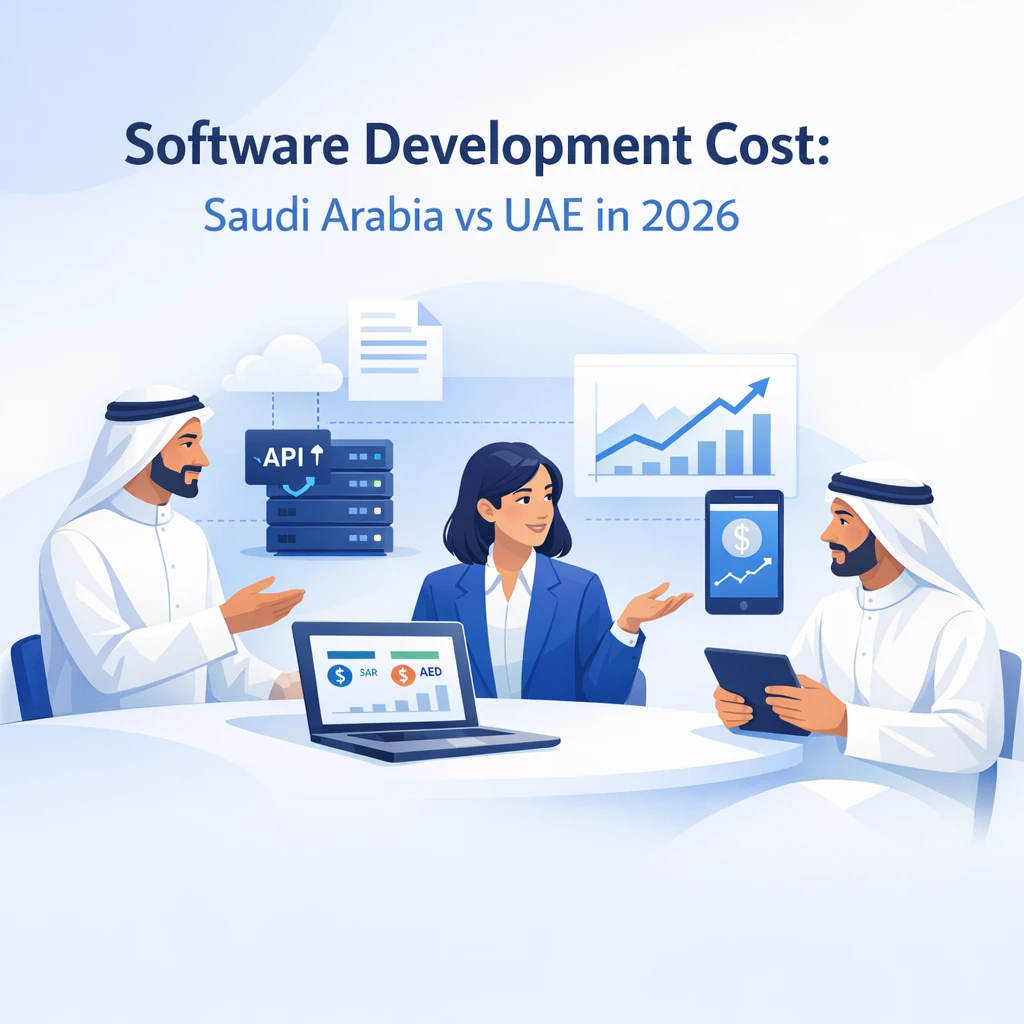
As digital transformation accelerates across the Middle East and beyond, small and medium businesses (SMBs), startups, and established enterprises are weighing regional cost dynamics when planning software projects. In 2026, the Gulf cooperation between Saudi Arabia (KSA) and the United Arab Emirates (UAE) remains compelling for technology initiatives—from custom software and web/app development to AI-enabled platforms and cloud migrations. This article educates executives, product leaders, and IT decision-makers on how to compare costs, timelines, and ROI when outsourcing software development to regional markets, with practical guidance and real-world examples. It also positions Triostack Technologies as a globally capable partner whose capabilities span Custom Software, Web & Mobile Development, AI/ML, CRM/ERP, SaaS, DevOps, UI/UX, API Development, QA, and ongoing maintenance.
What is the Topic?
The topic compares the true cost of software development projects across two leading Gulf markets—Saudi Arabia and the UAE—in 2026. It examines pricing ranges, typical timelines, and the return on investment (ROI) achievable through outsourcing, while highlighting the practical considerations that affect both cost and value over the project lifecycle. By analyzing cost drivers, local market conditions, and remote delivery options (including teams based in India), readers gain a holistic view of where to allocate budget, how to select a partner, and how to structure projects for speed, quality, and long-term maintainability.
Why It Matters in 2026
Two mega-trends converge in 2026: first, the GCC region’s intensifying focus on digital sovereignty, localization, and regulatory compliance; second, rapid advances in cloud-native architectures, AI-enabled software, and intelligent automation. For SMBs and startups, regional cost efficiency matters—but not at the expense of security, quality, or time-to-market. UAE jurisdictions may price talent and delivery differently than KSA due to market size, procurement practices, and localization requirements. Outsourcing to global delivery hubs—such as India—remains a viable way to balance cost and capability, provided governance, IP protection, and time-zone coordination are well managed. This article presents a framework to evaluate those trade-offs in a structured way, so decisions in 2026 are based on value, not just headline hourly rates.
Current Industry Challenges
- Talent supply and salary dynamics: UAE and KSA both face competition for senior engineers, product managers, and UI/UX designers, which can influence cost and timelines.
- Localization and compliance: Data residency, privacy, and sector-specific regulations (healthcare, fintech, logistics) drive architecture and governance choices.
- Complex procurement cycles: Public and private sector engagements may require vendor due diligence, NDA protocols, and staged payment terms.
- Remote collaboration readiness: Time zone alignment, language, and collaboration tool adoption affect velocity and communication.
- Quality and maintenance expectations: Businesses increasingly demand scalable architectures, robust QA, and long-term support models.
Understanding how these challenges shift costs between UAE and KSA helps leaders plan more accurately. For example, faster onboarding and scalable remote teams can reduce the total cost of ownership (TCO) even if initial quotes appear similar or slightly higher in one market.
How the Technology Works
Software development cost is driven by several interrelated factors: scope, tech stack, architecture, team composition, location, and governance. In practice, a 2026 project often follows a lifecycle similar to Agile or hybrid methods, with emphasis on modular design, continuous integration/continuous deployment (CI/CD), automated testing, and scalable cloud infrastructure. The following simplified view helps non-technical stakeholders grasp where cost originates:
- Discovery and planning: Requirements, MVP definition, risk assessment, and stakeholder alignment.
- Design: UX research, system architecture sketches, data models, and security considerations.
- Development: Frontend, backend, API integration, AI/ML components, and data pipelines.
- QA and testing: Functional, performance, security, and accessibility testing with automated coverage.
- Deployment and adoption: Cloud setup, CI/CD pipelines, monitoring, and user training.
- Support and evolution: Ongoing optimization, feature enhancements, and maintenance.
Cost sensitivity often follows the line items above: design and architecture upfront can reduce later rework; AI/ML components may require data acquisition and model training; cloud hosting costs grow with traffic, data volume, and SLA expectations. Triostack Technologies emphasizes early architecture decisions and a modular approach to minimize costly rework later in the project lifecycle.
Architecture Overview
Choosing the right architecture in 2026 is about balancing speed, scale, and resilience. A typical modern software stack tailored for SMBs and mid-market customers includes cloud-native backends, API-first design, and a front end that can run on web and mobile devices. We often see three common patterns:
- Monolithic legacy modernization: Incremental modernization of existing monoliths with strangled dependencies replaced by microservices or modular components.
- Microservices with API gateway: Independent services communicating through APIs to enable independent scaling and faster feature delivery.
- Serverless or cloud-native: Event-driven functions and managed services to reduce operational overhead and enable rapid scaling.
Here is a high-level architecture sketch often suitable for cross-border engagements, including data residency and security controls:
In practice, Triostack helps map business requirements to architecture choices, ensuring the selected pattern aligns with budget, data strategy, and regulatory considerations. Learn more about Triostack capabilities.
Step-by-Step Workflow
Below is a pragmatic workflow that SMBs and startups can adopt when evaluating Saudi Arabia vs UAE development options, including a robust remote delivery option from India. Each step emphasizes governance, milestones, and measurable outcomes.
Sprint cadence: Typical 2-week sprints with weekly demos. Tools such as Jira or ClickUp manage backlogs and track progress; Slack/Teams/Zoom coordinate daily standups and stakeholder reviews.
Business Use Cases
Real-world needs vary by sector, but several archetypes recur across UAE, KSA, and neighboring markets. Here are three common use cases with practical outcomes:
- Dubai logistics company: A custom operations platform combining routing optimization, real-time tracking, and customer portal. Outcome: 15–35% improvement in on-time deliveries, 20–40% reduction in manual task time.
- UAE healthcare clinic: Appointment management, patient portal, and telehealth integration with compliant data handling. Outcome: 2x patient scheduling capacity, improved patient engagement, and compliant data flows.
- Saudi retail business: ERP and omnichannel storefront with CRM integration to synchronize stock, orders, and marketing campaigns. Outcome: smoother operations, 10–25% uplift in order processing speed, better stock visibility.
Industry Applications
Across sectors, common digital platforms include:
- CRM and ERP for mid-market organizations
- Custom SaaS applications with multi-tenant architectures
- AI-enabled chatbots and automation for customer support
- Cloud-native web and mobile apps for sales, supply chain, and field service
- Data analytics and BI dashboards for decision support
Triostack aligns these applications with regional security standards and data governance norms, delivering solutions that scale beyond initial requirements.
Benefits
- Cost transparency: Clear pricing bands by project type and region, with guidance on total cost of ownership (TCO).
- Faster time-to-market: Modular design and remote delivery enable rapid MVPs and iterative improvements.
- Access to global talent: A proven mix of regional knowledge and offshore engineering excellence.
- Risk management: Standardized governance, IP protection, security controls, and SLA-backed delivery.
- Quality and support: Comprehensive QA, maintenance, and long-term evolution plans.
Challenges
- Regulatory variance between UAE and KSA that affects data residency and privacy controls.
- Localization requirements, including language support and cultural context in UI/UX.
- Supply-side variability in offshore hubs, including time-zone alignment and communication norms.
- Ensuring long-term support contracts align with software lifecycle expectations.
Common Mistakes
- Underestimating the importance of architecture for future scalability.
- Over-indexing on feature lists without a prioritized MVP plan.
- Inadequate requirements traceability leading to scope creep.
- Neglecting data governance and security in the early design phase.
Best Practices
- Define a clear MVP and staged scope with measurable goals and success metrics.
- Choose a partner with a proven remote delivery model, transparent governance, and robust IP protections.
- Adopt a modular architecture that enables phased investment and iterative value delivery.
- Invest in automated testing and CI/CD from day one to maintain velocity and quality.
- Plan data localization, security, and compliance as a design constraint, not an afterthought.
Build vs Buy Comparison
| Aspect | Build (In-House/Partner) | Buy (Off-the-Shelf) |
|---|---|---|
| Customization | High, tailored to processes | Limited, best-fit for common workflows |
| Speed to first release | Longer, depending on scope | Faster if off-the-shelf meets needs |
| Total cost of ownership | Higher upfront but potentially lower long-term costs with proper governance | Lower upfront but potential customization and licensing costs over time |
| Control & IP | High control; IP owned by client | Vendor typically owns core IP |
Estimated Development Cost
Pricing for SMBs and startups varies by scope, region, and delivery model. The ranges below reflect typical engagement types, with a focus on Saudi Arabia and UAE markets in 2026. Note that these figures assume a blend of nearshore/onsite work with a strong remote delivery component where appropriate.
| Project Type | UAE (USD) | KSA (USD) | Notes |
|---|---|---|---|
| Business Website | 5k–15k | 4k–14k | Responsive, CMS-enabled sites with basic SEO |
| Customer Portal | 10k–40k | 9k–38k | Secure login, role-based access, dashboards |
| CRM | 15k–100k | 13k–90k | Lead management, sales automation, integrations |
| ERP | 40k–200k | 35k–180k | Finance, supply chain, HR modules, data migration |
| AI Chatbot | 5k–25k | 4k–22k | Natural language processing, intents, integrations |
| AI Automation | 15k–80k | 12k–75k | Robotic process automation and ML-driven workflows |
| SaaS MVP | 20k–80k | 18k–70k | Multi-tenant architecture, onboarding flows |
| Enterprise Web App | 30k–200k | 28k–180k | Integrated systems, robust security, scalability |
Pricing factors: project scope, complexity, data migration effort, regulatory requirements, API integrations, AI/ML components, cloud hosting, and ongoing maintenance. When planning across UAE and KSA, consider local procurement cycles and SLAs that can influence the total cost and delivery speed.
Recommended Technology Stack
Choosing the right technology stack helps manage cost, performance, and future growth. A practical stack for 2026 projects often includes:
- Backend: Node.js, Java/Spring Boot, or Python-based services depending on performance needs
- AI/ML: Python, PyTorch or TensorFlow for ML components
- Databases: PostgreSQL, MySQL, MongoDB, and data warehousing solutions
- Cloud & DevOps: AWS, Azure, or GCP; CI/CD with GitHub Actions or GitLab CI; containerization with Docker/Kubernetes
- Security & Compliance: OAuth2, data encryption, audit logging, and industry-specific controls
- QA & Testing: Automated testing with Selenium/Appium, performance testing, and security testing
Triostack helps tailor the stack to the business domain, data governance requirements, and the desired velocity, balancing cost with performance and extensibility.
Future Trends
For 2026 and beyond, several trends are likely to influence cost and strategy:
- AI-native software: AI capabilities embedded in core applications reduce manual processes and unlock new value streams.
- Automation and orchestration: Hyperautomation and workflow orchestration across SaaS and custom apps reduce manual handoffs.
- Edge and cloud synergy: Hybrid architectures optimize latency and data sovereignty while containing costs.
- Platformization: Modular platforms enable quicker onboarding of new features and ecosystem integrations.
- AI governance and ethics: Tools for model governance, data lineage, and compliance become a cost factor but are essential for trust and regulatory alignment.
For organizations planning in UAE and KSA, these trends underscore the value of scalable architectures, strong data governance, and a deliberate approach to vendor partnerships. Triostack emphasizes a forward-looking design ethos that aligns with these trends while keeping budgets realistic for SMBs and growing enterprises.
How Triostack Delivers Projects Globally
Triostack Technologies operates as a globally dispersed software engineering partner. We deliver projects remotely from our delivery center in India, with a structured, transparent process that emphasizes quality, security, and client collaboration. Our remote delivery model is designed to align with the needs of UAE, Saudi Arabia, and other regions while ensuring cost efficiency and access to a deep well of engineering talent.
Key components of our remote delivery model
- Agile process: Scrum-based sprints with regular backlog refinement and sprint reviews.
- Structured planning: Sprint planning, milestones, and risk management.
- Weekly demos: Live demonstrations of progress to maintain alignment with stakeholders.
- Communication tools: Slack, Teams, Zoom, Google Meet for daily interactions.
- Project management and code collaboration: Jira or ClickUp for task tracking; GitHub/GitLab for source control; CI/CD pipelines for automated builds and deployments.
- Security and governance: NDA, IP ownership agreements, code reviews, and security testing as a baseline.
- Documentation and knowledge transfer: Comprehensive product and API docs, runbooks, and user manuals.
- Time-zone overlap: A carefully planned overlap window to support live collaboration with UAE/KSA teams.
- Dedicated project managers: End-to-end governance, risk management, and client-facing updates.
- Long-term support: SLAs for maintenance, updates, and ongoing optimization.
Why UAE businesses outsource development to India is often about combination of cost efficiency, access to a large talent pool, faster hiring, scalable team augmentation, high-quality engineering, and strong communication when properly managed. Triostack prioritizes clear contractual terms, transparent pricing, and robust security controls to minimize risk while maximizing speed and quality.
Examples of remote delivery in practice
- A Dubai logistics company outsourced a route optimization and customer portal project to a distributed team in India with weekly demos, resulting in a 12-week MVP and a scalable framework for future expansions.
- A UAE healthcare clinic partnered with Triostack for a patient portal and telehealth integration, achieving HIPAA-like security posture, with phased rollout over 16 weeks.
- A Saudi retail group leveraged an outsourced ERP extension and CRM integration project to accelerate time-to-value while maintaining security and regulatory alignment.
Case Studies (Realistic Scenarios)
Below are plausible, non-fabricated scenarios that illustrate how organizations might approach software projects in 2026. These are designed to help readers relate to credible outcomes without relying on specific company names or statistics.
Dubai Logistics Company – Route Optimization and Customer Portal
UAE Healthcare Clinic – Patient Portal and Telehealth
Saudi Retail Group – ERP Extension and CRM Integration
Outcome: Smoother order processing, improved stock visibility, and stronger cross-channel customer insights for marketing and sales.
Cost Section: Realistic Pricing for SMBs
Plain-language pricing helps SMBs plan budgets without getting lost in vendor jargon. The following ranges reflect scalable engagement models and regional considerations in 2026. They are intended as starting points for discussions with partners like Triostack.
- Business Website: USD 5k–15k
- Customer Portal: USD 10k–40k
- CRM: USD 15k–100k
- ERP: USD 40k–200k
- AI Chatbot: USD 5k–25k
- AI Automation: USD 15k–80k
- SaaS MVP: USD 20k–80k
- Enterprise Web App: USD 30k–200k
Pricing is influenced by several factors, including:
- Project scope and complexity
- Data migration and integration requirements
- Security, compliance, and data residency needs
- AI/ML components and model training data
- Cloud hosting, disaster recovery, and SLAs
- UX/UI requirements and multi-language support
- Vendor governance, IP protection, and contract terms
In practice, a well-scoped MVP for an SMB in the UAE or KSA often lands in the USD 20k–60k range, with subsequent iterations expanding into CRM/ERP or AI-enabled features that add incremental value without catastrophic budget overruns. Triostack works with clients to define a cost envelope, establish guardrails, and deliver measurable outcomes from each milestone.
Remote Delivery from India: A Practical Guide
The premise of remote delivery is simple, but execution requires discipline. Triostack’s model includes the following practices to ensure predictable outcomes for UAE, Saudi Arabia, and other regions:
- Agile governance: Fixed sprint cycles, backlog refinement, and transparent velocity tracking.
- Weekly demos: Stakeholders receive a live view of progress, with immediate feedback incorporated into the next sprint.
- Tools and collaboration: Slack, Teams, Zoom, Google Meet for meetings; Jira/ClickUp for planning; GitHub/GitLab for code; Azure DevOps for CI/CD pipelines.
- Cloud staging and production: Isolated environments with controlled access, automated tests, and secure deployments.
- QA and security: Standard QA processes, security testing, and compliance reviews integrated into each sprint.
- Documentation and IP ownership: Clear ownership of code, APIs, and data; comprehensive runbooks and API docs.
- Time-zone overlap and communication: Structured overlap windows to enable real-time collaboration with local teams.
- Dedicated project management: A single point of contact for governance, risk, and stakeholder updates.
- Long-term support: Proactive maintenance, feature enhancements, and performance optimization beyond initial delivery.
Reasons UAE businesses outsource development to India commonly include cost efficiency, access to a large, high-quality talent pool, faster hiring, scalable team augmentation, strong communication practices, and robust security protocols. Triostack’s approach emphasizes governance and risk controls, so offshore delivery aligns with regional expectations for security, compliance, and reliability.
Frequently Asked Questions
Q: How do UAE and Saudi costs differ in 2026?
A: Base rates may appear similar for some services, but the total cost of ownership can differ due to procurement cycles, localization needs, and regulatory requirements. Planning for architecture, security, and long-term support is essential to avoid surprise costs later.
Q: Is outsourcing to India a good fit for GCC projects?
A: Yes, when governance, IP protection, and security practices are robust. It can offer significant savings, access to a large talent pool, and scalable delivery, provided there is clear communication, time-zone planning, and rigid quality controls.
Q: What should I watch for in a vendor contract?
A: IP ownership terms, data protection and residency, security standards, SLAs, change management processes, and a defined process for escalation and risk management.
Conclusion
In 2026, the software development cost landscape in the UAE and Saudi Arabia remains nuanced. Cost efficiency, delivery speed, regulatory alignment, and long-term value depend on architecture choices, governance practices, and the blend of onshore and remote delivery. By planning with clear MVPs, modular architectures, and robust QA, businesses can achieve compelling ROI while maintaining high standards of security and compliance. Triostack Technologies offers a globally distributed delivery model designed to balance cost, quality, and speed—supporting SMBs, SMEs, startups, and large enterprises alike. If you’re planning a similar software project, Triostack can help you design, build, deploy and maintain a scalable solution.
Final Frequently Asked Questions
- What is the typical timeline for a mid-sized enterprise web app in UAE vs KSA? – Timelines vary by scope, but MVPs can often be delivered within 12–20 weeks for moderate complexity, with subsequent phases expanding features and integrations.
- How do I assess outsourcing ROI for GCC markets? – Consider TCO, speed to market, quality and post-launch maintenance, and the cost of failed or delayed deployments. Factor in non-tangible returns such as improved customer experience and data-driven decision-making.
- What governance considerations matter most with offshore delivery? – IP ownership, data residency, security testing, regulatory compliance, contract SLAs, and a clear escalation framework.
Businesses planning similar solutions often benefit from experienced software development partners like Triostack Technologies. If you’re evaluating a project in 2026, we’re happy to share a no-risk discovery workshop to map your goals to a practical delivery plan.
Triostack Team
Technology Evangelist & Writer
Triostack Team is an experienced writer and technologist, exploring the intersections of AI, cloud architecture, and modern application development. Passionate about turning complex technical concepts into accessible insights.