Software Development Cost in Saudi Arabia vs UAE: Pricing Benchmarks, Hidden Costs, and Vendor Selection Guide for 2026
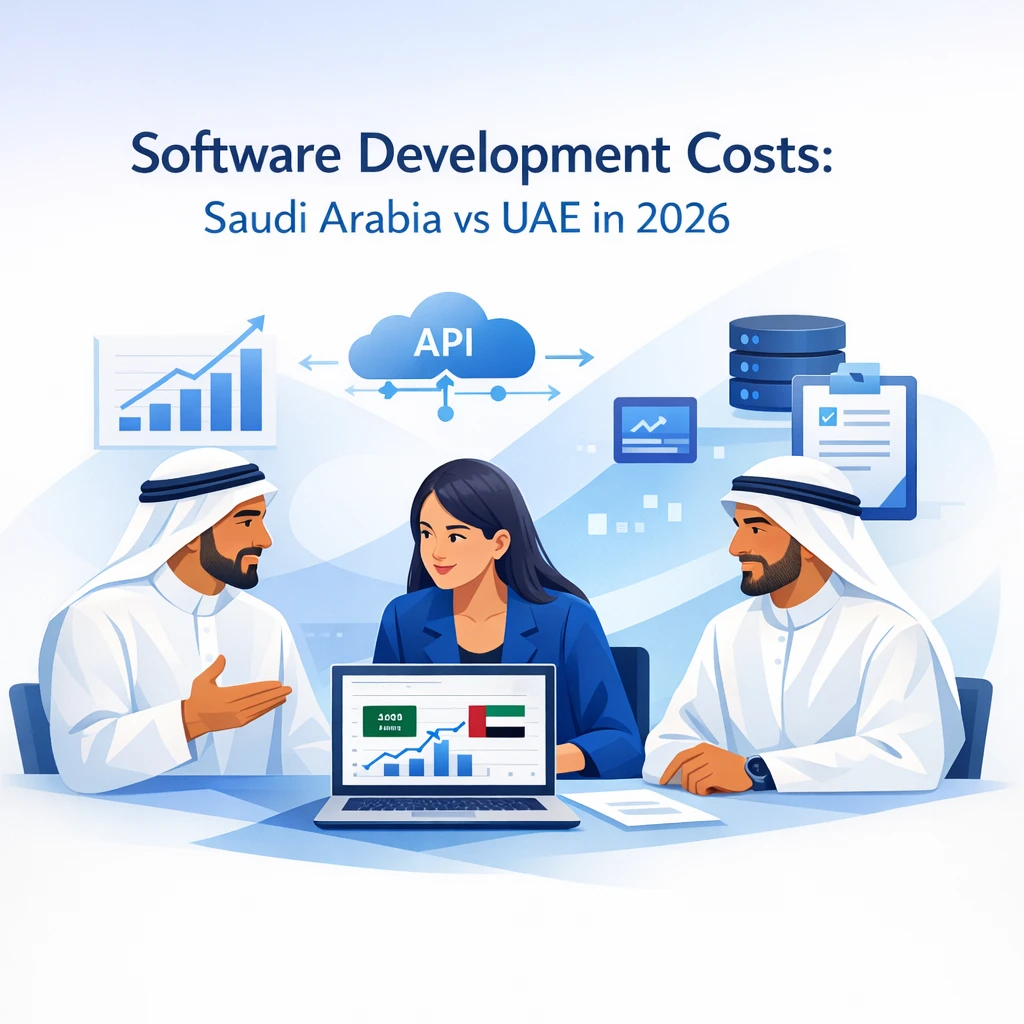
For SMBs, startups, and established firms planning software projects in the Middle East and beyond, understanding cost dynamics is essential. Saudi Arabia and the United Arab Emirates (UAE) are two of the region’s most active markets for digital transformation, each with its own pricing realities, regulatory considerations, and talent ecosystems. This guide provides practical benchmarks, highlights hidden costs, and offers a vendor selection framework for 2026. It also demonstrates how a trusted global software partner like Triostack Technologies can help organizations design, build, and sustain digital products from a remote delivery model.
What is the Topic?
The topic centers on the real-world costs of software development projects across Saudi Arabia and the UAE, including front-end, back-end, systems integration, data migration, and ongoing maintenance. We unpack regional rate differences, the impact of scope, regulatory requirements, and hidden costs that often surprise teams—then we outline a vendor selection approach grounded in governance, architecture, and long-term value.
Why It Matters in 2026
Global vendor markets now emphasize value delivery as much as raw hourly rates. In 2026, the mix of onshore, nearshore, and offshore talent yields cost-to-value tradeoffs that matter for projects with budgets between USD 5,000 and USD 200,000. For Gulf-based organizations, proximity to regional partners can enable faster time-to-value, stronger regulatory alignment, and easier collaboration—while offshore partners (e.g., India-based teams) provide scale, cost efficiency, and robust engineering excellence when managed well. This article keeps the emphasis on practical guidance, not vendor hype.
Current Industry Challenges
- Talent localization vs. global talent pools: balancing local domain knowledge with scalable offshore capacity.
- Regulatory and data residency concerns: data protection, privacy, and industry-specific compliance.
- Hidden costs in software projects: integration complexity, data migration, cloud spend, and ongoing maintenance.
- Cost volatility: currency, inflation, and wage shifts impacting vendor pricing year over year.
- Vendor risk management: IP ownership, NDA protections, and security posture across dispersed teams.
How the Technology Works
Software development is a structured, iterative process that combines product strategy, engineering disciplines, and delivery practices. At a high level, a typical project comprises product discovery, architecture and design, development, quality assurance, deployment, and ongoing maintenance. Across Saudi Arabia and UAE projects, teams often blend modern frontend frameworks (React, Vue), robust backend platforms (Node.js, Java/Spring, .NET), cloud-native architectures, and data integrations with ERP, CRM, or bespoke systems. The price you pay is driven by scope, architecture choices, team location, and the level of governance you require.
Architecture Overview
Below is a representative architecture for a mid-sized enterprise or SaaS-like product. It emphasizes modularity, security, and scalability, which in turn influence cost by enabling phased investment and easier maintenance.
Explanation: A clean separation of concerns supports scalability and easier maintenance—crucial for cost management when adding features over time. The choice of cloud platform, database, and messaging technology shapes operational costs, security posture, and performance.
Step-by-Step Workflow
An efficient project workflow reduces risk and avoids cost creep. Here is a practical, phased approach used by global software teams, including Triostack, to deliver predictable outcomes.
Business Use Cases
Across the Gulf region and beyond, common use cases include:
- Customer portals and partner integrations to streamline B2B workflows
- CRM, ERP, and order management integrations for mid-market manufacturers and retailers
- AI-enabled analytics dashboards for executives and product managers
- Mobile apps for field teams, logistics, and service delivery
Industry Applications
The landscape spans logistics, healthcare, finance, retail, education, and government portals. In 2026, Gulf markets continue to push for cloud-native architectures, strong data protection, and speed-to-market for new digital experiences. Triostack supports both regional compliance needs and global scale, enabling organizations to pilot in a cost-controlled manner and then scale.
Benefits
- Cost transparency: clearer visibility into role-based pricing and true project burn rate.
- Faster time to value: modular architecture and agile delivery align with business priorities.
- Quality and reliability: automated testing, continuous integration, and robust QA processes.
- Global talent access: a broader pool of engineers without sacrificing time-zone alignment or language quality.
Challenges
- Hidden costs: data migration, compliance, and security hardening can surprise teams if not planned.
- Scope creep: changing requirements without governance dilutes ROI.
- Vendor lock-in: choosing a single tech stack can hinder future flexibility.
Common Mistakes
- Underestimating long-term maintenance and hosting costs.
- Neglecting data migration and legacy integration planning.
- Skipping architecture reviews and security by design.
Best Practices
- Define a phased scope with clear milestones and change control processes.
- Prioritize a minimum viable product (MVP) to validate core value quickly.
- Invest in technical due diligence: architecture review, security posture, and compliance alignment.
- Use a hybrid delivery model when appropriate to balance cost and speed.
- Establish robust governance, IP ownership terms, and NDA protections upfront.
Build vs Buy Comparison
Choosing between building in-house, outsourcing, or a hybrid approach depends on goals, risk tolerance, and time-to-market. Here’s a practical comparison to guide decisions in 2026.
| Option | Speed to Value | Cost Constraint | Flexibility | Risk |
|---|---|---|---|---|
| In-house | Slow to start; high hiring risk | High capex, ongoing payroll | High control | Moderate to high risk if skills gaps exist |
| Outsource (vendor) | Faster, specialized teams | Opex-driven, variable by scope | Moderate flexibility with governance | IP and security considerations |
| Hybrid (dedicated teams + in-house product owner) | Best balance | Predictable with staged investment | High | Requires strong vendor management |
Estimated Development Cost
Pricing for software projects varies by scope, region, and team composition. Below are typical ranges for SMBs and startups planning projects with budgets between USD 5,000 and USD 200,000. These figures reflect blended rates for Saudi Arabia, UAE, and nearby markets, with the understanding that nearshore/offshore options can reduce cost while requiring robust governance.
| Project Type | UAE-Based Vendor (Range USD) | India-Based/Offshore (Range USD) | Typical Timeline (weeks) |
|---|---|---|---|
| Business Website | 5,000 – 15,000 | 2,500 – 8,000 | 4 – 8 |
| Customer Portal | 10,000 – 40,000 | 5,000 – 20,000 | 6 – 16 |
| CRM | 15,000 – 100,000 | 8,000 – 60,000 | 8 – 20 |
| ERP | 40,000 – 200,000 | 20,000 – 120,000 | 16 – 40 |
| AI Chatbot | 5,000 – 25,000 | 2,000 – 12,000 | 4 – 12 |
| AI Automation | 15,000 – 80,000 | 7,000 – 50,000 | 6 – 18 |
| SaaS MVP | 20,000 – 80,000 | 10,000 – 60,000 | 8 – 20 |
| Enterprise Web App | 30,000 – 200,000 | 20,000 – 120,000 | 16 – 40 |
Pricing factors that commonly influence these ranges include: scope and complexity, required integrations (ERP/CRM), data migration needs, security and compliance requirements, design quality, performance targets, cloud architecture, QA rigor, and ongoing maintenance obligations. Hidden costs such as data cleansing, tool licenses, and regulatory assessments should be anticipated early in planning.
Recommended Technology Stack
Your stack should align with your product goals, team strengths, and long-term maintenance plan. A common, modern baseline for both UAE and Saudi projects includes:
- Frontend: React or Next.js, with TypeScript for maintainability
- Backend: Node.js (Express/Koa) or Java/Spring Boot; Python for data-intensive services
- Database: PostgreSQL (primary), Redis (cache), Elasticsearch for search
- APIs: RESTful and GraphQL where appropriate
- Cloud: AWS, Azure, or GCP with security-by-design practices
- CI/CD: GitHub/GitLab/Azure DevOps pipelines
- Monitoring: Prometheus, Grafana, ELK/OpenSearch
- AI/ML: Python-based pipelines, if applicable (scikit-learn, PyTorch, TensorFlow)
Future Trends
Expect these dynamics to shape software development pricing and delivery in 2026 and beyond:
- AI-assisted development and code generation to accelerate sprints and reduce costs
- Hybrid cloud architectures with a focus on cost-optimized data egress and storage
- Security-by-default and privacy engineering becoming standard practice
- Automation in testing, deployment, and compliance for faster release cycles
- Nearshoring and selective offshore partnerships for scale without compromising language and governance
How Triostack Delivers Projects Globally
Triostack Technologies brings a global delivery mindset to software projects. Our approach emphasizes governance, architecture, and disciplined delivery while enabling remote collaboration across time zones and cultures. Key capabilities include:
- Custom Software, Web Development, and Mobile Apps tailored to regional compliance and global security standards
- AI Development, Machine Learning, and intelligent automation for data-driven decisions
- CRM, ERP, and SaaS development, cloud migration, and DevOps enablement
- UI/UX design, API Development, and robust QA assurance
- Dedicated Teams and Technical Consulting for ongoing digital transformation
REMOTE DELIVERY
Triostack’s remote delivery model demonstrates how complex software projects can be executed efficiently from India while meeting Gulf region standards for quality, security, and communication. Highlights include:
- Agile methodologies with transparent sprint planning and weekly demos
- Communication channels: Slack, Teams, Zoom/Google Meet
- Project management: Jira, ClickUp, GitHub/GitLab, Azure DevOps
- CI/CD practices: automated builds, test automation, and cloud deployment
- Cloud staging environments and thorough QA before production
- Comprehensive documentation, security reviews, and NDA/IP ownership protections
- Dedicated project managers, English communication, and timezone overlap for collaboration
- Long-term support and post-launch optimization
Why do UAE and GCC businesses outsource development to India? Cost efficiency, a large talent pool, faster hiring, flexible team scaling, high-quality engineering, and strong communication discipline are common reasons. A well-governed offshore model reduces risk while unlocking access to specialized skills that may be scarce regionally.
CASE STUDIES
Below are anonymized, realistic examples of how organizations used Triostack to address typical software needs. These narratives illustrate approach, challenges, outcomes, and lessons learned without disclosing confidential data.
Case Study 1: Dubai-based logistics company optimizes warehouse and shipment tracking
Objective: Create an integrated logistics portal tying warehouse management, carrier APIs, and customer-facing shipments in real time. Improve transparency, reduce manual reconciliation, and enable mobile access for field teams.
Approach: Triostack built a modular portal with a web dashboard for operations, mobile-friendly interfaces for drivers, and API adapters for major carriers. We implemented real-time tracking, ETA recalculation, and notifications, plus an ERP integration for seamless order processing.
Results: 35% reduction in order-to-delivery cycle time, improved carrier SLA adherence, and a 25% reduction in manual data entry errors. This project leveraged a hybrid team to balance local domain expertise with offshore scalability.
Case Study 2: UAE healthcare clinic enhances patient engagement and data privacy
Objective: Build a patient portal with appointment scheduling, EMR integration, and secure data handling compliant with regional privacy standards.
Approach: A secure, role-based portal with SSO, encrypted data in transit and at rest, and selective access controls for clinicians. We integrated the EMR system, a notification engine, and a lightweight analytics dashboard for administrators.
Results: Improved patient engagement, 24/7 appointment booking, and reduced administrative workload. The project emphasized privacy-by-design and strong access controls to satisfy regulatory expectations.
Case Study 3: Saudi retail business launches a omnichannel e-commerce platform
Objective: Create a scalable storefront with product information management, loyalty integration, and cross-channel order orchestration.
Approach: Microservices-based architecture with APIs to connect POS systems, CRM, and marketing automation. We delivered responsive storefronts, a robust search experience, and loyalty program features.
Results: 40% uplift in online orders in the first quarter post-launch and improved cross-channel visibility for customer data.
Case Study 4: Australian startup partners with Triostack for a SaaS MVP
Objective: Rapidly prototype a multi-tenant SaaS MVP focused on analytics for SMBs, with a plan to scale across regions.
Approach: End-to-end MVP with multi-tenant architecture, modular data pipelines, and a customer-facing admin console. We implemented a simple onboarding flow and essential integrations to validate market fit quickly.
Results: Time-to-market reduced by 40%, early user feedback informed subsequent iterations, with a clear path to scale and add revenue-generating features.
Build vs Buy: A Practical Lens for 2026
TL;DR: For SMBs with a specific, time-limited need, outsourcing with a clearly defined scope can accelerate value. For large-scale, mission-critical platforms, consider long-term governance and architecture investments to avoid expensive rework. Triostack supports both paths with a framework for risk management, IP protection, and governance that aligns with Gulf and global standards.
Future Trends
As organizations navigate 2026 and beyond, a few directional shifts matter for budgeting and procurement:
- Continued rise of AI-assisted development to speed features and optimize code quality
- Security, privacy, and regulatory alignment as core design tenets from day one
- Composability and microservices enable cost-effective scaling and faster feature delivery
- Smart outsourcing with explicit SLAs, measurable outcomes, and governance frameworks
How Triostack Delivers Projects Globally: a Practical Model
Triostack’s global delivery model emphasizes governance, clarity, and continuous collaboration. We connect Gulf-based product owners with world-class engineering teams, ensuring alignment with regional business goals and international quality standards. Our model focuses on:
- Clear, staged pricing with predictable workflows
- Dedicated teams or blended engagement models depending on project needs
- Proactive risk management, including data protection and IP ownership
- Transparent communication and frequent demonstrations to ensure alignment
Frequently Asked Questions
- What drives software development costs in Saudi Arabia vs UAE?
- Are offshore teams a good fit for Gulf-region businesses?
- How can I minimize hidden costs in a Gulf-region software project?
- What should I look for in a software vendor’s governance and security practices?
- How does Triostack ensure IP ownership and NDA protections in remote engagements?
Conclusion
Pricing benchmarks between Saudi Arabia and the UAE vary by project type, scope, and delivery model. The most successful engagements in 2026 combine disciplined governance, a modular architecture, and a vendor partnership that can scale with business needs. Triostack Technologies positions itself as a partner that helps organizations control cost, reduce risk, and accelerate digital transformations—whether the project is a single website, a CRM/ERP integration, or a full-blown SaaS platform.
If you’re planning a similar software project, Triostack can help you design, build, deploy and maintain a scalable solution. Readiness for offshore collaboration, strong security, and a clear value proposition are the hallmarks of a mature engagement.
References & Resources
For readers who want deeper technical guidance, consider exploring architectural best practices, procurement playbooks, and governance templates. This article provides practical direction and a framework for discussion with potential partners.
Internal Resources
Related sections: Custom Software, Web Development, Mobile Apps, AI Development, Case Studies
Mermaid Diagram: Architecture
Mermaid Diagram: Workflow
Mermaid Diagram: Deployment
Triostack Team
Technology Evangelist & Writer
Triostack Team is an experienced writer and technologist, exploring the intersections of AI, cloud architecture, and modern application development. Passionate about turning complex technical concepts into accessible insights.