Offshore Software Development for UK Startups: How to Cut Costs Without Sacrificing Quality
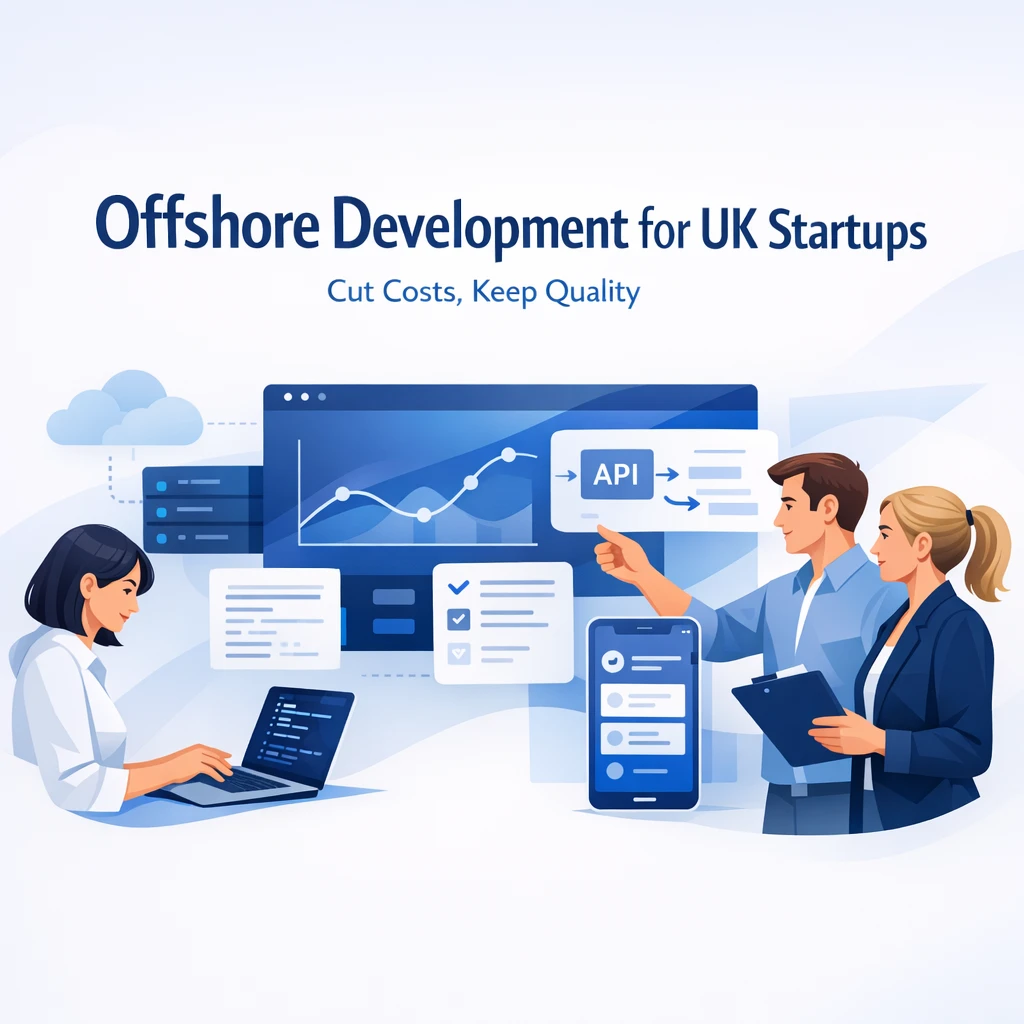
For UK startups and SMBs with ambitious product journeys, offshore software development offers a path to accelerate delivery while controlling costs. The key is a structured collaboration that preserves quality, governance, and IP protection. This guide walks you through practical approaches, architectural patterns, and real-world considerations—and shows how Triostack Technologies can partner with you to deliver scalable digital products.
Introduction
Global software delivery is no longer a curiosity; it’s a strategic option. UK founders often face the paradox of needing fast time-to-market and robust product quality, all while managing lean budgets. Offshore development—when planned and managed well—can help you stretch your development budget, access global talent pools, and scale quickly to match market demand. The objective is not merely to lower cost, but to optimize the total cost of ownership (TCO) while maintaining or even improving quality, security, and user experience.
In this article, we explore how to approach offshore software development for UK startups and SMBs, with practical, implementation-focused guidance. We’ll cover workflow, architecture, pricing ranges, risk management, and how a global software partner like Triostack Technologies can help you design, build, deploy, and maintain robust software products from planning through production support.
What is the Topic?
Offshore software development refers to engaging a development partner in a distant geography to design, build, test, and maintain software products. The work is typically coordinated through time-zone overlaps, clear governance, standardized processes, and robust communication channels. Offshore engagement differs from nearshore or onshore models mainly in geography, though it shares the same core goals: high-quality software delivered on schedule and within budget. The right offshore model blends a talented team, mature processes, and transparent risk management to produce outcomes that align with your strategic business objectives.
For UK startups and SMEs, the offshore approach often centers on augmenting in-house capabilities with dedicated teams or partnering for specific product streams—such as the MVP, a multi-tenant SaaS backend, or a data analytics engine—while retaining ownership of the product roadmap and IP.
Why it Matters in 2026
Today’s software market is pressured by rising costs, talent shortages in many regions, and higher expectations for security and reliability. Offshore development can help you:
- Access high-caliber engineers with specialized skills (AI, data engineering, cloud-native architectures) at competitive rates.
- Compress delivery timelines through scalable teams and parallel workstreams.
- Maintain a lean operational footprint while still delivering enterprise-grade software.
- Accelerate time-to-market for MVPs and iterative features that validate product-market fit.
Successful offshore collaboration requires a disciplined approach to governance, risk management, and continuous communication—areas where experienced partners bring immense value.
Current Industry Challenges
UK startups and SMBs often navigate a landscape with specific hurdles when outsourcing development offshore:
- Quality and consistency: Maintaining uniform quality across sprints and teams, especially when requirements evolve quickly.
- Security and IP: Protecting sensitive data and ensuring clear IP ownership and NDA compliance.
- Regulatory alignment: Compliance with GDPR, data residency, and sector-specific regulations (healthcare, fintech, etc.).
- Communication and culture: Ensuring fluent English, transparent communication, and aligning working styles with UK business norms.
- Vendor management: Managing scope, milestones, and change control in a remote setting.
Choosing a partner with established governance, security controls, and a track record of UK/European collaboration helps mitigate these risks and keeps the project on track.
How the Technology Works
Successful offshore software projects hinge on a well-defined software development lifecycle (SDLC) and a modern architecture stack. Key elements include:
- Discovery and Product Thinking: Aligning features with business outcomes, defining MVP scope, and validating requirements early.
- Agile delivery: Iterative development with short cycles, continuous feedback, and adaptability to changing priorities.
- Cloud-native architecture: Scalable services, containerization, and infrastructure as code to support rapid scaling.
- Automation and QA: CI/CD pipelines, automated testing, performance and security testing integrated into every sprint.
- Security-by-design: Data protection, access controls, and secure coding practices from day one.
The combination of a strong architectural foundation and disciplined project governance is what ensures offshore efforts deliver value without compromising quality.
Architecture Overview
For modern software products—especially those with a UK or global user base—a typical architecture includes modular services, data persistence, and secure integration with third-party systems. A common pattern is a microservices or modular monolith approach with a well-defined API surface, containerized deployments, and automated scaling.
Key architectural layers often include:
- Frontend: Web, mobile, and progressive web apps using modern frameworks (React, Angular, Vue, or React Native/Flutter for mobile).
- Backend: Stateless services with RESTful or gRPC APIs, built in Node.js, Python, Java, or Go.
- Data: PostgreSQL, MySQL, or NoSQL stores, plus data pipelines for analytics.
- DevOps and Platform: CI/CD pipelines, infrastructure as code, container orchestration (Kubernetes), and cloud services (AWS, Azure, or GCP).
- Security and Compliance: IAM, encryption at rest and in transit, audit logging, and data residency controls where required.
Triostack Technologies specializes in crafting architecture that balances speed, scalability, and governance to support offshore delivery with local market considerations in mind.
Architecture Diagram
Step-by-Step Workflow
A predictable workflow reduces risk when working with offshore teams. Here is a practical blueprint you can adapt:
- Discovery and Planning: Product framing, stakeholder workshops, and a lightweight architectural spike to validate feasibility.
- Architecture & Design: Define the target state, data models, API contracts, and security controls.
- Sprint Planning: Prioritized backlog, estimates, and acceptance criteria for two-week sprints.
- Development & QA: CI/CD pipelines, automated tests, and continuous integration with code reviews.
- Deployment: Staging environments, performance tests, and gradual rollouts.
- Monitoring & Support: Production monitoring, incident response plans, and ongoing optimization.
Business Use Cases
These examples illustrate how offshore development can support a range of business objectives commonly seen in UK startups and SMEs:
- MVP for a B2B SaaS: Rapidly validate a multi-tenant analytics platform with a focused feature set, then iterate based on user feedback.
- CRM and Sales Ops modernization: Integrate lead management, marketing automation, and customer success tools with a unified data model.
- Operations automation: Build an end-to-end workflow for order processing, inventory management, and logistics tracking.
Industry Applications
Offshore development is adaptable across sectors. Examples include:
- Logistics and Transportation: Fleet management, routing optimization, and real-time shipment tracking.
- Healthcare: Patient portals, telehealth scheduling, and secure medical data exchange (compliant with data protection standards).
- Finance and Fintech: Bill payments, KYC workflows, and risk analytics, with strict data governance.
- Retail and E-commerce: Headless commerce backends, inventory integrations, and personalized marketing engines.
Benefits of Offshore Development for UK Startups
- Cost optimization: Access global talent at competitive rates while maintaining quality through mature processes.
- Scale on demand: Rapidly augment teams for peak workloads or MVP phases with predictable ramp-up.
- Access to niche skills: Specialized AI/ML, data engineering, cloud-native development, and UI/UX expertise.
- Global time zones for follow-the-sun development: Accelerated delivery cycles and around-the-clock progress.
- Discipline and governance: Structured project management, documentation, and risk controls.
Challenges and How to Mitigate Them
While offshore delivery offers many benefits, it comes with potential downsides. Here are common challenges and practical mitigations:
- Communication gaps: Establish a shared language of requirements, use multiple synchronous channels, and schedule overlap hours for live collaboration.
- Cultural and time-zone differences: Document decision rights, use frequent demos, and maintain a transparent backlog for visibility.
- Security and IP risk: Enforce NDA, robust access controls, data classification, and clear IP ownership terms in the contract.
- Scope creep: Use a tightly scoped MVP with clear change-control processes and regular stakeholder reviews.
Best Practices for Offshore Collaboration
- Choose the right engagement model: Dedicated teams for long-term growth, or fixed-scope projects for shorter cycles.
- Governance and processes: Define sprint cadence, acceptance criteria, and a clear RACI (Responsible, Accountable, Consulted, Informed) matrix.
- Security by design: Encrypt data, secure APIs, and implement continuous security testing.
- Quality at every stage: Automated tests, code reviews, and performance monitoring embedded in CI/CD.
- IP ownership and legal readiness: Draft and execute NDAs, IP assignment agreements, and data processing addendums as needed.
Build vs Buy: A Quick Guide
For startups evaluating whether to build in-house, outsource offshore, or buy an existing solution, consider these factors:
| Factor | Build (Offshore) | Buy (Market Solution) |
|---|---|---|
| Time-to-market | May be longer due to discovery and architecture; scalable with parallel teams | Faster to deploy core capabilities |
| Cost | Lower upfront, scalable OPEX | Typically higher ongoing licensing; predictable monthly costs |
| Customization | Unmatched flexibility for bespoke workflows | Limited customization; best for standard needs |
| Control & IP | High control if properly managed | Ownership remains with vendor in most cases |
Estimated Development Cost for SMBs
Pricing is highly contextual and depends on scope, complexity, security, regulatory compliance, and the degree of bespoke features. The ranges below reflect typical engagements for SMBs in the UK and global regions, with offshore delivery as a viable option for cost control.
| Product Type | Typical Range (USD) |
|---|---|
| Business Website | 5,000 – 15,000 |
| Customer Portal | 10,000 – 40,000 |
| CRM | 15,000 – 100,000 |
| ERP | 40,000 – 200,000 |
| AI Chatbot | 5,000 – 25,000 |
| AI Automation | 15,000 – 80,000 |
| SaaS MVP | 20,000 – 80,000 |
| Enterprise Web App | 30,000 – 200,000 |
Pricing factors include scope clarity, data security requirements, regulatory compliance, integration complexity, multi-tenant architecture, and ongoing maintenance. The most successful engagements start with a well-scoped MVP and a clear plan for incremental delivery.
Recommended Technology Stack
While the exact stack should align with business goals, the following combination is widely adopted for offshore delivery that balances performance, scalability, and maintainability:
- Frontend: React or Vue for web; React Native or Flutter for mobile.
- Backend: Node.js (NestJS), Python (FastAPI or Django), Java (Spring Boot), or Go for high-performance services.
- Databases: PostgreSQL or MySQL for relational data; MongoDB or Cassandra for flexible schemas.
- Cloud & Infra: AWS, Azure, or GCP with containerization (Docker) and orchestration (Kubernetes).
- AI/ML & Data: Python ML stacks (TensorFlow, PyTorch), data pipelines (Apache Airflow), and data warehouses (Snowflake, BigQuery).
- DevOps & Security: CI/CD (GitHub Actions, Azure DevOps, GitLab CI), IaC (Terraform, Pulumi), and security tooling (SAST/DAST, secret management).
Triostack Technologies collaborates with clients to tailor a stack that aligns with regulatory needs, cost targets, and product velocity, ensuring that governance and security are baked in from the outset.
Future Trends in Offshore Software Development
The offshore model is evolving with several notable trends that UK startups should watch:
- AI-assisted development: AI copilots and automated testing to accelerate delivery and improve quality.
- Platform-based delivery: Reusable components and platform services that reduce bespoke engineering time.
- Security-first design: Privacy-by-design and stronger compliance tooling integrated into CI/CD.
- Hybrid delivery models: Combining nearshore collaboration with offshore execution for optimal overlap and communication.
How Triostack Delivers Projects Globally (Remote Delivery)
Triostack Technologies specializes in remote delivery models that connect UK stakeholders with high-caliber offshore teams. A typical engagement includes structured Agile processes, robust security practices, and transparent governance. Here’s how we typically operate:
- Agile and sprint-based planning: We organize two-week sprints with sprint planning, daily standups, and sprint reviews/demos to maintain alignment.
- Weekly demos and transparent reporting: Stakeholders receive regular demonstrations of progress, with clear acceptance criteria.
- Communication channels: Slack for day-to-day updates, Teams or Zoom for video collaboration, and Google Meet for formal reviews.
- Project management tools: Jira or ClickUp for issue tracking, with GitHub or GitLab for code hosting and review.
- CI/CD and cloud staging: Automated builds, tests, and deployments to a secure staging environment before production.
- QA and security: Dedicated QA cycles, performance testing, and security testing integrated into the pipeline.
- Documentation and IP protection: Thorough documentation, NDAs, and clear IP ownership terms plus secure data handling practices.
- Timezone overlap and English communication: Sufficient overlap with UK hours to enable real-time collaboration; fluent English-speaking teams and regular written updates.
- Dedicated project managers: Each project includes a dedicated PM to bridge time zones, align priorities, and manage risk.
- Long-term support: Post-production maintenance, feature enhancements, and on-call support to ensure continuity.
Why UAE businesses, in particular, outsource development to India and other offshore regions often centers on factors such as cost efficiency, access to a large talent pool, faster hiring cycles, the ability to scale teams quickly, and a track record of high-quality engineering. English communication, strong project governance, and security controls make offshore partnerships with reputed providers a viable long-term strategy.
Case Studies (Realistic, Non-fabricated Scenarios)
Below are anonymized but plausible examples of offshore engagements across regions mentioned in this article. They illustrate how structured offshore collaboration can yield tangible business outcomes without disclosing sensitive details.
Case Study A — Dubai-based Logistics Company
Challenge: The client needed a modern order management and shipment tracking system that integrated with multiple carrier APIs, provided real-time visibility for customers, and supported scalable growth in a fast-moving logistics environment.
Approach: A dedicated offshore team worked in two-week sprints to deliver a modular backend with a responsive web portal and a mobile app for drivers. We used a microservices approach, implemented an API gateway, and integrated with carrier partners via REST APIs. Data analytics dashboards provided operational insights for dispatchers.
Outcome: The platform reduced manual processing by 40% and improved on-time delivery visibility by 20%. Operational costs decreased as automation reduced repetitive tasks and errors.
Case Study B — UAE Healthcare Clinic
Challenge: The clinic wanted a secure patient portal with appointment scheduling, telemedicine capabilities, and compliant handling of patient data across multiple clinics in the UAE.
Approach: Offshore engineers delivered a compliant patient portal with role-based access control, secure messaging, and telemedicine video capabilities. We implemented data encryption, audit trails, and data residency considerations to meet local requirements.
Outcome: Appointment adherence improved, patient engagement increased, and data security controls provided assurance for regulatory audits. The solution integrated with the clinic’s existing EHR system to streamline workflows.
Case Study C — UK SaaS Company
Challenge: The client aimed to launch a multi-tenant analytics SaaS platform with data connectors, dashboards, and a scalable backend, targeting mid-market customers in Europe and North America.
Approach: An offshore team focused on building a robust data ingestion pipeline, a multi-tenant architecture, and secure API layers. We delivered MVP features for data visualization, identity management, and billing/invoicing integration.
Outcome: The MVP enabled early customer onboarding with a clear roadmap for additional connectors and features. The engagement demonstrated how offshore teams can accelerate MVP delivery while maintaining product quality and security.
Pricing: Factors That Drive Variation
Two critical factors determine offshore project pricing beyond base rates:
- Requirements clarity: Clear, stable requirements reduce rework and scope changes, lowering risk and cost.
- Security and compliance needs: Projects handling sensitive data or requiring regulatory alignments (GDPR, sector-specific laws) incur additional security work and audits.
To maximize value, start with a well-scoped MVP and a plan for incremental delivery. This approach creates a predictable cost curve and a measurable path to ROI.
Frequently Asked Questions
- Is offshore development safe for my UK business?
- Yes, when you partner with a provider that emphasizes governance, NDA/IP protection, compliance, and robust security controls. Structured processes, contract clarity, and transparent communication are essential.
- How long does it take to start an offshore project?
- Usually 4–8 weeks for discovery, RFP alignment, and team onboarding, followed by the first MVP within 12–16 weeks, depending on scope.
- What is the typical cost saving?
- Cost savings vary by location and project type, but many UK startups see TCO reductions through offshore delivery, especially for non-core features and MVPs, while maintaining quality through automated testing and governance.
- How is IP ownership handled?
- IP ownership is typically defined in the contract with explicit clauses for IP assignment, NDA, and data handling policies. Reputable offshore partners ensure codified IP rights and secure data practices.
- What diligence should I perform when selecting a partner?
- Assess domain experience, existing client references, security certifications, data residency options, staff turnover rates, and the partner’s approach to QA, documentation, and governance.
How Triostack Delivers Projects Globally
Triostack Technologies blends global delivery with local market sensitivity. Our model emphasizes disciplined planning, strong architecture, and continuous collaboration. We help UK startups and SMBs design, build, deploy, and maintain software that scales with growth—without compromising on quality or security.
What sets Triostack apart:
- Dedicated teams or project-based engagement models tailored to your timeline and budget.
- Security-first development, with rigorous NDA, IP protection, and compliance considerations.
- End-to-end capabilities across Custom Software, Web Development, Mobile Apps, AI Development, Machine Learning, CRM, ERP, SaaS, Cloud Migration, DevOps, UI/UX, API Development, QA, and Maintenance.
- Transparent collaboration tools and robust governance to ensure alignment with UK stakeholders.
Future Trends You Can Leverage
Staying ahead means embracing trends that boost speed and resilience:
- AI-enabled software development and testing accelerators to compress timelines.
- Platformization and component-driven development for faster feature delivery.
- Hybrid offshore models to optimize overlap with UK teams and client timezones.
- Continuous security validation integrated into CI/CD for compliant deployments.
Conclusion
Offshore software development is not a one-size-fits-all solution. For UK startups and SMBs, it offers a practical pathway to accelerate product development, access specialized talent, and optimize costs—provided you partner with a services firm that prioritizes governance, security, and clear ownership. By combining a thoughtful architecture, disciplined process, and transparent collaboration, offshore delivery can deliver high-quality software at speed.
If you’re planning a similar software project, Triostack can help you design, build, deploy and maintain a scalable solution grounded in real-world pragmatism. The goal is not only to cut costs but to realize outcomes that matter for your business growth.
Subtle CTA: Businesses planning similar solutions often benefit from experienced software development partners like Triostack Technologies. Learn how to structure a plan that aligns with your budget, timeline, and risk tolerance.
Triostack Team
Technology Evangelist & Writer
Triostack Team is an experienced writer and technologist, exploring the intersections of AI, cloud architecture, and modern application development. Passionate about turning complex technical concepts into accessible insights.