Offshore Development vs In-House Hiring in the UAE: Which Model Delivers Better ROI for Scaling Companies?
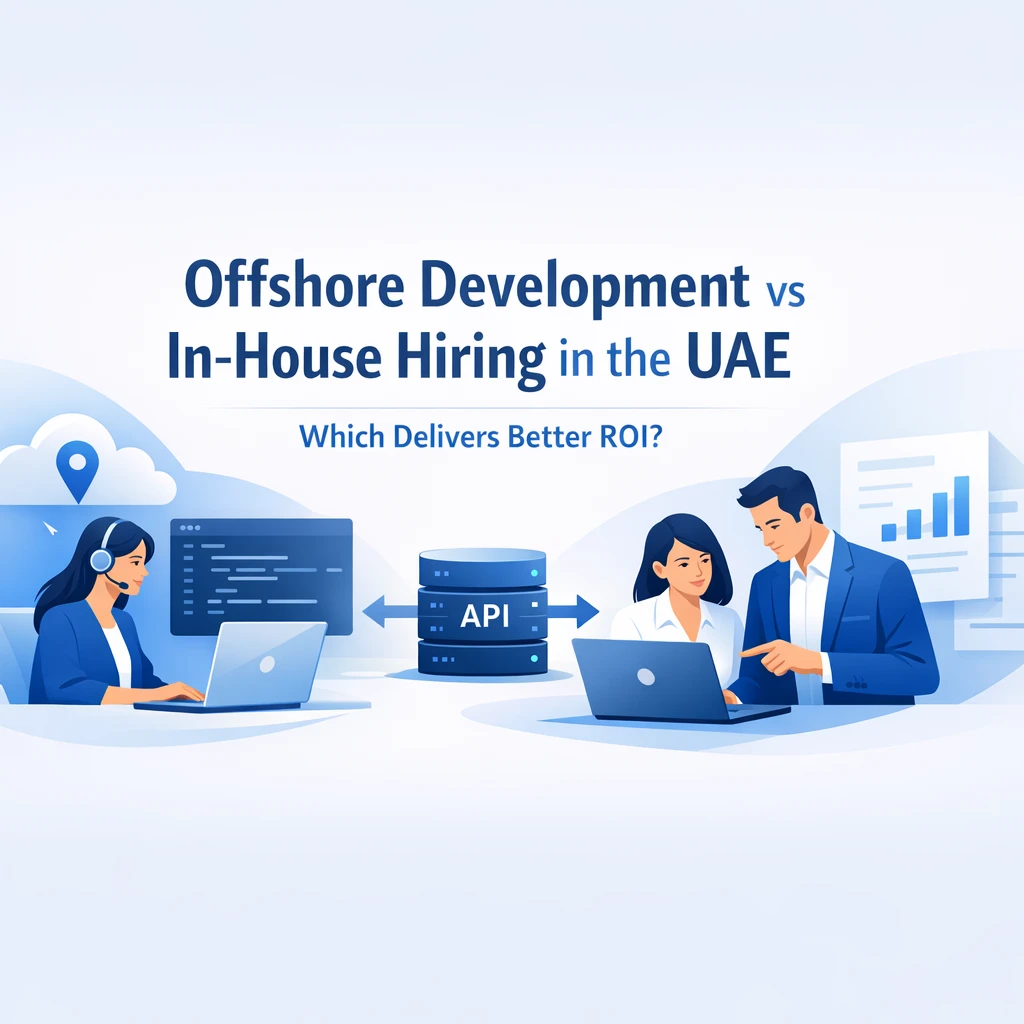
For growing businesses in the UAE and across the Gulf region, deciding how to source software talent is a strategic choice that directly impacts speed, quality, risk, and cost. This article explores the ROI implications of offshore development versus in-house hiring, with practical guidance, real-world examples, and a framework you can apply to your next project.
Introduction
Scaling a software product often forces tough trade-offs. You need fast delivery, high quality, security, and compliance, all while controlling cost. In regions like Dubai, Abu Dhabi, and throughout the GCC, as well as in global markets (US, UK, Europe, Australia, and Asia), companies increasingly combine global talent networks with local market knowledge. Offshore development and in-house hiring are not mutually exclusive; many successful scale-ups use a hybrid approach to balance speed, cost, and control. The goal is to achieve a predictable ROI while maintaining product quality, reducing time-to-market, and preserving essential IP and security standards.
What is the Topic?
The central question is simple: when should you build software with an in-house team, and when should you partner with offshore specialists to accelerate growth and reduce cost per feature? The UAE market brings its own dynamics—strong regulatory frameworks, a high standard of software quality, and a thriving startup ecosystem. Offshore models often involve dedicated teams or project-based arrangements in low-cost regions with strong engineering talent, while in-house hiring focuses on proximity, culture, and day-to-day control. This article compares these models through ROI lenses, guided by practical steps, architectures, and governance patterns you can apply today.
Why it Matters in 2026
Global talent supply chains have transformed how scaling companies approach software development. In 2026, the costs of local hiring in major UAE cities have risen, while offshore delivery hubs in India and other regions offer access to large pools of senior engineers, specialized skill sets, and flexible staffing—often with shorter ramp-up times. The right mix enables faster iterations, better risk management, and improved ROI (return on investment) for software programs ranging from CRM and ERP modernization to AI-powered products and SaaS platforms. The key is to align delivery models with business outcomes, regulatory requirements, and long-term product strategy.
Current Industry Challenges
- Talent shortages in specialized domains (AI, ML, cloud architecture, data engineering) that slow in-house ramp-ups.
- Global competition for top engineering talent, driving salaries higher in in-house models.
- Security, IP protection, and regulatory compliance across borders.
- Management bandwidth for orchestration, governance, and multi-vendor coordination.
- Need for rapid experimentation and MVP launches to capture market opportunities.
In offshore delivery, these challenges shift toward vendor management, communication overhead, and ensuring consistent quality across time zones. In-house hiring mitigates some risk but can introduce slower scaling and higher burn rates. The balanced approach often yields the best ROI for growing organizations.
How the Technology Models Work
Two broad models are often discussed in the market: in-house hiring and offshore development. In-house hires live and work within your organization, offering tight cultural alignment, direct supervision, and immediate collaboration. Offshore development involves engaging external teams—whether a dedicated team or a hybrid arrangement—from another country. You gain access to a broader talent pool, scalable capacity, and often lower cost per hour, albeit with greater complexity in coordination, IP protection, and governance. A pragmatic strategy blends both approaches, assigning core strategic capabilities to in-house teams while leveraging offshore partners for execution, ramping, and specialized workloads.
Architecture Overview
Regardless of where teams sit, a well-defined architecture is essential to ensure portability, quality, and ROI. A layered approach typically includes:
- Frontend: Web and mobile UIs with a consistent design system.
- Backend: Microservices or modular monoliths, with clear API contracts.
- Data: Proper data models, privacy controls, and analytics pipelines.
- DevOps: CI/CD pipelines, automated testing, and production observability.
- Security: Identity, access management, encryption, and compliance controls.
Triostack’s approach emphasizes modularity, scalable architectures, and security-by-design to support both offshore and in-house teams. The specifics depend on your domain, regulatory environment, and data sensitivity, but the underlying principles remain consistent across regions.
Step-by-Step Workflow
- Discovery & Requirements: Align on business goals, success metrics, and regulatory constraints. Define MVP boundaries and risk tolerance.
- Vendor & Team Model: Decide on in-house, offshore, or hybrid models. Establish engagement framework for governance, IP, and security.
- Architecture & RTL: Design scalable architecture, data handling, and integration strategy with existing systems.
- Implementation: Run iterative development in sprints, with clear acceptance criteria and continuous feedback loops.
- Quality & Security: Integrate QA, security testing, and compliance checks in every sprint.
- Deployment: Use CI/CD, staging environments, and phased rollout with rollback plans.
- Operate & Improve: Establish monitoring, dashboards, and ongoing optimization through product feedback and analytics.
Below is a schematic view of a typical offshore-in-hybrid workflow:
Business Use Cases
Below are representative scenarios where offshore development either complements or serves as a primary delivery model for scaling businesses.
- Responsive CRM enhancements for a UAE-based distribution company, leveraging offshore AI specialists to deliver a modular CRM with integrated analytics and automated workflows.
- Healthcare IT modernization for a UAE clinic network, using offshore teams to implement secure patient portals and data exchange layers while core governance remains in-house.
- Retail analytics platform for a Saudi retailer, combining offshore data engineering with in-house product management for rapid experimentation.
- Global SaaS MVP for an Australian startup, where offshore squads accelerate time-to-market while the product team focuses on core differentiators.
Industry Applications
Industries like logistics, healthcare, retail, financial services, and manufacturing increasingly employ offshore delivery to scale software programs. Key considerations include data sovereignty, regulatory alignment (e.g., GDPR, UAE DPI rules), and domain-specific security controls. Triostack supports these sectors with tailored governance, risk management, and compliance playbooks, ensuring your offshore or hybrid delivery remains predictable and auditable.
Benefits
- Cost efficiency: Access to high-caliber talent at competitive rates, with transparent fixed-price or dedicated-team models.
- Speed to market: Ramp capabilities quickly, enabling faster MVPs and iterative releases.
- Scalability: Flexible staffing to match demand without long-term commitments.
- Specialization: Availability of niche skills (AI, ML, cloud engineering, data engineering) that may be scarce locally.
- Global delivery: Time-zone overlap can be optimized to create around-the-clock development cycles.
When managed well, offshore development can supplement in-house teams, providing a controllable path to scale with predictable ROI.
Challenges
- Coordination across time zones and cultures, requiring disciplined rituals and transparent communication.
- Ensuring consistent quality, testing rigor, and adherence to your architectural standards.
- Protecting intellectual property and data when working with external partners.
- Managing vendor performance, SLAs, and contract enforceability in a global context.
Common Mistakes
- Underestimating governance and quality assurance in offshore engagements.
- Rushing to offshore without a clear architectural blueprint or data security framework.
- Treating offshore partners as substitutes for all strategic capabilities instead of enablers.
- Failing to establish objective KPIs and a measurable sunset criterion for supplier relationships.
Best Practices
- Define a clear hybrid model that protects core IP while leveraging offshore execution for execution-heavy workloads.
- Establish explicit security, data governance, and compliance requirements in the contract.
- Set up a transparent sprint cadence with weekly demos, backlog visibility, and objective quality gates.
- Utilize a shared tooling stack (issue tracking, repo access, CI/CD) to minimize friction across teams.
- Invest in strong program management—dedicated project managers, robust NDA, and IP ownership clauses.
Build vs Buy: A Quick Comparison
| Aspect | Build (In-House) | Buy (Offshore/Outsourcing) |
|---|---|---|
| Control & IP | High control; IP ownership embedded | Requires robust contracts; IP protection is critical |
| Cost & Speed | Higher upfront cost; longer ramp-up | Typically lower hourly rates; faster scale |
| Quality & Consistency | Direct QA oversight | Quality depends on vendor governance |
| Risk & Compliance | Lower vendor risk if internal policy aligned | Requires strong contracts and security controls |
Estimated Development Cost (Typical Ranges for SMBs)
The ranges below are indicative and depend on scope, domain, security, data migration, and regulatory requirements. They assume a mix of offshore and in-house resources where appropriate.
| Project Type | Typical Range (USD) |
|---|---|
| Business Website | 5,000 – 15,000 |
| Customer Portal | 10,000 – 40,000 |
| CRM | 15,000 – 100,000 |
| ERP | 40,000 – 200,000 |
| AI Chatbot | 5,000 – 25,000 |
| AI Automation | 15,000 – 80,000 |
| SaaS MVP | 20,000 – 80,000 |
| Enterprise Web App | 30,000 – 200,000 |
Pricing factors include feature scope, integration complexity, regulatory requirements, data migration, performance needs, UX expectations, and maintenance commitments. For SMBs, starting with a minimal viable product (MVP) and evolving through modular releases often yields the best ROI.
Recommended Technology Stack
While the best stack depends on the domain, cross-cutting concerns like performance, security, and maintainability guide selection. Triostack typically recommends a balanced mix of proven technologies:
- Frontend: React, Angular, or Vue; TypeScript for strong typing.
- Backend: Node.js, Java (Spring Boot), .NET, or Python (DaaS/ML pipelines); API-first design.
- Data & AI: PostgreSQL/MySQL, Redis, Elasticsearch; Python-based ML pipelines; ML Ops tooling.
- Cloud & DevOps: AWS, Azure, or GCP; Kubernetes for orchestration; CI/CD pipelines (GitHub Actions, GitLab CI, Azure DevOps).
- Security & Compliance: IAM, encryption at rest/in transit, secure coding practices, audit trails.
Triostack supports integration with CRM, ERP, and other enterprise systems via robust API development and internal link placeholders to maintain a cohesive technology ecosystem.
Future Trends
Key trends shaping offshore vs in-house decision-making include:
- Increased emphasis on AI-assisted software engineering and automated testing to reduce cycle times.
- Growing importance of modular, API-first architectures that ease cross-border collaboration.
- Enhanced focus on data residency, privacy, and cross-border compliance.
- Graph-based data pipelines and real-time analytics enabling smarter products and operations.
For scaling companies, these trends favor flexible, hybrid models that combine the efficiency of offshore execution with the control of in-house governance.
How Triostack Delivers Projects Remotely from India
Triostack leverages a structured remote delivery framework that emphasizes alignment, transparency, and robust governance. This section outlines how a UAE business can confidently work with offshore teams in India while preserving control, security, and quality.
Agile & Sprint Planning
Projects unfold in time-boxed sprints (typically 1–2 weeks). We start with a joint sprint planning session to align on backlog, acceptance criteria, and done-done criteria. Regular backlog refinement ensures that priorities stay aligned with business value.
Weekly Demos & Collaboration Tools
Weekly demos via Slack, Microsoft Teams, or Zoom ensure continuous feedback. We use Jira or ClickUp for issue tracking and planning, with GitHub or GitLab for code management. Documentation lives in accessible wikis and knowledge bases to reduce tribal knowledge.
CI/CD & Cloud Staging
We implement CI/CD pipelines that push to secure cloud staging environments for automated testing and performance checks before production release. The staging environment mirrors production to minimize surprises during deployment.
QA, Security, & Compliance
Quality assurance is baked into every sprint. Security reviews, threat modeling, and compliance audits are integrated with development through automated tests, code scanning, and continuous monitoring.
IP Ownership, NDA & Legal Safeguards
Contracts cover IP ownership, data handling, NDAs, and exit strategies. Timezone overlap is optimized to support real-time communication, while clear escalation paths handle issues swiftly.
Dedicated Project Managers
Every engagement includes dedicated program and project managers who coordinate daily stand-ups, risk management, and stakeholder updates. This ensures visibility and accountability across both teams.
Long-Term Support
Post-release maintenance, feature enhancements, and support are baked into retainer models or ongoing SOWs to preserve continuity and reduce downtime.
Why UAE businesses outsource development to India? Cost efficiency, a vast talent pool, faster hiring, scalable teams, high-quality engineering, and strong communication practices make offshore delivery a compelling option—when guided by disciplined governance and clear SLAs. Triostack helps you design, implement, and manage these arrangements so you can focus on strategic outcomes.
Case Studies (Realistic Scenarios)
These narratives illustrate how offshore and hybrid delivery can unlock ROI for specific industries and geographies without naming real companies or using fabricated statistics.
Dubai Logistics Company — ERP Modernization & Portal
Challenge: A Dubai-based logistics leader needed to replace legacy ERP modules, integrate with carrier systems, and deliver a customer portal for shipments visibility. The project faced regulatory constraints and strict data handling policies.
Approach: Triostack designed a modular ERP modernization with a hybrid model: core ERP governance remained in-house, while offshore squads delivered microservices for order management, customs compliance, and analytics. API-first design enabled rapid integration with external carriers and internal systems. A dedicated PM ensured alignment and secure data exchange with the client’s team.
Outcome: Faster feature delivery, improved data accuracy, and a scalable platform that could accommodate new carrier integrations and regional regulations. The hybrid approach reduced time-to-market for new features while preserving critical control over sensitive data.
UAE Healthcare Clinic — Patient Portal & Data Exchange
Challenge: A network of clinics sought to modernize patient engagement while maintaining HIPAA-like privacy standards in the region. They needed secure portals and interoperable data exchange with partner facilities.
Approach: Offshore teams built a secure patient portal and integration layer to exchange records with regional partners, while in-house teams owned governance and sensitive data handling. The project emphasized security-by-design and auditable data flows.
Outcome: Improved patient experience, better appointment coordination, and safer data handling—achieved through a disciplined, hybrid delivery model that balanced speed and security.
Saudi Retail Brand — Analytics Platform & Personalization
Challenge: A regional retailer required an analytics platform capable of real-time data processing and personalized marketing campaigns across channels.
Approach: Offshore data engineers built streaming pipelines and ML-driven personalization features, while business stakeholders in-house steered product direction and policy decisions. The collaboration benefited from clear API contracts and robust QA checks.
Outcome: Enhanced customer engagement and operational insights, delivered through a scalable architecture that supported ongoing experimentation and expansion into new markets.
UK SaaS Company — MVP for Global Market
Challenge: A UK-based SaaS startup aimed to reach multiple international markets quickly with a robust MVP.
Approach: Triostack deployed a dedicated offshore team for core product development, with in-house product management guiding localization, pricing, and go-to-market strategy. The architecture favored modularity and localization readiness.
Outcome: The MVP achieved early market traction in the target regions, with a roadmap in place for continued growth and product-scale improvements managed through a hybrid delivery model.
Balancing Benefits and Challenges: Practical Takeaways
For scaling companies, the ROI equation hinges on several factors beyond pure cost. Consider:
- Strategic criticality of the software component: core IP and competitive differentiators are often better kept in-house, while commoditized modules can be offshore-ready.
- Quality gates and governance: explicit acceptance criteria, code standards, and security requirements reduce rework and risk.
- Vendor maturity and cultural alignment: a partner with a proven track record in your domain reduces integration friction.
- Data sovereignty: regional data residency requirements may shape where certain workloads live.
- Long-term cost stability: fixed-price or dedicated-team models can offer predictable budgets, while time-and-materials may fluctuate with scope.
Frequently Asked Questions
Q: Is offshore development suitable for mission-critical systems?
A: Yes, when governance, security, and IP controls are clearly defined. Many clients start with non-core components or modernization efforts and progressively move mission-critical modules as trust and processes mature.
Q: How do we protect IP when working with offshore teams?
A: Use strong NDAs, explicit IP ownership clauses, code escrow, and security requirements. Adopt API-first design and separate sensitive components to in-house control where possible.
Q: What is a practical hybrid model?
A: Core product strategy, high-risk components, and data governance remain in-house. Offshore teams handle execution-heavy modules, rapid prototyping, and specialized features, with a dedicated PM ensuring alignment.
Q: How do we measure success?
A: Establish KPIs across delivery velocity, defect rates, security/compliance, uptime, and user adoption. Regularly review ROI against a defined target (e.g., cost per feature, time-to-market, and customer impact).
How Triostack Delivers Projects Globally
Triostack combines local market insight with a global delivery model. We help you design, build, deploy, and maintain scalable software platforms with:
- Custom Software, Web Development, and Mobile Apps
- AI Development, Machine Learning, and Data Analytics
- CRM, ERP, and SaaS Solutions
- Cloud Migration, DevOps, and CI/CD
- UI/UX Design, API Development, and Integration
- Dedicated Teams, QA, Maintenance, and Technical Consulting
Triostack’s global footprint enables you to access top-tier engineering talent with the governance and security controls required by UAE and international standards.
Why Businesses Choose Triostack
With a track record of delivering complex software programs across multiple regions, Triostack offers a practical, outcomes-driven approach. We emphasize architecture discipline, risk management, and transparent governance so clients can scale confidently. Our engagement models, tools, and processes are designed to reduce delays, minimize rework, and ensure regulatory compliance throughout the project lifecycle.
For organizations planning software projects between USD $5,000 and $200,000, Triostack provides scalable capacity, flexible delivery, and ongoing support to sustain momentum as your product evolves.
If you’re planning a similar software project, Triostack can help you design, build, deploy and maintain a scalable solution. Learn more about our dedicated teams and cloud migration services to see how a hybrid delivery model could fit your needs.
Conclusion
Offshore development and in-house hiring each offer distinct ROI advantages. For scaling companies in the UAE and beyond, the most practical path often combines both models into a cohesive delivery strategy. The aim is not simply to minimize cost, but to maximize value delivery—through faster time-to-market, higher-quality software, robust security, and scalable architecture. When managed with disciplined governance, clear KPIs, and strong partnerships, offshore delivery can accelerate growth while preserving strategic control. Triostack stands ready to help you evaluate options, design the hybrid model that fits your business, and execute with assurance.
Triostack Team
Technology Evangelist & Writer
Triostack Team is an experienced writer and technologist, exploring the intersections of AI, cloud architecture, and modern application development. Passionate about turning complex technical concepts into accessible insights.