MVP Development Cost for Startups in Dubai, Saudi Arabia, and Qatar: Budget, Timeline, and Go-to-Market Planning
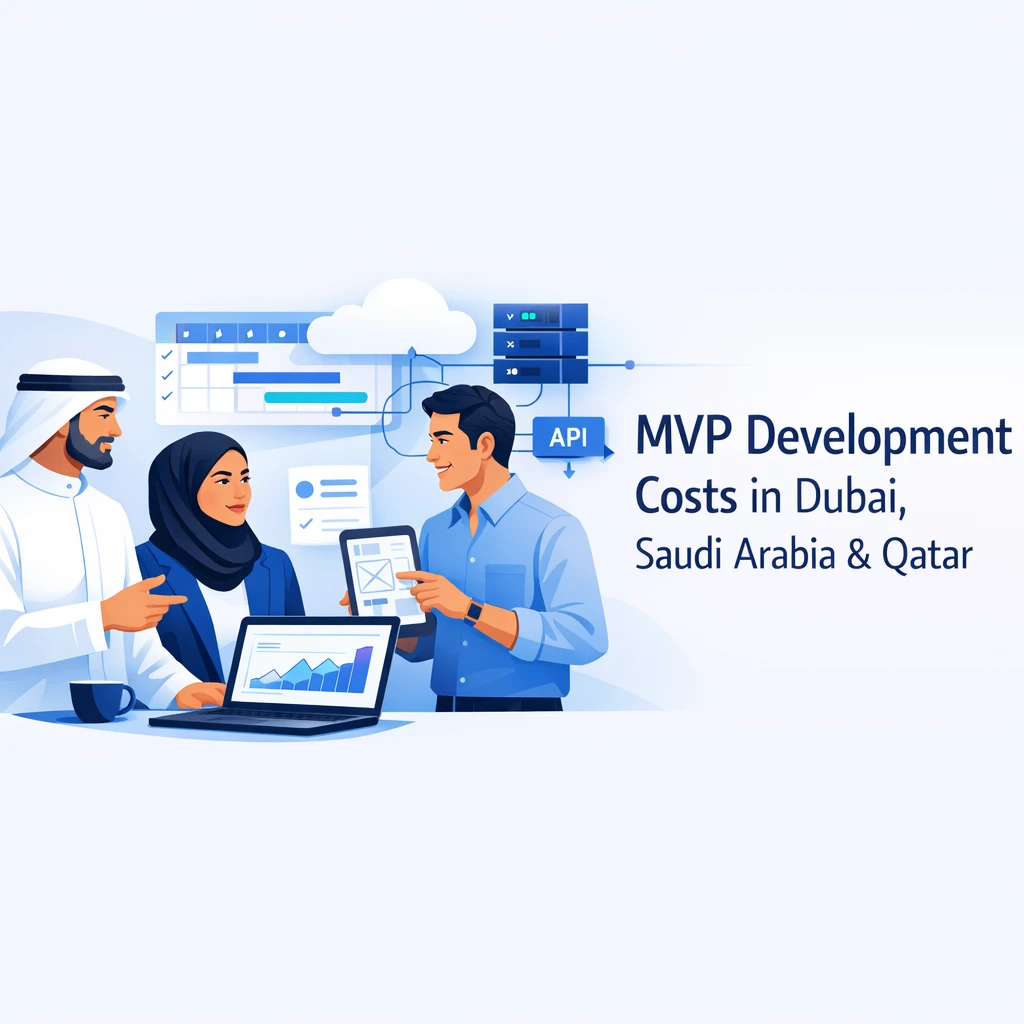
Understanding the costs, timelines, and GTM strategies for MVPs in the Gulf region—and how to scale to global markets—helps founders and executives make better bets on software bets that pay off quickly. This guide blends practical budgeting, delivery models, and real-world patterns from Triostack Technologies, a trusted global software development partner.
What is the Topic?
An MVP, or minimum viable product, is the smallest version of a product that still delivers core value to early adopters. For startups operating in Dubai, Saudi Arabia, Qatar, and broader Gulf markets, MVPs provide a structured path to test market fit, validate demand, and secure follow-on funding without over-investing upfront. This article focuses on MVP development cost, timelines, and go-to-market planning for technology solutions—ranging from web apps and mobile platforms to AI-enabled SaaS offerings—and translates those lessons into practical actions you can apply in the UAE, KSA, and Qatar while keeping a global delivery lens in mind.
Triostack Technologies approaches MVPs as both a product and a delivery challenge: how do you validate the idea quickly, how do you design for scale from day one, and how do you manage cost without compromising essential quality? The answer lies in disciplined discovery, modular architecture, modular delivery, and a remote delivery model that blends global talent with local market insights.
Why it Matters in 2026
Across the UAE, Saudi Arabia, and Qatar, public sector digitization, smart city initiatives, and accelerated e-commerce adoption push software projects to the forefront. For startups and SMBs, the regional markets present both opportunities and constraints:
- Regulatory environments are evolving with a greater emphasis on data privacy, localization, and cybersecurity requirements.
- The Gulf region boasts a strong talent pool and growing demand for cloud-native, scalable software solutions.
- Competition is global. An MVP built for Gulf users often serves as a launchpad for international rollouts.
- Costs can vary by city, vendor, and delivery model, making a precise budget and timeline essential for stakeholder confidence.
In 2026, the most successful MVPs are those that combine strategic product thinking with disciplined execution, leveraging remote delivery to access specialized skills while meeting local compliance and security standards.
Current Industry Challenges
- Rising development costs due to talent demand and inflation in the region.
- Difficulty in predicting feature scope for an MVP, leading to budget creep.
- Talent scarcity in niche domains like AI, data engineering, and cybersecurity.
- Need for robust security, privacy, and localization to comply with regional laws.
- Coordinating cross-border teams and time zones while maintaining fast feedback loops.
Triostack helps mitigate these challenges with a modular delivery approach, clear phase gates, and a remote delivery model that emphasizes transparency, governance, and measurable outcomes.
How the Technology Works
At a high level, MVP development combines product discovery, architectural planning, and iterative delivery. The core idea is to deliver a working product with the smallest set of features that validates a hypothesis, then rapidly improve based on user feedback. This approach is particularly effective for Gulf-region startups that aim to de-risk investments before expanding into international markets.
Key technological considerations include:
- Cloud-native architectures that enable scalable growth and faster time-to-market.
- APIs and microservices to enable modularity and future integration with CRM, ERP, or data platforms.
- Security-by-design practices to satisfy regional data protection expectations.
- Design systems and UI components that scale across devices and regions.
Architecture Overview
A typical MVP architecture for startups planning to scale globally includes:
- Frontend: responsive web UI and mobile apps (React/Vue/Nativescript or React Native).
- Backend: API layer with a modular microservices approach (Node.js, Go, or Python).
- Data: scalable databases (PostgreSQL, Redis, MongoDB) with appropriate data models for region-specific needs.
- Identity and Security: OAuth, MFA, and role-based access controls.
- AI/ML: optional components for personalization, automation, and analytics.
- DevOps: CI/CD pipelines, infrastructure as code, automated testing, and environment parity (local, staging, production).
Below is a simplified architectural diagram to illustrate the high-level layers and data flows.
Step-by-Step Workflow
Adopt a practical, phased approach from discovery to deployment. This workflow is designed to be replicable across Gulf markets and can be scaled for global rollouts.
- Discovery & Strategy (2–4 weeks): Define problem statements, target users, success metrics, and a high-level MVP scope. Conduct risk analysis and compliance checks for the UAE, KSA, and Qatar as well as export markets.
- UX/UI & Prototyping (2–4 weeks): Prioritize features, build wireframes, and validate user flows with stakeholders and potential customers.
- Architecture & Tech Stack Finalization (1–2 weeks): Decide on cloud provider, data models, and integration points.
- Development Sprints (8–16 weeks): Iterative delivery with continuous feedback, automated tests, and regular demos.
- QA & Security Review (2–4 weeks): Security testing, performance checks, and localization verification.
- Deployment & Go-to-Market Prep (1–2 weeks): Staging validation, production rollout, and GTM readiness—pricing, positioning, and launch plan.
Triostack follows Agile rituals with weekly demos, sprint planning, and clear acceptance criteria to keep stakeholders in the loop throughout the journey.
Business Use Cases
These scenarios illustrate the MVP patterns most commonly requested by Gulf-region SMBs and startups:
- Dubai Logistics Co. A parcel tracking and route optimization MVP to reduce last-mile delivery times and improve customer visibility.
- UAE Healthcare Clinic A patient portal and telemedicine MVP enabling appointment scheduling, remote consultations, and secure medical record access.
- Saudi Retail Business A bilingual e-commerce MVP with integrated payments, loyalty, and inventory management for multiple store formats.
- Australian Startup A data-driven analytics platform to demonstrate cross-border use cases with a Gulf-first deployment plan.
- UK SaaS Company An enterprise workflow automation MVP with multi-tenant architecture and regional data segregation.
Industry Applications
While MVPs are project-specific, certain industries in the Gulf and beyond share common patterns:
- Logistics & Transportation
- Healthcare & Telehealth
- Retail & E-commerce
- Financial Services & Fintech
- Education Technology
- Smart City & IoT Solutions
Benefits
- Faster validation of product-market fit with a constrained budget.
- Clear governance and measurable milestones to reduce risk and improve stakeholder alignment.
- Scalability from day one via modular architecture and cloud-native design.
- Access to global talent while respecting local regulatory and market requirements.
Challenges
- Localization and regulatory compliance across UAE, KSA, and Qatar.
- Balancing feature completeness with the MVP principle to avoid scope creep.
- Ensuring data security and privacy, especially for healthcare and fintech use cases.
- Managing remote teams across time zones while keeping communication crisp.
Common Mistakes
- Over-scoping the MVP and missing the real test of market demand.
- Under-investing in UX or security, which hurts adoption and trust.
- Skipping a formal go-to-market plan in the pursuit of rapid development.
- Underestimating integration complexity with ERP/CRM systems used by Gulf enterprises.
Best Practices
- Define success metrics that tie to business impact (retention, revenue, cost-to-serve).
- Adopt a modular MVP design to enable quick pivots and feature phasing.
- Use a regional data strategy that respects localization and data sovereignty needs.
- Plan for security and compliance from day one, not as an afterthought.
Build vs Buy
For startups in Gulf markets, deciding between building in-house or outsourcing is a strategic choice that affects speed, cost, and control. The table below summarizes typical trade-offs.
| Aspect | Build In-House | Outsource / Engage a Partner |
|---|---|---|
| Time to first MVP | Longer due to hiring, onboarding, and ramp-up | Faster via experienced teams, defined processes |
| Cost to start | Higher upfront (salaries, benefits, tools) | Better managed, transparent milestones |
| Quality control | Dependent on internal skills | Quality built into sprint reviews and QA |
| Flexibility | Rigid if headcount is fixed | High flexibility to scale up or down |
Estimated Development Cost
Below are typical ranges for common MVP categories. Prices reflect typical Gulf-region engagement patterns with a regional focus, balanced by global delivery capabilities. Real costs vary by complexity, integrations, and regulatory requirements.
| Project Type | Typical Range (USD) | Notes |
|---|---|---|
| Business Website | 5,000 – 15,000 | Marketing site with CMS integration |
| Customer Portal | 10,000 – 40,000 | Login, profiles, dashboards |
| CRM | 15,000 – 100,000 | Lead management, sales automation |
| ERP | 40,000 – 200,000 | Finance, inventory, procurement |
| AI Chatbot | 5,000 – 25,000 | Rule-based to NLP-enabled |
| AI Automation | 15,000 – 80,000 | Workflow automation & insights |
| SaaS MVP | 20,000 – 80,000 | Multi-tenant architecture |
| Enterprise Web App | 30,000 – 200,000 | Complex workflows, integrations |
Pricing factors include scope stability, number of integrations, data governance requirements, localization needs, and security/compliance considerations. Budget buffers of 10–20% are prudent for Gulf-region MVPs facing dynamic regulatory landscapes.
Recommended Technology Stack
A practical stack for Gulf-market MVPs balancing speed and scale includes:
- Backend: Node.js, Go, or Python microservices
- Mobile: React Native or Flutter for cross-platform apps
- Data & Storage: PostgreSQL, Redis, MongoDB
- Cloud & Infra: AWS, Azure, or GCP with CI/CD pipelines
- AI/ML: Cloud-based ML services for personalization and automation
- Security & Compliance: OAuth2, MFA, encryption at rest and in transit
Triostack brings experience across fintech, healthcare, logistics, and retail, enabling teams to select a pragmatic stack that aligns with regulatory expectations and go-to-market plans.
Future Trends
- GPDR-like and local privacy frameworks will become more prominent in Gulf markets, driving data localization considerations.
- AI-assisted software development and low-code platforms will accelerate MVP delivery without sacrificing quality.
- Edge computing and IoT will enable more capable field deployments in logistics and smart city projects.
- Multi-cloud and hybrid cloud strategies will become common to meet regional resilience requirements.
How Triostack Delivers Projects Globally
Triostack Technologies operates with a distributed delivery model designed for speed, quality, and governance. We support clients in Dubai, Abu Dhabi, Riyadh, Jeddah, Doha, and across global markets by combining the benefits of offshore excellence with local-market awareness.
- Custom Software, Web Development, and Mobile Apps tailored to Gulf-market requirements
- AI Development, Machine Learning, and data-driven product capabilities
- CRM, ERP, and SaaS solutions with scalable architecture
- Cloud Migration, DevOps, and CI/CD automation
- UI/UX design, API Development, and Dedicated Teams
- QA, Maintenance, and Technical Consulting
Triostack emphasizes a pragmatic balance of speed, cost, and quality. By blending global engineering practices with regional market insights, we help startups and SMBs reach their first milestone and prepare for scale.
REMOTE DELIVERY: How Triostack Delivers Projects from India
Many Gulf-region clients benefit from remote delivery hubs in India, which offer access to a deep talent pool, strong engineering quality, and flexible team scaling. The model emphasizes clear governance, strong communication, and robust security practices to ensure a seamless experience for Gulf-based stakeholders.
Agile & Governance
- Flexible team models including dedicated teams and blended co-located setups
- Sprint planning, weekly demos, and sprint review cadences
- Product owners, scrum masters, and project managers aligned with Gulf-based stakeholders
Collaboration & Tools
- Slack, Teams, Zoom, Google Meet for real-time communication
- Jira, ClickUp for project management; GitHub/GitLab for code collaboration
- Azure DevOps and CI/CD pipelines; cloud staging environments for testing
- Documentation and knowledge transfer as part of the handover process
QA, Security, and IP
- QA across desktop and mobile platforms with automated tests
- Security scans, vulnerability management, and compliance checks
- NDA and clear IP ownership terms with all partners
Timezone Overlap & English Communication
We ensure meaningful overlap with Gulf business hours to enable timely feedback. English is used for all critical communications and documentation, with bilingual support when needed.
Dedicated Project Managers
Triostack assigns dedicated PMs to oversee timelines, budgets, and risk management, providing transparency and accountability throughout the project lifecycle.
Long-Term Support
Post-launch, we offer ongoing maintenance, feature enhancements, security updates, and performance optimization to ensure your MVP remains robust as you scale.
Why UAE businesses outsource development to India often comes down to: cost efficiency, a large talent pool, faster hiring, flexible team scaling, high-quality engineering, robust communication, and the ability to maintain strong governance and data security across borders.
CASE STUDIES
Below are realistic, anonymized examples of how MVPs were conceived, built, and launched. Details are representative, not client-specific, and illustrate outcomes rather than proprietary facts.
Case Study 1 — Dubai Logistics Company (Anonymized)
Challenge: A regional logistics operator needed a real-time parcel tracking MVP with route optimization and customer-facing dashboards to improve last-mile delivery visibility. Approach: Discovery workshops, a modular microservices architecture, and a data pipeline that ingested vehicle telematics and order data. Built a bilingual web portal and mobile app within 14 weeks, with a phased rollout to 20% of routes first as a pilot.
Outcome: 18% improvement in on-time delivery, higher customer satisfaction, and a foundation for subsequent AI-driven routing optimizations.
Case Study 2 — UAE Healthcare Clinic (Anonymized)
Challenge: A clinic sought a patient portal for appointments, telemedicine, and secure medical records sharing, with strict privacy controls and regional compliance.
Approach: A privacy-by-design MVP with role-based access, appointment scheduling, secure video visits, and encrypted storage. Used a cloud-hosted, compliant stack with localization for Arabic and English.
Outcome: 40% reduction in admin overhead, improved patient engagement, and a scalable base for future integrations with an EHR system.
Case Study 3 — Saudi Retail Business (Anonymized)
Challenge: A multi-store retailer needed an MVP e-commerce platform with bilingual support, integrated payments, and an omnichannel inventory view.
Approach: Phased MVP with storefront, cart, checkout, and basic CRM integration. Included regional payment gateways and a lightweight ERP interface for stock updates.
Outcome: 15% lift in online sales within the first quarter and a streamlined process for store-wide inventory management.
Case Study 4 — UK SaaS Company (Anonymized)
Challenge: A UK-based SaaS provider wanted a Gulf-ready MVP with multi-tenant architecture and compliance to support a regional expansion.
Approach: Cross-border delivery with a Gulf-centric UI and localization, onboarding experiments, and scalable tenancy. Delivered within 12 weeks with a roadmap for additional modules.
Outcome: Early traction in the Gulf market enabling a successful pilot with a regional partner network.
Pricing & Go-To-Market Planning
Budgeting an MVP for Gulf markets requires aligning product scope with GTM investments. A well-structured MVP roadmap accounts for localization, regulatory checks, and early customer feedback loops. Here are practical considerations:
- Localization & localization QA: Arabic and English UI, currency, date formats, legal text.
- Security & compliance: data protection, access controls, audit trails.
- Integrations: payment gateways, ERP/CRM interfaces, and analytics platforms.
- Hosting & data residency: UAE data centers or AWS/Azure regions with data localization strategies.
- Go-to-market: pricing strategy, partner programs, onboarding, and support readiness.
Go-to-market planning should be run in parallel with MVP development. A practical GTM plan includes target segments, early adopters, value hypotheses, and a staged marketing and sales plan to capitalize on Gulf-region demand while preparing for international expansion.
Development Timeline Snapshot
The following timeline offers a practical framework for Gulf-market MVPs. Actual durations depend on scope, compliance, and integration complexity.
| Phase | Typical Duration | Key Deliverables |
|---|---|---|
| Discovery | 2–4 weeks | Problem statements, success metrics, MVP scope |
| UX/UI & Prototyping | 2–4 weeks | Wireframes, user flows, design system |
| Architecture & Stack | 1–2 weeks | Tech decisions, data model, integrations |
| Development Sprints | 8–16 weeks | Incremental features, demos, QA |
| QA & Security | 2–4 weeks | Security tests, performance, localization |
| Deployment & GTM Prep | 1–2 weeks | Production rollout, marketing readiness |
Note: The Gulf market often benefits from a staged delivery with a pilot to a limited user group, followed by a broader release. This approach reduces risk and informs market-specific adjustments before a full-scale launch.
Frequently Asked Questions
Q: How much does an MVP typically cost for a Dubai-based startup?
A: MVP costs vary by scope, but revised ranges for a Gulf-market MVP often fall in the 20,000–80,000 USD range for a middle-complexity product. Simple website MVPs sit around 5,000–15,000 USD, while more integrated MVPs with CRM/ERP touchpoints can exceed 100,000 USD depending on the market readiness and regulatory requirements.
Q: How long does it take to build an MVP for the Gulf region?
A: Typical MVP timelines span 8–20 weeks, with the realization that complex integrations or security requirements can extend timelines. An Agile approach with weekly demos helps maintain momentum and adjust scope quickly.
Q: Should I outsource to India or hire locally in the UAE/KSA?
A: Both options have merits. Offshore or nearshore delivery in India offers cost efficiency and deep technical expertise, while local Gulf teams provide proximity to market, regulatory familiarity, and closer collaboration. A blended model can balance speed, cost, and security.
Q: What is essential in a Gulf MVP go-to-market plan?
A: Clear value propositions for Gulf customers, a bilingual user experience, compliance with local data laws, a scalable pricing model, and a plan for onboarding and support that aligns with regional expectations.
Conclusion
For startups and SMBs in Dubai, Saudi Arabia, Qatar, and beyond, MVP development is a strategic exercise in balancing cost, speed, and quality. A well-planned MVP can de-risk investments, validate market demand, and establish a scalable foundation for growth. The Gulf region’s trajectory toward digital transformation increases the value of a disciplined MVP approach that can be launched quickly, iterated based on real user feedback, and expanded to global markets with confidence.
Triostack’s experience with global delivery, security-conscious architecture, and a focus on practical outcomes helps businesses plan, build, and scale their MVPs while staying sensitive to local market dynamics. By combining robust architectural practices, transparent collaboration, and a pragmatic cost model, we help startups and SMBs move from concept to a validated product with a clear path to scale.
If you're planning a similar software project, Triostack can help you design, build, deploy and maintain a scalable solution.
Reach out to discuss MVP plans, timelines, and budgets tailored to your region and goals.
Architecture, Workflow, and Deployment Diagrams
Internal Links & References
For related topics, see: Remote Delivery, Case Studies, and Pricing & GTM Planning.
Triostack Team
Technology Evangelist & Writer
Triostack Team is an experienced writer and technologist, exploring the intersections of AI, cloud architecture, and modern application development. Passionate about turning complex technical concepts into accessible insights.