MVP Development Cost for Startups in Australia: How Founders Can Launch Faster Without Overspending
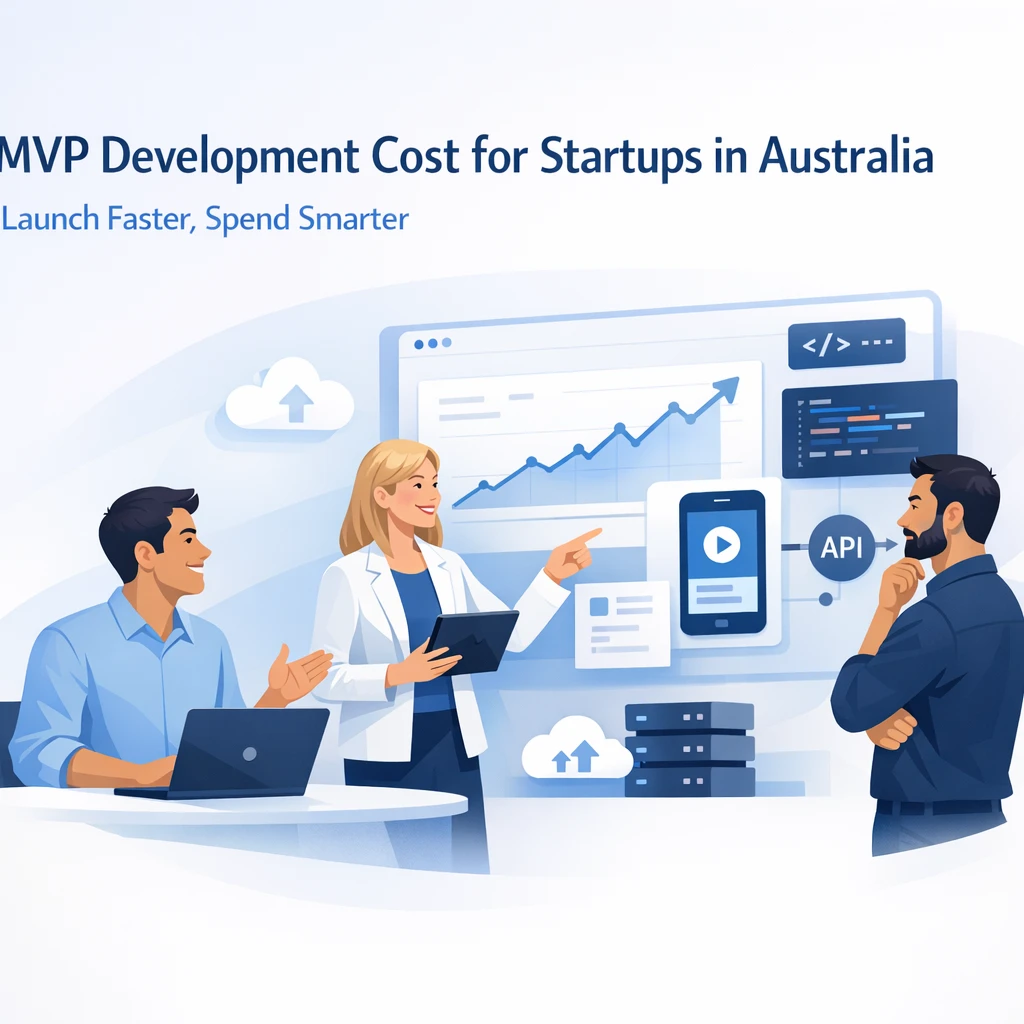
Australia’s startup ecosystem is vibrant and highly competitive. Founders are under pressure to validate ideas quickly, attract investors, and scale with disciplined budgets. A well-executed minimum viable product (MVP) can de-risk product-market fit without creating a costly, long-running project. This article explains how to estimate MVP costs, choose the right technology stack, and structure development for speed and scale — while showcasing practical, real-world strategies used by Triostack Technologies as a global software partner.
Introduction
For startups and growth-focused SMBs, MVP development is less about building a perfect product and more about validating critical assumptions with real users. The cost of MVP projects in Australia varies widely based on scope, architecture, and delivery model. By understanding cost drivers, adopting a lean MVP mindset, and leveraging global talent pools, founders can deliver value early and iteratively while preserving optionality for future evolution.
What is the Topic?
An MVP is the smallest, testable version of a product that demonstrates core value to users and stakeholders. It focuses on essential features, a pragmatic user experience, and a scalable architecture that supports future expansion. The MVP cost equation is driven by four major levers: scope, technology choices, team structure, and delivery model. In practice, a well-scoped MVP answers a handful of user problems, delivers measurable outcomes, and provides a baseline for growth.
Why it Matters in 2026
Several trends shape MVP cost considerations today:
- Global talent pools and offshore delivery models reduce labor costs without compromising quality when managed effectively.
- Cloud-native architectures and modular design enable faster iteration with lower risk.
- Security, data privacy, and regulatory compliance are increasingly integral to MVPs, especially in healthcare, fintech, and logistics segments.
- AI-enabled MVPs can unlock early value, but must be scoped carefully to avoid feature creep.
For Australian founders, the challenge is balancing speed, cost, and governance while maintaining the experience that local customers expect. A thoughtful MVP plan, complemented by a strategic remote delivery model, can shorten time-to-market and improve learnings from early customers.
Current Industry Challenges
Startups in Australia encounter several recurrent hurdles when pursuing MVPs:
- Scope creep and vague requirements leading to budget overruns.
- Overly ambitious feature sets that extend timelines beyond MVP goals.
- Underestimation of platform security, compliance, and data privacy needs.
- Fragmented technology choices that complicate maintenance and future scaling.
- Finding reliable technical leadership and product management in a tight budget.
Practical mitigation involves disciplined discovery, modular architecture, and a balanced delivery approach that combines local product leadership with capable offshore execution partners.
How the Technology Works
Each MVP has unique technical requirements, but most successful MVPs share a common architectural rhythm: a user-facing frontend, a scalable backend service layer, data storage, and integrations with essential external systems (payment gateways, CRM, analytics). Modern MVPs typically leverage:
- Web or mobile frontends built with React, Vue, or React Native for rapid iteration.
- API-first backends using Node.js, Python, Go, or .NET, often hosted on managed cloud platforms.
- Managed databases (PostgreSQL, MySQL, or NoSQL solutions) with appropriate indexing and security controls.
- Identity and access management, input validation, and monitoring baked in from day one.
- CI/CD pipelines, automated testing, and cloud-native deployment to enable repeatable releases.
The key is a lean implementation that supports feature validation while remaining adaptable for future enhancements.
Architecture Overview
Below is a representative MVP architecture that balances speed, scalability, and cost. This model is adaptable across industries including logistics, healthcare, retail, and SaaS platforms.
The diagram above illustrates a typical API-first approach where the frontend communicates with a backend layer via a secure API gateway. This separation makes it easier to iterate frontend features without destabilizing core services, while enabling scalable data management and secure integrations.
Mermaid Diagram: Architecture Overview
Step-by-Step Workflow
A practical MVP workflow helps teams stay focused and aligned. The following steps outline a lightweight path from concept to validated MVP:
- Discovery and Discovery Evidence: Confirm the core problem, define success metrics, and draft user stories with measurable acceptance criteria.
- Design Sprints: Rapidly prototype the user experience and validate with key stakeholders and a small set of customers.
- Architecture and MVP Scoping: Identify the minimal technical capabilities required to validate the business hypothesis.
- Development Sprints: Implement the core features in two-week iterations, prioritizing critical flows and data integrity.
- Quality Assurance: Run automated tests, exploratory testing, and security checks to mitigate risk early.
- Incremental Release and Feedback: Deploy to a staging environment, gather user feedback, and refine the backlog.
- Measure, Learn, Iterate: Use product analytics and customer feedback to decide the next steps.
Using a transparent sprint cadence with weekly demos helps maintain alignment with stakeholders and investors. Tools like Jira or ClickUp, combined with Slack or Teams for daily communication, keep the team visible and accountable.
Business Use Cases
Understanding the MVP’s business value accelerates prioritization. Consider these representative use cases:
- B2B CRM MVP: A lean customer relationship platform with contact management, lead tracking, and basic reporting to validate the sales process.
- Marketplace MVP: A two-sided platform with seller onboarding, product listings, and buyer checkout to test product-market fit.
- Operations Portal MVP: An internal or partner-facing portal with dashboards, task management, and payment integration to streamline workflows.
- Healthcare Portal MVP: Appointment scheduling, patient portal, and secure messaging to verify demand while meeting privacy requirements.
Industry Applications
Across industries in the UAE, GCC region, Europe, the United States, and Asia-Pacific, MVPs are commonly used to validate:
- Logistics and delivery optimization
- Healthcare and patient engagement
- Retail and e-commerce experiences
- Financial services and fintech basics
- Education technology and professional services
Benefits
- Faster time-to-market through focused scope and streamlined delivery.
- Cost control by concentrating on core value and deferring non-critical features.
- Risk reduction via incremental learning and early customer feedback.
- Scalability built-in through modular architecture and API-first design.
Challenges
Common MVP challenges include misaligned expectations, underinvested testing, vendor lock-ins, and security gaps. Strategically addressing these concerns during discovery and architecture design reduces the risk of budget overruns and delays.
Common Mistakes
- Overbuilding the MVP with non-essential features.
- Underestimating data governance and security needs from day one.
- Choosing a vendor solely on price rather than capability and process maturity.
- Lack of clear success metrics and measurement plans.
Best Practices
- Define a narrow MVP scope with explicit success criteria and a time-bound plan.
- Adopt an API-first, modular architecture to enable future scaling.
- Prioritize security, privacy, and compliance in MVP design.
- Leverage a blended delivery model to balance cost and quality, with strong product leadership.
Build vs Buy Comparison
| Aspect | Build | Buy / Outsource |
|---|---|---|
| Speed to MVP | Can be longer due to in-house ramp-up | Faster with established teams |
| Control & IP | Full control; IP owned by you | Depends on contract; IP specifics need clarity |
| Cost Certainty | Variable; potential hidden costs | Transparent, negotiated pricing |
| Quality Assurance | Dependent on team capability | Leverage vendor QA process and automation |
| Scalability | Must design for growth | Vendor often offers scalable patterns |
Estimated Development Cost
Costs vary by scope, team composition, and delivery model. The ranges below reflect typical MVP engagements for startups aiming for a proof of concept or initial market validation. All figures are USD and assume moderate complexity with standard regulatory considerations. In practice, a well-scoped MVP may fall below or exceed these ranges depending on specifics.
| Project Type | Typical Range | Notes |
|---|---|---|
| Business Website | USD 5,000 – 15,000 | Responsive design, CMS, basic analytics |
| Customer Portal | USD 10,000 – 40,000 | User accounts, dashboards, notifications |
| CRM | USD 15,000 – 100,000 | Lead management, pipeline, basic reporting |
| ERP | USD 40,000 – 200,000 | Core modules, integration with legacy systems |
| AI Chatbot | USD 5,000 – 25,000 | Rule-based to NLP-based capability |
| AI Automation | USD 15,000 – 80,000 | Workflow automation with minimal viable intelligence |
| SaaS MVP | USD 20,000 – 80,000 | Multi-tenant architecture, core features |
| Enterprise Web App | USD 30,000 – 200,000 | Complex workflows, integrations, security |
Pricing is influenced by factors such as feature scope, tech stack, security requirements, regulatory compliance, data migration needs, and the level of ongoing maintenance. A pragmatic approach is to invest in the MVP’s core differentiators and plan for iterative enhancements post-launch.
Factors Driving MVP Cost
Consider the following levers when scoping and budgeting:
- Platform: Web, mobile, or both? Native vs. hybrid approaches impact cost and time.
- Architecture: API-first design, data architecture, and security controls add up as complexity grows.
- Integrations: Payment gateways, CRM, ERP, and third-party services can significantly affect timeline and cost.
- Security & Compliance: Data privacy regimes (e.g., GDPR or local equivalents) and domain-specific controls.
- Team Composition: In-house vs. offshore or blended teams, including product managers, designers, developers, QA, and devops.
Recommended Technology Stack
Choosing the right stack is essential for velocity, reliability, and future growth. The following stack is commonly adopted for Australia-based MVPs due to balance of speed, cost, and scalability:
- Frontend: React or Vue for web; React Native or Flutter for mobile.
- Backend: Node.js (Express or NestJS) or Python (FastAPI) for rapid development; Go or .NET for performance-intensive needs.
- Database: PostgreSQL for relational data; MongoDB or DynamoDB for flexible schema needs.
- Authentication: Auth0 or open standards (OAuth 2.0, OpenID Connect).
- Hosting & Cloud: AWS, Azure, or Google Cloud with managed services to speed up delivery.
- CI/CD: GitHub Actions, GitLab CI, or Azure DevOps for automated builds and deployments.
- AI & Analytics: Prebuilt ML services, lightweight NLP, and analytics dashboards using open-source or cloud-native tools.
Triostack Technologies can tailor the stack to regulatory considerations, data residency requirements, and your team’s capabilities, ensuring a practical foundation for your MVP.
Future Trends
Looking ahead, MVPs will increasingly incorporate:
- AI-assisted product discovery and user analytics to validate features early.
- Microservices and serverless architectures to accelerate iteration cycles.
- Edge computing for latency-sensitive applications and data sovereignty considerations.
- Security-by-design and privacy-by-default as standard practices in MVPs.
How Triostack Delivers Projects Globally
Triostack Technologies operates as a global software development partner, delivering high-quality solutions to clients across regions including Dubai, UAE, Saudi Arabia, Qatar, Oman, Kuwait, Bahrain, the United States, Canada, the United Kingdom, Europe, Australia, and Singapore. Our model emphasizes remote delivery from India with a robust governance framework that ensures quality, security, and alignment with your business goals.
Key elements of our remote delivery approach include:
- Agile and Sprint Planning: Short iterations with clear acceptance criteria and stakeholder involvement.
- Weekly Demos: Transparent progress updates and course corrections based on feedback.
- Communication Tools: Slack, Teams, Zoom, Google Meet for daily standups and reviews.
- Project Management & Collaboration: Jira, ClickUp for backlog management and visibility; GitHub or GitLab for code collaboration.
- CI/CD & Cloud Staging: Automated pipelines and cloud-based environments for testing and staging.
- QA & Documentation: Structured QA processes and comprehensive release notes.
- Security & NDA: Strict security protocols and non-disclosure agreements to protect IP.
- IP Ownership & Long-term Support: Clear ownership terms and ongoing maintenance options.
- Timezone Overlap & English Communication: Teams in time zones with workable overlap and strong English communication skills.
- Dedicated Project Managers: Single point of contact to coordinate cross-functional teams and client stakeholders.
Why UAE businesses outsource development to India is rooted in several practical factors: cost efficiency, a large and highly skilled talent pool, faster hiring for specialized roles, flexible team scaling, high-quality engineering, robust communication practices, and a mature outsourcing ecosystem. This model enables Australian and Middle East-based clients to access world-class engineering without compromising on governance or security.
How Triostack Delivers Projects Globally: Remote Delivery Details
To illustrate the practicalities, here is a snapshot of how a Triostack project typically unfolds when delivered remotely from India:
- Agile Alignment: The client’s product manager participates in sprint planning and backlog grooming with a dedicated Triostack product owner.
- Weekly Demos & Feedback: Demos are conducted via Teams or Zoom, with clear acceptance criteria and revised story points as needed.
- Toolchain: Jira for issue tracking, ClickUp for collaboration, GitHub for code, and Azure DevOps for CI/CD pipelines where appropriate.
- Security & Compliance: NDA, data protection measures, and secure development practices are followed throughout the project lifecycle.
- Time Zone Overlap: Overlaps between India and client regions ensure real-time communication for critical decisions.
- Documentation & Handover: Comprehensive documentation and knowledge transfer at project milestones and post-launch support plans.
These practices are designed to deliver consistent quality while enabling rapid iteration, making Triostack a reliable partner for startups and SMBs pursuing MVPs across continents.
Case Studies
Below are anonymized, realistic implementation scenarios that illustrate how MVPs can be delivered effectively in different regions while maintaining strong outcomes. Names and figures are representative and not tied to specific public data.
Case Study 1 — Dubai Logistics Company
Challenge: The client needed a lightweight order-tracking and delivery scheduling MVP to improve route efficiency and customer transparency. The MVP focused on real-time shipment status, ETA notifications, and driver-app interfaces. Outcome: Time-to-market was accelerated by 8 weeks. The MVP validated the core need for real-time visibility, enabling the client to raise a subsequent round with validated product-market fit. Tech stack included React front-end, Node.js backend, PostgreSQL, and a small set of integrations with courier APIs.
Case Study 2 — UAE Healthcare Clinic
Challenge: A private clinic required a secure patient portal for appointment scheduling, messaging with clinicians, and consent management. The MVP emphasized privacy controls, audit trails, and secure data storage. Outcome: The MVP facilitated patient engagement and reduced manual administrative workload by streamlining appointment flows. Security was designed in from Day 1, including data encryption at rest and in transit, with role-based access controls.
Case Study 3 — Saudi Retail Business
Challenge: A regional retailer sought an e-commerce MVP to test online demand with limited inventory. The MVP included product catalog, shopping cart, payment integration, and basic analytics. Outcome: The MVP validated online demand at a lower cost and shorter timeline, informing a broader rollout plan. Stack included Vue.js, Node.js, and a lightweight CMS to enable rapid content updates.
Case Study 4 — Australian Startup
Challenge: An Australian startup aimed to validate a B2B SaaS idea with a single-tenant MVP offering core features and analytics. Outcome: Early customer feedback guided feature prioritization and pricing experiments, resulting in a solid product-market fit signal and a clear roadmap for scaling to multi-tenant architecture. The engagement emphasized governance, data security, and scalable infrastructure from the outset.
Case Study 5 — UK SaaS Company
Challenge: A UK-based SaaS company required a lean MVP to test an automated workflow platform. Outcome: The MVP demonstrated automation capabilities with a modular backend and an easy-to-customize UI, enabling rapid onboarding of pilot customers and a compelling case for investment.
Future Trends in MVP Development
As the software landscape evolves, MVPs will increasingly leverage AI, analytics, and automation to unlock early business value. Expect more emphasis on:
- AI-assisted product discovery and feature prioritization.
- Modular, service-based architectures that enable quick expansion with minimal risk.
- Security-first design and privacy-by-default in MVP workflows.
- Global delivery models that balance cost efficiency with robust governance and quality assurance.
Featured Drawings: Mermaid Diagrams
Remote Delivery: Why It Works for Australian Startups
Outsourcing development to established offshore teams — for example in India — can be a pragmatic approach for Australian startups seeking speed and cost efficiency. A well-governed remote delivery model can provide:
- Competitive cost structures without compromising quality.
- Access to a large pool of experienced engineers and specialists.
- Flexible team scaling to match market testing phases.
- Strong communication, governance, and security standards.
Triostack’s remote delivery model prioritizes clear governance, language proficiency, and robust project management. We emphasize time zone overlap, transparent reporting, and continuous improvement, with dedicated project managers ensuring alignment with client goals.
Case for UAE and GCC Clients: Why Outsourcing Fits Local Business Needs
UAE and GCC-based companies frequently look for speed to value and predictable budgets. Offshore delivery from India offers:
- Cost efficiency and faster hiring for specialized skills.
- Access to large engineering talent with domain experience in logistics, healthcare, and retail.
- Flexible team scaling to accommodate trial MVPs and subsequent expansions.
- High-quality engineering, aligned with strict security and compliance standards.
When combined with local product leadership and clear SLAs, offshore capabilities can complement regional teams to deliver robust MVPs with rapid feedback loops.
What’s Next: Building a Roadmap for Your MVP
To move from idea to MVP in Australia, consider the following actionable steps:
What problem are you solving and what will success look like in the first 90 days? Prioritize features that directly validate the hypothesis with real users. Decide whether to build in-house, outsource, or adopt a blended approach. Pick a stack that supports rapid iteration and future scaling. Define roles, responsibilities, risk management, and security controls. Outline the milestones that will determine whether to pivot, persevere, or expand.
Triostack can help you craft and execute this roadmap, offering strategic guidance, technical execution, and ongoing support to ensure a successful MVP.
FAQ — Frequently Asked Questions
- What is a realistic MVP budget for an Australian startup?
- A realistic MVP budget ranges from roughly USD 20,000 to USD 80,000 for a typical SaaS MVP with essential features and cloud hosting. More complex verticals like healthcare or financial services with regulatory requirements can rise toward USD 100,000 or more. The exact figure depends on scope, team structure, and the need for integrations.
- How long does MVP development usually take?
- Most MVPs can be launched within 8–14 weeks for core features, followed by iterative enhancements in subsequent sprints. A tight, well-scoped MVP can be delivered in 10 weeks if the team operates with a focused backlog and strong product leadership.
- Should I outsource MVP work or hire locally?
- Outsourcing offers cost efficiency and faster access to skilled talent, especially for non-core product work. A blended model with local product leadership and offshore development often yields the best balance of speed, quality, and governance.
- What about security and compliance for MVPs in healthcare or fintech?
- Security-by-design and privacy-by-default are essential from day one. Implement data protection measures, role-based access, encryption, and compliant data handling practices appropriate to the domain and jurisdictions involved.
Conclusion
For startups in Australia and across the regions you serve, an MVP is a powerful tool to validate assumptions, attract investment, and guide product strategy. The path to a successful MVP is less about building a perfect product and more about designing the smallest possible thing that delivers real value to users. By focusing on lean scope, modular architecture, and a pragmatic delivery model — including the option to leverage global talent with strong governance — founders can launch faster without overspending.
Triostack Technologies supports clients with Custom Software, Web Development, Mobile Apps, AI Development, Machine Learning, CRM, ERP, SaaS, Cloud Migration, DevOps, UI/UX, API Development, Dedicated Teams, QA, Maintenance, and Technical Consulting. We emphasize collaboration, transparency, and results, helping you navigate MVP costs while building a scalable digital product fit for global markets.
Frequently Used Keywords & Pointers
In case you’re scanning for quick references, here are practical pointers to consider:
- Define a crisp MVP scope with measurable success metrics.
- Choose an API-first, modular architecture for future expansion.
- Balance in-house leadership with offshore delivery for speed and governance.
- Plan for security, compliance, and data governance from Day 1.
- Use a transparent sprint schedule with weekly demos and stakeholder reviews.
Internal Links & Resources
For more on MVP strategies, explore related sections like Build vs Buy, Remote Delivery, and our Case Studies.
CTA — Subtle and Contextual
Businesses planning similar solutions often benefit from experienced software development partners like Triostack Technologies. If you’re planning a similar software project, Triostack can help you design, build, deploy and maintain a scalable solution.
Triostack Team
Technology Evangelist & Writer
Triostack Team is an experienced writer and technologist, exploring the intersections of AI, cloud architecture, and modern application development. Passionate about turning complex technical concepts into accessible insights.