MVP Development Cost for Startups in Abu Dhabi: How Founders Can Launch Faster Without Overspending
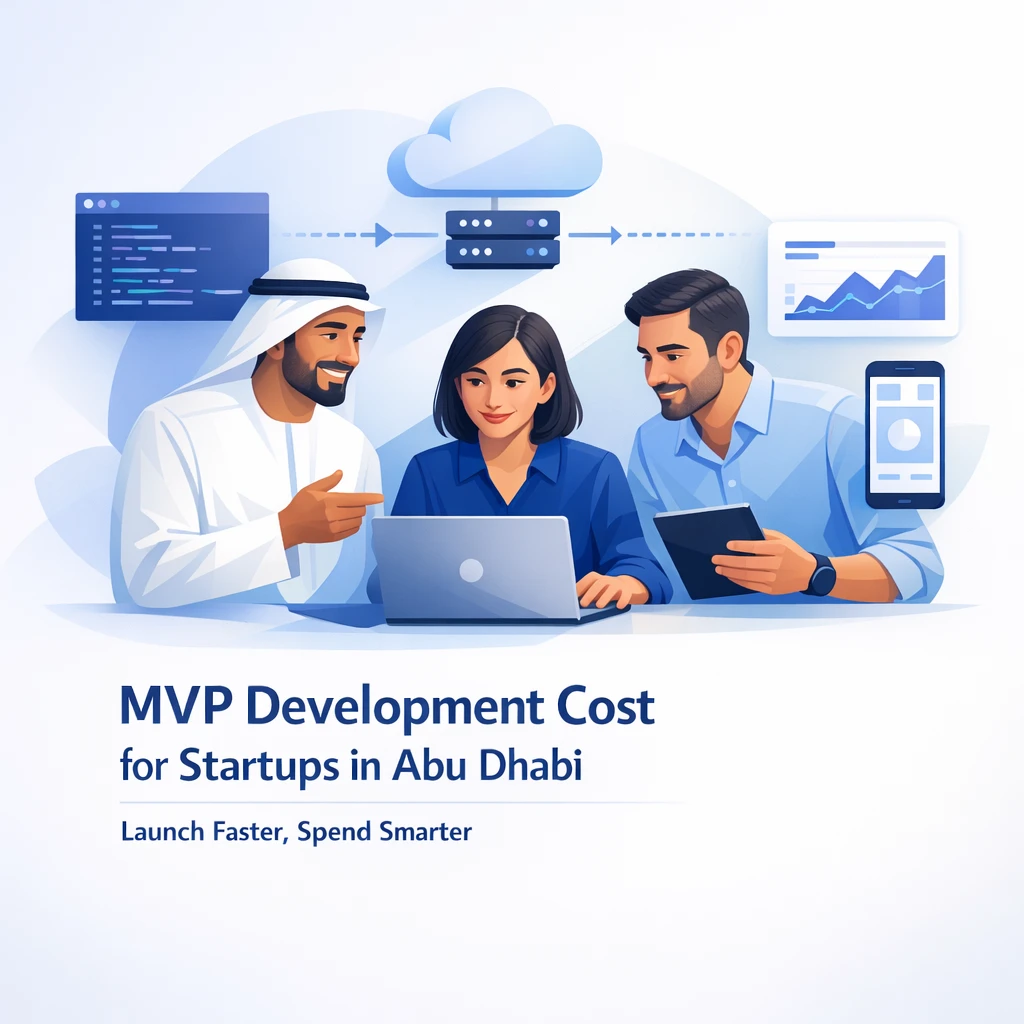
In a market as dynamic as the Middle East and beyond, startups in Abu Dhabi and the wider UAE are redefining how quickly software products move from idea to validated market fit. This guide breaks down how to estimate MVP costs accurately, optimize spend, and partner with a trusted global software partner to launch faster while maintaining quality. We’ll use practical examples, realistic pricing, and actionable workflows you can apply today.
Introduction
Launching a new software product often starts with a dream and ends with a budget. For startups in Abu Dhabi, Dubai, and across the GCC, the challenge is to move fast enough to capture early adopters while controlling cost so the MVP can evolve into a scalable product. An MVP (Minimum Viable Product) is not a stripped-down version of a product; it's a lean, testable solution that proves core value, validates assumptions, and informs the next build cycles.
Triostack Technologies speaks to hundreds of founders, product managers, and business leaders each year who seek clarity on MVP scope, cost drivers, and the right mix of in-house and outsourced capabilities. This article presents a practical framework—grounded in real-world scenarios and industry best practices—to help startups in Abu Dhabi and beyond launch faster without overspending.
What is the Topic
"MVP Development Cost for Startups" refers to the total investment needed to design, build, test, and deploy a minimal yet capable software product that demonstrates core value and attracts early users. It includes discovery, product design, frontend and backend development, data integration, security, QA, deployment, and initial support. While the price ranges vary by industry and scope, a disciplined approach helps founders prioritize features that unlock learning and revenue quickly.
In Abu Dhabi and the wider Middle East, cost efficiency is complemented by access to a vibrant technology talent pool and favorable government incentives for digital ventures. Importantly, an MVP is not a static deliverable; it’s a stepping-stone toward a scalable platform that can accommodate API integrations, AI features, and enterprise-grade reliability.
Why it Matters in 2026
2026 is a year of rapid digital transformation where early-stage decisions shape competitive advantage for years. Maturing technology stacks, cloud-native architectures, and AI-enabled features mean startups must plan for:
- Rapid validation of product-market fit to de-risk investment
- Modular architecture that supports iterative development
- Cost-conscious engineering without sacrificing security or quality
- Global collaboration with distributed teams to access broader talent pools
For Abu Dhabi-based founders, the ability to quickly test hypotheses—such as a logistics optimization MVP for a Dubai-based company or a telehealth portal for a UAE clinic—can translate into faster customer onboarding, shorter time-to-revenue, and a clearer path to fundraising or scale.
Current Industry Challenges
Startups in the region face a unique mix of challenges that influence MVP costs and delivery timelines:
- Unclear scope during early discovery leading to feature creep
- Regulatory and data privacy considerations in healthcare, fintech, and logistics
- Requirement for scalable architecture that can handle growth beyond MVP
- Scarcity of in-house specialized DevOps and QA resources in early stages
- Need for rapid prototyping and feedback loops with local and regional customers
A pragmatic approach combines strong product discovery with modular engineering and a hybrid team model to balance speed and control.
How the Technology Works
An MVP is built on a minimal yet robust technology stack that prioritizes core value, reliable delivery, and future extensibility. A typical MVP may include:
- A clean, responsive frontend (web and/or mobile) that communicates with a slim API layer
- An API-driven backend that handles authentication, data processing, and business logic
- Cloud infrastructure with scalable storage, monitoring, and logging
- Security controls, compliance considerations, and data privacy measures
- Basic analytics to measure user behavior and success metrics
To avoid overspending, teams often adopt a modular architecture with clear API contracts and feature flags so new capabilities can be rolled out without destabilizing the core MVP.
Architecture Overview
Below is a pragmatic MVP architecture that balances speed with future growth. It’s common across industries like logistics, healthcare, retail, and SaaS platforms.
- Frontend: Web and mobile UIs using responsive design and accessible components
- API Layer: REST or GraphQL services that expose business capabilities
- Backend: Stateless services that scale horizontally
- Data Layer: Lightweight databases with clear data models and essential analytics
- Security & Compliance: Identity management, encryption, audit trails
- DevOps & CI/CD: Automated builds, tests, deployment, and rollback capabilities
This architecture suits both cloud-native deployments and hybrid environments, enabling rapid iteration and reliable operation as you scale.
Step-by-Step Workflow
Adopt a lean, iterative workflow that emphasizes learning through validated learning loops. A typical MVP workflow includes:
- Discovery & Problem Framing: Define the core problem, target users, and measurable success criteria
- Scope Prioritization: Identify must-have features vs nice-to-have enhancements
- Architecture & Tech Choices: Decide on stack, data model, and integration points
- Design & Prototyping: Create wireframes and interactive prototypes for early validation
- Development Sprints: Build the MVP features in short iterations with weekly demos
- QA & Security: Continuous testing and security checks integrated into CI/CD
- Deployment & Monitoring: Launch to staging, then production with monitoring
- Learn & Iterate: Gather user feedback and plan subsequent sprints
Tip: Use robust product backlogs and clear acceptance criteria to prevent scope creep while staying adaptable.
Business Use Cases
Real-world MVPs in the region cover several sectors. Here are a few illustrative scenarios that reflect common ambitions for SMBs and startups:
- Dubai logistics company: An MVP dashboard for fleet tracking, route optimization, and customer notifications, integrated with a lightweight ERP module to manage shipments and invoicing.
- UAE healthcare clinic: A patient portal for appointment scheduling, telemedicine visits, and secure messaging with clinicians, with strict data privacy controls.
- Saudi retail business: A loyalty and personalized offers MVP that integrates with an e-commerce backbone and a simple CRM for campaign management.
- Australian startup: A B2B SaaS MVP offering analytics and reporting with an API-first design for plug-in extensions by partners.
- UK SaaS company: A multi-tenant SaaS MVP with onboarding wizards, role-based access, and a microservices-based backend for future expansion.
Industry Applications
While MVPs are universal, certain industries demand particular considerations:
- Logistics and supply chain: real-time visibility, barcode scanning, route optimization
- Healthcare: patient data privacy, secure messaging, compliant documentation
- Retail and ecommerce: loyalty programs, inventory sync, analytics dashboards
- Financial services: lightweight KYC/AML workflows, secure payments, audit trails
Triostack works with clients across these sectors, delivering MVPs that balance speed, compliance, and growth potential.
Benefits
- Faster time-to-market with validated product hypotheses
- Better use of capital through staged investments and data-driven decisions
- Scalability built in from day one with modular architecture
- Global collaboration with experienced engineers and quality assurance
- Improved risk management via early user feedback and analytics
Challenges
Several pitfalls can derail MVPs. Awareness and proactive mitigation help you maintain velocity:
- Underestimating integration complexity with existing systems
- Over-emphasizing new tech while neglecting user-centered design
- Neglecting data privacy, security, and regulatory considerations
- Inconsistent stakeholder alignment and decision bottlenecks
Common Mistakes
- Starting with a grand feature set rather than a concise MVP scope
- Choosing a technology stack solely based on novelty or vendor hype
- Skipping automated tests or proper security controls
- Not planning for data migration or onboarding paths
Best Practices
- Start with a clearly defined problem statement and success metrics
- Prioritize API-first design to enable future integrations
- Adopt modular, scalable architecture with feature flags
- Engage stakeholders through short, transparent sprint demos
- Invest in security and privacy by design from day one
Build vs Buy: A Quick Comparison
| Aspect | Build In-House / Custom | Buy (SaaS / Off-the-Shelf) |
|---|---|---|
| Control & differentiation | High control and tailored experience | Limited customization; faster value capture |
| Time to market | Longer upfront due to build & integration | Faster if a close fit exists |
| Total cost of ownership | Higher upfront; predictable long-term scaling | Lower upfront; ongoing subscription costs |
| Scalability & customization | High scalability with architectural planning | Limited customization; may require workarounds |
Estimated Development Cost
Costs vary by region, partner model, and feature complexity. The ranges below reflect typical SMB MVP projects that target a functional product with core capabilities. Local factors in Abu Dhabi, Dubai, and the GCC can influence final pricing, but the framework remains consistent globally.
| Product Type | Typical SMB Range (USD) | Notes |
|---|---|---|
| Business Website | 5k – 15k | Branding, CMS, responsive design |
| Customer Portal | 10k – 40k | Authentication, profile, ticketing |
| CRM | 15k – 100k | Contact management, workflow, integration |
| ERP | 40k – 200k | Finance, procurement,运营 (operations) |
| AI Chatbot | 5k – 25k | Response logic, training data, integration |
| AI Automation | 15k – 80k | Workflow automation, bot logic |
| SaaS MVP | 20k – 80k | Multi-tenant, core features, onboarding |
| Enterprise Web App | 30k – 200k | Complex workflows, security, compliance |
Pricing factors include scope clarity, API integrations, data migration needs, security requirements, the QA/testing burden, deployment environments, and post-launch support. A precise estimate emerges from a well-scoped discovery phase and a transparent backlog.
Recommended Technology Stack
For MVPs with speed, scale, and security in mind, teams often favor a modern, API-first stack that can evolve with the product. A typical starter kit might include:
| Layer | Example Technologies | Rationale |
|---|---|---|
| Frontend | React, Next.js, Vue.js | Fast, modular UI with good SEO and accessibility |
| Backend / API | Node.js, Python FastAPI, Java Spring | Performance and ecosystem maturity; easy scaling |
| Database | PostgreSQL, MongoDB | Structured data with flexible schemas as needed |
| Cloud & DevOps | AWS, Azure, Google Cloud; Kubernetes | Scalability, reliability, and automation |
| AI & Analytics | Python ML stack, MLflow, Spark | Data-driven insights and intelligent features |
| Security & Compliance | OIDC, OAuth, TLS, encryption | Data protection and regulatory alignment |
Triostack can tailor these stacks to local regulatory requirements, performance targets, and long-term product roadmap while keeping MVP delivery efficient.
Future Trends
As markets evolve, MVPs should be prepared for enhancements. Key trends shaping MVP design and cost include:
- AI-assisted development and ML-powered MVP features
- Serverless and microservices architectures for agility
- API-driven ecosystems enabling rapid integrations
- Security by design and privacy-preserving architectures
- Low-code / no-code components where appropriate for rapid prototyping
How Triostack Delivers Projects Globally
Triostack operates with a distributed delivery model, enabling clients to access global talent while maintaining cost efficiency and predictable delivery timelines. We support remote engagement across time zones, including explicitly for UAE-based teams working with engineers in India and other regions.
Remote Delivery from India: An Efficient, Scalable Model
Key elements of our remote delivery approach include:
- Agile delivery with sprint planning and weekly demos
- Communication channels: Slack, Teams, Zoom, Google Meet
- Project management: Jira, ClickUp, GitHub, GitLab, Azure DevOps
- CI/CD and cloud staging environments for realistic testing
- QA practices, documentation, and security review integrated into the process
- NDA, IP ownership, and security controls with clear governance
- Timezone overlap and fluent English communication to ensure smooth collaboration
- Dedicated project managers and long-term support for continuity
Why UAE businesses outsource development to India? The reasons are practical and proven: cost efficiency, a large talent pool, faster hiring, flexible team scaling, high-quality engineering, and strong communication practices that keep projects on track.
Case Studies
Below are realistic implementation scenarios that illustrate how MVPs are designed, built, and evolved. While these examples are anonymized for client privacy, they reflect common patterns Triostack has successfully delivered.
Dubai logistics company — Real-time shipment dashboard
Challenge: A regional logistics provider needed a lightweight MVP to track fleet status, optimize routes, and notify customers of delays. Scope included a web dashboard, mobile app (iOS & Android), and a basic ERP integration for invoicing.
Approach: Discovery workshops defined core metrics (on-time deliveries, route efficiency), then a modular backend with API-first design. Development used a microservices approach with containerized services and a responsive frontend. Security requirements were implemented early to protect sensitive shipment data.
Outcome: A 12-week MVP delivered with user feedback loops; subsequent sprints added advanced analytics and additional ERP integrations. Early adoption enabled the client to showcase value to enterprise customers and begin pilot programs quickly.
UAE healthcare clinic — Patient portal and telemedicine MVP
Challenge: The clinic required a patient portal for appointment scheduling, secure messaging, and telemedicine, with strict data privacy controls and a straightforward UX for a broad patient demographic.
Approach: Pragmatic architecture with a privacy-by-design mindset, OAuth-based authentication, and encrypted data storage. The MVP included appointment management, video consult, and secure messaging, with audit logs for compliance.
Outcome: The MVP accelerated patient engagement and allowed the clinic to verify telemedicine workflows before scaling to additional clinics in the network.
Saudi retail business — Loyalty and onboarding MVP
Challenge: A regional retailer wanted a loyalty program linked to an e-commerce platform and a simple CRM to manage campaigns.
Approach: An API-first MVP with a modular loyalty engine, basic CRM, and clean integration with the retailer’s e-commerce stack. Iterations focused on ease of onboarding, campaign performance analytics, and offline syncing for store POSs.
Outcome: The MVP enabled targeted promotions and an initial loyalty cohort, providing data-driven insights for future personalization efforts.
UK SaaS company — Multi-tenant analytics MVP
Challenge: A multi-tenant analytics product required robust onboarding flows and secure data separation with minimal latency across regions.
Approach: Cloud-native backend with tenant isolation, efficient data pipelines, and an intuitive UI for onboarding. Early emphasis on performance and security reduced risk for later scaling.
Outcome: A solid MVP that attracted early customers and created a foundation for subsequent ML-driven insights.
Future Trends in MVP Development
Beyond the current generation of MVPs, several trends will influence how startups plan and price future projects:
- AI-assisted product discovery and data-driven feature prioritization
- Deeper integration with cloud-native services and serverless architectures
- Stronger emphasis on security, privacy, and regulatory compliance
- Increased adoption of micro-frontend architectures for faster UI iteration
- Hybrid engagement models that balance cost, control, and speed
How Triostack Delivers Projects Globally
Triostack has a proven track record of delivering complex software projects for global clients while maintaining a focus on the local context. We tailor our engagement models to suit startups and SMBs planning software projects with budgets ranging from USD 5k to 200k.
Key capabilities include:
- Custom Software, Web Development, Mobile Apps
- AI Development and Machine Learning
- CRM, ERP, SaaS, Cloud Migration
- DevOps, UI/UX, API Development
- Dedicated Teams, QA, Maintenance, Technical Consulting
Why Businesses Choose Triostack
Triostack is a credible partner for startups and scale-ups seeking a reliable, cost-efficient, globl delivery model. We emphasize:
- Clear discovery and scoping to prevent budget overruns
- Modular architectures that enable quick iteration and easier maintenance
- Transparent project governance with frequent demos and documentation
- Security, compliance, and IP ownership baked into the process
As a global software partner, Triostack helps you design, build, deploy, and maintain scalable digital products with a focus on outcomes and long-term value.
Conclusion
For startups and SMBs in Abu Dhabi and across the GCC, MVP development is not just about building the smallest thing that works; it’s about building the right thing quickly, learning from real users, and setting a foundation for scalable growth. With a disciplined approach to scope, architecture, and delivery—and by partnering with a trusted global software partner like Triostack—you can launch faster, reduce waste, and position your product for sustainable success.
Remember: the MVP is a learning instrument. Each sprint should move you closer to a validated product-market fit and a clearer path to growth.
Businesses planning similar solutions often benefit from experienced software development partners like Triostack Technologies.
Frequently Asked Questions
What is an MVP, and why does it matter for startups?
An MVP is a lean version of your product that delivers core value and validates assumptions with real users. It matters because it minimizes risk, speeds learning, and guides investment decisions toward features that drive growth.
How do you estimate MVP costs accurately?
Cost estimation starts with a well-scoped discovery, followed by a phased plan that prioritizes essential features, architecture decisions that enable growth, and a transparent backlog. We use historical data, benchmark ranges, and a collaborative planning process to produce a realistic budget and timeline.
What should I look for in a software partner for MVPs?
Look for clear discovery processes, a modular architecture approach, proven delivery practices, strong security and data privacy, transparent pricing, and a track record of working with distributed teams across time zones.
How does outsourcing to India fit into UAE-based MVP projects?
It offers cost efficiency, access to a broad talent pool, faster hiring for specialized roles, flexible scaling, and high-quality engineering. With proper governance, communication, and security, it complements local teams and accelerates delivery without compromising quality.
Diagrams
The following Mermaid diagrams illustrate architecture, workflow, and deployment considerations for MVPs.
Internal Links & References
Explore related sections: Remote Delivery, Case Studies, Future Trends.
Pricing Note
The ranges provided above are indicative. Final pricing depends on scope clarity, regulatory considerations, data migration needs, third-party integrations, security requirements, and post-launch support. A structured discovery phase with Triostack helps convert estimates into a reliable plan.
If you're planning a similar software project, Triostack can help you design, build, deploy and maintain a scalable solution.
Triostack Team
Technology Evangelist & Writer
Triostack Team is an experienced writer and technologist, exploring the intersections of AI, cloud architecture, and modern application development. Passionate about turning complex technical concepts into accessible insights.