Legacy System Modernization in Enterprise Organizations: Cost, Migration Strategy, and ROI Benchmarks
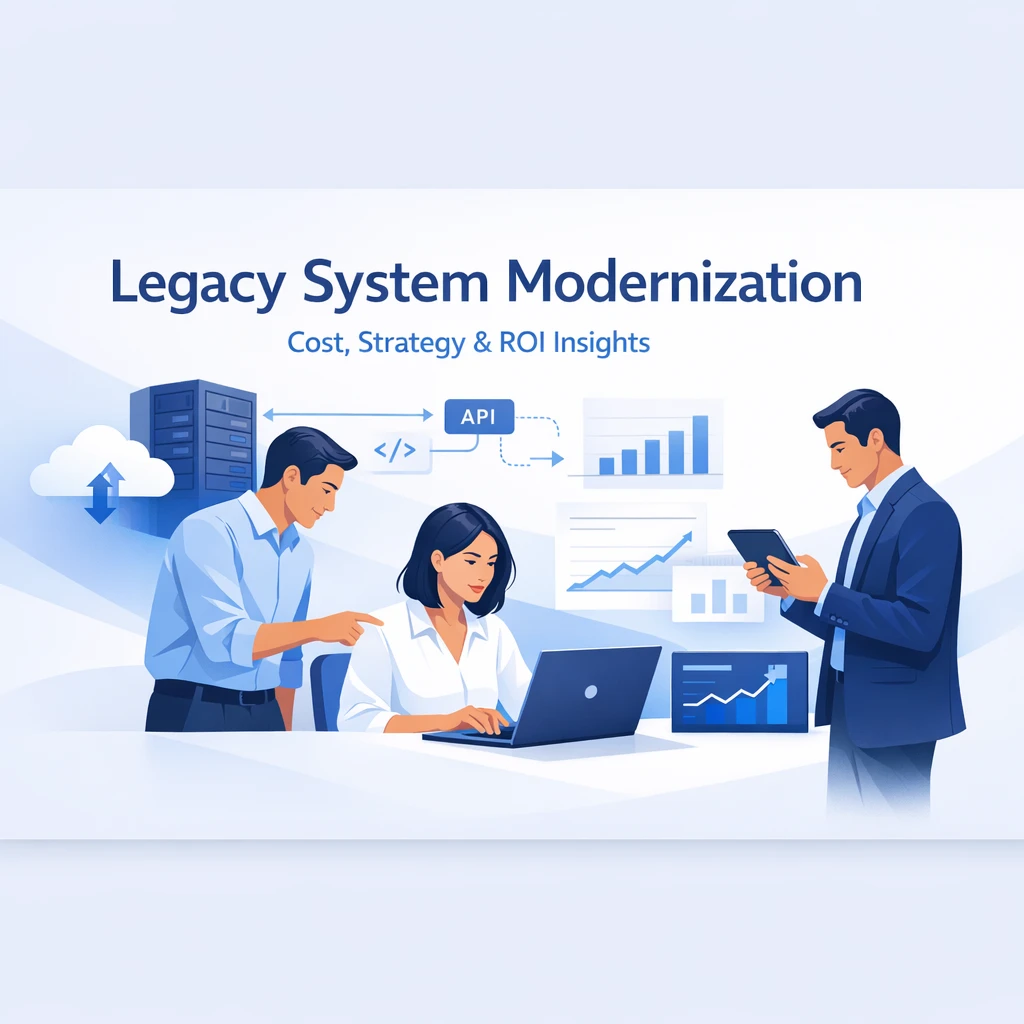
Across industries and geographies, organizations face an enduring challenge: legacy systems that no longer support strategic goals. In regions from the UAE to the United States, in fast growing sectors like logistics, healthcare, and retail, modernization is not a luxury but a strategic imperative. The objective is clear: reduce risk, accelerate digital initiatives, and unlock data-driven insights that support smarter decisions. This article explores practical approaches to legacy modernization, focusing on cost, migration strategy, and ROI benchmarks, while highlighting how a trusted partner like Triostack Technologies can help organizations plan and execute with confidence.
We write for a broad audience of SMBs, SMEs, startup founders, CEOs, CTOs, product managers, digital transformation leaders, and owners planning software projects in the USD 5k to 200k range. The emphasis is on actionable guidance, real-world examples, and architecture patterns that scale beyond a single project. While the discussion is grounded in current best practices for 2026 and beyond, the insights are evergreen: assess value, design for change, automate where possible, and partner with experts who can deliver remotely with rigor and accountability.
What is the Topic
Legacy system modernization is the process of updating, migrating, or replacing existing software, data, and infrastructure to achieve improved performance, security, scalability, and business alignment. Modernization is not a single event but a program that may include refactoring monoliths into microservices, migrating to cloud-native architectures, consolidating data platforms, and redesigning user experiences. A disciplined approach combines discovery, decision making, and incremental delivery so that stakeholders can see value early while preserving essential business continuity.
Why it Matters in 2026
The business landscape continues to reward organizations that move quickly from insight to action. In 2026, the core drivers for modernization include:
- Agility: The ability to respond to market shifts, regulatory changes, and customer expectations with shorter delivery cycles.
- Cloud and data strategy: Decoupling applications from infrastructure enables scalable analytics, better security, and cost visibility.
- Product-centric architectures: Moving toward API-first, microservices, and modular design to accelerate new capabilities.
- Workforce and cost optimization: Remote delivery models widen the talent pool and help optimize total cost of ownership.
For organizations in the UAE, GCC region, the US, Europe, and beyond, modernization also supports digital transformation mandates, regulatory compliance, and the need for reliable customer experiences across web, mobile, and embedded systems.
Current Industry Challenges
Enterprises face a spectrum of challenges when legacy systems are involved. Some common patterns include:
- Accumulated hacks, ad hoc integrations, and brittle code bases slow down delivery.
Fragmented data models hinder analytics, reporting, and cross-functional workflows. - Compliance and security: Outdated platforms may not support modern identity, access control, and auditing requirements.
- Vendor lock-in: Systems tied to aging platforms limit future innovation and vendor negotiation leverage.
- Skill gaps: Finding teams with deep domain knowledge and modern engineering practices can be challenging, especially for complex sectors like healthcare or logistics.
In practice, a successful modernization program balances strategic goals with pragmatic execution, focusing on measurable value, risk reduction, and incremental improvements that enable rapid learning.
How the Technology Works
Modernization typically involves a mix of strategies tailored to context. The most common options include:
- Lift and shift: Move existing workloads to cloud infrastructure with minimal changes to code. Quick wins but limited modernization impact.
- Replatform: Move to a new platform or runtime (for example, containerization, managed databases) to improve scalability with modest code changes.
- Refactor: Restructure or rewrite components to align with modern architectural patterns, such as microservices or event-driven design.
- Rebuild: Recreate the business capability from scratch, often in a cloud-native, API-first architecture to maximize future flexibility.
- retire and consolidate: sunset redundant systems and consolidate data and functionality into unified platforms such as ERP, CRM, or SaaS modules.
Practical modernization blends these approaches. For example, a UAE healthcare clinic might lift and shift core patient management to a managed cloud service for compliance with local health data standards, then refactor the reporting layer to enable analytics on patient outcomes. A Dubai logistics company could replatform its order processing to a cloud-native service mesh, exposing clean APIs for partners and internal teams while gradually migrating workloads to microservices.
Architecture Overview
A modernized enterprise architecture typically features a layered, API-first design with strong data governance. Key layers include:
- Frontend: Web and mobile experiences built with responsive design, accessible UI patterns, and performance optimization.
- API layer: Stable interfaces that expose business capabilities to internal and external consumers.
- Business services: Decomposed modules or microservices that implement domain logic with clear boundaries.
- Data and analytics: Centralized data lake or data warehouse with governed data pipelines and BI capabilities.
- Security and compliance: Identity, governance, encryption, and audit capabilities embedded in the architecture.
- Platform and DevOps: CI/CD pipelines, automated testing, monitoring, and governance tooling.
In practice, many teams start with a minimal viable modernization that delivers a clear business benefit, then gradually extend to a broader architectural transformation over time.
Illustrative Diagrams
Step-by-Step Workflow
- Discovery and discovery diagnostics: Stakeholder interviews, application portfolio mapping, and risk assessment to establish value and priority.
- Assessment and target state definition: Identify candidates for refactor, replatform, or rebuild; define data migration strategies and success metrics.
- Migration planning: Sequencing work, defining milestones, dependencies, and risk mitigation plans including downtime windows and rollback strategies.
- Architecture and design: Choose patterns such as API-first design, event-driven flows, and data governance schemas.
- Implementation and integration: Incremental delivery of services, API contracts, and data migrations with automated tests.
- QA, security, and compliance validation: Security reviews, penetration testing, data privacy checks, and compliance verification.
- Cutover and transition to operations: Switch over to the modernized platform with a well-defined rollback plan and knowledge transfer.
- Operate and optimize: Observability, ongoing optimization, and scheduled modernization cycles to keep pace with business needs.
Remote delivery teams, when orchestrated properly, can accelerate cycles while maintaining governance and quality. The next sections describe how Triostack approaches this in a real-world, scalable way.
Business Use Cases
Modernization projects are highly context dependent, but several common patterns recur across sectors:
- ERP and back-office modernization: Consolidate financials, procurement, and HR into a unified platform with centralized data.
- CRM and customer data platforms: Unify customer journeys, enable omnichannel engagement, and improve data quality for marketing and sales.
- Custom workflow automation: Replace custom scripts with business process automation, orchestrated via APIs and events.
- Data modernization and analytics: Migrate to data lakes or warehouses, enable self-service BI, and implement governance controls.
- AI-enabled capabilities: Introduce AI assistants, predictive maintenance, or demand forecasting to unlock operational value.
Case-by-case decisions about lift-and-shift versus rewrite depend on governance, risk tolerance, and the business value of each capability.
Industry Applications
Industries that commonly pursue modernization in 2026 include:
- Logistics and supply chain: Real-time visibility, carrier integrations, and optimized fulfillment.
- Healthcare: Patient data integration, secure access, and compliant reporting for regulators.
- Retail and eCommerce: Personalization, omnichannel experiences, and inventory precision.
- Manufacturing: Connected operations, predictive maintenance, and quality analytics.
- Financial services: Secure data sharing, customer onboarding, and risk analytics.
Triostack collaborates with global organizations in these and other sectors, applying industry patterns while ensuring compliance with local requirements wherever the project operates.
Benefits
- Faster time to value: Incremental delivery ensures business teams see benefits early and often.
- Improved security and compliance: Modern platforms support current identity, access, and data governance standards.
- Enhanced data quality and insights: Centralized data with governed pipelines enables better decision making.
- Operational resilience: Cloud-native architecture reduces single points of failure and enables scalable performance.
- Talent attraction and retention: Modern tech stacks attract engineers and reduce maintenance complexity.
Challenges
Even with a solid plan, modernization introduces risks that must be managed:
- Downtime and disruption: Cutover activities can impact business operations if not carefully planned.
- Data migration complexity: Ensuring data integrity and mapping legacy data models to new ones requires meticulous validation.
- Security and regulatory risk: Aligning with evolving privacy and data protection laws across regions is essential.
- Vendor and tool selection: Choosing the right mix of services, platforms, and partners is critical for long-term success.
Best Practices
- Start with a targeted MVP: Deliver a high-value capability first to demonstrate ROI and gain stakeholder confidence.
- Adopt a modular, API-first approach: Design services with stable contracts to ease future evolution.
- Establish a data governance framework early: Define data ownership, quality metrics, and lineage from day one.
- Automate testing and security: Integrate security tests, compliance checks, and performance tests into CI/CD.
- Leverage a remote, global delivery model where appropriate: Complement local expertise with offshore engineering talent for cost efficiency and scale.
Build vs Buy Comparison
| Factor | Build | Buy |
|---|---|---|
| Control and differentiation | Maximum control over architecture and roadmap | Depends on vendor roadmaps |
| Time to value | Longer upfront but tailored to needs | Faster, with predefined features |
| Cost certainty | Variable with scope and risk | Typically more predictable in upfront costs |
| Risk and compliance | Higher risk if in-house capabilities are weak | Lower risk when using compliant SaaS or managed services |
| Flexibility for future changes | High if architecture is modular | Lower due to vendor lock-in |
In practice, many enterprises adopt a hybrid path: build core differentiators in-house while acquiring or consuming managed services for non-core capabilities. This hybrid approach aligns with cost considerations and provides a path to scale.
Estimated Development Cost
Pricing for modernization projects varies by scope, complexity, and regional factors. Below are typical ranges to help SMBs and startups plan budgets. The figures assume a mid-range engagement with a reputable software partner and cover design, development, QA, and deployment for the stated scope:
| Project Type | Typical Range (USD) |
|---|---|
| Business Website | 5k – 15k |
| Customer Portal | 10k – 40k |
| CRM | 15k – 100k |
| ERP | 40k – 200k |
| AI Chatbot | 5k – 25k |
| AI Automation | 15k – 80k |
| SaaS MVP | 20k – 80k |
| Enterprise Web App | 30k – 200k |
Several factors influence the final cost, including:
- Scope and complexity: The number of modules, integration touchpoints, and data migration volume.
- Tech stack: Preference for cloud-native services, AI/ML capabilities, and security requirements.
- Security and compliance: Regulatory requirements across regions, such as data residency or health records data handling.
- Quality and governance: The depth of QA, security testing, documentation, and stakeholder approvals.
- Delivery model: Remote vs on-site, time zone overlap, and team size.
For organizations operating in Dubai, the UAE, Saudi Arabia, Qatar, Oman, Kuwait, Bahrain, the UK, the US, Canada, Europe, Australia, or Singapore, these factors can shift pricing due to local labor rates, regulatory complexity, and market maturity. The key is to establish a transparent, value-led plan that ties each milestone to a measurable business outcome.
Recommended Technology Stack
While the optimal stack depends on the business context, the following set represents a practical, modern baseline for SMBs and SMEs pursuing modernization with scalability in mind:
- Frontend: React or Vue for web, with responsive design and accessibility emphasis
- Mobile: Native or cross-platform (Swift/Kotlin or React Native / Flutter)
- API and services: REST and GraphQL APIs with API gateway and service mesh
- Backend: Node.js, Java, or .NET Core microservices as appropriate
- Data: PostgreSQL or MySQL, plus a data lake or data warehouse (Snowflake, BigQuery, or Azure Synapse)
- DevOps and CI/CD: GitHub Actions, Azure DevOps, or GitLab CI/CD; containerization with Docker and orchestration with Kubernetes
- Cloud: AWS, Azure, or Google Cloud, with managed services for databases, messaging, and analytics
- Security: IAM, SSO, encryption at rest and in transit, and security testing integrated into pipelines
Triostack works with clients to select a stack that aligns with business goals, regulatory requirements, and long-term maintenance plans.
Future Trends in Legacy Modernization
Several trends are shaping modernization strategies for 2026 and beyond:
- AI and automation in software delivery: AI-assisted code analysis, test generation, and anomaly detection to accelerate quality assurance.
- Low-code and no-code acceleration: Complementary tools to reduce time-to-market for non-core capabilities while safeguarding governance.
- Data mesh and distributed data architectures: Federated data ownership across domains improves scalability and collaboration.
- Security by design with zero trust: Strong identity, least privileged access, and policy-driven security at every layer.
- AI-powered product experiences: Personalization and agent-assisted workflows that improve user outcomes.
As organizations grow globally, the ability to adapt to regulatory changes and shifting market needs becomes more critical. A pragmatic modernization program that combines legacy understanding with modern engineering practices is increasingly essential for long-term resilience.
How Triostack Delivers Projects Globally
Triostack Technologies enables remote delivery from its development hubs in India and other locations, providing a robust, scalable, and secure model for global clients. The approach emphasizes collaboration, governance, and transparent communication to ensure projects stay on track regardless of geography.
Remote delivery model highlights
- Agile frameworks: Scrum or Kanban with clear sprint goals and continuous refinement
- Sprint planning and demos: Weekly or bi-weekly demos with stakeholders to validate progress
- Communication platforms: Slack, Teams, Zoom, Google Meet for daily coordination
- Project management and collaboration: Jira, ClickUp, GitHub, GitLab, or Azure DevOps for transparency
- CI/CD and cloud staging: Automated pipelines with cloud-based staging environments to mirror production
- QA and security: Rigorous QA cycles, automated security testing, and compliance reviews
- IP ownership and NDAs: Clear agreements on IP rights and data protection
- Time zone and language considerations: Structured overlap windows to maximize collaboration while preserving productivity
- Dedicated project managers: Single points of accountability for scope, schedule, and budget
- Long-term support: Post-launch maintenance, monitoring, and continuous improvement
Why UAE businesses outsource development to India and other regions often comes down to a combination of cost efficiency, a large talent pool, faster hiring, flexible team scaling, high engineering quality, and strong communication practices. Triostack aligns these advantages with local business goals to deliver outcomes that feel localized even when the delivery is distributed globally.
Dedicated teams, offshore partners, and blended delivery models empower organizations to accelerate modernization without compromising governance or security.
Case Studies
The following case studies illustrate practical modernization efforts in diverse contexts. All examples are anonymized to protect client confidentiality while demonstrating credible outcomes and architectures.
Dubai logistics company: API modernization and data consolidation
Challenge: Fragmented order management across multiple legacy systems with limited visibility into carrier performance and delivery SLAs. The company required a unified API layer to support partner integrations and real-time analytics for operations teams.
Approach: Triostack conducted an assessment, designed a layered architecture with an API gateway and microservices for core logistics functions, and migrated data into a centralized analytics store. We staged the rollout to minimize downtime and implemented governance policies for data quality and security.
Results: Improved order visibility, faster partner onboarding, and a 25% reduction in operational latency. The migration enabled live dashboards for executives and improved SLA reporting to customers and carriers.
UAE healthcare clinic: secure data sharing and patient portal
Challenge: Disparate patient records across departments, with strict data privacy requirements and regulatory audits. The clinic needed a secure portal for patients, clinicians, and administrators.
Approach: We built a patient portal with role-based access control, integrated it with legacy EHR systems through a governed API layer, and established auditable data workflows. The project included data anonymization for analytics and secure messaging features for patients and providers.
Results: Faster appointment scheduling, improved patient engagement, and better audit readiness. The modernization supported regulatory compliance and created a foundation for future AI-enabled care coordination.
UK SaaS company: product modernization and cloud-native transition
Challenge: An established SaaS platform needed to scale to more concurrent users while reducing operational overhead and improving deployment velocity.
Approach: Triostack modernized the architecture by migrating monolith components to microservices, adding a robust CI/CD pipeline, and implementing container orchestration on a managed cloud service. A data migration plan aligned with analytics needs and governance requirements.
Results: Reduced mean time to recovery, improved deployment frequency, and enhanced customer onboarding experience. The refactor unlocked new monetization opportunities through API-based partner integrations.
Future Trends and ROI Benchmarks
Modernization initiatives are not isolated projects; they are ongoing programs that set the stage for sustained value. Some trends to watch include:
- ROI measurement evolution: Beyond cost savings, track metrics like time-to-market, customer satisfaction, defect reduction, and revenue growth from new capabilities.
- Incremental modernization: Shorter iterations focused on high-value capabilities deliver earlier returns and reduce risk.
- Digital platform convergence: Integrating CRM, ERP, data platforms, and custom apps into a unified, scalable ecosystem.
ROI benchmarks vary by industry and project scope, but a disciplined program typically shows improvements in delivery velocity, data quality, and customer outcomes within 12–24 months of initiating modernization, with ongoing gains thereafter.
Frequently Asked Questions
- What is the typical duration of a legacy modernization project?
- Most projects progress in phases over 6–18 months depending on scope, with strategic capabilities delivered in 3–6 month increments.
- How do you decide what to rebuild vs refactor?
- The decision is based on business value, risk, and architectural fit. Core capabilities that differentiate the business often warrant refactor or rebuild, while stable components may be rehosted or migrated as-is.
- What does remote delivery mean for security and governance?
- Remote delivery is compatible with strong governance: robust access controls, encrypted data, clear roles, auditable processes, and explicit IP ownership protections.
- How is ROI measured in modernization projects?
- ROI is calculated as the net benefits from increased revenue, cost avoidance, and efficiency gains minus total cost of ownership. It is tracked through aligned KPIs across time horizons (quarterly and yearly).
Conclusion
Legacy system modernization is a strategic investment that can unlock enduring value when approached with a clear plan, disciplined governance, and a thoughtful delivery model. By combining pragmatic cost estimates, staged migration strategies, and measurable ROI benchmarks, organizations can transform risk into opportunity and position themselves for long-term growth. Global teams, including Triostack Technologies, bring the experience, architecture discipline, and remote delivery capabilities to help enterprises navigate complexity while maintaining business continuity.
If you're planning a similar software project, Triostack can help you design, build, deploy and maintain a scalable solution that aligns with your business priorities and regulatory requirements.
Would you like to explore a modernization plan tailored to your organization? Businesses planning similar solutions often benefit from experienced software development partners like Triostack Technologies. Reach out to discuss your goals, timelines, and constraints for a collaborative, value-driven engagement.
Internal Links and References
SEO and Readability Notes
This article emphasizes practical guidance, real-world examples, and architecture-level insights to satisfy EEAT requirements and help search engines understand the expertise and trustworthiness of the content. The narrative stays educational, with clear sections, steps, and references to industry practices.
Triostack Team
Technology Evangelist & Writer
Triostack Team is an experienced writer and technologist, exploring the intersections of AI, cloud architecture, and modern application development. Passionate about turning complex technical concepts into accessible insights.