How Much Does SaaS Product Development Cost in the United States? MVP to Scale Pricing for Founders
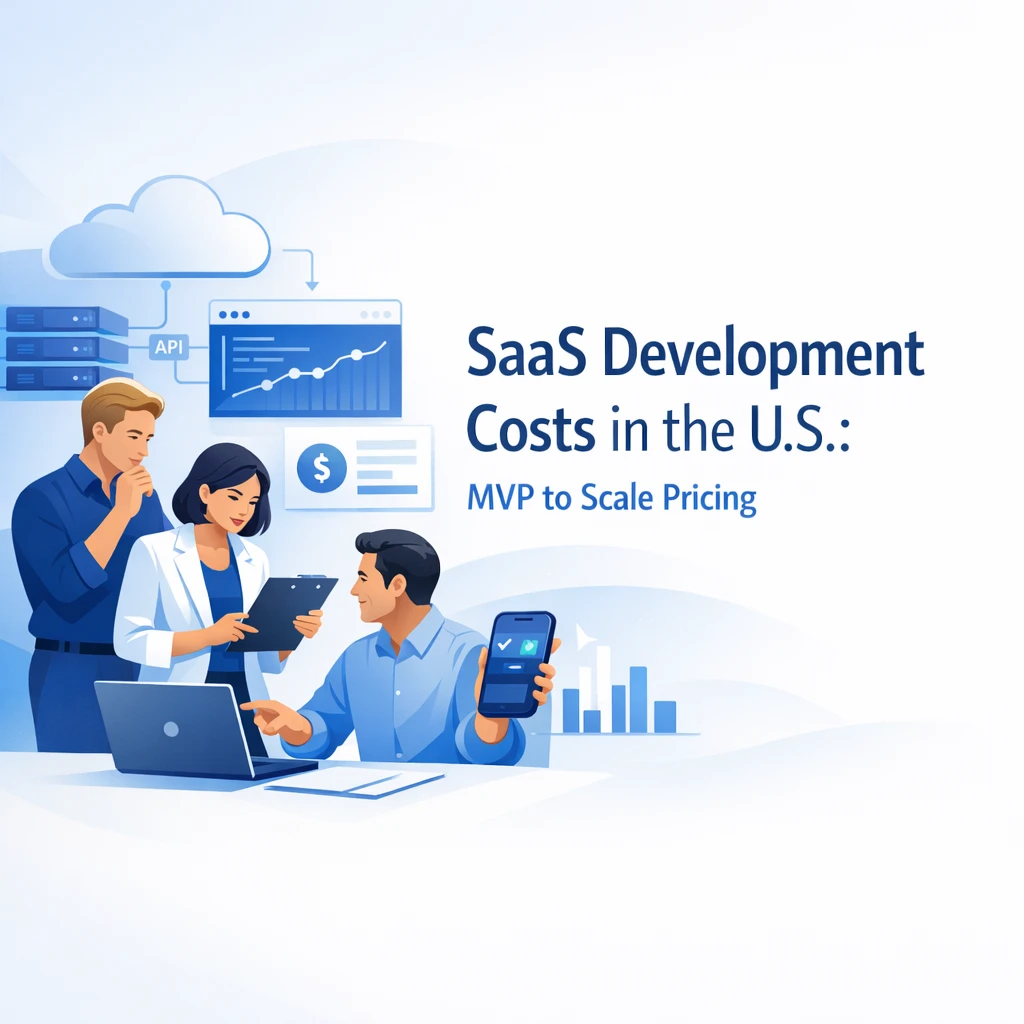
Understanding the cost path from an MVP to a scalable SaaS platform helps founders, CTOs, and product leaders make informed decisions. This guide explains what drives cost, provides practical budgeting frameworks, and shares global delivery considerations that keep quality high while optimizing for total cost of ownership. At Triostack Technologies, we’ve partnered with SMBs, SMEs, and startups around the world to translate ideas into robust, scalable software—without breaking the bank.
Introduction
Building a Software-as-a-Service product is a journey. Early MVPs test ideas, validate product-market fit, and establish the core value proposition. Scaling, meanwhile, introduces new challenges: multi-tenant architecture, data security, payment and compliance, performance under load, and long-term maintainability. In the United States—and with global teams—costs can vary widely based on scope, architecture choices, talent mix, and delivery model. This article focuses on SaaS product development costs from MVP to scale, with practical guidance for founders and leaders in the UAE, GCC, Europe, the UK, the Americas, and beyond. We’ll also share how to evaluate outsourcing options and how Triostack Technologies can help you design, build, deploy, and maintain a scalable solution.
What is the Topic?
The core question is simple: What does it cost to develop a SaaS product in the United States, from a minimal viable product to a fully scalable platform? In practice, the answer depends on architecture (monolith vs microservices), technology stack, multi-tenant considerations, security and compliance, data workloads, integration needs, and the level of polish required for a first paying customer. A pragmatic budgeting approach breaks the journey into phases: MVP (validate), Growth (expand features and user base), and Scale (performance, reliability, security, and global availability). Across these phases, cost is driven by four levers: scope, team composition, technology choices, and delivery model. Triostack emphasizes practical, phased planning, with emphasis on early risk reduction, repeatable architecture, and measurable outcomes.
Why it Matters in 2026
2026 brings a matured SaaS landscape where customers expect robust security, fast performance, and seamless integrations. The cost landscape has shifted due to talent dynamics, compliance costs, and the rise of AI-enabled features. Founders who plan for scalability from day one typically avoid rework and technical debt that can stall growth years later. Regions like the UAE, Saudi Arabia, and Europe increasingly demand regulated, secure, and regionally aware software, which can affect architecture decisions and cost. A disciplined approach to MVPs, cloud-native design, and strategic outsourcing can deliver high quality at a predictable price point.
Current Industry Challenges
- Uncertainty in scope: MVPs evolve into full platforms as customer feedback arrives, often expanding requirements mid-flight.
- Talent and wage volatility: US-based hiring for senior developers, architects, and security experts can be costly and time-consuming.
- Security, compliance, and data residency: Financial services, healthcare, and other regulated sectors require stringent controls and audits.
- Performance scaling: Multi-tenant SaaS must remain responsive as user counts grow and data volumes expand.
- Vendor and integration complexity: SaaS often depends on payments, identity, CRM, ERP, or analytics ecosystems.
How the Technology Works
Most modern SaaS platforms adopt a cloud-native, multi-tenant architecture with microservices or modular monoliths. Core elements include a secure authentication layer, a scalable API surface, business services for domain logic, data stores, and integration points with external services (payments, email, messaging, analytics). The following high-level diagram shows a typical stack and data flows.
Architecture Overview
Architecting for scale starts with modularity, clear API boundaries, and data isolation. A typical recommended approach is:
- Frontend: React or Vue for web, React Native or Flutter for mobile
- Backend: Node.js, Go, or Java with a focus on API-first design
- Data: relational database for core data, NoSQL for flexible or high-volume data
- Infra: cloud-native deployment, containerization, and automated CI/CD
- Security: identity, authorization, encryption at rest/in transit, and regular audits
Step-by-Step Workflow
Adopting a structured, repeatable workflow reduces risk and accelerates delivery. The following stages describe a pragmatic path from MVP to scale, with typical activities at each phase:
- Discovery: Define MVP scope, target user personas, and success metrics. Validate hypotheses with quick prototypes or smoke checks.
- Design: Create UX flows, data model sketches, and API contracts. Prioritize features by impact and effort.
- Build: Implement core modules, establish CI/CD, and ensure secure, testable code with traceable changes.
- Test: Execute functional, performance, security, and user-acceptance tests. Stress test for peak loads.
- Deploy: Release to staging, then production with blue/green or canary strategies as appropriate.
- Observe: Instrumentation, log aggregation, monitoring dashboards, and continuous improvement based on real usage.
Business Use Cases
Below are common scenarios where SMBs, SMEs, and startups typically invest in SaaS product development:
- Custom CRM or customer portal tailored to niche sectors (manufacturing, logistics, healthcare)
- Industry-specific ERP extensions for payroll, procurement, inventory, and analytics
- AI-powered analytics or automation tools integrated into existing workflows
- Vertical SaaS focused on compliance, data security, and regional requirements
Industry Applications
While the technology stack can be universal, industry context matters. Some sectors include:
- Logistics and supply chain: route optimization, carrier integrations, and real-time tracking
- Healthcare: patient management, telehealth workflows, and secure data sharing
- Retail and distribution: inventory control, pricing engines, and CRM integrations
- Financial services: secure payments, KYC/AML workflows, and audit trails
- Education and training: LMS, onboarding platforms, and analytics
Benefits
- Faster time-to-market through MVP-first delivery and iterative enhancement
- Scalable architecture designed to handle growing user bases and data volumes
- Improved security, compliance, and governance across data lifecycles
- Flexibility to customize features for specific segments while maintaining a common codebase
- Better collaboration with cross-functional teams via transparent milestones and weekly demos
Challenges
- Estimating scope during MVP while ensuring future scalability
- Maintaining consistency across rapidly changing requirements
- Balancing speed with robust security and compliance standards
- Managing third-party integrations and dependency risk
Common Mistakes
- Underestimating data migration and onboarding complexity
- Skipping UX research or accessibility considerations in MVPs
- Overbuilding features that don’t deliver immediate value
- Neglecting testing for security, privacy, and performance under load
Best Practices
- Start with a clear MVP scope aligned to measurable outcomes
- Adopt a cloud-native, scalable architecture with clear API boundaries
- Define security and data governance from day one
- Instrument the product with observability and automated QA
- Choose a delivery model that aligns with your budget, timeline, and risk tolerance
Build vs Buy: When to Build, When to Buy
Decision factors include customization needs, speed to market, total cost of ownership, and ongoing maintenance. The table below highlights typical considerations.
| Factor | Build | Buy |
|---|---|---|
| Customization | Highest—tailored to exact needs | Limited—vendor roadmap constraints |
| Time-to-market | Longer upfront design and build | Faster to launch with off-the-shelf components |
| Total Cost of Ownership | Higher upfront and ongoing maintenance | Lower upfront, recurring fees |
| Control & IP | Full control over code and IP | Limited control over source and roadmap |
Estimated Development Cost
Below are typical cost ranges for common SaaS components in the United States. These figures are illustrative and depend on scope, team composition, and vendor guidance. For founders and SMBs, these ranges serve as a planning reference rather than a precise quote.
| Software Component | Typical Development Cost (USD) |
|---|---|
| Business Website | 5,000–15,000 |
| Customer Portal | 10,000–40,000 |
| CRM | 15,000–100,000 |
| ERP | 40,000–200,000 |
| AI Chatbot | 5,000–25,000 |
| AI Automation | 15,000–80,000 |
| SaaS MVP | 20,000–80,000 |
| Enterprise Web App | 30,000–200,000 |
Pricing is influenced by scope clarity, UX complexity, data workloads, integration needs, and the level of security demanded by your industry. A well-scoped MVP can cost far less than a full enterprise rollout, while a carefully designed scale path protects quality and reliability as user adoption grows.
REMOTE DELIVERY: Triostack’s Global, Remote Delivery Model
Triostack supports remote delivery from its global centers, including teams in India, to serve clients worldwide. The model blends agile practices with transparent communication and disciplined governance to deliver consistently high quality at a compelling price point. Key elements include:
- Agile, with sprint planning and weekly demos to validate progress and adjust priorities
- Communication channels: Slack, Teams, Zoom, Google Meet
- Project management: Jira, ClickUp, GitHub, GitLab, Azure DevOps
- CI/CD, cloud staging, QA, and robust documentation
- Security, NDA, and IP ownership protections
- Timezone overlap and English language proficiency to ensure smooth collaboration
- Dedicated project managers for continuity and long-term support
Why UAE-based businesses outsource development to India? The reasons include cost efficiency, a large and mature engineering talent pool, faster hiring cycles, flexible team scaling, high-quality engineering, and strong communication. This combination enables startups and established firms to accelerate product delivery while maintaining strict quality standards.
How Triostack Delivers Projects Globally
Triostack positions itself as a global software partner that emphasizes architecture-driven delivery, robust QA, and long-term partnership. We work with you from discovery through deployment and ongoing maintenance, aligning with your business goals and regulatory requirements. Our offering includes:
- Custom Software and Web Development
- Mobile Apps
- AI Development and Machine Learning
- CRM and ERP Integrations
- SaaS Architecture, Cloud Migration, and DevOps
- UI/UX design, API Development, and Dedicated Teams
- QA, Maintenance, and Technical Consulting
Future Trends
- AI-enabled development: faster prototyping, smarter code generation, and smarter test data generation
- Serverless and edge compute to optimize cost and latency
- Security-by-design and continuous compliance as a product feature
- Observability-driven development with proactive resilience planning
- Platformization: building reusable components for faster scaling across regions
How Triostack Delivers Projects Globally: Remote Delivery Details
Triostack follows a structured remote delivery approach designed for global teams and time zones. The core components include:
- Agile planning and sprint cadences tailored to client time zones
- Weekly demonstrations to maintain alignment and momentum
- Dedicated project managers and clear documentation
- Regular security reviews and compliance checklists
- Transparent risk management and change control
From a UAE or GCC market perspective, outsourcing to experienced teams in India often delivers a compelling combination of cost effectiveness, scale, and quality with a strong emphasis on communication and governance. We’ve seen partners accelerate time-to-value while maintaining robust quality assurance and security standards.
Case Studies (Illustrative, anonymized)
The following case studies are anonymized scenarios illustrating how the MVP-to-scale journey can unfold for different industries and regions. They emphasize process, decision points, and outcomes rather than company names or exact figures.
Case Study A: Dubai-based logistics company — Route optimization SaaS
Challenge: A logistics provider in Dubai needed a cloud-based route optimization module to reduce fuel costs and improve delivery windows. The MVP focused on route planning for a subset of carriers and regions.
Approach: Triostack delivered a modular SaaS MVP with a microservices core, cloud-native deployment, and clear API contracts for carrier integrations. The team started with a lean data model and gradually extended to real-time carrier feed integration and analytics dashboards.
Solution Delivered: A secure, scalable MVP with multi-tenant capabilities, basic analytics, and integration hooks to existing TMS/ERP systems.
Outcomes (illustrative): Improved routing efficiency and data visibility, enabling faster decision-making and onboarding of additional carriers.
Case Study B: UAE healthcare clinic — Patient management CRM
Challenge: A regional healthcare clinic sought a patient management CRM that could handle appointment scheduling, telehealth, and secure data sharing with partners.
Approach: Triostack designed an HIPAA-conscious architecture with role-based access, audit logs, and end-to-end encryption. The MVP included patient records, appointment workflows, and telehealth integration with a compliant video service.
Solution Delivered: A compliant, scalable CRM integrated with existing EHR systems and a secure patient portal.
Outcomes (illustrative): Enhanced patient experience, improved data governance, and streamlined scheduling workflows.
Case Study C: Saudi retail business — E-commerce backend with SaaS features
Challenge: A regional retailer needed an e-commerce backend capable of handling multi-vendor catalogs, pricing rules, and a SaaS layer for partner storefronts.
Approach: Triostack implemented a robust product catalog, pricing engine, and an API-first backend enabling partner integrations. The MVP enabled a few storefronts and a clean upgrade path to scale.
Solution Delivered: A scalable e-commerce backend with a multi-tenant SaaS layer for partner storefronts and analytics dashboards.
Outcomes (illustrative): Faster partner onboarding and improved pricing flexibility and data insights for marketing teams.
Case Study D: Australian startup — AI-powered analytics MVP
Challenge: An Australian startup wanted an AI-powered analytics MVP to surface actionable insights from customer data with a scalable platform for growth.
Approach: Triostack delivered a data pipeline, model deployment, and an analytics UI with dashboards and reporting capabilities. The platform emphasized data quality, model monitoring, and security.
Solution Delivered: A working analytics MVP with AI-assisted insights and a roadmap for expanding data sources.
Outcomes (illustrative): Enabled rapid experimentation with AI features and validated product-market fit for a data-driven SaaS offering.
Case Study E: UK SaaS company — B2B CRM extension
Challenge: A UK-based SaaS company required a configurable CRM extension to serve mid-market clients with industry-specific workflows.
Approach: Triostack teamed to design a configurable product with plug-in modules, ensuring a clean upgrade path and strong security.
Solution Delivered: A flexible CRM extension with market-ready features and robust APIs for integration into existing customer ecosystems.
Outcomes (illustrative): Accelerated go-to-market for the client's vertical product and improved client retention through tailored workflows.
QA, Security, and IP Ownership
Quality assurance and security are not afterthoughts. They are built into the development lifecycle. Triostack adheres to security-first practices, including secure coding guidelines, regular threat modeling, automated tests, and periodic security assessments. IP ownership is clearly defined in NDAs and contracts, ensuring clients own their codebase and data assets upon project completion or as agreed in the engagement terms.
Frequently Asked Questions
- What drives the cost of a SaaS MVP in the US?
- Key drivers include feature scope, UX complexity, security and compliance requirements, third-party integrations, and the team’s composition. Early clarity on the minimal viable feature set reduces risk and cost overruns.
- How long does it take to build an MVP?
- Typical MVPs take anywhere from 8 to 20 weeks, depending on scope, platform targets (web, mobile), and the number of integrations. A phased plan helps manage time-to-value expectations.
- Is outsourcing a good option for a US startup?
- Outsourcing can be a strong option when it aligns with your budget, risk tolerance, and governance needs. A well-structured engagement with a partner like Triostack emphasizes transparency, clear milestones, and strong security practices.
- What about post-MVP scaling costs?
- Scaling costs typically grow due to increased data volumes, more users, advanced security requirements, and reliability investments. A scalable architecture and phased feature expansion help control cost growth.
- How do you ensure data security and compliance?
- Security-by-design, encryption, access controls, regular audits, SOC 2-type controls, and regulatory mapping for GDPR, HIPAA, or regional standards as needed.
- How does Triostack ensure remote delivery quality?
- By combining disciplined project management, robust tooling, time-zone-aware collaboration, and continuous feedback loops to maintain high quality while optimizing cost and speed.
Conclusion
Pricing SaaS product development from MVP to scale in the United States is not a single number. It’s a spectrum shaped by scope, architecture, team composition, and delivery model. Founders who invest in a clear MVP plan, a scalable architecture, and a thoughtful outsourcing strategy can accelerate time-to-value, reduce risk, and position their product for sustainable growth. Triostack Technologies brings a global perspective, combining deep software engineering with pragmatic project governance to help you navigate complexity—whether you plan to build in the US, or partner with a globally distributed team to optimize cost and accelerate delivery.
Whether you’re planning a SaaS MVP, a CRM extension, or a full-scale enterprise platform, the right partner helps you convert vision into a reliable product that customers will love.
Triostack Team
Technology Evangelist & Writer
Triostack Team is an experienced writer and technologist, exploring the intersections of AI, cloud architecture, and modern application development. Passionate about turning complex technical concepts into accessible insights.