How Much Does It Cost to Build a SaaS Product in the UK or UAE? MVP to Scale Pricing Guide
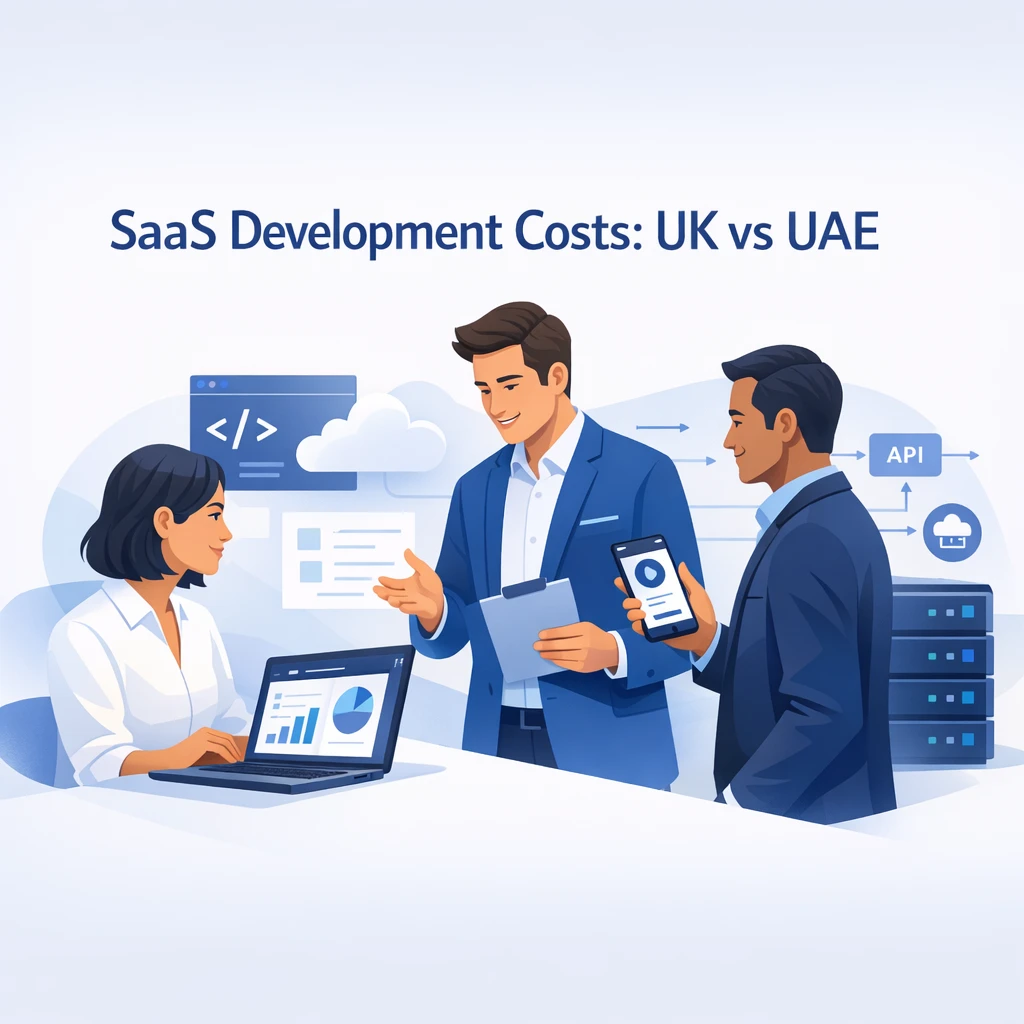
A practical, region-aware pricing guide for SMBs, SMEs, startups, and product leaders planning a SaaS journey—from MVP to scale—across the UK, UAE, and beyond.
Introduction
Software-as-a-Service (SaaS) remains a compelling model for businesses aiming to accelerate growth, improve customer experiences, and unlock recurring revenue. Yet pricing for SaaS projects is not one-size-fits-all. Costs vary by region, product complexity, team structure, compliance requirements, and the speed at which you want to scale. This guide walks SMBs, startups, founders, and technology leaders through realistic cost ranges for building a SaaS product—from an MVP to a scalable platform—focused on the UK and UAE markets, with practical takeaways for global delivery models.
Throughout, the emphasis is on actionable insight, not glossy marketing. You’ll learn how to estimate costs, understand the factors that drive spend, compare build vs buy options, and map a path from MVP to enterprise-grade SaaS—all while understanding how a global software partner like Triostack Technologies can help you execute with confidence.
What is the Topic?
The topic covers the entire lifecycle of building a SaaS product—from early discovery and MVP development to scaling, architecture modernization, and ongoing maintenance. It breaks down cost drivers, timelines, and the tradeoffs between in-house development, nearshore/offshore delivery, and managed services. The goal is to provide a clear, region-aware framework that helps leaders plan budgets, align stakeholders, and deliver value quickly.
Why it Matters in 2026
In 2026, speed to market remains a critical differentiator. The UK and UAE markets demand robust, secure, scalable SaaS solutions with strong user experiences. At the same time, global supply chains, talent availability, and regulatory expectations—especially around data sovereignty, privacy, and security—shape cost structures. Regional nuances matter: payroll costs, infrastructure prices, regulatory compliance overhead, and the level of onshore vs offshore engagement all influence the total cost of ownership.
Current Industry Challenges
- Rising talent costs in high-demand tech hubs, driving interest in remote or offshore delivery models.
- Security and compliance complexity for SaaS products operating in regulated jurisdictions (data residency, encryption, incident response).
- Escalating user expectations for performance, reliability, and UX, especially in sectors like healthcare, logistics, and finance.
- Need for modular architectures that support rapid feature delivery without sacrificing stability.
- Budget planning uncertainty in SMBs and startups navigating go-to-market timelines.
How the Technology Works (MVP to Scale)
A SaaS product typically evolves through distinct stages, each with its own cost profile:
- Discovery & MVP: Validate idea, core architecture, essential features, and a usable UX.
- Prototype to V1: Build the first production-ready version, establish CI/CD, security baselines, and monitoring.
- Scale-ready: Refactor for performance, add multi-tenancy, implement robust data models, and strengthen security/compliance.
- Growth & Maturity: Expand modules (CRM, ERP, ML/AI capabilities), optimize operations, and pursue enterprise-grade SLAs.
Costs at each stage reflect not only development work but also architecture decisions, cloud infrastructure, security, QA, and ongoing maintenance. In the UK and UAE, near-term regulatory readiness (for data, privacy, and industry-specific requirements) can influence both initial spend and long-run total cost of ownership.
Architecture Overview
Most modern SaaS products share a common architectural pattern: multi-tenant cloud back-end, API-first services, modular front-end, and a deployment pipeline that supports continuous delivery. Below is a high-level view of a typical SaaS stack you might expect to see in the UK and UAE markets:
- Frontend: Web (React/Angular/Vue) and mobile apps (iOS/Android) with a responsive UX.
- Backend: Stateless microservices or modular monoliths hosted in the cloud, with API gateways and service meshes as needed.
- Data: Scalable relational and/or NoSQL databases with strong tenancy isolation and data residency options.
- Security & Compliance: IAM, encryption at rest and in transit, audit logs, and compliance tooling.
- DevOps: CI/CD pipelines, automated testing, blue/green or canary deployments, and robust monitoring.
Step-by-Step Workflow
- Discovery & Requirements: Stakeholder interviews, user stories, and high-level architecture decisions.
- MVP Scope & Planning: Prioritize features with a measurable MVP scope; align on success metrics.
- Design & Prototyping: UX/UI design, information architecture, and an API contract.
- Development & QA: Iterative sprints, automation, performance testing, and security reviews.
- Launch & Observability: Production rollout, monitoring, incident response, and customer feedback loops.
- Scale & Optimize: Refactor, modularize, add advanced features, and optimize costs through cloud efficiency.
Business Use Cases
Consider these representative scenarios where a scalable SaaS helps SMBs and SMEs achieve faster time-to-value:
- A Dubai-based logistics firm needs a tracking portal for shipments with real-time status, automated invoicing, and GPS integration.
- A UAE healthcare clinic requires secure patient portals, appointment automation, and compliant data handling.
- A Saudi retail business wants an omnichannel CRM that connects online and offline channels with inventory management.
- An Australian startup expands to the UK with a multi-tenant SaaS platform serving small businesses.
- A UK SaaS company seeks a modular product with AI-powered analytics for mid-market customers.
Industry Applications
While the underlying technology remains similar, different sectors impose unique requirements:
| Industry | Typical SaaS Focus | Key Compliance/Regulatory Considerations |
|---|---|---|
| Logistics & Transportation | Fleet management, route optimization, real-time tracking | Data residency, secure data sharing with carriers |
| Healthcare | Patient portals, scheduling, EHR integration | HIPAA-equivalent controls in the region, data encryption |
| Retail & E‑commerce | CRM, inventory, omnichannel order management | PCI DSS, regional tax compliance |
| Financial Services | Fraud detection, risk analytics, customer onboarding | SDLC controls, data segregation, auditing |
Benefits of a Thoughtful SaaS Build
- Faster time-to-market with MVP-led validation and modular architecture.
- Scalability from day one, reducing the need for a large rewrite later.
- Improved customer retention through better UX, performance, and reliability.
- Better data leverage: analytics, AI/ML, and decision support as you scale.
Challenges
- Managing scope and avoiding feature creep during MVP and early iterations.
- Balancing speed with security and regulatory compliance.
- Maintaining performance as user load grows and data volumes increase.
- Aligning distributed teams across geographies and time zones.
Common Mistakes
- Underestimating ongoing hosting and maintenance costs after launch.
- Over-engineering for future features without MVP validation.
- Neglecting security and data protection in the initial design.
- Failing to set clear success metrics and exit criteria for MVP.
Best Practices
- Adopt an MVP-first, iteratively delivered plan with measurable milestones.
- Use microservices or modular monoliths with a clear API contract and strong versioning.
- Invest in automated testing, continuous integration, and continuous deployment (CI/CD).
- Prioritize security by design, data privacy, and compliance from day one.
- Design for global delivery: prep for multi-region deployments and localization.
Build vs Buy: A Quick Comparison
| Aspect | Build | Buy (Out-of-the-box) |
|---|---|---|
| Time to value | Longer upfront, higher customization | Faster go-to-market |
| Cost predictability | Depends on scope; potential for budget overruns | Predictable subscription costs |
| Customization | Unlimited (within constraints) | Limited by vendor capabilities |
| Control & data ownership | Full control | Vendor-hosted data; usually multi-tenant |
Estimated Development Cost (MVP to Scale)
Costs vary by product scope, region, team composition, and the level of onshore vs offshore delivery. The ranges below reflect typical market reality for SMBs aiming for a solid MVP and subsequent scaling in the UK, UAE, and comparable markets. All values are USD and assume a mid-range engagement model with a capable blended team.
| Product Component | Typical Cost Range (USD) | Notes |
|---|---|---|
| Business Website | 5k–15k | Marketing site, lead capture, content management |
| Customer Portal | 10k–40k | Login, profiles, dashboards, basic workflows |
| CRM | 15k–100k | Lead management, opportunity tracking, reporting |
| ERP | 40k–200k | Finance, supply chain, multi-department workflows |
| AI Chatbot | 5k–25k | Rule-based to AI-enabled responses |
| AI Automation | 15k–80k | Process automation, RPA-lite features |
| SaaS MVP | 20k–80k | Core multi-tenant platform, essential features |
| Enterprise Web App | 30k–200k | Comprehensive modules, custom integrations |
Note: These ranges include product design, core development, QA, and deployment. Cloud infrastructure costs (hosting, data transfer, backups) are separate ongoing expenses. Regions with stricter data residency needs or compliance obligations (for example, healthcare or financial services) can push costs higher due to additional controls and audits.
Recommended Technology Stack
The stack below reflects a pragmatic approach to building scalable SaaS with strong developer productivity, security, and multi-region support:
- Frontend: React or Vue with TypeScript; responsive design for desktop and mobile
- Backend: Node.js with NestJS or Python with FastAPI; microservice-friendly patterns
- Database: PostgreSQL for relational data; Redis for caching; optional NoSQL for specific workloads
- API & Integration: RESTful APIs, GraphQL where beneficial, API gateway
- Cloud & DevOps: AWS, Azure, or Google Cloud; Kubernetes for orchestration; CI/CD with GitHub Actions or Azure DevOps
- Security & Compliance: IAM, OAuth 2.0, encryption, logging, monitoring
- AI/ML: Python-based pipelines, ML services for analytics or recommendation engines
Future Trends
- AI-powered automation and intelligent workspaces that reduce manual tasks
- Edge computing-enabled SaaS features for latency-sensitive use cases
- Greater emphasis on data locality, sovereignty, and privacy-by-design
- Platform engineering to support faster feature delivery and resilient operations
How Triostack Delivers Projects Globally (Remote Delivery)
Triostack Technologies supports remote delivery from its global delivery centers, including teams in India and other regions, enabling cost-efficient, scalable development for clients in the UAE, UK, and worldwide. Key aspects of our remote delivery model include:
- Agnostic to location, but structured around time-zone overlap, clear communication, and agile rhythms
- Agile project management with sprint planning, weekly demos, and transparent progress tracking
- Collaboration tools: Slack, Teams, Zoom/Google Meet; issue tracking in Jira, ClickUp, GitHub, or GitLab
- CI/CD pipelines, automated testing, cloud staging, and robust QA processes
- Documentation, security, NDAs, IP ownership protections, and clear escalation paths
- Dedicated project managers, with options for long-term support and maintenance
Why UAE businesses outsource development to India and other offshore hubs? The top drivers include cost efficiency, a large talent pool, faster hiring, flexible team scaling, high-quality engineering, and strong communication practices. Triostack ensures strict adherence to data privacy requirements, regional compliance, and security standards while delivering cost-effective, high-velocity software programs.
Case Studies (Illustrative, Non-Specific Names)
Below are representative, illustrative scenarios demonstrating how regional SaaS projects can unfold. These are not real company statistics, but realistic patterns you might encounter when partnering with a global software provider like Triostack.
Case Study 1: Dubai-based Logistics Firm (Illustrative)
Challenge: A mid-market logistics player needed a real-time shipment portal, customs documentation automation, and invoicing workflows. The goal was to reduce manual data entry and accelerate delivery times.
Approach: Triostack implemented a multi-tenant portal with real-time tracking, API integrations with carrier APIs, route optimization, and automated billing. The engagement started with an MVP focused on core tracking, then expanded to include invoicing and analytics dashboards.
Outcome: Time-to-insight improved, operating costs reduced due to process automation, and customers reported better shipment visibility.
Case Study 2: UAE Healthcare Clinic (Illustrative)
Challenge: A private clinic sought a patient portal for scheduling, consent management, and secure patient data sharing with partners, while meeting local privacy standards.
Approach: Triostack delivered an MVP with patient authentication, appointment automation, and secure messaging. Subsequent iterations added EHR integrations and reporting dashboards for clinical management.
Outcome: Increased patient engagement, improved scheduling efficiency, and better data governance with auditable access controls.
Case Study 3: UK SaaS Startup (Illustrative)
Challenge: A UK-based startup needed a modular SaaS platform with CRM capabilities and analytics to target small businesses.
Approach: A phased build started with core CRM modules, then added analytics and AI-driven insights. Triostack structured the program for rapid iteration and scalable deployment across regions.
Outcome: Faster market entry, strong user adoption, and a clean path to enterprise features as the customer base grew.
Case Study 4: Australian Startup Expanding to Europe (Illustrative)
Challenge: An Australian startup required a global-ready SaaS platform with multi-region tenancy, localization, and security controls for new markets.
Approach: Triostack mapped data residency, implemented localization, and set up a regional deployment strategy with compliance checklists and automated testing across environments.
Outcome: Smooth international expansion with consistent performance and compliant data handling.
Cost Considerations for SMBs: What to Expect
Understanding the cost drivers helps SMBs plan budgets more accurately. Several factors influence the final price:
- Scope & Complexity: Number of modules, integrations, AI features, data models
- Team Composition: Frontend, backend, QA, design, DevOps, security specialists
- Regulatory Requirements: Data residency rules, regional compliance specifics
- Platform Strategy: On-prem vs cloud, multi-tenant architecture, scalability goals
- Delivery Model: Onshore-only vs hybrid nearshore/offshore teams
- Quality & Support: SLA levels, ongoing maintenance, and support windows
For references, a typical SaaS MVP might cost in the 20k–80k USD range, while a broader enterprise-grade SaaS could exceed 200k USD depending on features, security needs, and integration complexity. Regional factors such as local labor rates, hosting costs, and compliance overhead can shift these ranges by 10–40% in the UAE and UK markets.
Pricing Factors Explained
- Feature scope: Each feature adds development, testing, and integration costs. MVP focuses on the core value proposition.
- Security and compliance: IAM, encryption, audits, and regulatory mapping add costs but reduce risk.
- Cloud infrastructure: Hosting, data transfer, backups, and disaster recovery contribute to ongoing costs.
- Integrations: Connecting to external systems (ERP, CRM, payment gateways) requires adapters and ongoing maintenance.
- Localization: Multiple languages, currencies, and regional settings increase design and testing effort.
- Team composition: A balanced mix of product managers, designers, and engineers affects rates and velocity.
Putting It All Together: A Practical Roadmap
Start with a clearly defined MVP, validated by user testing in your target market. Plan for modular growth, design for region-specific compliance, and set up a robust DevOps pipeline from day one. This approach minimizes waste, accelerates learning, and positions you for scalable expansion across the UK, UAE, and global markets.
Frequently Asked Questions
- Q: How long does it take to build an MVP for a SaaS product?
- A: Typical MVP timelines range from 2 to 6 months depending on scope, clarity of requirements, and readiness of the core platform.
- Q: Is offshore development a good option for SaaS projects?
- A: Offshore or nearshore delivery can reduce cost and increase capacity, especially for routine development and QA. It requires strong governance, clear communication, and robust security practices, which Triostack supports through structured Agile processes and dedicated PMs.
- Q: What ongoing costs should I expect after launch?
- A: Cloud hosting, data transfer, security monitoring, maintenance, updates, and support. These typically run as a monthly TCO in the range of a few thousand to tens of thousands of USD, depending on scale and usage.
- Q: How do I choose between building vs buying components?
- A: Evaluate total cost of ownership, strategic differentiation, time-to-value, and risk. A blended approach—buy core capabilities and build unique modules—often delivers the best balance.
Conclusion
Pricing a SaaS project—from MVP to scale—in the UK, UAE, and nearby markets requires a careful balance of scope, architecture, security, and delivery model. Regions with strong digital ecosystems and strict compliance expectations demand deliberate planning, but they also offer a path to durable, scalable software products. By starting with a clear MVP, embracing modular architecture, and leveraging a disciplined delivery model—whether onshore, offshore, or a hybrid—businesses can maximize value while controlling risks.
As you consider your next SaaS initiative, remember that a seasoned partner can help you translate business goals into a pragmatic technical plan. Businesses planning similar solutions often benefit from experienced software development partners like Triostack Technologies. If you're planning a similar software project, Triostack can help you design, build, deploy and maintain a scalable solution.
Call to Action (Subtle)
For organizations exploring similar journeys, engaging with a global software partner can unlock speed, quality, and scale. Consider a discovery session to map your MVP roadmap, timelines, and budget expectations.
Businesses planning similar solutions often benefit from experienced software development partners like Triostack Technologies. If you're planning a similar software project, Triostack can help you design, build, deploy and maintain a scalable solution.
Triostack Team
Technology Evangelist & Writer
Triostack Team is an experienced writer and technologist, exploring the intersections of AI, cloud architecture, and modern application development. Passionate about turning complex technical concepts into accessible insights.