How Much Does CRM Development Cost in Qatar and Kuwait? A Decision-Maker’s Guide to Pricing and Scope
Introduction
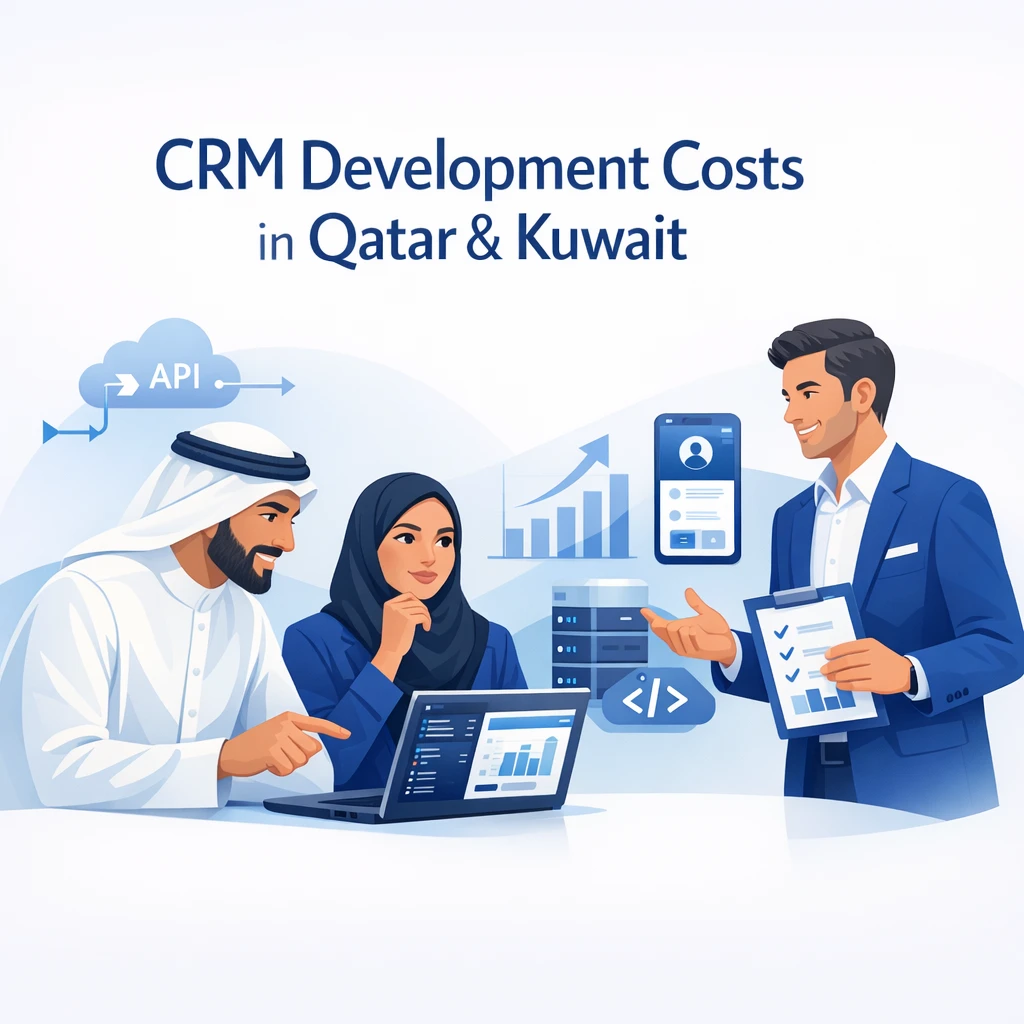
For many SMBs, SMEs, and startups in the Gulf region and beyond, a customer relationship management (CRM) system is a strategic investment rather than a simple IT project. When you plan CRM development in market environments like Qatar and Kuwait, you’re balancing multi-channel engagement, regulatory considerations, and the need for scalable architecture that grows with your business. This guide intentionally focuses on practical pricing guidance, scope decisions, and implementation pathways that help decision-makers project total cost with confidence — from USD 5,000 up to USD 200,000 and beyond.
Triostack Technologies approaches CRM development as a product-led, modular exercise. We emphasize outcomes, governance, and a clear path to value, while respecting a global delivery model that ensures quality, transparency, and predictable timelines. This article is educational first, with real-world examples and actionable steps to help you decide how to scope your CRM program for 2026 and beyond.
Note: Throughout this article, Triostack references are used to illustrate capabilities in a non-promotional context. Real-world decisions should be based on a formal discovery phase with a trusted software partner.
What is the Topic?
A CRM development project is the end-to-end process of designing, building, integrating, deploying, and maintaining a system that manages customer data, interactions, and lifecycle processes. In practice, CRM projects often include customer data modeling, contact and account management, marketing automation, service and support workflows, analytics, and API integrations to other systems such as ERP, e-commerce, and POS platforms.
Pricing varies with scope, geography, talent mix, and delivery model. In Qatar and Kuwait, currency considerations, local data privacy expectations, and the availability of skilled engineers influence both the total cost and the timeline. When planning from USD 5k to USD 200k, you’ll typically budget for discovery, core CRM features, integrations, hosting, security, and ongoing support.
Why it Matters in 2026
CRM is no longer a back-end data store. It’s a core driver of customer experience and revenue growth. Modern CRM platforms support real-time engagement across channels, provide analytics for decision-making, and enable automation that reduces manual work. In 2026, leaders expect:
- Unified customer data across marketing, sales, and service
- Seamless integrations with ERP, e-commerce, and support platforms
- Security and compliance ready for regulated markets
- Scalable architectures that support growth without escalating maintenance cost
- Remote collaboration with transparent governance and predictable delivery timelines
Current Industry Challenges
Businesses evaluating CRM development in the GCC and beyond face a common set of challenges:
- Integrating legacy systems with modern data models and API-led architectures
- Managing data quality, deduplication, and governance across multiple subsidiaries or regions
- Balancing customization with maintainability and upgradeability
- Ensuring data privacy, security, and regulatory compliance in cross-border deployments
- Maintaining speed to market while ensuring robust QA and security testing
Triostack supports these challenges with a structured discovery process, modular architecture, and a remote delivery model that emphasizes transparency and collaboration.
How the Technology Works
A CRM system typically consists of a data model, an application layer, and a set of integrations that connect with third-party services. Core modules often include:
- Contacts, accounts, leads, opportunities, and pipeline management
- Marketing automation and campaign orchestration
- Service desk, ticketing, and case management
- Reporting, dashboards, and data analytics
- Workflow automation, rules, and triggers
- APIs for integration with ERP, e-commerce, payment gateways, and BI tools
When you build or customize a CRM, you’ll typically consider data modeling choices (relational vs, graph-based), the choice between a cloud-native vs server-hosted deployment, and the integration strategy (REST/GraphQL APIs, webhooks, event-driven patterns).
Architecture Overview
The architecture shown here is representative of a scalable, secure CRM platform designed for multi-region deployment. It emphasizes modularity, API-first design, and clear separation of concerns.
Key takeaways: a well-structured CRM platform should separate core data from presentation, provide a robust API surface, and include solid security and auditing capabilities. For distributed teams, this architecture supports regional deployments while maintaining a single source of truth.
Learn more about our Dubai case studies for practical outcomes.
Step-by-Step Workflow
A practical CRM implementation follows a disciplined lifecycle. The workflow below reflects a typical engagement with a strong governance model and regular stakeholder feedback loops.
Triostack aligns with Agile practices, including sprint planning, daily standups, and weekly demos to keep stakeholders engaged and informed.
Business Use Cases
CRM investments vary by sector. Here are representative use cases that SMBs and SMEs commonly pursue:
- Sales-first CRM with lead scoring, opportunity tracking, and forecasting
- Customer support CRM with SLA-based routing and knowledge base
- Marketing automation for multi-channel campaigns and personalization
- Customer portal for self-service, ticketing, and appointment scheduling
- Partner and account management to streamline channel relationships
Industry Applications
In Qatar, Kuwait and across the GCC, industries leverage CRM to harmonize operations across distributed teams. For example:
- Logistics and distribution: pipeline visibility, order status updates, and SLA tracking
- Healthcare: patient scheduling, CRM-driven communications, and referral management
- Retail and e-commerce: omnichannel customer journeys, loyalty programs, and post-purchase support
- Manufacturing: B2B sales workflows, account planning, and service contracts
Benefits
- Improved customer understanding through unified data
- Faster sales cycles and better pipeline visibility
- Higher customer satisfaction via proactive service and personalized marketing
- Operational efficiency via automation and integrated workflows
- Cost control through modular, scalable architecture
Challenges
As you plan CRM development, anticipate challenges such as data migration complexity, multi-region latency, and the need for robust security controls. A thoughtful discovery phase helps de-risk these topics before you commit to a particular scope.
Common Mistakes
- Underestimating data cleansing and migration effort
- Over-customizing at the start, leading to maintenance heaviness
- Underinvesting in security, access control, and compliance
- Failing to align CRM capabilities with business KPIs
Best Practices
- Start with a minimal viable scope and iterate based on real usage
- Design data models for cross-region replication and privacy requirements
- Adopt an API-first approach to simplify future integrations
- Plan for security, backups, and disaster recovery from day one
- Engage a partner with global delivery capabilities and a clear NDA/IP policy
Build vs Buy CRM: A Quick Comparison
Choosing between building a custom CRM and purchasing an off-the-shelf solution depends on fit, speed, and total cost of ownership. The table below highlights typical trade-offs you’ll consider as decision-makers.
| Criteria | Build | Buy |
|---|---|---|
| Time to value | Longer upfront but tailored to processes | Faster to deploy with core capabilities |
| Customization | High, tailored to unique workflows | Limited to vendor capabilities |
| Cost certainty | Higher upfront; ongoing maintenance | Fixed license or subscription; variable integration |
| Scalability | Controlled architecture and data model | Depends on vendor roadmap |
Estimated Development Cost
Below are typical SMB-oriented ranges for CRM-related initiatives, expressed in USD. These ranges reflect a broad mix of capability sets, geography, and team composition. Your exact budget will depend on scope, data migration, integrations, and security requirements.
| Deliverable | Typical Range (USD) | Notes |
|---|---|---|
| Business Website | 5k–15k | Marketing site with basic CRM integration |
| Customer Portal | 10k–40k | Self-service, ticketing, knowledge base |
| CRM | 15k–100k | Core customer data, workflows, automation |
| ERP | 40k–200k | End-to-end business processes integration |
| AI Chatbot | 5k–25k | Answering common questions, routing, and handoff |
| AI Automation | 15k–80k | Workflow automation, predictive actions |
| SaaS MVP | 20k–80k | Multi-tenant, scalable architecture to test market fit |
| Enterprise Web App | 30k–200k | Complex integrations, governance, and security |
Important: these ranges assume a managed engagement with a reputable partner and do not include ongoing hosting, licenses, or long-term support. Factors that push costs higher include data migration complexity, multi-region latency, advanced security requirements, and the breadth of integrations.
Pricing Factors
Understanding drivers helps set realistic expectations. Key factors include:
- Scope depth: number of modules, workflows, and user roles
- Integrations: ERP, e-commerce, payment gateways, marketing platforms
- Data migration: cleansing, mapping, and historical data transfer
- Security and compliance: encryption, IAM, audit trails, and data residency
- Platform choice: custom build vs. platform-based customization
- Team location: local vs nearshore vs offshore resources
- Change management and training
- Quality assurance: test coverage, security testing, performance testing
Future Trends in CRM Development
Expect CRM projects in 2026 and beyond to emphasize intelligent automation, AI-assisted decision support, adaptive user interfaces, and secure data ecosystems. Trends likely to shape pricing and scope include:
- AI-powered insights and next-best-action recommendations
- Voice-enabled interfaces and conversational UX
- Low-code/no-code tools to accelerate customization
- Zero-trust security models and privacy-by-design practices
- Edge computing considerations for real-time analytics in regional hubs
How Triostack Delivers Projects Globally
Triostack Technologies specializes in Custom Software development, with capabilities in Web Development, Mobile Apps, AI Development, Machine Learning, CRM, ERP, SaaS, Cloud Migration, DevOps, UI/UX, API Development, Dedicated Teams, QA, and Maintenance. We work with clients across the globe and often partner with teams in multiple time zones to ensure continuous progress and knowledge transfer.
Our approach emphasizes collaborative discovery, architecture before code, and a continuous improvement mindset. You’ll see a strong emphasis on documentation, governance, and transparent communication to de-risk complex programs.
REMOTE DELIVERY: How Triostack Delivers Projects from India
Triostack leverages a robust remote delivery model to provide high-quality software engineering at scale. The model is designed to maximize time zone overlap, communication clarity, and fast feedback loops while maintaining cost efficiency for clients in the UAE, GCC, and beyond.
- Agile: we apply Scrum or Kanban as appropriate, with clearly defined sprints and backlog management.
- Sprint Planning: shared quarterly roadmaps and sprint plans with client stakeholders.
- Weekly Demos: visible progress through live demos and acceptance criteria.
- Communication Tools: Slack, Teams, Zoom, Google Meet for daily coordination.
- Project Management: Jira, ClickUp for issue tracking and milestones; GitHub and GitLab for code management.
- CI/CD: automated builds, tests, and deployments with cloud staging environments.
- QA & Security: automated and manual testing, security reviews, and compliance checks.
- Documentation: architecture, API specs, user guides, and release notes.
- Security & IP: NDA, strict access controls, and IP ownership agreements.
- Timezone Overlap: teams align on overlapping windows to maximize real-time collaboration.
- English Communication: clear, concise written and spoken communication across all teams.
- Dedicated Project Managers: single point of contact for governance, risk, and progress reporting.
- Long-term Support: post-launch maintenance, optimization sprints, and feature upgrades.
Why UAE businesses outsource development to India often makes sense: cost efficiency, access to a large talent pool, faster hiring cycles, high-quality engineering, and strong communication capabilities. The result is a scalable, high-quality CRM program delivered with rigorous project controls and a sustainable support path.
Case Studies (Realistic Implementations)
Below are anonymized, realistic scenarios that demonstrate how CRM initiatives unfold in practice. Names and exact numbers are illustrative but representative of typical outcomes you might expect when partnering with a capable software provider like Triostack.
Dubai-based Logistics Company: End-to-end CRM for Order-to-Cash
Challenge: fragmented customer data across multiple regional systems, manual order status updates, and slow response times for client inquiries.
Solution: a modular CRM with contact and account management, integrated with the ERP for order status, shipping, and invoicing. Implemented a bidding/quote module and a customer portal for self-service support. Standardized data model and introduced API-based integrations with logistics partners.
Outcome: 30% faster response times, improved order accuracy, and a 12–15% uplift in on-time deliveries tracked via CRM dashboards.
Read more about CRM strategies for logistics in similar contexts here.
UAE Healthcare Clinic: Patient Portal + CRM Integration
Challenge: disjoint scheduling, patient communications, and CRM data separated from EMR systems.
Solution: integrated patient portal with appointment scheduling, reminders, and CRM-based communications. Linked CRM profiles with EMR records to streamline patient journeys and improve care coordination.
Outcome: 20% reduction in appointment no-shows, more timely follow-ups, and higher patient satisfaction scores in post-visit surveys.
Saudi Retail Business: Loyalty & Marketing Automation
Challenge: fragmented loyalty programs across channels and inefficient marketing outreach.
Solution: unified CRM with loyalty engine, segmentation, and automated campaigns across email, SMS, and app push notifications. Introduced campaign analytics and attribution modeling.
Outcome: improved loyalty program engagement and a measurable uptick in repeat purchases during key seasons.
Australian Startup: CRM MVP for Market Entry
Challenge: need to validate product-market fit quickly in a new geography with limited upfront investment.
Solution: CRM MVP focusing on core Lead-to-Opportunity workflow, lightweight marketing automation, and essential analytics. Delivered in a time-boxed MVP sprint with a plan for incremental enhancements.
Outcome: reduced go-to-market time by enabling rapid customer onboarding and early feedback loops from early adopters.
Global Partners: UK SaaS Company Case (Brief Reference)
To illustrate the breadth of CRM engagements, consider a UK-based SaaS company that pursued ongoing CRM customization and support as part of a broader digital transformation program. While the details vary, the underlying principles of robust architecture, clear governance, and iterative delivery remain consistent across regions.
Cost Considerations for SMBs
Software pricing for SMBs typically follows a few guiding patterns. The ranges provided earlier reflect typical market realities in the GCC, the US, Europe, and APAC. When negotiating pricing, consider:
- Scope clarity and a phased delivery plan
- Defined acceptance criteria and exit criteria at each milestone
- Transparent change control and how scope changes affect cost and timeline
- Clear ownership of data, IP, and access controls
- Post-launch support, maintenance, and upgrade paths
Subtle but important: you’ll often see slightly different pricing if the partner uses a dedicated team in a lower-cost region (like India) with strong English communication and robust QA practices, compared with onshore teams in the UAE or Europe. The total cost of ownership over 3–5 years can be more favorable with a remote-capable partner that maintains high-quality assurance and governance.
Businesses planning similar CRM solutions often benefit from experienced software development partners who can design, build, deploy and maintain scalable CRM ecosystems. If you are evaluating a CRM program, consider a discovery call to discuss scope, risk, and governance with a partner who has a solid remote delivery model.
Subtle CTA: If you're planning a similar software project, Triostack can help you design, build, deploy and maintain a scalable solution.
Frequently Asked Questions
- What is the typical timeline for a CRM MVP project?
- A typical MVP timeline ranges from 8 to 16 weeks, depending on scope, data migration, and integrations. Larger CRM programs may run in 4–8 month phases with quarterly milestones.
- Is it better to build or customize an off-the-shelf CRM?
- It depends on how closely your business processes map to standard workflows. Customization can yield better fit, but may require more governance and ongoing maintenance. A hybrid approach — core CRM with selective custom modules — is common.
- How should I handle data migration and data quality?
- Data cleansing and mapping are essential. Allocate time in discovery for a data-cleaning plan, pilot migration, and a risk register. Prioritize data quality to ensure reliable analytics and decision support.
- What about security and compliance in cross-border deployments?
- Security-by-design, encryption at rest and in transit, IAM, and audit logs are essential. Ensure data residency requirements and regional regulations are addressed up front in the architecture and contract terms.
Triostack Team
Technology Evangelist & Writer
Triostack Team is an experienced writer and technologist, exploring the intersections of AI, cloud architecture, and modern application development. Passionate about turning complex technical concepts into accessible insights.