Healthcare Mobile App Development Cost in Qatar: Compliance, Features, and Vendor Selection Guide
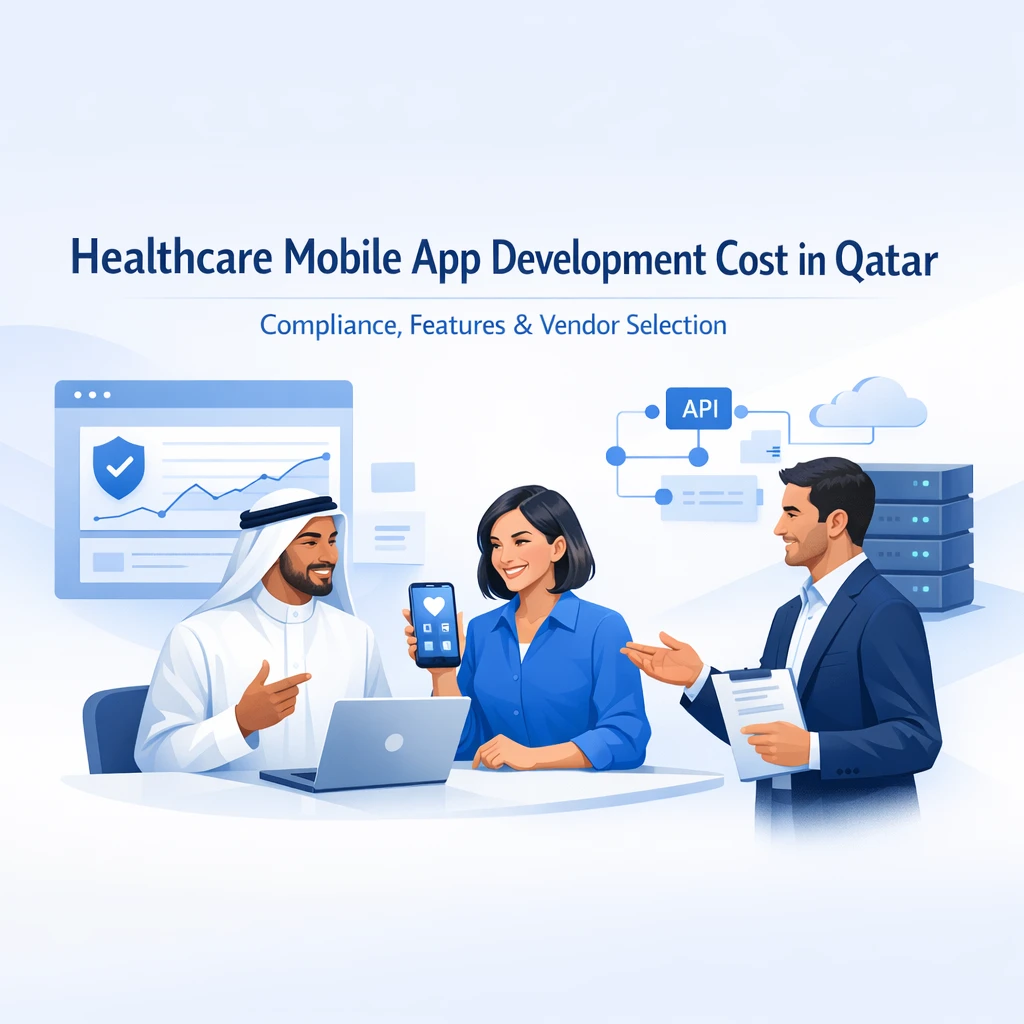
A practical, vendor-agnostic guide to estimating build costs, choosing the right features, and selecting a capable software partner for healthcare mobile apps in Qatar and the GCC region. This article prioritizes education and actionable guidance to help SMBs, SMEs, startups, and corporate buyers make informed decisions.
Introduction
Healthcare mobile apps are increasingly central to patient engagement, care coordination, and operational efficiency. In Qatar and broader GCC markets, regulatory expectations around data privacy, security, and interoperability shape both the cost and delivery approach. This guide breaks down the cost determinants, essential features, and a practical vendor-selection framework. It also demonstrates how Triostack Technologies approaches healthcare mobility projects with global reach and disciplined process—without turning promotion into marketing fluff.
Whether you’re a founder evaluating a new telemedicine MVP, a clinic expanding a patient portal, or an enterprise planning a scalable care coordination platform, this article provides a structured path to cost estimation, architecture, and vendor choice that holds up under local compliance demands and regional privacy expectations.
What is the Topic?
The topic centers on healthcare mobile app development within Qatar and similar regulatory environments. It covers: how much to budget (from discovery to production), what features matter (and what can be phased in), how to evaluate compliance needs (data privacy, consent, secure messaging), and how to select a vendor that can deliver a robust, scalable, and secure solution. The guidance also extends to remote delivery models that couple cost efficiency with technical rigor.
Why it Matters in 2026
- Regulatory and privacy expectations continue to tighten. Patient data protection, auditability, and secure integration with hospital information systems are non-negotiable.
- Interoperability remains a priority. APIs and standard data formats (FHIR-like patterns) enable smoother workflows across clinics, labs, and pharmacies.
- Cost discipline matters more than ever as healthcare budgets face scrutiny. A staged approach with clear MVPs helps optimize ROI.
- Hybrid delivery models (onshore + offshore) are common. They offer scale and access to broader talent pools while preserving governance and security controls.
Current Industry Challenges
- Balancing compliance with speed to market. Healthcare apps must meet data protection, consent, and secure data handling requirements.
- Integrating with existing systems (EHRs, lab systems, appointment scheduling), often via APIs or middleware, while minimizing data duplication.
- Ensuring offline capability and resilient performance in areas with variable connectivity.
- Delivering intuitive user experiences for diverse populations (patients, providers, caregivers) across languages and cultures.
- Managing multi-region hosting and data residency requirements in the GCC and beyond.
How the Technology Works
A healthcare mobile app typically consists of a cross-platform mobile client, a secure backend, and third-party services. Common choices include:
- Mobile frameworks: React Native or Flutter for cross-platform development, delivering near-native experiences with shared codebases.
- Backend: RESTful or GraphQL APIs built on Node.js, .NET, or Python (Django/Flask), with strong API governance.
- Security & compliance: encryption at rest and in transit, IAM, role-based access, audit logging, and secure data retention policies aligned with local regulations.
- Data interchange: HL7/FHIR-inspired data models, standardized messaging, and regulated data sharing with clinical systems.
- AI & analytics: optional AI components for triage, symptom checking, and predictive insights, deployed with responsible AI practices.
Architecture Overview
Below is a typical architecture pattern for healthcare mobility in regulated markets. It emphasizes security, scalability, and interoperability while keeping the user experience clean and responsive.
Step-by-Step Workflow
- Discovery & Compliance Scoping: Gather requirements, assess regulatory constraints, define a data flow, and sketch MVP features.
- Architecture & UX Prototyping: Define system architecture, data models, and user journeys; validate with stakeholders.
- Development & Security by Design: Implement features in sprints with continuous security reviews and privacy-by-design practices.
- QA & Compliance Validation: Perform functional, performance, security, and data privacy testing; conduct privacy impact assessment if required.
- Deployment & Monitoring: Roll out to production with CI/CD pipelines, monitoring, and incident response plans.
- Maintenance & Compliance Updates: Ongoing support, updates for regulatory changes, and feature expansions.
Business Use Cases
- Telemedicine & virtual visits: Secure video, chat, and intake forms with clinician triage and appointment scheduling.
- Patient portal & engagement: Access to test results, appointment reminders, and personalized health tips.
- Medication management: ePrescriptions, refill requests, and drug interaction checks integrated with pharmacy systems.
- Remote monitoring: Wearable data ingestion, alerting, and care-plan adherence tracking.
- Clinical workflow apps: Mobile access for clinicians to patient records, rounds, and specimen tracking.
Industry Applications
While the GCC markets drive many use cases, the patterns are broadly applicable to clinics, hospitals, and care providers across the world. Examples include:
- Hospitals implementing patient portals and clinician-facing mobility apps to improve throughput and data accuracy.
- Clinics building telehealth platforms to extend care beyond physical visits.
- Labs creating patient-facing results dashboards and secure data exchange with clinicians.
- Home health agencies coordinating care plans and remote monitoring via mobile interfaces.
Benefits
- Improved patient engagement and satisfaction through convenient access to services.
- Better care coordination and reduced administrative overhead.
- Stronger compliance posture with auditable data flows and access controls.
- Scalability to add new modules (e-prescriptions, AI triage, language support) without a full rebuild.
Challenges
- Accurate cost forecasting across design, development, QA, and deployment with regulatory milestones.
- Maintaining security and privacy across multi-tenant cloud environments.
- Ensuring long-term maintainability as standards and APIs evolve.
Common Mistakes
- Underestimating data security and privacy considerations during initial scoping.
- Rushing to add features without a phased MVP plan aligned to clinical workflows.
- Choosing tech for hype rather than fit-for-purpose requirements (e.g., over-chasing a specific framework without evaluation).
- Inadequate API governance, causing interoperability issues later on.
Best Practices
- Adopt a modular, service-oriented architecture with clear API contracts.
- Design privacy by design and security by default into every feature.
- Prioritize seamless clinician and patient UX with multilingual support and accessibility considerations.
- Plan for phased delivery (MVP first) and measurable success criteria (KPIs).
Build vs Buy Comparison
Choosing between building in-house, outsourcing, or buying an off-the-shelf solution hinges on control, speed, and compliance needs. The table below highlights typical trade-offs for healthcare mobility projects.
| Aspect | Build (Custom) | Buy (Off-the-Shelf) | Hybrid/Outsource |
|---|---|---|---|
| Time to market | Slowest (depends on team) | Fast if a good fit | Moderate |
| Compliance control | Highest control | Limited by vendor | Balanced control |
| Customization | Full control | Limited to vendor capabilities | Moderate to high |
| Cost uncertainty | Higher upfront, predictable later | Lower upfront, ongoing licenses | Hybrid costs |
Estimated Development Cost
For SMBs planning a healthcare mobility project, the budget typically covers discovery, design, development, QA, deployment, and a period of post-launch support. The ranges below reflect typical engagements in Qatar and similar markets, with the understanding that complexity, compliance needs, and integrations can push numbers in either direction.
| Module / Solution | Typical Range (USD) |
|---|---|
| Business Website | 5,000 – 15,000 |
| Customer Portal | 10,000 – 40,000 |
| CRM | 15,000 – 100,000 |
| ERP | 40,000 – 200,000 |
| AI Chatbot | 5,000 – 25,000 |
| AI Automation | 15,000 – 80,000 |
| SaaS MVP | 20,000 – 80,000 |
| Enterprise Web App | 30,000 – 200,000 |
Pricing factors include scope clarity, regulatory complexity, integration depth, data migration needs, testing rigor, and the level of ongoing support and security hardening required. Local factors, such as data residency and cloud hosting choices, also influence final cost.
Recommended Technology Stack
The following stack is commonly used for healthcare mobile apps that must scale and comply with data protection requirements:
- Front-end: React Native or Flutter for cross-platform mobile apps; optional native modules for performance-critical features.
- Backend: Node.js (Express), Python (Django/Flask), or .NET for secure APIs; GraphQL or REST endpoints.
- Database: PostgreSQL for relational data; Redis for caching; MongoDB for unstructured data where appropriate.
- Identity & Security: OAuth 2.0 / OpenID Connect, MFA, audit logging, data encryption at rest & in transit.
- Cloud & DevOps: AWS or Azure with HIPAA/GDPR-like controls, CI/CD pipelines, IaC (Terraform), and containerization (Docker, Kubernetes).
- Interoperability: FHIR-like data models, secure API gateways, and standardized messaging patterns.
Future Trends
- AI-assisted triage and decision support with explainable outputs for clinicians.
- Enhanced remote patient monitoring with edge processing and offline-first capabilities.
- Regulatory updates driving automated compliance checks and audit readiness.
- No-code/low-code components for rapid iterations and prototyping while preserving governance.
How Triostack Delivers Projects Globally (Remote Delivery)
Triostack supports remote delivery from our development center in India with a structured, collaborative approach. The model emphasizes agility, transparency, and robust governance to ensure you get a high-quality product on time and within budget.
Agile Delivery & Communication
Engage through established agile rituals: sprint planning, daily standups, and weekly demos. We maintain rigorous documentation and source control, using modern collaboration tools to keep your team in the loop.
- Planning & Governance: Product backlog, release planning, and sprint goals aligned with your business outcomes.
- Weekly Demos: Live demonstrations to confirm progress and gather feedback.
- Communication: Slack, Teams, Zoom, Google Meet for real-time collaboration.
- Project Management & Tooling: Jira, ClickUp, GitHub, GitLab, Azure DevOps for issue tracking and version control.
- CI/CD & Staging: Automated builds, tests, and cloud staging environments to validate before production.
- QA & Security: Dedicated QA, security reviews, and compliance validation throughout the cycle.
- Documentation & IP: Clear documentation, NDA, and explicit IP ownership terms.
- Timezone & Language: Reasonable overlap with your business hours and English communication as standard.
- Dedicated Project Management: A single point of contact and a governance framework to manage risk and scope.
Why UAE Businesses Outsource to India
Outsourcing software development to India offers a blend of cost efficiency, a large talent pool, and strong engineering capabilities, with several pragmatic advantages:
- Cost efficiency without compromising on quality thanks to mature delivery practices.
- Access to a deep, specialized talent pool across mobile, cloud, and AI domains.
- Faster hiring cycles and scalable teams to meet project timelines.
- High-quality engineering culture, backed by robust processes and global client references.
- Clear communication channels, time-zone overlap, and a focus on international collaboration norms.
Remote delivery is not just about price; it’s about governance, risk management, and disciplined execution. With the right partner, UAE and GCC organizations can achieve predictable results while maintaining strict regulatory compliance.
Case Studies
Below are representative, non-confidential project narratives illustrating how healthcare and related organizations have approached mobile app development with Triostack. Names are generalized to protect client confidentiality.
Case Study 1 — Dubai-based Logistics Company
A logistics company in Dubai sought a mobile app for field agents to optimize delivery routing, real-time parcel tracking, and customer notifications. The project required integration with the company’s legacy ERP, a secure authentication layer, and offline capabilities for drivers in remote routes. Triostack delivered a cross-platform mobile app with a secure API layer and an analytics dashboard for operations. The engagement began with a 6-week discovery sprint, followed by a 4-month development cycle and 2 months of QA and security hardening. The app launched with core courier tracking, proofs of delivery, and customer alerts, with a plan to phase in telematics and optimized routing in subsequent releases.
Case Study 2 — UAE Healthcare Clinic
A private healthcare clinic in the UAE needed a patient portal and telehealth module to improve appointment management, access to test results, and secure clinician-patient messaging. The project integrated with the clinic’s EHR system and adhered to privacy requirements pertinent to patient data. Triostack created a patient-facing app with multilingual support, streaming video for virtual visits, secure messaging, and e-prescription workflows. The delivery included data migration, role-based access controls, and a comprehensive audit trail. Post-launch enhancements included patient education content and appointment reminders that leveraged push notifications.
Case Study 3 — Saudi Retail Chain
A Saudi-based retail chain sought a mobile customer loyalty and appointment scheduling app to support in-store clinics and wellness kiosks. The solution combined loyalty programs, appointment booking, and targeted health education content. Triostack delivered a scalable backend and mobile experiences across iOS and Android, emphasizing data privacy and secure payment flows. The project demonstrated rapid iteration on feature sets, with a 12-week MVP followed by phased enhancements for loyalty analytics and healthcare content personalization.
Case Study 4 — Australian Health Tech Startup
An Australian startup pursued a telemedicine MVP with AI-assisted triage, secure chat, and patient data management. The engagement highlighted cross-border data handling, compliance considerations, and performance at scale. Triostack’s approach emphasized modular architecture, robust security controls, and a strong emphasis on doctor-patient UX. The solution evolved to include automated scheduling, digital prescriptions, and integration with partner clinics.
Build vs Buy: A Practical Framework for Healthcare Apps
In regulated markets like Qatar, decisions around building versus buying are influenced by regulatory alignment, time-to-value, and the ability to customize workflows to clinical needs. Consider these guidelines:
- Use build when you need deep customization for clinical workflows, unique data models, or proprietary integrations with local providers.
- Use buy when you need a fast, proven patient experience with robust security controls and you can adapt business processes to the solution.
- Adopt a hybrid model when you require regulatory-compliant core services (authentication, data access, auditing) while building patient-facing features tailored to your care pathways.
Future Trends in Healthcare Mobile Apps
As the market matures, expect greater emphasis on:
- No-code tooling with governance to accelerate iterations while preserving compliance.
- AI-powered triage and decision support with transparent explanations for clinicians.
- Advanced telehealth capabilities, including hybrid care models and remote monitoring.
- Stronger vendor ecosystems for interoperability and standardized data sharing.
How Triostack Delivers Projects Globally
Triostack brings disciplined software delivery to healthcare initiatives across geographies. We emphasize robust architecture, security, and governance while maintaining a patient-first UX. Our capabilities span:
- Custom Software, Web Development, Mobile Apps
- AI Development, Machine Learning
- CRM, ERP, SaaS
- Cloud Migration, DevOps
- UI/UX, API Development
- Dedicated Teams, QA, Maintenance
- Technical Consulting
Why Businesses Choose Triostack
Triostack prioritizes practical outcomes: scalable architectures, robust security, and a collaborative partner that understands healthcare contexts and regulatory expectations. We emphasize:
- Transparent project governance and risk management.
- Proven ability to scale teams for complex healthcare programs.
- Focus on UX, accessibility, and clinician-friendly interfaces.
- Commitment to quality, testing, and regulatory readiness.
Conclusion
Healthcare mobile app development in Qatar and the GCC requires a careful blend of compliance, user-centric design, and technically robust delivery. By understanding cost drivers, prioritizing essential features, and selecting a partner with demonstrated capabilities in secure, scalable mobility, organizations can achieve meaningful outcomes while maintaining governance and data protection standards. Triostack is positioned as a global software development partner that supports healthcare mobility with a disciplined, educational, and outcomes-focused approach.
Frequently Asked Questions
- What is the typical timeline for a healthcare mobile app MVP in Qatar?
- Timelines vary with scope, but a well-scoped MVP often ranges from 12 to 20 weeks, including planning, design, development, QA, and deployment, plus regulatory reviews if needed.
- What regulatory standards should we consider?
- Data protection, access controls, audit trails, secure data transfer, and interoperability standards. Specific obligations depend on the data types, the care setting, and local regulations.
- Is remote/offshore development feasible for healthcare apps?
- Yes. When done with strong governance, security controls, and clear communication, offshore delivery can reduce costs while meeting compliance and quality requirements.
- How do we handle data residency in the GCC?
- Choose cloud regions or data centers that align with residency requirements and ensure contracts specify data localization, encryption, and access controls.
Businesses planning similar healthcare software projects often benefit from experienced software development partners like Triostack Technologies. If you're planning a project, we can help you design, build, deploy and maintain a scalable solution.
Note: This article emphasizes practical guidance. For tailored input, consider a consultation to map your specific regulatory and clinical workflow requirements.
Additional Diagrams
Triostack Team
Technology Evangelist & Writer
Triostack Team is an experienced writer and technologist, exploring the intersections of AI, cloud architecture, and modern application development. Passionate about turning complex technical concepts into accessible insights.