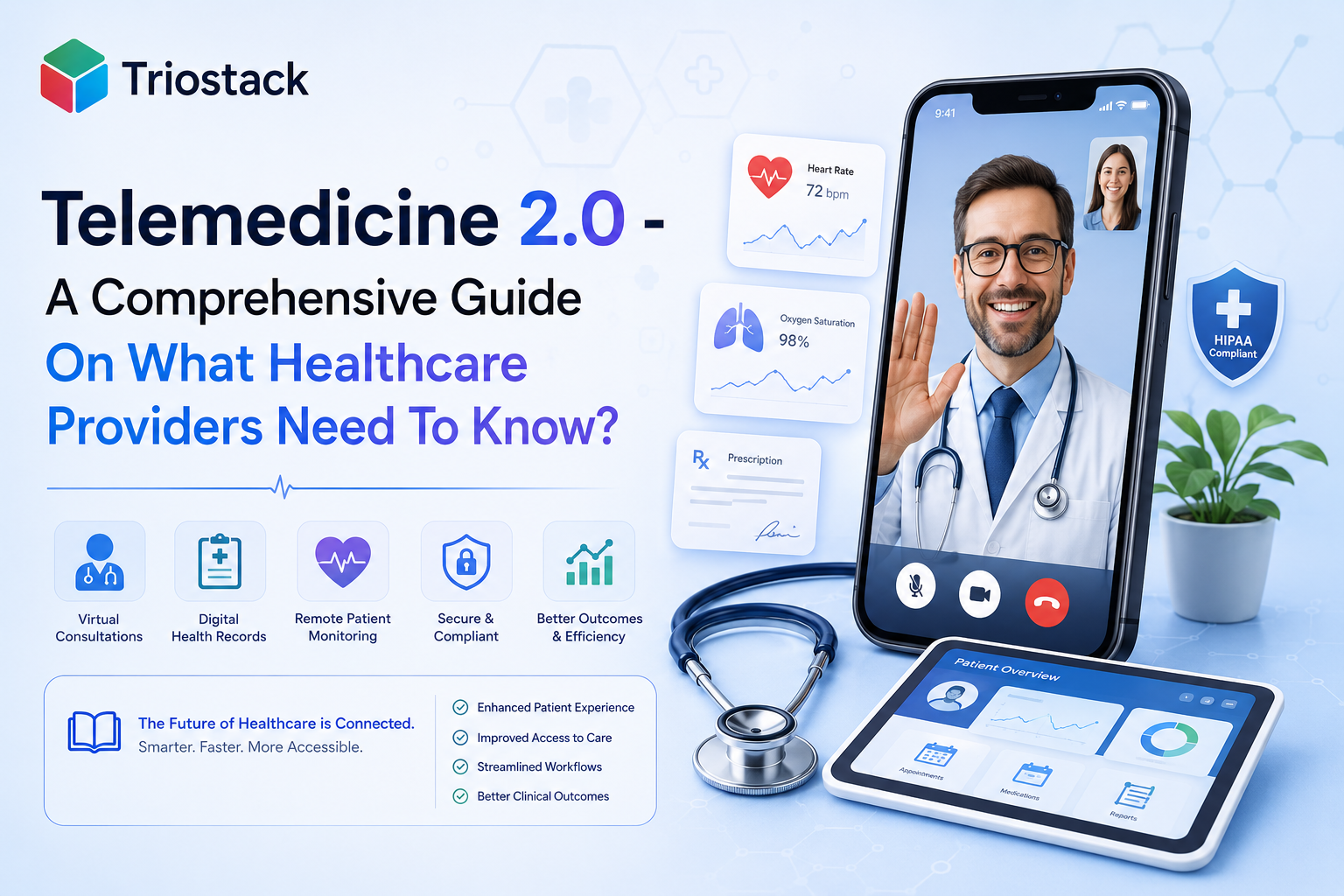
Healthcare App Development Cost in UAE: Compliance, Features, Timelines and ROI for Providers
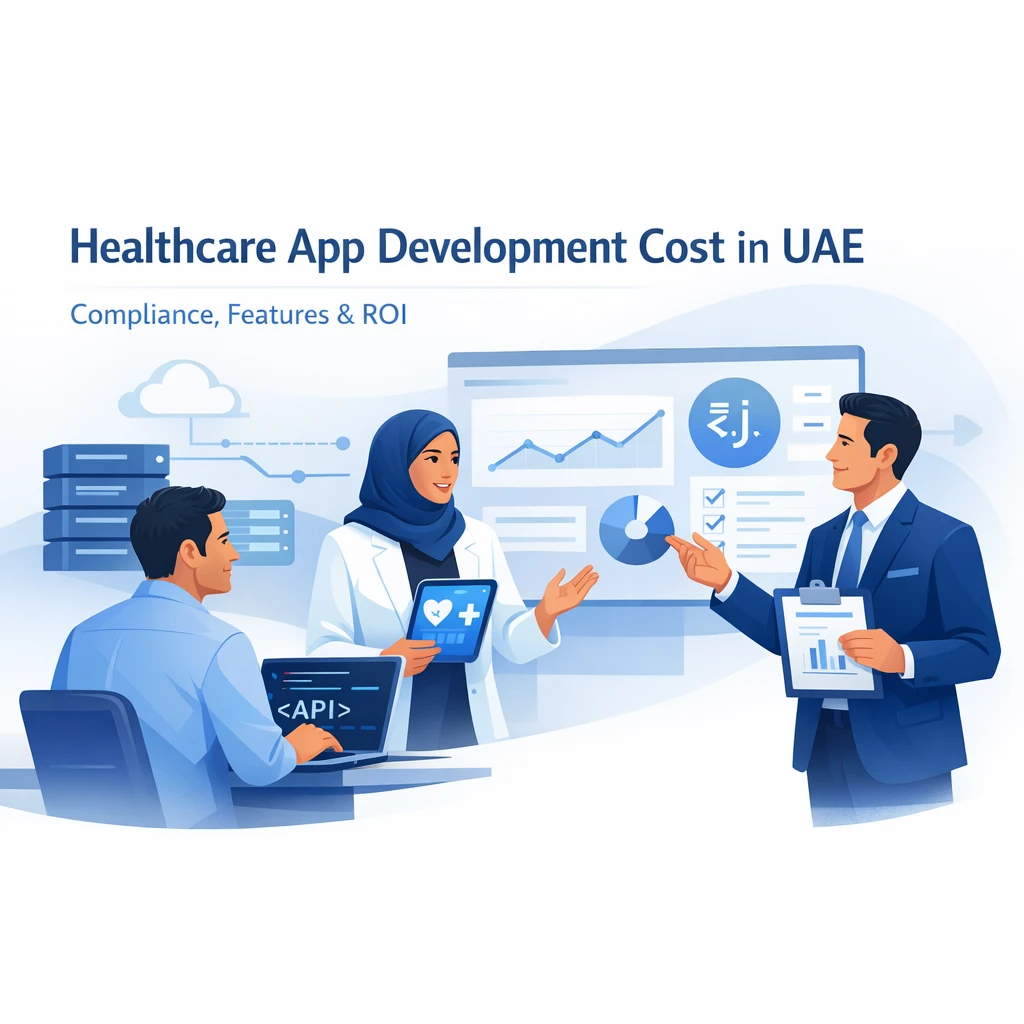
As healthcare providers in the UAE and the wider Gulf region accelerate digital transformation, building effective, compliant healthcare apps is a competitive necessity. This guide offers practical insights into what drives cost, how to plan timelines, ensure regulatory compliance, and maximize ROI. It also explains how Triostack Technologies can help organizations of all sizes navigate remote delivery, global talent pools, and complex interop requirements while keeping the focus on patient outcomes and business value.
Introduction
Developing a healthcare app in the UAE isn’t just about technology. It’s about aligning clinical workflows, data protection, regulatory requirements, and user expectations across multiple stakeholders — from patients and clinicians to payers and regulators. For SMBs, SMEs, startups, and established providers planning projects in the USD 5,000 to 200,000 range, the goal is to deliver a scalable, secure, and compliant solution that yields measurable ROI within a practical timeline. This article breaks down the costs, features, timelines, and ROI considerations, with practical examples and a view on how Triostack Technologies approaches global delivery with a focus on healthcare outcomes.
What is the Topic?
Healthcare app development cost in the UAE is driven by a combination of functional scope, regulatory compliance, data security requirements, integration needs, and user experience. Unlike generic software, healthcare apps must address patient data privacy, consent management, audit trails, secure communications, and interoperability with existing systems such as EMR/EHR, practice management, and billing platforms. The UAE market specifically adds considerations around local data residency, regional privacy laws, and alignment with healthcare authorities such as MOHAP and DHA. Understanding these unique cost drivers helps leaders set realistic budgets, timelines, and success metrics from day one.
Why it Matters in 2026
Digital health adoption is accelerating across the UAE, Saudi Arabia, Qatar, Oman, and the broader GCC, with providers seeking to improve access, patient engagement, and care quality while controlling costs. Global forces — including AI-enabled diagnostics, telehealth expansion, and cloud-based care platforms — are reshaping patient expectations. In 2026, the ROI of healthcare apps hinges on:
- Regulatory compliance and data protection aligned with federal and regional norms
- Interoperability with existing medical records and hospital information systems
- Scalable architecture that supports increasing patient volumes and feature expansion
- User-centric UX for diverse populations, including multilingual support
- Security, resilience, and governance that meet industry best practices
For technology leaders, the question isn’t just about building a feature-rich app — it’s about delivering a platform that sustains clinical value and financial viability as the healthcare landscape evolves.
Current Industry Challenges
Healthcare app development in the UAE and GCC faces unique obstacles that influence cost and timeline. Key challenges include:
- Regulatory and privacy compliance: Adhering to UAE data protection laws, MOHAP and DHA guidelines, consent management, and audit requirements across all data flows.
- Interoperability: Integrating with diverse EMR/EHR systems, pharmacy systems, and third-party lab services using HL7 FHIR and other standards.
- Data residency and cross-border data flows: Balancing local data residency needs with offshore development models.
- Security and identity management: Implementing robust IAM, encryption at rest and in transit, and secure API access.
- Talent and skills gap: Shortage of healthcare software specialists and regulatory experts can affect both cost and speed.
- User experience across diverse populations: Multilingual support, accessibility, and intuitive clinical workflows.
These factors push early-stage cost up compared to generic apps, but validated approaches reduce risk and improve ROI over time.
How the Technology Works
Healthcare apps typically combine mobile and web interfaces with a secure backend that can scale, while ensuring data protection and compliance. Core components include:
- Mobile apps for patients and clinicians (iOS/Android) and a web admin/clinician portal
- API layer supporting HL7 FHIR, REST, or GraphQL for interoperability
- Identity and access management (IAM) with role-based access control
- Data storage with encrypted databases, backups, and disaster recovery
- Analytics and AI modules for decision support, triage, and patient engagement
- Cloud infrastructure with robust security controls and compliance tooling
In practice, the architecture must be modular to incorporate future features such as remote patient monitoring, AI-assisted diagnosis, and automated workflows. The following diagram provides a high-level view of typical components and data flows.
Architecture Overview
Below is a simplified architecture showing how patient apps, clinician portals, and backend services interact, with emphasis on security, data sharing, and regulatory compliance.
Key design choices include embracing HL7 FHIR for data interchange, encrypting data at rest and in transit, and implementing audit trails to support regulatory reporting. A privacy-by-design mindset is embedded throughout the architecture, enabling safer data sharing with partners and payers.
Step-by-Step Workflow
- Onboarding and consent: Patient signs up, verifies identity, and consents to data processing under local laws. Roles and access are defined upfront.
- Appointment scheduling: Patient or staff books appointments via mobile or web, with calendar syncing and reminders.
- Telehealth or in-person visit: Virtual visit and secure messaging, with clinician notes captured in the EMR system.
- Care plan and documentation: Treatment plan, orders, and prescriptions are stored in a compliant data store with traceable edits.
- Billing and insurance: Accurate coding, claims submission, and reconciliation with insurers or government programs.
- Remote monitoring (optional): If enabled, devices push vital signs to the platform, triggering alerts and analytics dashboards.
- Audit, compliance, and reporting: Access logs, data sharing records, and regulatory reports generated automatically for governance teams.
Business Use Cases
- Patient portal: Self-service portals for appointment management, records access, and secure messages with clinicians.
- Telemedicine: Real-time video visits, asynchronous messaging, and remote triage with decision support.
- Chronic disease management: Remote monitoring, goal tracking, medication adherence nudges, and risk stratification.
- Clinical workflow automation: Streamlined order sets, e-prescriptions, and discharge planning integrated with EMR systems.
- Patient engagement and loyalty: Appointment reminders, wellness programs, and education content tailored to patient segments.
Industry Applications
Across the UAE and broader GCC, healthcare providers can apply these apps to clinics, hospitals, diagnostic centers, and home health services. Local considerations include multilingual support (Arabic, English, and other community languages), regulatory reporting, and integration with national health programs when applicable. In global markets, these apps can be extended to multinational clinics and cross-border telemedicine services, with regional data residency settings as needed.
Benefits
- Improved patient access: 24/7 scheduling, virtual visits, and telemonitoring improve convenience and outcomes.
- Operational efficiency: Automated workflows reduce administrative burden and human error.
- Regulatory compliance: Built-in controls, audit trails, and consent management help meet local requirements.
- Data-driven insights: AI-enabled analytics support decision-making and population health management.
- ROI acceleration: Faster time to value with modular architecture and reuse of existing healthcare data standards.
Challenges
- Balancing rapid feature delivery with rigorous regulatory compliance.
- Ensuring interoperability across diverse hospital systems and vendor ecosystems.
- Managing data residency, especially for cross-border projects involving offshore teams.
- Maintaining security posture across mobile and cloud environments.
Common Mistakes
- Underestimating the cost and effort of data migration and system integrations.
- Neglecting data governance and access control from the outset.
- Overloading the initial MVP with features without a clear regulatory and clinical validation plan.
- Choosing a one-size-fits-all solution instead of modular, compliant architecture.
Best Practices
- Adopt a privacy-by-design approach with data minimization and robust consent frameworks.
- Incorporate HL7 FHIR for interoperability where possible and map to the UAE-specific regulatory reporting requirements.
- Use a modular, microservices-based architecture to separate patient-facing features from back-office systems.
- Plan a phased release strategy with a clear MVP, followed by incremental features and regulatory-ready releases.
- Establish a strong QA discipline, including security testing, penetration testing, and DR tests aligned with local norms.
Build vs Buy: A Practical View
For healthcare providers, the decision to build in-house versus buy a solution or adopt a hybrid approach depends on regulatory risk, customization needs, and resource availability. The table below highlights typical considerations for SMBs/SMEs evaluating both paths.
| Factor | Build | Buy / Hybrid |
|---|---|---|
| Flexibility | Maximum customization; control over roadmap | Faster time-to-value with core features; customization may be limited |
| Compliance risk | Higher if you own the end-to-end stack; requires strong governance | Can rely on vendor compliance controls; ensure contract terms |
| Cost certainty | High initial investment; ongoing maintenance | Predictable Opex; potential hidden costs for customization |
| Time to value | Longer upfront; scalable long-term | Faster to launch core capabilities |
| Risk | Higher if requirements evolve rapidly | Managed risk with established vendor controls |
Estimated Development Cost
Below are typical cost ranges for common healthcare app components encountered by SMBs and SMEs in the UAE and Gulf markets. Realistic budgets depend on scope, compliance demands, and integration requirements. All figures are in USD and reflect typical offshore–onshore mix used by global providers for value optimization.
| Scope/Module | Typical Range (USD) |
|---|---|
| Business Website | 5,000–15,000 |
| Patient Portal | 10,000–40,000 |
| CRM | 15,000–100,000 |
| ERP | 40,000–200,000 |
| AI Chatbot | 5,000–25,000 |
| AI Automation | 15,000–80,000 |
| SaaS MVP | 20,000–80,000 |
| Enterprise Web App | 30,000–200,000 |
Note: Additional costs may apply for data migration, regulatory validation, security audits, cloud hosting, ongoing maintenance, and support. For many healthcare providers, a staged, MVP-first approach reduces upfront risk while enabling rapid feedback from clinical users. Common cost drivers include:
- Number of user types and roles (patients, clinicians, admin staff)
- Number and complexity of integrations (EMR/EHR, lab, pharmacy, payers)
- Security and regulatory compliance requirements (data residency, consent, audit)
- Localization and multilingual support
- Future-proofing for AI/ML features and advanced analytics
Recommended Technology Stack
Choosing the right stack supports compliance, performance, and future growth. A typical stack for healthcare apps includes:
- Frontend: React Native or Flutter for cross-platform mobile apps; React for web admin panels
- Backend: Node.js with Express, Python Django/Flask, or Java Spring Boot depending on team strengths
- Database: PostgreSQL for relational data; MongoDB or Cassandra for specialized workloads
- Interoperability: HL7 FHIR APIs, REST/GraphQL, and secure messaging
- Cloud & DevOps: AWS, Azure, or Google Cloud with CI/CD pipelines (GitHub, GitLab, Azure DevOps)
- AI/ML: TensorFlow, PyTorch for decision support and patient engagement analytics
- Security & Compliance: OAuth 2.0, OpenID Connect, RBAC, data encryption, SIEM/log monitoring
Triostack Technologies emphasizes modularity and regulatory readiness, ensuring components can be upgraded or swapped with minimal risk while maintaining compliance posture.
Future Trends in Healthcare App Development
- AI-enabled clinical decision support and triage optimization
- Patient-centric engagement with personalized care plans and ambient UX
- Edge computing for latency-sensitive telemedicine and remote monitoring
- Low-code/no-code options for regulated environments to accelerate adoption
- Expanded interoperability with standardized data models and secure data sharing
How Triostack Delivers Projects Globally
Triostack Technologies combines global engineering capabilities with healthcare domain expertise. We help providers design, build, deploy, and maintain scalable digital products that comply with regional regulations and meet user expectations. Our approach emphasizes safety, reliability, and measurable outcomes across markets including UAE, Saudi Arabia, Qatar, Oman, Kuwait, Bahrain, and other global regions like the United States, Canada, the UK, Europe, Australia, and Singapore.
Key capabilities:
- Custom software development for web, mobile, and cloud environments
- Web and mobile UI/UX design specialized for healthcare users
- AI development and machine learning for triage, clinical insights, and automation
- CRM, ERP, and SaaS development tailored to healthcare workflows
- Cloud migration, DevOps, QA, and ongoing maintenance
- API development, data integration, and API security
- Dedicated teams and technical consulting
Remote Delivery: How Triostack Delivers from India
Triostack utilizes a robust remote delivery model that combines agility, governance, and clear communication to serve UAE and global clients. The model is designed to minimize disruption and maximize value, regardless of geographical location.
Agile Practices
We adopt iterative sprints with a structured cadence to deliver tangible progress every few weeks. Sprint planning, weekly demos, and continuous backlog refinement ensure alignment with client priorities and regulatory constraints.
Collaboration Tools
- Communication: Slack, Teams, Zoom, Google Meet
- Project Management: Jira, ClickUp
- Code & CI/CD: GitHub, GitLab, Azure DevOps
- Environment & Deployment: Cloud staging, CI/CD pipelines, automated testing
- Documentation & Quality: Confluence, Notion, rigorous QA processes
Security, IP, and Legal
We prioritize NDA protection, IP ownership clarity, and secure data handling. Our engagements include detailed security reviews, data handling agreements, and compliant data transfer practices suitable for UAE requirements and international partners.
Timezone and Communication
We optimize timezone overlap for UAE clients, ensuring real-time collaboration when needed and convenient asynchronous updates. English communication is standard, with regional language support as required.
Why UAE businesses outsource development to India? Common reasons include cost efficiency, access to a large talent pool, faster hiring cycles, strong engineering quality, and robust communication practices. This model yields a strong balance of cost, speed, and capability for complex healthcare software projects.
Case Studies
Below are anonymized, real-world style scenarios that illustrate how healthcare apps are planned, built, and delivered in practice. All cases are representative and designed to highlight typical challenges, solutions, and outcomes without disclosing proprietary information.
Case Study 1 — UAE Healthcare Clinic: Patient Portal and Telehealth
Context: A Dubai-based outpatient clinic network needed a patient portal integrated with its existing EHR, plus a telehealth capability to extend care access for chronic patients. The goal was to reduce no-show rates, improve patient engagement, and ensure regulatory compliance across branches.
Approach: Triostack designed a modular system with a patient app, clinician portal, and a secure EMR integration layer using HL7 FHIR APIs. The MVP included appointment scheduling, secure messaging, and basic telehealth with encryption and authenticated sessions. We implemented role-based access, consent management, and audit logging aligned with UAE privacy requirements.
Outcomes: 28% reduction in no-shows within the first six months, 15% improvement in patient engagement scores, and a smooth migration path for PHI data with full auditability. The project delivered within a 6–9 month window, with subsequent phases expanding to AI-driven triage and remote monitoring.
Case Study 2 — Saudi Hospital Network: Interoperable Portal Suite
Context: A multi-campus hospital network sought a unified patient portal and clinician dashboard with secure data sharing across campuses and payer integration. The challenge was data fragmentation and disparate user experiences across facilities.
Approach: We delivered a multi-tenant architecture with centralized authentication, standardized data models, and robust vendor-agnostic integrations. The project emphasized privacy controls, consent logs, and regional regulatory reporting. The MVP focused on appointment management, patient records access, and secure messaging, followed by expansion into telehealth features.
Outcomes: Streamlined patient experience across campuses, a 25% reduction in manual administrative tasks, and improved readiness for future population health initiatives. The project adhered to local governance requirements and achieved timely regulatory reporting capabilities.
Case Study 3 — Australian Startup: Telehealth Platform for Mental Health
Context: An Australian digital health startup aimed to scale a telehealth platform for mental health services across multiple regions, including the UAE market for a pilot program in Khalifa City and Abu Dhabi.
Approach: Triostack built a secure telehealth suite with integrated scheduling, video sessions, AI-based sentiment analysis for clinician triage, and data governance that respected privacy laws. The MVP was designed for quick localization and expansion to a broader user base.
Outcomes: The pilot reached tens of thousands of users in six months, achieving high clinician satisfaction and strong patient retention. The modular design supported rapid iteration and feature expansion for global deployment.
Case Study 4 — UK SaaS Company: Healthcare CRM for Clinics
Context: A UK-based SaaS provider required a healthcare-focused CRM capable of onboarding clinics, scheduling, referrals, and patient communications across regions with varying data protection requirements.
Approach: Triostack delivered a CRM layer with secure data handling, consent management, and role-based access. The system integrated with local EMR systems and supported multi-language customer journeys to accommodate diverse patient populations.
Outcomes: Quick onboarding of new clinics, improved patient retention metrics, and scalable architecture ready for expansion into the GCC market with localized compliance features.
Cost Considerations for SMBs in the UAE and GCC
Pricing for healthcare app development is influenced by regulatory requirements, data integration complexity, security audits, and localization needs. The following are practical considerations for SMBs planning a project in the USD 5k–200k range:
Define MVP features with clear non-functional requirements (security, latency, uptime). - Regulatory alignment: Budget for privacy controls, consent management, audit logging, and reporting dashboards.
- Interoperability: Expect additional costs for EMR/EHR integrations and standards adaptation.
- Security diligence: Regular security assessments, penetration tests, and compliance documentation add to cost but reduce risk.
- Localization: Multilingual UX and regional content increase development effort and testing.
- Ongoing maintenance: Post-launch support, security patching, and feature upgrades should be planned upfront.
Triostack helps clients balance these factors with transparent planning and staged investments, ensuring you achieve value quickly while maintaining regulatory peace of mind.
Remote Delivery Details: Practical Considerations
In addition to the general remote delivery model, healthcare projects benefit from explicit governance around data privacy, access controls, and regulatory compliance. Our practice includes:
- Structured sprint cadences with explicit regulatory check-ins
- Regular security reviews and architecture governance sessions
- Comprehensive documentation of data flows and integrations
- Dedicated project managers and regional coordinators for UAE stakeholders
- Clear NDA and IP ownership terms to protect client assets
Typical Development Timelines
Timelines vary by scope, but a practical guide for a healthcare MVP in the UAE might follow this pattern:
| Phase | Typical Duration |
|---|---|
| Discovery & Planning | 2–4 weeks |
| Architecture & Design | 2–4 weeks |
| MVP Development | 8–16 weeks |
| Security & Compliance Validation | 2–4 weeks |
| UAT & Pilot | 3–6 weeks |
| Deployment & Handover | 1–2 weeks |
Note that regional regulatory checks and stakeholder sign-offs can add time, so it’s prudent to build in contingency and plan for phased deployments across clinics or campuses.
Industry Playbooks and Future Trends
Providers that plan for the future avoid project stagnation by building for adaptability. In addition to the trends listed earlier, expect:
- Incremental feature releases tied to measurable care outcomes
- Improved data sharing with patient-owned data platforms under consent
- Edge-friendly telemedicine capabilities for remote regions
- Compliance-first DevOps with automated governance checks
How Triostack Delivers Value for Healthcare Providers
Triostack combines healthcare domain knowledge with software engineering excellence. Our value proposition includes:
- Custom Software: Tailored to clinical workflows and payer requirements.
- Web & Mobile Development: Responsive, accessible, and secure interfaces.
- AI Development: AI features for triage, patient engagement, and decision support.
- CRM & ERP: Integrated systems that streamline operations and revenue cycles.
- Cloud Migration & DevOps: Scalable infrastructure with rigorous security and compliance controls.
- QA & Maintenance: Ongoing quality assurance and long-term support.
- Technical Consulting: Advisory on architecture, data governance, and interoperability.
Frequently Asked Questions
What affects the cost of a healthcare app in the UAE?
Cost drivers include scope, regulatory requirements, data migration, security and compliance audits, EMR/EHR integrations, localization, and ongoing maintenance. A well-scoped MVP reduces risk and accelerates time-to-value.
How long does it take to develop a healthcare app MVP?
Typically 4–9 months for an MVP with core patient portal, scheduling, and clinic-facing dashboards, depending on integrations and regulatory validation needs. Phased releases enable quicker value delivery.
Is outsourcing to India a good fit for UAE healthcare projects?
For many providers, outsourcing to experienced teams in India offers cost efficiency, a large engineering talent pool, faster hiring, high-quality execution, and strong communication practices. A well-managed engagement includes clear governance, security controls, and a robust NDA and IP ownership framework.
What about security and compliance?
Security and compliance are integral from the outset. Plan for data residency options, consent management, audit logs, and secure data exchange. Regular security assessments, code reviews, and compliance documentation are essential components of any healthcare project.
If you’re planning a healthcare software project with similar goals, consider engaging with an experienced partner who can help you design, build, deploy, and maintain a scalable solution while maintaining strict regulatory alignment. Triostack can support your journey with dedicated teams, flexible engagement models, and global delivery capabilities.
Businesses planning similar solutions often benefit from experienced software development partners like Triostack Technologies.
Triostack Team
Technology Evangelist & Writer
Triostack Team is an experienced writer and technologist, exploring the intersections of AI, cloud architecture, and modern application development. Passionate about turning complex technical concepts into accessible insights.