Healthcare App Development Cost in Qatar: Compliance, Features, and Budget Planning for Decision Makers
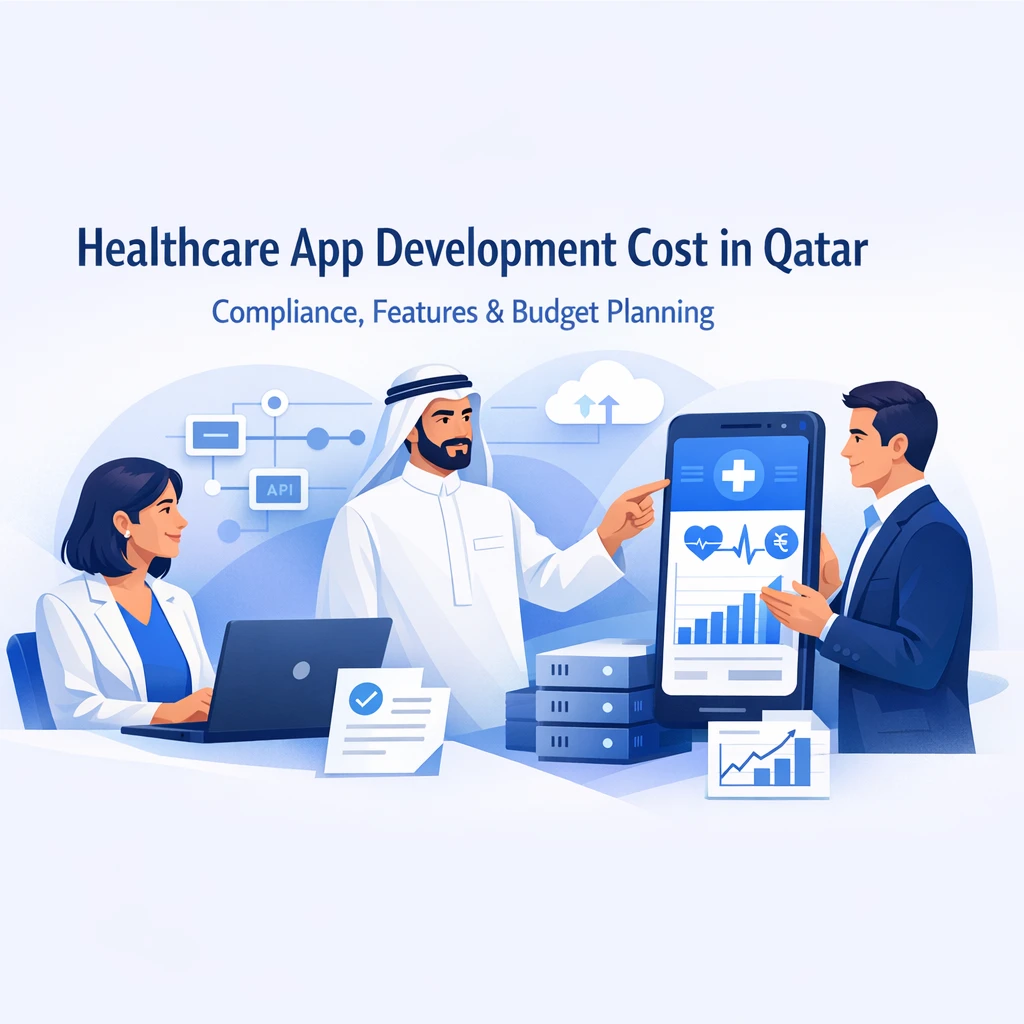
A practical guide for SMBs, SMEs, startups, and enterprise teams planning healthcare software projects across the Gulf region and beyond. From regulatory considerations to cost ranges, learn how to plan, build, and deploy reliable healthcare apps with a trusted global partner like Triostack Technologies.
Introduction
Healthcare digital transformation is accelerating worldwide, with Qatar and neighboring markets at the forefront of adopting patient-centric, data-driven care solutions. For decision makers — whether you’re a CEO, CTO, product manager, or founder — the question isn’t just how much a healthcare app costs, but how to estimate the total lifecycle investment: compliance, integration, security, UX, and ongoing maintenance.
This article provides an actionable framework to evaluate cost, features, and timelines for healthcare app development in Qatar and the surrounding region (UAE, Saudi Arabia, Kuwait, Bahrain, Oman), while also addressing global delivery considerations. We’ll illustrate how a mature software partner like Triostack Technologies approaches projects of USD 5,000 to USD 200,000 and beyond, with an emphasis on compliance, interoperability, and long-term value.
What is the Topic?
The topic focuses on the end-to-end cost and planning considerations for building healthcare applications — including patient portals, appointment tooling, telemedicine, AI-assisted triage, and integrations with electronic health records (EHR/EMR). It also covers how to navigate regulatory requirements, data privacy, and secure cloud hosting while enabling scalable architectures that can evolve with your clinical and operational needs.
Why it Matters in 2026
- Regulatory complexity is rising. Data privacy and cross-border data transfers remain highly regulated in the GCC and beyond. Any healthcare app needs a documented compliance strategy from day one.
- Interoperability is a business driver. Healthcare ecosystems prosper when systems talk to each other using standards like HL7 FHIR and DICOM where relevant.
- Patient expectations are higher. Mobile-first experiences, telehealth, and AI-assisted care demand robust, secure, and user-friendly apps with clear data provenance.
- Cost control is essential for speed-to-value. A well-planned build-vs-buy approach and modular architecture reduce risk and enable phased rollouts.
Current Industry Challenges
Many healthcare projects in the region grapple with legacy systems, data silos, and complex vendor ecosystems. Common challenges include:
- Interoperability gaps between EHR/EMR systems and new mobile or web apps.
- Data privacy and residency requirements that influence cloud choices and data storage.
- Security threats targeting PHI (Protected Health Information) and sensitive patient data.
- Cost overruns due to scope creep, late discovery of integration issues, or underestimating data migration needs.
- Cloud strategy decisions (multi-cloud vs single-cloud, regional data centers) and governance complexities.
How the Technology Works
A modern healthcare app typically follows a multi-tier architecture that separates concerns among the frontend, backend services, data storage, and external integrations. At a high level:
- Frontend web and mobile interfaces built with modern frameworks to deliver responsive UX and accessibility compliance.
- Backend API services (microservices or modular monolith) handling business rules, patient data processing, and integrations.
- Data layer secure databases with strong encryption, role-based access, and audit trails.
- Integrations with EHR/EMR systems, labs, pharmacies, imaging repositories, and telemedicine platforms via standardized APIs (HL7 FHIR, HL7 v2, DICOM as needed).
- AI/ML components for triage, patient risk scoring, chat assistants, and decision support, deployed in a controlled, auditable manner.
- Security & compliance built-in identity and access management, data residency controls, and privacy-by-design practices.
Architecture Overview
A pragmatic architecture for healthcare apps emphasizes modularity, scalability, and security. The diagram below illustrates a typical setup that supports growth from an MVP to a compliant, enterprise-grade product.
Step-by-Step Workflow
- Discovery & Compliance Review: Define scope, major compliance requirements, data residency, and integration needs with stakeholders.
- Design & Architecture: Create data models, API contracts, and system diagrams with security-by-design baked in.
- Development Sprints: Feature-first MVP approach with iterative delivery and frequent stakeholder reviews.
- Quality Assurance: Rigorous security testing, accessibility checks, and interoperability validation.
- Deployment & Migration: Cloud staging, data migration plans, and cutover strategy with rollback planning.
- Monitoring & Support: Observability, incident management, and ongoing optimization.
Business Use Cases
The following use cases demonstrate how healthcare apps deliver value within Qatar and the wider GCC region while aligning to regional regulatory expectations.
- Patient Portal & Appointment Scheduling: Self-service appointment booking, reminders, and secure messaging with clinicians.
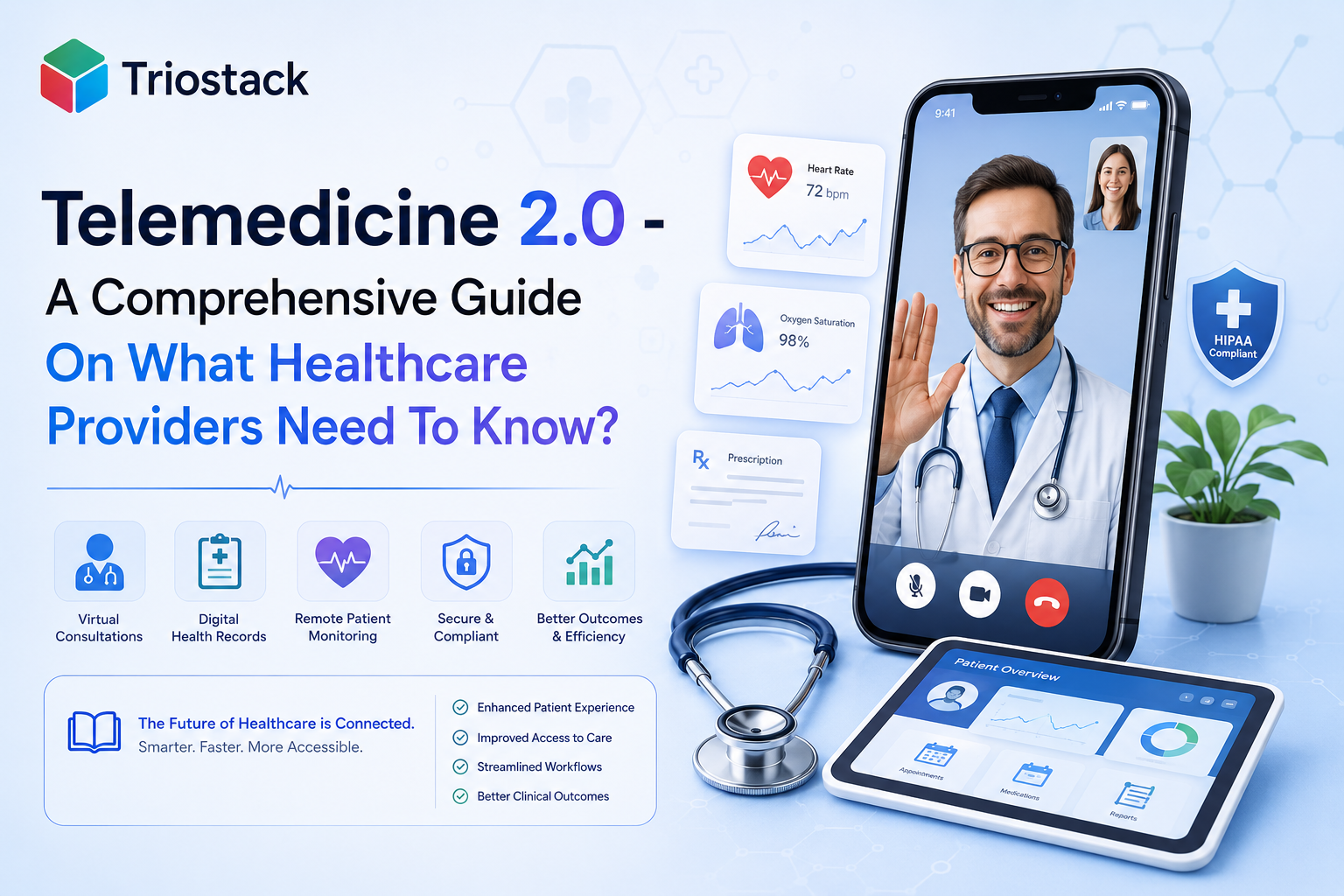
- Telemedicine: Video visits, remote patient monitoring, and asynchronous messaging to extend care beyond clinic walls.
- Clinical Care Coordination: Shared care plans, referrals, and inter-entity communication to improve outcomes.
- AI-assisted Triage & Decision Support: Risk scoring, symptom triage, and clinical decision support within governed workflows.
- Pharmacy & Lab Integrations: Real-time lab results, e-prescriptions, and inventory visibility across locations.
Industry Applications
Beyond clinics, healthcare apps influence insurers, labs, and hospital networks. Key application domains include:
- Outpatient clinics and specialty centers
- Diagnostic imaging and radiology workflows
- Home health and remote patient monitoring programs
- Pharmacy benefits management and formulary adherence
- Medical education and patient engagement platforms
Benefits
- Improved patient access and convenience through mobile and web portals.
- Stronger compliance posture with auditable data flows and role-based access controls.
- Faster time-to-value via a phased, modular build that prioritizes MVP features.
- Better interoperability with EHR/EMR systems, labs, and imaging services.
- Scalable cloud-native architecture ready for AI-enabled care assistants and decision support.
Challenges
- Regulatory alignment across Qatar, UAE, and other Gulf markets, including data residency constraints.
- Ensuring data quality, lineage, and auditability for PHI and sensitive clinical data.
- Maintaining security posture across a distributed development and delivery model.
- Balancing feature-rich capabilities with budget and timeline constraints.
Common Mistakes
- Underinvesting in security design during early discovery.
- Overcustomizing too early without validated MVPs or clear ROI.
- Failing to align data models with interoperability standards from day one.
- Scope creep driven by individual department needs without a centralized governance model.
Best Practices
- Security by design: Implement threat modeling, encryption at rest and in transit, and robust access controls.
- API-first: Design consistent APIs for internal and external integrations with versioning and contracts.
- Regulatory alignment: Map compliance requirements early and maintain documentation for audits.
- Modular architecture: Start with a core platform and add modules as needs evolve.
- Human-centered UX: Prioritize accessibility, multilingual support, and intuitive flows for clinicians and patients.
Build vs Buy Comparison
Choosing between building in-house, engaging a specialist partner, or using a hybrid approach depends on control, time-to-market, and budget. The table below highlights typical considerations for a healthcare app project.
| Aspect | Build In-House | Buy from a Specialist Partner (e.g., Triostack) | Hybrid |
|---|---|---|---|
| Time-to-value | Slow to medium depending on team maturity | Faster with proven delivery processes | Balanced, phased delivery |
| Regulatory readiness | Requires build-up of compliance practices | Starting with compliance-ready templates | Incremental compliance coverage |
| Cost control | Potentially higher upfront cost and ongoing drift | Predictable with defined scope and managed risks | Variable, depends on scope changes |
| Quality & security | Depends on internal processes | Industry-best practices and independent QA | Best of both, trade-offs |
Estimated Development Cost
For SMBs and early-stage growth teams, the cost of healthcare app development typically falls within these ranges. These figures reflect development work, not ongoing hosting, maintenance, or regulatory audits:
| Project Type | Typical Range (USD) |
|---|---|
| Business Website | 5,000 – 15,000 |
| Customer Portal | 10,000 – 40,000 |
| CRM | 15,000 – 100,000 |
| ERP | 40,000 – 200,000 |
| AI Chatbot | 5,000 – 25,000 |
| AI Automation | 15,000 – 80,000 |
| SaaS MVP | 20,000 – 80,000 |
| Enterprise Web App | 30,000 – 200,000 |
Pricing factors include scope, regulatory requirements, integration complexity, data migration, design accessibility, security controls, and post-launch support.
Recommended Technology Stack
The stack below reflects a pragmatic balance between security, interoperability, speed, and scale for healthcare apps in Qatar and neighboring regions.
- React or Angular for web; React Native or Flutter for mobile.
- backend: Node.js with Express or NestJS, or .NET Core, microservices-ready.
- database: PostgreSQL for relational data; a secure data lake (e.g., Azure Data Lake or AWS S3 with encryption) for large volumes of non-relational data.
- interoperability: HL7 FHIR APIs, with optional HL7 v2 adapters and DICOM for imaging where needed.
- AI/ML: Python-based pipelines (PyTorch, scikit-learn) with model governance and explainability measures.
- cloud: Hyperscale cloud with regionally compliant data centers (e.g., AWS, Azure) and robust IAM.
- security & DevOps: CI/CD pipelines, containerization (Docker/Kubernetes), and automated security tests.
Future Trends
- AI-driven clinical decision support with stronger governance and explainability.
- Enhanced patient engagement through personalized, multilingual experiences.
- Zero-trust security models and compliance-by-design frameworks.
- Increased emphasis on data sovereignty and regional cloud strategies.
Remote Delivery from India: How Triostack Delivers Projects Globally
Triostack operates a mature remote delivery model that serves clients around the world, including the UAE, Saudi Arabia, Qatar, Oman, Bahrain, Kuwait, the US, UK, Europe, Canada, Australia, and Singapore. The approach combines agile practices with robust governance to ensure security, reliability, and timely delivery.
Agile & Governance
- Agile: Epics, user stories, sprints, and continuous refinement with transparent velocity metrics.
- Sprint Planning: Collaborative planning sessions with stakeholders during each iteration.
- Weekly Demos: Public demonstrations to validate progress and alignment with business goals.
Collaboration Tools
- Slack, Teams, Zoom, Google Meet for daily communication
- Jira or ClickUp for backlog and sprint tracking
- GitHub or GitLab for version control
- Azure DevOps for CI/CD pipelines
- Cloud staging environments and production-ready deployments
Quality, Security & IP
- QA as a dedicated phase with test plans, risk-based testing, and security testing
- Security reviews, threat modeling, and NDAs to protect IP
- Clear ownership of code and assets with documented IP terms
Timezone & Communication
Triostack ensures reasonable timezone overlap for real-time collaboration, with dedicated project managers coordinating handoffs and risk management across regions.
Why UAE businesses outsource development to India: cost efficiency, access to a large engineering talent pool, faster hiring, scalable teams, high engineering quality, and strong communication. This combination supports rapid delivery without sacrificing compliance or security.
Case Studies (Anonymized)
The following anonymized case studies illustrate how healthcare-focused teams partner with Triostack to deliver value across markets.
Dubai-based Logistics Company
A logistics company in Dubai partnered with Triostack to build a secure patient-first courier solution that integrates with its existing ERP. Outcomes included streamlined delivery scheduling for clinical samples, improved route optimization for time-sensitive specimens, and a compliant audit trail for regulatory inspections.
UAE Healthcare Clinic
A multi-clinic network adopted a patient portal with appointment management, telemedicine, and lab result access. The engagement emphasized privacy controls, role-based access, and HL7/FHIR-based data exchanges with partner laboratories.
Saudi Retail Business with Health Services
A regional retailer integrated healthcare service kiosks with a patient management system, enabling on-site check-ins, symptom screening, and referral workflows. The project highlighted interoperability with external systems and secure data handling across locations.
Australian Startup: Telemedicine Platform
An Australian startup turned to Triostack for a scalable telemedicine platform with mobile-first UX, telehealth scheduling, and cloud-based patient records. The initiative demonstrated strong performance under global usage patterns and regulatory considerations similar to those in the GCC.
UK SaaS Company with Healthcare Compliance
A UK-based SaaS vendor extended its compliance-enabled healthcare module to MENA markets via Triostack, focusing on data residency, privacy controls, and HIPAA-like policy alignment for cross-border patients.
Dedicated Sections: Remote Delivery from India for GCC & Global Clients
Triostack’s distributed delivery model is designed to meet the regulatory and operational realities of healthcare projects in Qatar, UAE, Saudi Arabia, Oman, Kuwait, Bahrain, and other regions. The model is anchored by:
- Clear governance with a dedicated Project Manager and an empowered development team.
- Time zone overlap to enable timely collaboration and issue resolution.
- English-language communication, documentation, and transparent progress reporting.
- Strong emphasis on data security, privacy, and compliance evidence (policies, procedures, and audit trails).
- Flexible team scaling to match project phases and regulatory milestones.
How Triostack Delivers Projects Globally
Triostack brings together custom software, web and mobile development, AI development, and cloud migration capabilities to deliver end-to-end healthcare software projects. Our core strengths include:
- Industry-aligned frameworks for healthcare, privacy, and security.
- Dedicated teams with regional compliance know-how and global delivery discipline.
- Transparent processes, governance, and documentation to support audits and regulatory reviews.
- Ongoing maintenance, QA, and long-term support to sustain performance and compliance.
Why Businesses Choose Triostack
Triostack’s approach to healthcare app development emphasizes practical outcomes: reliable architecture, strong security, and predictable delivery. We help you craft a roadmap that aligns product, compliance, and business goals while ensuring a scalable platform for future capabilities such as AI-enabled clinical decision support and advanced patient engagement tools.
- Custom Software: Tailored healthcare apps built to your workflows and regulatory needs.
- Web & Mobile Development: Seamless, accessible experiences across devices.
- AI Development: Scalable AI capabilities with governance and explainability.
- CRM/ERP & Integrations: Smooth interoperability with existing systems and external partners.
- DevOps & Cloud Migration: Secure, scalable, compliant cloud infrastructure with robust CI/CD.
- UI/UX & Accessibility: Patient-friendly interfaces with accessibility in mind.
- QA & Maintenance: Ongoing quality assurance and long-term support for regulatory changes.
Conclusion
Planning healthcare app development in Qatar and the broader Gulf region demands more than a one-size-fits-all quote. It requires a deliberate strategy that accounts for compliance, interoperability, user experience, and long-term support. A phased, modular approach supported by a trusted global partner — like Triostack Technologies — can help you achieve fast time-to-value while maintaining the highest standards of security and regulatory alignment. By balancing in-house capability with specialized external talent, you can accelerate delivery, reduce risk, and lay a solid foundation for future healthcare innovations.
Frequently Asked Questions
- What factors influence the cost of a healthcare app in Qatar?
- Scope and features, regulatory requirements, EHR/EMR integrations, data migration, security controls, cloud hosting, QA, and post-launch support all influence cost.
- What is a typical MVP timeline for a healthcare app?
- Most projects begin with a 8–14 week MVP cycle, followed by iterative releases every 2–8 weeks, depending on scope and regulatory milestones.
- How does Triostack ensure compliance and data privacy?
- We apply privacy-by-design, data residency controls, secure data handling, and auditable processes aligned to regional regulations and global best practices.
- Can I start with a smaller module and scale later?
- Yes. A modular, MVP-first approach enables rapid value realization and controlled expansion as governance and interoperability requirements mature.
- What is the advantage of remote delivery from India?
- Cost efficiency, access to a large talent pool, faster hiring, scalable teams, and ongoing collaboration through mature tools and processes—while maintaining strict security and IP protections.
Triostack Team
Technology Evangelist & Writer
Triostack Team is an experienced writer and technologist, exploring the intersections of AI, cloud architecture, and modern application development. Passionate about turning complex technical concepts into accessible insights.