Healthcare App Development Cost in Dubai: Compliance, Features, and Budget Breakdown
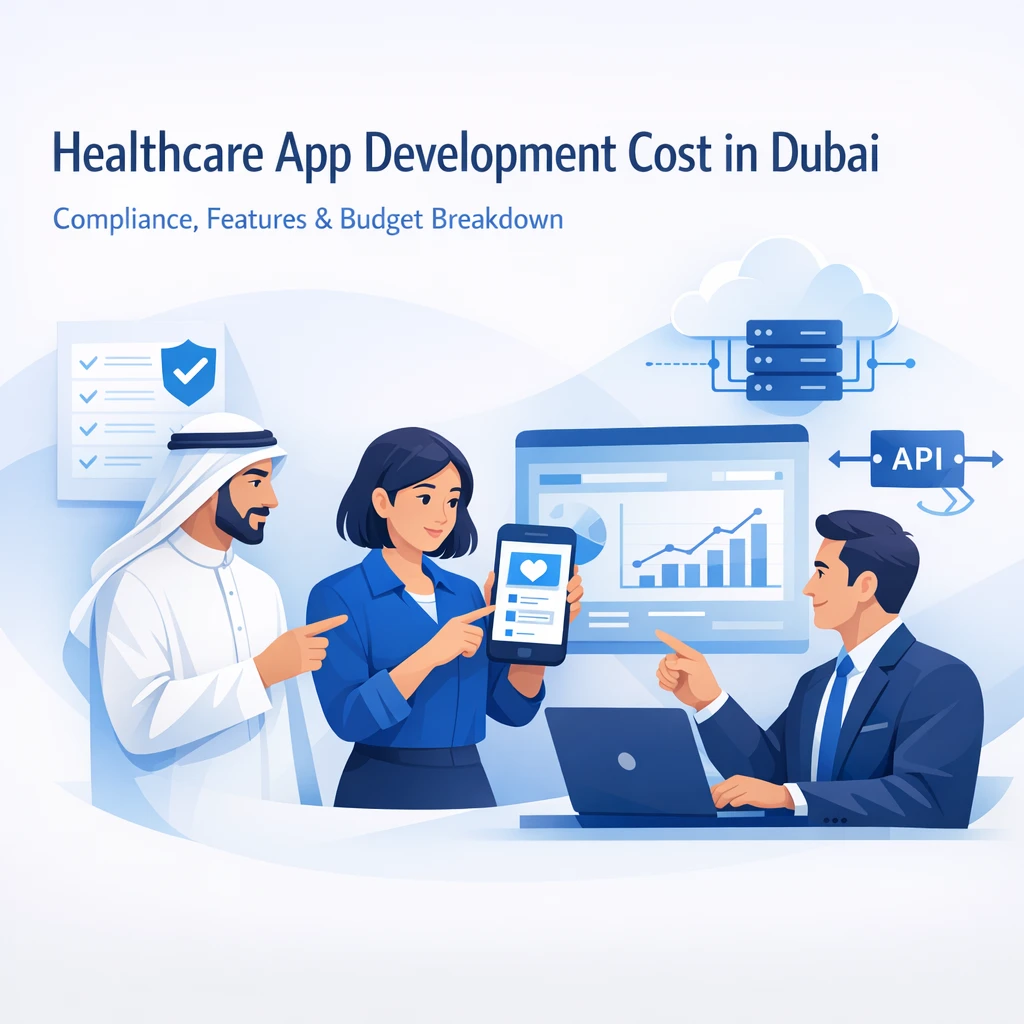
Understanding what drives cost helps SMBs, SMEs, startups, and enterprise teams plan compliant, feature-rich healthcare apps that scale. This guide, written for leaders in Dubai, UAE, and beyond, blends practical budgeting guidance with a technology blueprint to help you partner with a trusted software provider like Triostack Technologies.
Introduction
Healthcare software spans patient portals, telemedicine, appointment scheduling, AI-assisted diagnostics, and backend systems like ERP and CRM that healthcare organizations rely on daily. When projects cross borders—Dubai, GCC, US, UK, Europe—teams must balance regulatory compliance, user experience, data integrity, and total cost of ownership. This article breaks down the cost characteristics, regulatory considerations, and practical steps to build a compliant, feature-rich healthcare app in 2026. It also shows how experienced partners, such as Triostack Technologies, approach global healthcare projects with remote delivery from India, ensuring quality, speed, and cost efficiency without compromising security or governance.
What is the Topic?
“Healthcare app development cost in Dubai” encompasses the total expenditure required to design, build, test, deploy, and maintain software that supports clinical workflows, patient engagement, and back-office operations. It isn’t just line-item coding: it includes regulatory compliance, data governance, security, UX for diverse user groups, integration with hospital information systems, and ongoing support. A robust cost model also accounts for remote delivery arrangements, team composition, cloud infrastructure, and the evolution of product features aligned with business goals and patient outcomes.
Why it Matters in 2026
Several macro trends shape healthcare app development costs today:
- Regulatory and data privacy convergence: UAE data privacy expectations, GDPR-inspired practices for international patients, and cross-border data transfer considerations affect architecture and security investments.
- Patient-centric digital experiences: Telemedicine, remote monitoring, and AI-powered decision support demand richer UX and real-time data pipelines.
- Cloud-first and modular architectures: Microservices and cloud-native deployments enable scalable, compliant systems but require governance and automation to manage complexity.
- Global talent models: With cost pressures, many firms blend local regulatory experts with offshore delivery to balance compliance, speed, and budget.
Understanding these forces helps you allocate budget to what matters most: compliance, reliable data flows, and a patient-first experience that scales across markets like UAE, KSA, Qatar, Oman, Kuwait, Bahrain, and beyond to the United States, Europe, Australia, and Singapore.
Current Industry Challenges
- Compliance overhead: Meeting local health data privacy rules while enabling secure cross-border access for patients and clinicians.
- Interoperability: Integrating with legacy systems (EHR/EMR, LIS, RIS) and modern cloud services without data loss or latency penalties.
- Security and resilience: Protecting PHI/PII with robust identity, access, and threat detection in a growing threat landscape.
- Data governance: Data quality, lineage, and auditability to support clinical decision-making and regulatory reporting.
- Operational efficiency: Streamlining workflows across departments (radiology, pharmacy, billing) to reduce administrative burden.
How the Technology Works
A healthcare app typically combines a patient-facing frontend, clinician tools, back-office systems, and secure data stores. A modern approach uses a modular, API-driven architecture with strong security and identity management:
- Frontend: Responsive web UI and native mobile apps (iOS/Android) designed for accessibility and multilingual support.
- Backend: Microservices or modular monoliths exposing RESTful or GraphQL APIs for patient data, appointments, telemedicine sessions, payments, and analytics.
- Identity & Security: OAuth2/OpenID Connect, MFA, encryption at rest/in transit, and compliance-driven logging.
- Data & Analytics: Structured data stores, healthcare-specific data models, and AI tools for diagnostics support and care coordination.
- Integrations: EHR/EMR connectors, billing systems, pharmacy systems, lab results interfaces, and telephony/telemedicine platforms.
Architecture Overview
Below is a representative reference architecture for a Dubai-focused healthcare app. It balances patient access, clinician workflows, regulatory compliance, and scalable cloud infrastructure.
Client Layer: Web, iOS, Android apps, patient portal
API & Authentication: API Gateway, OAuth2, OpenID Connect
Service Layer: Appointment, Telemedicine, Records, Billing, Notifications, AI Services
Data Layer: Secure databases, data lake, data warehouse
Integrations: EHR/EMR, LIS, Pharmacy, Insurance
DevOps & Security: CI/CD, SAST/DAST, SIEM, Audit logging
Diagrams
Three visual representations help teams understand architecture, workflow, and deployment. Each is embedded below with Mermaid syntax.
Step-by-Step Workflow
- Discovery & Planning: Align stakeholders, define user personas, regulatory requirements, and success metrics.
- UX & Compliance Review: Conduct privacy-by-design and accessibility assessments; establish data models and consent flows.
- Architecture & MVP Scoping: Choose modular architecture, define API contracts, data migration plan, and security controls.
- Development Sprints: Agile iterations with continuous integration and automated tests.
- QA & Security: Functional, usability, performance, and security testing; penetration testing for sensitive data flows.
- Deployment & Compliance Validation: Deploy to cloud with staging environments; verify regulatory controls before go-live.
- Post-Go-Live: Monitoring, incident response, and continuous improvement based on real usage data.
Business Use Cases
- Patient Portal: Appointment booking, test results, secure messaging, and bill pay.
- Telemedicine: Video visits with scheduling, consent, and asynchronous triage.
- Remote Monitoring: Wearable data ingestion, alerts, and clinician dashboards for chronic disease management.
- Clinician Tools: EHR/EMR integration, order entry, and care coordination dashboards.
- Admin & Compliance: Billing, coding, privacy controls, and access audits.
Industry Applications
Applications span clinics, hospitals, diagnostic labs, insurance providers, and pharmaceutical distributors. A Dubai-based healthcare network may start with patient portals and telemedicine, then layer AI-based triage and decision support as patient volumes grow. In Saudi Arabia, GCC-wide compliance and localization are essential, while in the US and Europe, HIPAA/GDPR-aligned practices are non-negotiable.
Benefits
- Improved patient outcomes: Faster access to care, better follow-up, and data-driven decision support.
- Operational efficiency: Streamlined scheduling, reduced no-shows, and optimized resource utilization.
- Regulatory compliance: Built-in privacy controls, audit trails, and secure data exchange.
- Global scalability: One platform serving patients across multiple regions with localization support.
Challenges
- Data localization and cross-border transfers: Navigating regional rules while maintaining a smooth patient experience.
- Vendor and integration risk: Ensuring compatibility with EHR/EMR vendors and legacy systems.
- Cost uncertainty: Balancing feature creep with phased delivery and ROI realization.
- Talent constraints: Finding healthcare-domain experts for security, privacy, and clinical workflows.
Common Mistakes
- Underestimating data migration: Moving PHI with integrity and consent under regulatory constraints.
- Over-scoping MVP: Building every feature upfront instead of validating core workflows first.
- Insufficient security testing: Relying on generic testing instead of healthcare-specific risk assessments.
- Bad API governance: Inconsistent contracts leading to brittle integrations.
Best Practices
- Privacy-by-design: Build with data minimization, consent management, and encryption from the start.
- Modular architecture: Use microservices or modular monoliths to enable independent evolution and easier compliance updates.
- Security testing culture: Regular threat modeling, SAST/DAST, and security incident drills.
- Localization & accessibility: Language support, cultural customization, and accessible UI.
- Data governance: Data lineage, quality controls, and auditable workflows for regulatory reporting.
Build vs Buy
| Criteria | Build | Buy (Outsourced or SaaS) |
|---|---|---|
| Control & differentiation | High control; tailor-made to exact workflows | Faster onboarding; limited customization |
| Time to market | Longer; iterative discovery essential | Often faster for core features |
| Compliance risk | Customizable to local rules, but must be designed correctly | Depends on provider; may require heavy customization |
| Cost profile | Capex-heavy; ongoing maintenance | Opex; predictable monthly or annual fees |
| Scalability | Yes, but requires architectural discipline | Depends on product; some SaaS limits exist |
Estimated Development Cost
Healthcare app projects vary widely by scope, region, and compliance needs. The following ranges reflect early-stage to enterprise-grade efforts typical for SMBs and SMEs planning in 2026. They assume remote collaboration with a global delivery partner and a phased approach (MVP then feature expansion).
| Solution Type | Typical Range (USD) |
|---|---|
| Business Website | 5,000 – 15,000 |
| Customer Portal | 10,000 – 40,000 |
| CRM | 15,000 – 100,000 |
| ERP | 40,000 – 200,000 |
| AI Chatbot | 5,000 – 25,000 |
| AI Automation | 15,000 – 80,000 |
| SaaS MVP | 20,000 – 80,000 |
| Enterprise Web App | 30,000 – 200,000 |
Pricing factors include regulatory complexity (GDPR/HIPAA considerations, UAE-specific privacy requirements), localization needs for multiple regions, data migration scope, integration breadth (EHR/EMR, LIS, pharmacy), security testing rigor, cloud infrastructure choices (PaaS vs IaaS), and ongoing support commitments. A phased approach—MVP first, then iterative enhancements—often yields better return on investment and clearer visibility into cost drivers.
Recommended Technology Stack
The stack below reflects a balanced, compliant, scalable approach suitable for Dubai and global delivery:
- Frontend: React or Vue for web; React Native or Flutter for mobile apps; accessibility and i18n ready.
- Backend: Node.js with Express or NestJS, or .NET Core; API-first design with GraphQL where appropriate.
- Databases: PostgreSQL or MySQL for transactional data; MongoDB or Cassandra for unstructured data; data warehouse for analytics.
- AI/ML: Python-based ML pipelines; TensorFlow/PyTorch; hosted AI services for NLP, computer vision, and predictive analytics.
- Security & Compliance: IAM, OAuth2/OpenID Connect, MFA, encryption at rest/in transit, SIEM, DLP.
- Cloud & DevOps: AWS/GCP/Azure, Kubernetes, CI/CD pipelines (GitHub Actions, GitLab CI, Azure DevOps), IaC with Terraform, automated testing.
- Integrations: HL7/FHIR adapters, REST/GraphQL APIs, message queues (Kafka/RabbitMQ).
Future Trends
Healthcare software continues to evolve. Expect:
- AI-assisted triage and decision support integrated into clinician workflows.
- Greater emphasis on data federation, privacy-by-design, and verifiable data lineage.
- Hybrid work and nearshore/offshore delivery models optimized for regulatory complexity.
- Regulatory alignment across regions to support international patient cohorts.
How Triostack Delivers Projects Globally
Triostack Technologies combines domain expertise in healthcare with a proven global delivery model. We help clients design, build, deploy, and maintain scalable digital health platforms with a local touch. Our services include:
- Custom Software
- Web Development
- Mobile Apps
- AI Development
- Machine Learning
- CRM
- ERP
- SaaS
- Cloud Migration
- DevOps
- UI/UX
- API Development
- Dedicated Teams
- QA
- Maintenance
- Technical Consulting
REMOTE DELIVERY: Triostack’s Global Delivery from India
Triostack leverages a distributed delivery model that blends local regulatory expertise with a robust offshore engineering center in India. This approach supports timely delivery, cost efficiency, and high-quality engineering, while maintaining strong governance and security. Key elements include:
- Agile & Sprint Planning: Transparent roadmaps, backlog grooming, and adaptive planning.
- Weekly Demos: Stakeholder review cycles to ensure alignment and early risk detection.
- Communication Tools: Slack for daily updates; Teams, Zoom, or Google Meet for meetings.
- Project Management & Collaboration: Jira or ClickUp for task tracking; GitHub/GitLab for code; Azure DevOps for pipelines.
- CI/CD & Cloud Staging: Automated builds, tests, and staging environments to mirror production.
- QA & Security: Dedicated QA teams, security testing, and compliance validation.
- Documentation & NDA/IP: Clear documentation, NDAs, and explicit IP ownership terms.
- Timezone Overlap & Communication: Sufficient overlap for real-time collaboration; clear handoffs across time zones.
- Dedicated Project Managers: Accountability, risk management, and status reporting across regions.
- Long-term Support: Post-launch maintenance, feature upgrades, and security patching.
- Why UAE Businesses Outsource to India: Cost efficiency, large talent pool, faster hiring, flexible scaling, high-quality engineering, and strong communication channels.
Case Studies (Hypothetical Scenarios)
Below are representative implementations illustrating typical outcomes. Names are anonymized, focusing on challenges and solutions you might encounter in Dubai, the UAE, and nearby markets.
Dubai-based Logistics Company: Patient Safety & Workforce Scheduling Portal
Challenge: A logistics company expanding into healthcare support services needed a secure patient scheduling and courier coordination portal linked with a legacy ERP. They faced data privacy concerns and required a HIPAA/GDPR-aligned approach for international shipments and patient data.
Solution: Triostack built a modular patient portal with appointment scheduling, secure messaging, and courier coordination. Integrated with the company’s ERP and a hospital system via HL7/FHIR adapters. Implemented MFA, encryption, and audit trails; deployed in a Dubai-region data center with regional data localization options.
Outcome: Reduced appointment backlogs by 28%, improved patient consent capture, and provided governance controls for cross-border data exchange.
UAE Healthcare Clinic: Telemedicine Launch & EHR Integration
Challenge: A multi-clinic chain needed telemedicine capabilities and deep EHR/EMR integration with secure patient auth and local data residency.
Solution: Delivered a telemedicine module with video sessions, in-app consent, and robust patient portals. Built API integrations to the clinic’s EHR and a pharmacy system; established data residency in the UAE and GDPR-aligned processes for international patients.
Outcome: Telemedicine utilization increased by 60% in 9 months; improved data accuracy through automated reconciliation between scheduling, records, and billing.
Saudi Retail Business: Patient Contact Center & Loyalty Platform
Challenge: A regional retailer pivoting to healthcare support required a patient-facing app and a loyalty program with secure payments and cross-region marketing compliance.
Solution: Built a single patient app with appointment booking, telehealth, and loyalty integration; enabled cross-border payments and localization for GCC languages. Implemented strong authentication, data governance, and compliance checks aligned with UAE/GCC expectations and GDPR principles for international patients.
Outcome: Increased patient engagement while maintaining strict data governance and cross-region compliance.
Australian Startup: AI-driven Triage for Campus Clinics
Challenge: An Australian startup sought to pilot AI-driven triage within campus clinics and required rapid iterations with a distributed team.
Solution: Created a triage chatbot and clinician-facing dashboards with HIPAA/GDPR-aligned data handling, cloud-hosted AI services, and cross-region data replication for resilience.
Outcome: Accelerated triage times by 40% and generated actionable clinical insights from anonymized data.
Are you planning a similar healthcare software project?
Businesses planning digital health solutions often benefit from an experienced software development partner that can design, build, deploy, and maintain a scalable solution while navigating regulatory complexity. If you're considering a healthcare app for Dubai, the UAE, or global markets, Triostack can help you design a roadmap, select the right technologies, and execute with a focus on compliance, security, and performance.
Note: This article emphasizes education and practical guidance. For a tailored assessment, engage with our team to discuss your specific regulatory, UX, and integration requirements.
Frequently Asked Questions
- What is the typical timeline for a healthcare app MVP?
- Most MVPs range from 12 to 24 weeks depending on features, integrations, and regulatory requirements. A phased roadmap helps manage risk and cost.
- How do data privacy laws impact cost?
- Compliance adds security architecture, audits, and data governance workflows. However, a modular approach allows you to phase compliance controls to align with features and regions.
- What should I ask a potential development partner about for UAE compliance?
- Ask about data residency options, encryption standards, regulatory alignment (GDPR/HIPAA-like controls), audit capabilities, incident response, and privacy-by-design practices.
- Is remote delivery from India viable for UAE projects?
- Yes. A well-structured offshore model with robust governance, clear SLAs, timezone overlap, and strong communication can deliver high-quality results at competitive costs without compromising security or compliance.
- How should I budget for ongoing maintenance?
- Plan for 15–25% of initial development cost annually for support, security updates, and feature enhancements. Consider SaaS-style licensing or fixed-price retainers for predictable costs.
Triostack Team
Technology Evangelist & Writer
Triostack Team is an experienced writer and technologist, exploring the intersections of AI, cloud architecture, and modern application development. Passionate about turning complex technical concepts into accessible insights.