Generative AI for Real Estate in the UAE: High-ROI Use Cases for Sales, Operations, and Customer Experience
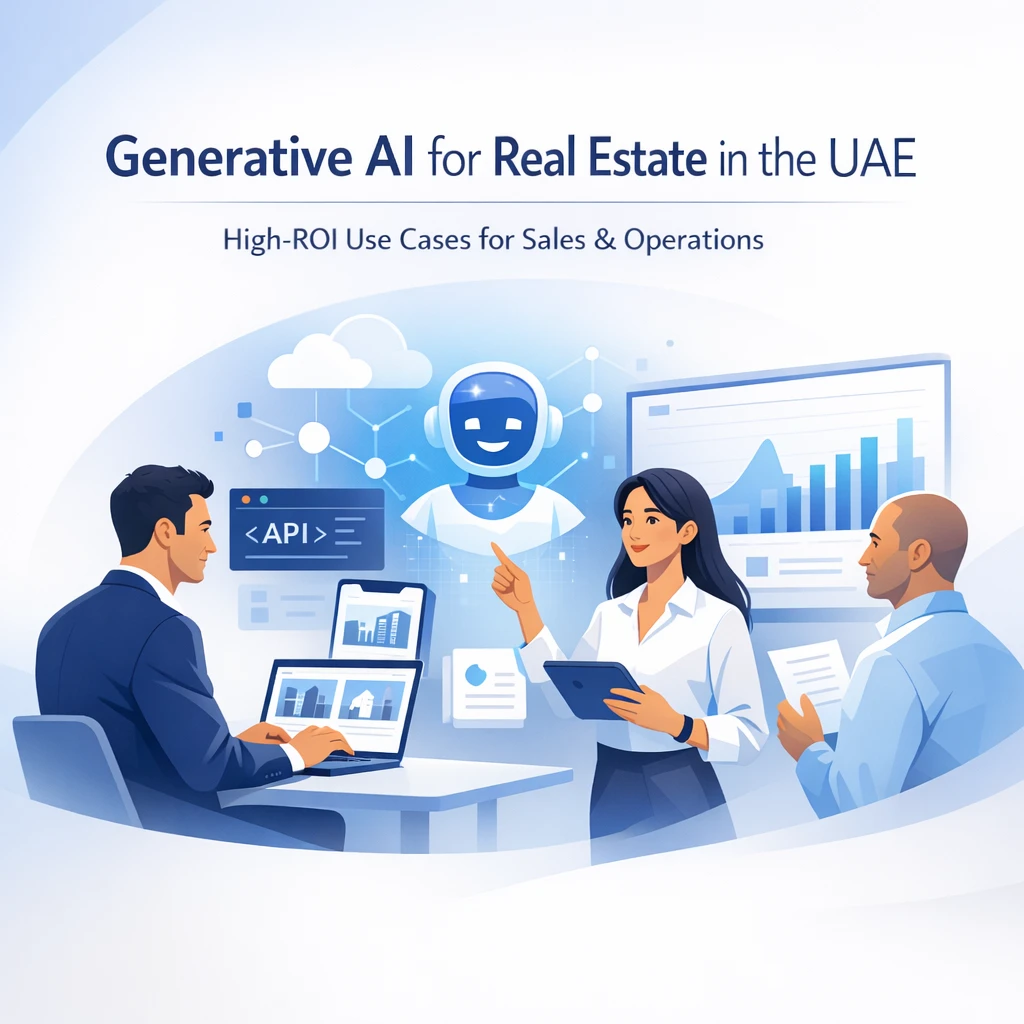
Across the UAE and the wider Gulf region, real estate markets are growing more sophisticated by the day. Tight competition, high customer expectations, and a data-rich landscape create an opportunity: leverage generative AI to streamline sales cycles, optimize operations, and elevate customer experience. This article provides practical guidance, practical architecture patterns, and implementation insights to help SMBs, SMEs, startups, and established firms assess, pilot, and scale generative AI solutions for real estate. It also explains how Triostack Technologies approaches these programs with a global delivery model that balances speed, quality, and governance.
What is the Topic?
Generative AI refers to AI systems capable of producing new content, insights, or actions from data. In real estate, this includes generating property descriptions, pricing scenarios, lead responses, market analyses, and even code or configurations for workflows. The UAE context adds unique considerations: multilingual customer interactions, strict data privacy, dynamic regulatory requirements, and the need to integrate with CRM, ERP, and property management platforms. When applied thoughtfully, generative AI can shorten sales cycles, automate repetitive tasks, improve data quality, and deliver personalized experiences at scale.
Why it Matters in 2026
In 2026, real estate teams expect technology to do more than automate. They want systems that understand intent, synthesize data from multiple sources, and learn from interactions. The UAE market has mature data ecosystems, from property listings and legal documents to customer inquiries and service tickets. Generative AI can help by:
- Enhancing lead discovery and qualification with contextual, real-time insights.
- Automating building operations, maintenance scheduling, and vendor communications.
- Delivering highly personalized client journeys, including virtual tours, tailored recommendations, and contract drafting assistance.
- Reducing time-to-value for software projects, enabling faster ROI cycles for SMBs and SMEs alike.
For technology leaders, this means balancing speed with risk management, ensuring data privacy, and maintaining compliance with local regulations while maintaining a global engineering discipline provided by partners like Triostack.
Current Industry Challenges
Real estate teams in the UAE face a set of persistent challenges that generative AI can help address:
- Fragmented data sources across MLS, CRM, ERP, property management systems, and customer support channels.
- Long sales cycles driven by manual document processing and repetitive client communications.
- Inconsistent client experiences across channels and touchpoints.
- Limited automation for after-sale services, facility management, and lease administration.
- Regulatory and data privacy considerations, especially when handling personal data across borders.
The goal is not to replace people but to augment teams with AI-enabled workflows that improve accuracy, speed, and client satisfaction.
How the Technology Works
Generative AI combines language models, retrieval augmented generation (RAG), embeddings, and orchestration logic to deliver targeted outcomes. In real estate contexts, three layers are typical:
- Language and content generation for property descriptions, chat responses, and contract templates.
- Decision acceleration via structured prompts, dashboards, and KPI-driven recommendations.
- Automation and workflow orchestration to trigger tasks, notify stakeholders, and sync data across systems.
Implementation decisions depend on data availability, governance policies, and the desired speed to value. Key considerations include data privacy, model bias mitigation, explainability, and secure integration with existing systems.
Architecture Overview
Below is a high-level reference architecture used by Triostack when building AI-powered real estate solutions for the UAE market. It emphasizes data safety, scalability, and maintainability, while enabling rapid experimentation and deployment.
In this pattern, the AI Core hosts language models, prompt templates, and orchestration logic. Data flows from client apps into a data lake or warehouse, where data is harmonized, cleansed, and enriched. Retrieval-augmented layers fetch context for generation, while integrations between CRM, ERP, and property management systems drive end-to-end workflows.
Mermaid Diagram: Workflow and Data Flow
Mermaid Diagram: Deployment & CI/CD
Step-by-Step Workflow
- Discovery and Data Strategy: define use cases, data sources, privacy requirements, and success metrics. Establish governance and KPI baselines.
- Data Preparation: inventory, clean, normalize, and enrich datasets. Identify sensitive data and apply masking where necessary.
- Model Selection and Prototyping: choose base models, define prompts, and build a minimal viable prototype to validate value quickly.
- Integration: connect AI components to CRM, ERP, PMS, and BI tools. Ensure secure APIs and event-driven workflows.
- Deployment and Security: move from staging to production with proper access controls, logging, and compliance checks.
- Monitoring and Governance: set up metrics, drift detection, and periodic model retraining schedules.
- Scale and Optimize: expand use cases, optimize prompts, and refine ROIs across departments.
Business Use Cases
Below are practical, high-ROI use cases organized by department. Each use case includes a brief description, example prompts, and integration touches.
- Sales and Marketing: lead scoring and routing, property personalized recommendations, auto-generated property descriptions for listings, and AI-assisted negotiation summaries.
- Operations and Facilities: predictive maintenance scheduling, lease renewal forecasting, vendor contract analysis, and maintenance ticket triage.
- Customer Experience: 24/7 multilingual chatbots, virtual property tours with natural language narration, and dynamic FAQ generation based on user queries.
In the UAE market, multilingual support (Arabic, English, and others) is often crucial. A Triostack implementation can provide localized prompts, compliant data handling, and secure cross-border data flows.
Industry Applications
Real estate players span brokerages, developers, property managers, and facility operators. Generative AI can support:
- B2B and B2C property portals with dynamic content creation
- Lease and sale lifecycle automation
- Site-level analytics for portfolio optimization
- Regulatory-compliant document generation and e-signatures
Triostack collaborates with clients across the UAE, Saudi Arabia, Qatar, Oman, Kuwait, Bahrain, and beyond, leveraging local security and data governance practices.
Benefits
- Faster time-to-value for new features and product lines
- Improved lead conversion and client retention through personalized experiences
- Operational efficiencies through automation of repetitive tasks
- Better data quality, enabling more accurate forecasting and insights
- Scalable content generation for listings, proposals, and marketing materials
When planned with governance and security in mind, generative AI becomes a force multiplier rather than a risk. Triostack emphasizes auditable workflows and clear ownership over data and models.
Challenges
Despite its benefits, there are real challenges to address:
- Data privacy and cross-border data transfer considerations
- Model drift and the need for ongoing validation
- Ensuring output quality and avoiding biased or inaccurate content
- Integrating AI outcomes with existing systems and business processes
Mitigation strategies include governance frameworks, hybrid deployments (on-prem and cloud), and human-in-the-loop validation for high-stakes outputs.
Common Mistakes
- Pursuing AI as a silver bullet without a clear use case or ROI plan
- Underinvesting in data preparation and governance
- Building monolithic solutions without modular, scalable architecture
- Underestimating the importance of UX when presenting AI-generated results
The right approach blends business outcomes with robust engineering and design disciplines. Triostack helps clients avoid these pitfalls by starting with outcomes, not technology for its own sake.
Best Practices
- Define measurable success: acceptance criteria, adoption rates, and key performance indicators
- Adopt a modular architecture with clear data contracts
- Implement strong data governance, privacy, and security controls
- Use iterative experimentation with rapid prototyping
- Prioritize user-centric design and transparent AI outputs
Triostack emphasizes an iterative, risk-aware approach that aligns AI initiatives with business goals and regulatory requirements.
Build vs Buy Comparison
Many UAE real estate teams face a choice between building tailored AI capabilities in-house or partnering with an experienced vendor. The table below summarizes typical tradeoffs.
| Criterion | Build | Buy (Partner) |
|---|---|---|
| Time-to-value | Longer due to data prep and model development | Faster with pre-built components and governance |
| Customization | High degree of control | Depends on vendor capabilities, can be highly configurable |
| Risk & governance | Requires mature processes | Vendor handles risk controls and compliance |
| Cost | CapEx and ongoing ops costs | Opex with predictable investment |
| Scalability | Depends on architecture | Typically designed for scale across markets |
For many UAE SMBs, partnering with a capable firm like Triostack accelerates ROI while keeping governance intact. A blended approach is common: core capabilities built or hosted via a vendor, with custom modules developed in-house when needed.
Estimated Development Cost
Costs vary by scope, data complexity, and integration requirements. The ranges below reflect typical projects for SMBs and SMEs in real estate with a focus on ROI and time-to-value. All figures are in USD and exclude ongoing operational costs such as cloud hosting, licenses, and support.
| Solution Type | Typical Range (USD) | Notes |
|---|---|---|
| Business Website | 5k–15k | Content generation, basic chat, lead capture |
| Customer Portal | 10k–40k | Listings, quotes, document management |
| CRM | 15k–100k | Lead scoring, auto-responses, activity pipelines |
| ERP | 40k–200k | Lease management, procurement workflows, financial data |
| AI Chatbot | 5k–25k | Multilingual, integrated with chat channels |
| AI Automation | 15k–80k | Workflow orchestration, task automation |
| SaaS MVP | 20k–80k | End-to-end MVP with core AI features |
| Enterprise Web App | 30k–200k | Complex integrations and governance |
Pricing factors include data readiness, integration complexity, regulatory considerations, language support, security requirements, and the need for custom UX. Triostack can tailor engagements to fit budget bands from USD 5k to USD 200k while preserving architectural quality and long-term maintainability.
Recommended Technology Stack
The stack below reflects practical, enterprise-grade choices commonly adopted for UAE real estate AI projects. It balances performance, security, and developer productivity.
- Frontend: React or Vue.js, accessible UI components, multilingual support
- Backend: Node.js or .NET, microservices, API gateways
- AI/ML: LLM providers or open models, embeddings, RAG layer, prompt engineering tooling
- Data & Storage: Data Lake or Data Warehouse, secure storage, encryption at rest/in transit
- CRM/ERP/PMS Integrations: REST/GraphQL APIs, event-driven architecture (Kafka, RabbitMQ)
- DevOps: GitHub/GitLab, CI/CD, IaC, containerization (Docker, Kubernetes), cloud native services
- Security & Compliance: IAM, SSO, data masking, audit logging, GDPR-like controls as applicable
- QA & Testing: automated tests, performance testing, security testing
Triostack helps select components that align with your regulatory context and deployment preferences, offering flexible remote delivery.
Future Trends
Expect continued maturation in the UAE and GCC markets around AI governance, privacy-by-design, and AI-driven decision support. Emerging patterns include: AI-assisted contract analytics, real-time demand forecasting with external indicators, and hybrid AI systems that combine domain-specific models with general-purpose LLMs for robust performance in regulated environments.
How Triostack Delivers Projects Globally
Triostack operates with a distributed delivery model that emphasizes collaboration, quality, and governance. Teams in India, the UAE, and other regions work in tandem to deliver scalable software across time zones while maintaining clear ownership and communication channels.
- Agile: Iterative sprints with frequent stakeholder feedback
- Sprint Planning: Defined goals, backlog grooming, and commitment
- Weekly Demos: Product visibility and course corrections
- Communication: Slack, Teams, Zoom, Google Meet for day-to-day collaboration
- Project Management: Jira, ClickUp, GitHub, GitLab for project and code management
- CI/CD: Automated pipelines, cloud staging, and production deployment
- Security & IP: NDAs, IP ownership, and compliance documentation
- Time Zone Overlap: Sufficient overlap with UAE business hours for synchronous collaboration
- English Communication: Clear, technical, and professional communication standards
- Dedicated Project Managers: Single point of contact for governance and delivery oversight
- Long-term Support: Ongoing maintenance, upgrades, and scalability planning
Why UAE businesses consider outsourcing to India or other nearshore hubs alongside local teams? Cost efficiency, a large talent pool, scalable hiring, high-quality engineering, and strong communication often create a compelling combination for complex AI programs.
Remote Delivery: A Practical Guide for UAE Real Estate Projects
Remote delivery models require disciplined practices to succeed. Triostack aligns with UAE business expectations while leveraging a global talent pool:
- Agile and Sprint Planning: Short iterations keep stakeholders engaged and procurement timelines predictable.
- Regular Demos: Weekly milestones demonstrate progress and reduce risk.
- Communication Channels: Slack for daily updates, Teams for meetings, Zoom for reviews, and Google Meet for client briefings.
- Project Management: Jira or ClickUp to manage backlogs, user stories, and acceptance criteria; GitHub or GitLab for code hosting and reviews.
- CI/CD and Cloud Staging: End-to-end automation from code to staging to production; cloud staging mirrors production environments for accurate testing.
- QA and Documentation: Thorough QA tests, signed-off documentation, and clear release notes.
- Security and NDA: Strict security protocols, signed NDAs, and clear IP ownership terms.
- Timezone Overlap: Ensuring overlap windows for synchronous collaboration with UAE teams
- English Communication: Clear, concise, and precise updates and technical documentation
- Dedicated Project Managers: Ensuring accountability and risk management
For UAE businesses, remote delivery from India offers cost efficiency, a deep talent pool, faster hiring, high-quality engineering, and strong communication practices when paired with robust governance and strong client partnerships. Triostack emphasizes transparency and continuous alignment to business outcomes.
Case Studies (Realistic Scenarios)
Below are anonymized but practical scenarios that illustrate how generative AI can be applied in real estate contexts. These are representative patterns rather than specific client statistics.
Dubai-based Logistics Company
Challenge: A logistics firm with a large real estate portfolio sought to optimize facility space utilization and automate vendor contracts for warehousing spaces.
Approach: Triostack built an AI-enabled portfolio analytics module that generates property descriptions, automates lease renewal drafting, and aligns space utilization with demand signals. The system integrated with the company’s ERP for lease accounting and with the procurement system for vendor management.
Outcome: Improved visibility into portfolio performance, faster lease renewal processing, and streamlined vendor communications. The solution supported multilingual interactions for regional teams and ensured data governance aligned with local regulations.
UAE Healthcare Clinic
Challenge: A network of clinics needed to manage property-related leases, patient facility scheduling, and clinical workspace optimization while maintaining strict data privacy.
Approach: Implemented a secure AI-assisted content and document generation system for lease agreements, facilities management requests, and patient-facing informational content. Integrated with the clinic’s CRM and practice management systems to automate appointment workflows and resource planning.
Outcome: Reduced administrative load on staff, faster lease processes, and improved patient experience through responsive, multilingual support.
Saudi Retail Business
Challenge: A retail chain sought to optimize store locations, merchandising, and lease negotiations while ensuring regulatory compliance across borders.
Approach: Built an AI-driven market analysis tool that ingested foot traffic data, rental rates, and competitor activity to recommend store locations and optimize leasing terms. Automated marketing content generation for property listings and investor briefs.
Outcome: More efficient site selection and better-aligned marketing content during property campaigns.
Australian Startup
Challenge: A proptech startup needed to rapidly prototype a property marketplace with AI-generated content, chat capabilities, and seller dashboards.
Approach: Rapid MVP using a modular AI core with plug-and-play integrations to the marketplace, chatbot, and seller dashboards. Emphasized UX and multilingual support for a global audience.
Outcome: Accelerated time-to-market and a scalable architecture ready for regional expansion.
UK SaaS Company
Challenge: A SaaS provider offering property management tooling required AI-assisted guidance for contract management, risk assessment, and automated customer support.
Approach: Implemented a generative AI layer for document drafting and dynamic knowledge base generation integrated with the existing SAAS product.
Outcome: Improved customer support efficiency, reduced response times, and richer, self-service content for clients.
Cost Section: Realistic Software Pricing for SMBs
Understanding pricing helps you plan budgets, especially when evaluating ROI and total cost of ownership. The ranges below reflect typical engagements for SMBs and SMEs planning real estate AI projects. They assume a reasonable data landscape and standard integrations.
Typical Ranges by Solution Type
- Business Website: USD 5k–15k
- Customer Portal: USD 10k–40k
- CRM: USD 15k–100k
- ERP: USD 40k–200k
- AI Chatbot: USD 5k–25k
- AI Automation: USD 15k–80k
- SaaS MVP: USD 20k–80k
- Enterprise Web App: USD 30k–200k
Pricing Factors
- Data readiness and quality: more data requires more cleansing and normalization
- Number and complexity of integrations with CRM, ERP, or PMS
- Multilingual requirements and localization needs
- Security, privacy controls, and regulatory compliance
- Custom prompts, risk controls, and explainability requirements
- UX design complexity and content generation scope
- Ongoing maintenance, updates, and support commitments
For many UAE categories, Triostack helps align price with outcomes, delivering a roadmap that prioritizes high-ROI use cases first and scales over time.
Frequently Asked Questions
- What kind of real estate AI use cases deliver the highest ROI in the UAE?
- Leads qualification, tailored property recommendations, automated content generation for listings, contract automation, and multilingual client support tend to yield strong ROI when implemented with governance and clear KPIs.
- How long does a typical AI pilot take?
- Most pilots can deliver measurable value within 6–12 weeks, depending on data readiness and integration complexity. A phased plan helps demonstrate early wins while de-risking broader deployment.
- Can these solutions handle multilingual requirements?
- Yes. UAE and Gulf markets often require Arabic and English support, with the ability to scale to other languages as needed. Proper localization is essential for adoption.
- How does Triostack ensure data privacy and compliance?
- We design with privacy by design, apply data masking where appropriate, enforce strict access controls, and document governance and IP ownership. NDAs and regulatory considerations are part of every engagement.
- What is the difference between onshore and offshore delivery in this context?
- Onshore or nearshore arrangements offer closer regulatory alignment and closer time-zone alignment for collaboration, while offshore models provide cost advantages and larger talent pools. A blended approach often yields the best balance for AI programs.
Conclusion
Generative AI holds the potential to transform real estate operations in the UAE and beyond by accelerating sales cycles, automating routine tasks, and delivering personalized experiences at scale. The path to value hinges on clear use cases, careful data governance, and a pragmatic approach to architecture and delivery. Triostack Technologies positions itself as a trusted partner capable of guiding SMBs and growth-stage firms through discovery, prototyping, and scale — with remote delivery that respects local context, regulatory considerations, and business objectives.
As you plan your next software initiative, consider not only the technology but also the capability, governance, and partnerships that will enable sustainable success. Businesses planning similar solutions often benefit from experienced software development partners like Triostack Technologies.
Frequently Asked Section: Internal Links and Resources
For readers exploring related topics, use these internal links as reference points (placeholders):
Triostack Team
Technology Evangelist & Writer
Triostack Team is an experienced writer and technologist, exploring the intersections of AI, cloud architecture, and modern application development. Passionate about turning complex technical concepts into accessible insights.