Digital Transformation Strategy for Logistics Companies in the GCC: Technology Roadmap, Budget, and Business ROI
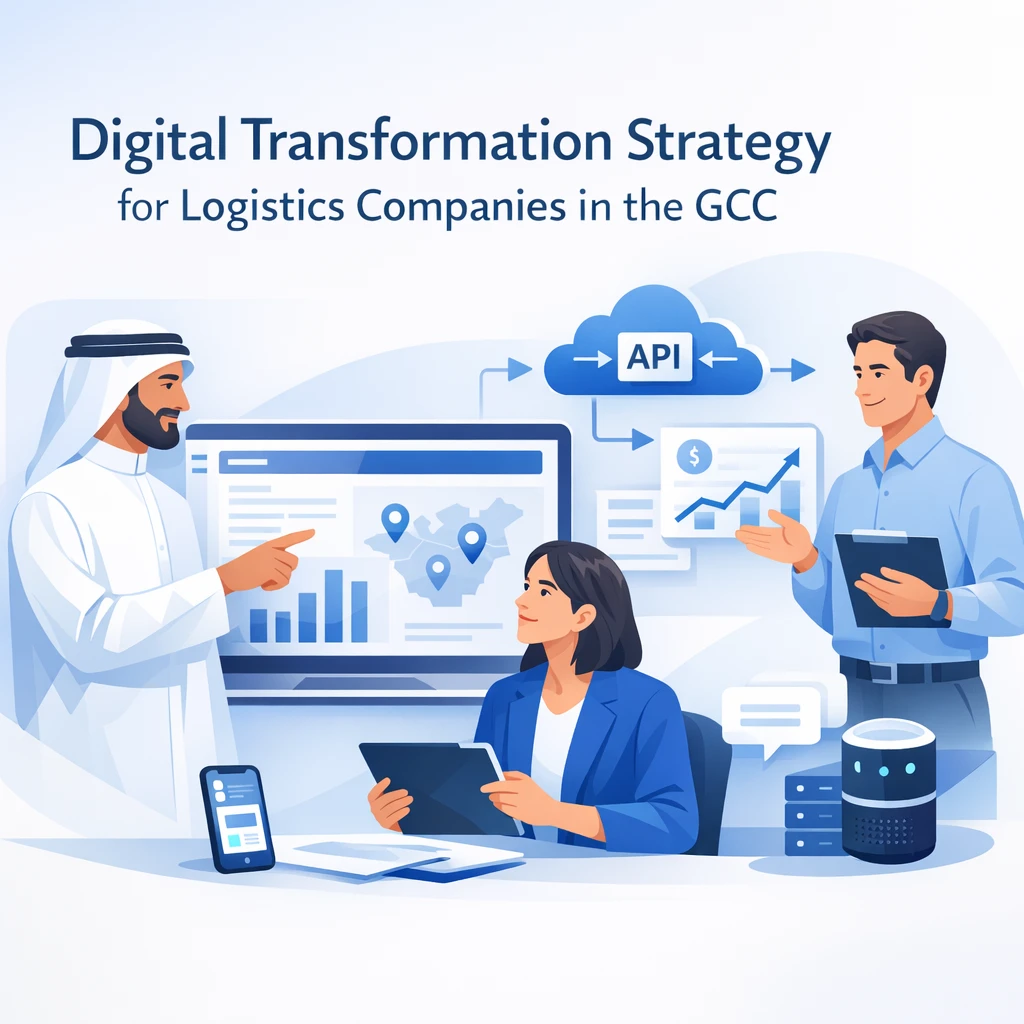
Practical guidance for small to mid-market logistics players in the GCC (Dubai/UAE, Saudi Arabia, Qatar, Oman, Kuwait, Bahrain) and beyond, translating strategy into measurable outcomes with a clear technology roadmap and realistic budgeting.
Introduction
Across the GCC, logistics is a strategic enabler of trade, e-commerce, and regional development. Companies that modernize with purpose—not just tech for tech’s sake—see tangible improvements in visibility, speed, compliance, and cost efficiency. This article presents a practical, vendor-agnostic framework for digital transformation tailored to logistics businesses, with a focus on technology roadmaps, budgeting, and return on investment (ROI). It also introduces Triostack Technologies as a proven partner capable of delivering large-scale, globally distributed software programs while keeping the customer’s business outcomes at the center of every decision.
What is the Topic?
Digital transformation in logistics means aligning people, process, data, and technology to create end-to-end value. It is not a single tool or a one-off project; it is an investment program that combines software platforms, data integration, automation, and organizational change management to achieve reliable, scalable operations, improved customer experience, and competitive advantage.
Why it Matters in 2026
- Global trade and regional growth. The GCC remains a critical logistics hub for the Middle East, Africa, and Asia. Efficient logistics enable just-in-time inventory, faster route settlement, and better cross-border clearance.
- Rising customer expectations. E-commerce acceleration requires real-time tracking, accurate ETA predictions, and flawless order orchestration.
- Regulatory evolution. Customs, sanctions, and trade-compliance requirements demand robust data governance and secure, auditable workflows.
- Talent and cost pressures. A larger talent pool in offshore delivery centers can help scale capabilities while maintaining cost discipline.
In this context, a thoughtful technology roadmap—grounded in business outcomes and constrained by budget realities—helps GCC logistics players compete locally and globally.
Current Industry Challenges
- Disparate systems across warehouses, transport, and customs leading to data silos and slow decision-making.
- Limited visibility from dock to delivery, with frequent data gaps and manual reconciliation.
- Legacy ERP/WMS systems that are expensive to customize and difficult to modernize.
- Complex supply chains facing volatility in fuel, routes, and capacity.
- Security, data privacy, and compliance requirements across multiple jurisdictions.
How the Technology Works
Effective logistics transformation combines four core capabilities:
- Unified data fabric: Integrates data from ERP, WMS, TMS, CRM, IoT devices, and external partners using APIs, ETL/ELT, and data lakes.
- Automation and orchestration: Automates routine workflows (booking, invoicing, exception handling) and orchestrates cross-system processes across warehouses, fleets, and last-mile partners.
- Analytics and AI: Applies real-time analytics, predictive insights (demand, capacity, maintenance), and prescriptive actions to improve service levels and cost efficiency.
- Security and governance: Implements identity, access controls, encryption, auditing, and regulatory compliance across borders.
For GCC businesses, this often involves a phased approach: modernizing core data foundations, then enhancing operations with automation, and finally embedding AI-driven decision support that scales.
Architecture Overview
The following high-level architecture is designed to be scalable, modular, and compliant with regional data requirements. It supports remote delivery, phased adoption, and independent evolution of each layer.
F[UI/ Dashboards] E --> G[Warehouse Systems] E --> H[Fleet/Transport Systems] G --> I[CRM/Customer Portal] H --> I
Step-by-Step Workflow
- Plan and baseline: Define success metrics, map current processes, and identify data sources.
- Ingest and normalize: Connect ERP, WMS, TMS, CRM, and IoT devices; standardize data models.
- Integrate and automate: Build orchestration workflows across procurement, storage, routing, and delivery.
- Analyze and predict: Use AI to forecast demand, capacity, and disruptions; generate recommended actions.
- Execute and monitor: Automate execution with controls and dashboards; continuously monitor for improvement.
- Scale and govern: Expand to new facilities, regions, and partners with robust governance.
Business Use Cases
- Route optimization and dynamic dispatch: Real-time reallocation of trucks to meet service levels and reduce empty miles.
- Inventory visibility and storage optimization: Real-time stock levels, automatic reordering, and space optimization in warehouses.
- Last-mile visibility and customer experience: End-to-end tracking, ETA accuracy, and proactive customer notifications.
- Cross-border and customs automation: Pre-screening, document validation, and automated declarations to reduce delays.
- Predictive maintenance for fleets and equipment: AI-driven maintenance scheduling to minimize downtime.
Industry Applications for the GCC
GCC logistics businesses can tailor solutions to local realities—import/export trade, hyperlocal e-commerce, and regional distribution networks. Use cases include:
- Dock-to-door orchestration for FMCG distribution in UAE and Saudi Arabia.
- Cross-border freight management with compliant data exchange for Saudi, UAE, Qatar, and Kuwait.
- Last-mile delivery networks for retail chains and marketplaces across major GCC cities.
Benefits
- Improved on-time delivery and reliability through better routing and real-time visibility.
- Lower total cost of ownership via automation, integrated systems, and data-driven decision making.
- Faster time-to-market for new services (e.g., cross-border e-commerce support).
- Enhanced security, governance, and compliance across jurisdictions.
- Better customer experience and partner collaboration through transparent workflows.
Challenges
- Aligning legacy systems with modern cloud-based platforms.
- Data quality and lineage across multiple partners and geographies.
- Change management: getting operations teams to adopt new ways of working.
- Security, privacy, and regulatory compliance in cross-border data flows.
Common Mistakes
- Sweeping modernization without a phased value delivery plan.
- Underinvesting in data governance and data quality initiatives.
- Over-customizing ERP/WMS platforms instead of leveraging out-of-the-box capabilities.
- Underestimating the importance of organizational change management.
Best Practices
- Adopt a product-minded, MVP-driven approach with measurable milestones.
- Establish a governance framework for data, security, and compliance early.
- Use an incremental, value-driven roadmap with clear dependencies and risk mitigation.
- Choose a flexible technology stack that supports future growth and regional needs.
- Invest in change management and user enablement from day one.
Build vs Buy: What Makes Sense for GCC Logistics?
| Aspect | Build | Buy (Out-of-the-Box / SaaS) |
|---|---|---|
| Time to value | Longer, phased development | Shorter, faster deployment for core capabilities |
| Customization | High, tailor-made to unique processes | Limited to vendor capabilities; customization possible but costly |
| Cost predictability | Variable, depends on scope | More predictable with subscription pricing |
| Control and IP | High control; IP owned by the client | Vendor controls; IP ownership may be shared or vendor-owned |
| Maintenance burden | Client-owned; ongoing development and patching required | Vendor handles updates; potential vendor lock-in |
| Risk | Higher implementation risk if requirements are not well-defined | Lower risk for core functionality but risk of feature gaps |
Estimated Development Cost
Typical ranges for SMBs and SMEs planning software projects (all figures in USD). These ranges reflect a range of project scopes, from MVPs to robust platforms with integrations and automation.
| Project Type | Typical Range (USD) | Notes |
|---|---|---|
| Business Website | 5,000 – 15,000 | Marketing sites or lightweight portals |
| Customer Portal | 10,000 – 40,000 | Self-service features, order tracking |
| CRM | 15,000 – 100,000 | Sales/marketing automation, pipeline insights |
| ERP | 40,000 – 200,000 | End-to-end business process integration |
| AI Chatbot | 5,000 – 25,000 | Customer support, FAQ automation |
| AI Automation | 15,000 – 80,000 | Robotic process automation, workflow optimization |
| SaaS MVP | 20,000 – 80,000 | Core product with essential features |
| Enterprise Web App | 30,000 – 200,000 | Complex workflows, large data volumes |
Pricing factors include scope, data migration, system integrations, security requirements, regulatory compliance, multi-region deployment, and the level of ongoing support.
Recommended Technology Stack
The stack below is representative for GCC logistics projects that require reliability, scalability, and security. Specific technology choices should be guided by existing systems, regulatory considerations, and in-region support availability.
| Layer | Example Technologies |
|---|---|
| Frontend | React or Vue, with TypeScript; responsive UX; accessible design |
| Backend | Node.js, Java Spring Boot, or .NET; microservices architecture |
| APIs & Integration | REST/GraphQL APIs; API gateway; message brokers (Kafka, RabbitMQ) |
| Data & Analytics | Data lake (S3/AB), Delta Lake; Python/R for analytics; Spark |
| Cloud & DevOps | AWS/Azure/GCP; Kubernetes; CI/CD (GitHub Actions, Azure DevOps) |
| AI & ML | TensorFlow/PyTorch; AutoML; MLflow; OpenAI integrations |
| Automation & Orchestration | RPA tools, workflow engines, BPMN |
| Security & Compliance | Identity & Access Management, encryption, DLP, SOC 2 type security practices |
Future Trends
- Hyperautomation and intelligent route planning across multi-modal networks.
- Increased adoption of edge computing for real-time decisions at warehouses and in vehicles.
- Greater emphasis on data governance, privacy, and cross-border data flows in the GCC.
- AI-assisted demand forecasting and capacity planning integrated with supplier networks.
- Robust cloud migrations with multi-region resilience and disaster recovery.
REMOTE DELIVERY: How Triostack Delivers Projects Globally (From India)
Triostack has successfully delivered software programs from India to clients worldwide, including GCC-based businesses. Our remote delivery model emphasizes adaptability, transparency, and security while maintaining high-quality engineering standards.
Agile, with clear rituals
- Sprint Planning: Align on goals, scope, and acceptance criteria every 2 weeks.
- Weekly Demos: Demonstrate progress to stakeholders; gather feedback early.
- Tools and Collaboration: Slack, Teams, Zoom/Google Meet, Jira, ClickUp, GitHub, GitLab, Azure DevOps.
- CI/CD and Cloud Staging: Automated testing, staged releases, and secure deployments.
- QA and Documentation: Continuous quality assurance and up-to-date documentation.
- Security and NDA/IP Ownership: Strict security controls, NDAs, and clear IP ownership terms.
- Timezone Overlap and Communication: Align working hours for effective collaboration and fast issue resolution.
- Dedicated Project Managers: Onshore coordination, risk management, and status reporting.
- Long-term Support: Post-go-live maintenance, feature enhancements, and support SLAs.
Why do UAE businesses outsource development to India? Benefits include cost efficiency, access to a large talent pool, faster hiring, high-quality engineering, strong communication practices, and the ability to scale teams quickly while maintaining quality standards.
Case Studies (Realistic Scenarios, Anonymized)
Dubai-based logistics company (anonymized)
Engaged to modernize warehouse operations across multiple facilities, integrate with the TMS and ERP, and implement real-time shipment tracking. The program delivered a unified data platform, improved workflow automation, and a single source of truth for inventory and orders. The result was more reliable deliveries and better customer communication.
UAE-based healthcare network
A healthcare clinic network needed a secure portal for patient scheduling, billing, and coordination with suppliers. The project included patient data privacy controls, role-based access, and a compliant data exchange layer with suppliers. The outcome was streamlined operations and improved patient experience.
Saudi retail business
The retailer required end-to-end visibility across distribution centers and stores, with automated replenishment and an omni-channel order flow. The solution integrated with store POS, inventory, and logistics partners, enabling better stock management and faster delivery promises.
Australian startup
Asked for a scalable logistics platform with a modular SaaS architecture for regional expansion. The project emphasized rapid MVP delivery, multi-tenant architecture, and robust analytics. The startup could validate the business model and scale to additional markets efficiently.
UK SaaS company
A UK-based logistics software provider sought a global deployment with multi-language support and secure data handling. The engagement demonstrated Triostack’s capability to deliver complex, multi-region deployments with strong governance and consistent performance.
Pricing factors and Cost Components
Pricing is driven by scope, complexity, integrations, data migration, regulatory considerations, and post-release support. The key cost components typically include:
- Discovery and UX design to align business goals with user needs.
- Platform core development and integration with ERP/WMS/TMS.
- Data migration, data quality, and governance tooling.
- Security, compliance, and audit readiness.
- Cloud infrastructure, deployment automation, and monitoring.
- Change management, training, and user enablement.
In practice, GCC logistics projects often start with a minimum viable product (MVP) that demonstrates the core value, followed by incremental enhancements that extend coverage to more facilities, regions, and partner ecosystems.
Frequently Asked Questions
- What is the typical timeline for a digital transformation program in logistics?
- A phased approach often starts with discovery and MVP delivery within 8–12 weeks, followed by additional waves every 8–16 weeks depending on scope and risk considerations.
- Is remote delivery viable for GCC-based logistics projects?
- Yes. A well-governed remote delivery model with clear collaboration rituals, security controls, and time-zone alignment can deliver high-quality results while keeping costs predictable.
- How do we measure ROI?
- ROI is typically measured through improved service levels (on-time delivery), cost per shipment, inventory turnover, labor productivity, and customer satisfaction. A baseline is established early, with ongoing tracking of KPI trends.
Conclusion
For logistics companies in the GCC, digital transformation is a strategic investment in resilience, efficiency, and growth. A well-planned technology roadmap—grounded in business outcomes, governed data, and a pragmatic build-vs-buy approach—delivers measurable ROI while enabling scalable, secure operations. Triostack Technologies brings a global delivery model, deep domain expertise in logistics and enterprise software, and a commitment to patient, disciplined execution. With the right partner, GCC logistics providers can modernize without disruption, unlock new service capabilities, and stay competitive in an increasingly complex market.
If you're planning a similar software project, Triostack can help you design, build, deploy and maintain a scalable solution.
Triostack Team
Technology Evangelist & Writer
Triostack Team is an experienced writer and technologist, exploring the intersections of AI, cloud architecture, and modern application development. Passionate about turning complex technical concepts into accessible insights.