Dedicated Development Team vs In-House Hiring in the UK: Which Model Scales Product Delivery More Efficiently?
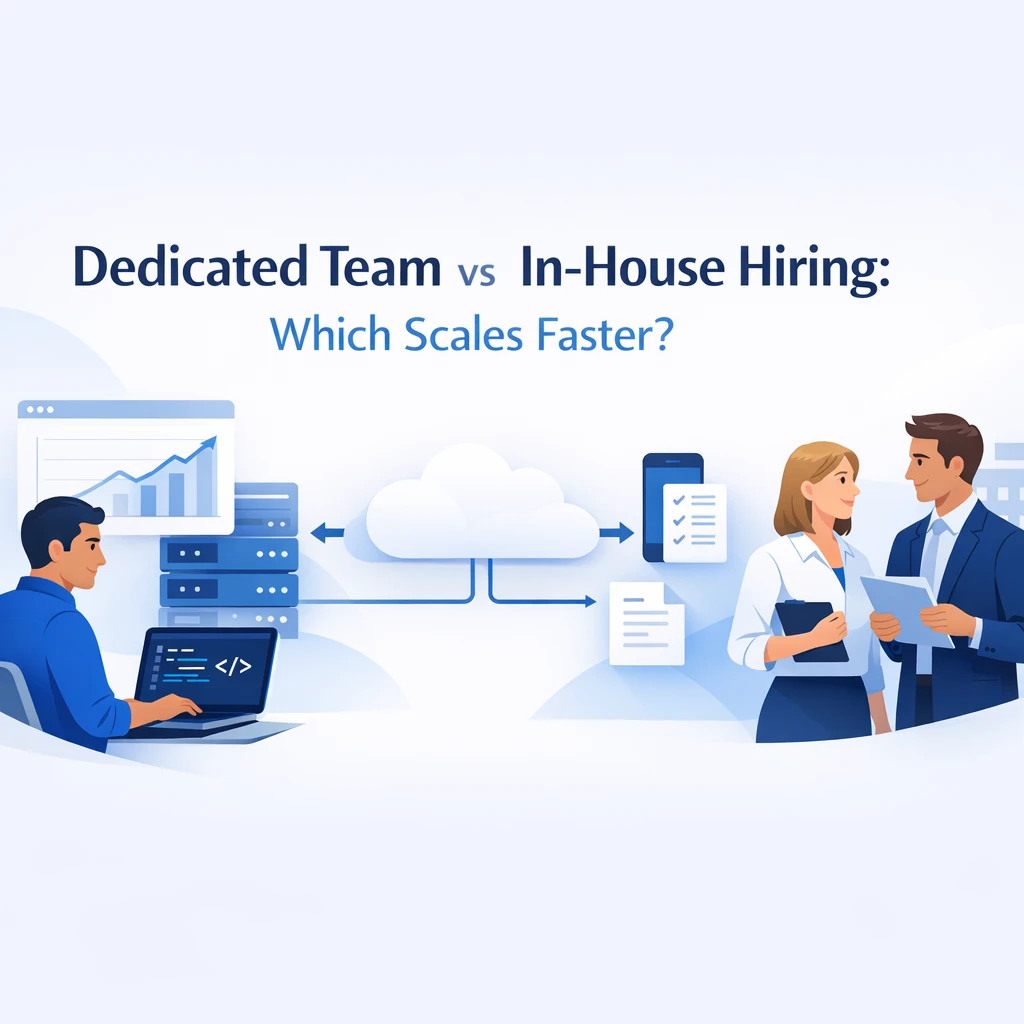
The decision between building an in-house software team and partnering with a dedicated development team is a strategic one for SMBs, SMEs, startups, and established enterprises alike. In today’s global market, the right approach to software delivery can be the difference between hitting a go-to-market date and missing it by months. This article offers a practical, practitioner-focused view on how dedicated teams and in-house hires compare in terms of speed, cost, risk, and scalability. We’ll ground the discussion with real-world patterns, industry insights, and actionable guidance, while illustrating how Triostack Technologies can support organizations across the UAE, GCC, the UK, Europe, North America, and beyond.
What is the Topic?
Dedicated development teams are remote, full-stack engineering groups that work exclusively on a client’s project under a single management and collaboration framework. In-house hiring, by contrast, builds a local team with direct reporting lines, office space, and internal processes. The core question is not simply about location or whether to outsource, but about which model delivers software faster, with higher quality, and at a sustainable cost when scaling across product life cycles.
Why it Matters in 2026
Global software delivery has shifted from vendor selection as a mere procurement decision to a critical strategic capability. For UK companies expanding into markets like the UAE, Saudi Arabia, and Europe, or serving customers in the US, Canada, and Australia, the capacity to scale quickly while maintaining governance and security is essential. The right delivery model reduces time-to-market, accelerates iterations, and lowers Total Cost of Ownership (TCO) without compromising risk controls or IP ownership. The landscape is shaped by talent supply, regulatory compliance, currency stability, and the evolving expectations around remote collaboration tools and DevOps maturity.
Current Industry Challenges
- Talent Scarcity and Cost Inflation: In-demand developers command premium salaries, particularly in the UK and Western Europe. Building an in-house team often entails long ramp-up times and higher ongoing costs.
- Time-to-Market: Startups and digital transform initiatives require rapid feature delivery. Delays can erode competitive advantage.
- Quality and Security: Complex compliance regimes (GDPR, data localization, industry-specific standards) demand robust security and governance practices, regardless of model.
- Global Alignment: Distributed teams must align across time zones, cultures, and tools, which can complicate communication and product planning.
- Scalability: Peak demand swings require nimble scaling of teams without sacrificing code quality or architecture integrity.
These challenges are not confined to one region. Many UK SMBs and startups look to global partners to balance cost, speed, and risk. This is where a dedicated development team model—when implemented with strong governance and clear SLAs—can outperform a traditional in-house approach for many projects.
How the Technology Works
At a high level, a dedicated development team is a cohesive unit that becomes an extension of your organization. The model emphasizes:
- Clear governance with a dedicated project manager and product owner alignment.
- Transparent collaboration via established workflows and tools (Jira, ClickUp, Git platforms).
- Specialized skill mix tailored to your product (front-end, back-end, mobile, AI/ML, QA, UX/UI, DevOps).
- Security and IP safeguards with NDAs, defined IP ownership, and compliance controls.
In contrast, in-house hiring consolidates control and proximity but may incur higher fixed costs and slower ramp-up. The decision often hinges on product strategy, market urgency, and the need for scalable, project-based engagement without long-term fixed headcount commitments.
Architecture Overview
Whether you choose in-house or a dedicated team, a modern software product typically follows a modular, service-oriented architecture. Below is a simplified view of two parallel delivery paths that converge on a common architectural pattern:
The diagram illustrates that regardless of the team structure, successful delivery relies on a shared architecture: clean API boundaries, scalable data models, choice of cloud providers, and strong DevOps practices. Triostack Technologies emphasizes architecture that supports multi-tenant SaaS, secure data handling, and flexible deployment across on-prem, cloud, and hybrid environments.
Architecture Overview
Key architectural decisions to optimize either model include:
- Cloud-Native Stack: Containers, orchestration (Kubernetes), autoscaling, and modular microservices enable rapid scaling and reliability.
- API-First Design: REST/GQL APIs with clear contracts to support cross-team collaboration.
- Data Strategy: Polyglot persistence, event-driven patterns, and robust data governance to support analytics and compliance.
- Security by Design: Identity and access management, encryption at rest and in transit, and regular pen-testing.
Step-by-Step Workflow
Adopting a practical workflow helps teams stay synchronized, whether you’re building in-house or engaging a dedicated partner like Triostack. The following steps reflect a mature, iterative approach that aligns with Agile and DevOps best practices:
- Discovery & Vision Alignment: Define goals, metrics, success criteria, and constraints. Establish the Product Backlog and high-level architecture.
- Contracting & Setup: Define engagement model, SLAs, security, IP ownership, and tooling. Set up remote delivery workspace and access controls.
- Plan & Sprint Cadence: Create a 2–4 week sprint model with a roadmap, backlog refinement, and sprint goals.
- Iterative Delivery: Produce incrementally shippable software. Use CI/CD, automated tests, and feature flags for safe deployments.
- Quality & Security Gatekeeping: Regular QA, security reviews, penetration testing, and compliance checks.
- Review & Adapt: Demos, stakeholder feedback, and backlog refinement at the end of each sprint.
- Deployment & Operations: Staging to production, monitoring, incident management, and post-shift handoffs.
- Maintenance & Evolution: Ongoing improvements, tech debt management, and scale-up planning as demand grows.
In a dedicated team model, the client typically provides product ownership while the remote team delivers execution. In an in-house model, the team is co-located with direct management. In practice, successful organizations blend governance, alignment, and tooling to bridge the bridge between models when needed.
Business Use Cases
Below are common situations where dedicated teams often outperform traditional in-house hiring, especially for SMBs and startups with budgets of USD 5,000 to 200,000 for initial engagements:
- Productized SaaS MVP: Fast time-to-market with a modular architecture and clear roadmaps.
- CRM / ERP Extensions: Custom integrations that connect legacy systems with modern SaaS platforms.
- Digital Transformation Initiatives: Legacy modernization, data migration, and cloud adoption programs.
- Mobile-First Platforms: Native or cross-platform apps with robust API ecosystems.
Each scenario benefits from a structured delivery model, clear ownership, and predictable progression through milestones.
Industry Applications
Across industries—logistics, healthcare, retail, finance, and education—the right delivery approach helps bridge the gap between strategy and execution:
- Logistics & Supply Chain: Real-time tracking, route optimization, and inventory management with secure data sharing.
- Healthcare: Patient portals, telemedicine, and compliant data handling (HIPAA/GDPR equivalents).
- Retail & Ecommerce: Omnichannel platforms, order orchestration, and recommendation engines.
- Finance & Insurance: Risk analytics, KYC/AML, and secure transaction processing.
Benefits
- Speed to value: Dedicated teams can scale up or down quickly to meet sprint goals, while in-house hires require long ramp-up times.
- Cost predictability: Transparent pricing models with predictable monthly outlays, especially when using a dedicated team for project sprints.
- Quality & governance: Established QA, security reviews, and architecture standards regardless of location.
- Access to global talent: Tap expert skills not readily available in a single geography while maintaining IP ownership.
Challenges
- Communication barriers: Timezone differences, cultural nuances, and language can affect collaboration if not managed well.
- Coordination overhead: Version control, branching strategies, and cross-team integration require disciplined processes.
- Security considerations: Data residency, access control, and regulatory compliance must be guaranteed in both models.
Common Mistakes
- Ambiguous scope: Vague requirements lead to scope creep. Invest in detailed user stories and acceptance criteria.
- Underestimating governance: Skipping NDA, IP clauses, or security controls can create long-term risk.
- Overhead without value: Excessive management layers impede speed. Keep governance lean but effective.
- Poor vendor management: In a dedicated team model, misalignment on process, tooling, or communication channels slows delivery.
Best Practices
- Define a clear product roadmap: Align stakeholders, set milestones, and create a prioritized backlog.
- Use a discovery phase: Validate architecture, data models, and integration points before heavy investment.
- Leverage a hybrid approach when appropriate: Use in-house for core domain knowledge while outsourcing specialized capabilities through a dedicated team.
- Invest in governance tooling: Version control, CI/CD pipelines, issue tracking, and documentation standards.
Build vs Buy Comparison
| Aspect | Dedicated Team | In-House Hiring | Recommendation |
|---|---|---|---|
| Time-to-market | Rapid scaling for sprints | Longer ramp-up | When speed matters, start with a dedicated team |
| Cost predictability | Transparent monthly rates | Fixed salaries and benefits | Better predictability with dedicated teams for NPV clarity |
| Control & governance | Strong SLA-based governance | Direct control but higher admin load | Shared governance with clear SLAs |
| Scalability | Elastic scaling up/down | Fixed headcount limits | Dedicated teams scale more flexibly |
| IP ownership | Defined in contract | Same, but with internal handling | Ensure explicit IP clauses |
| Risk | Vendor risk managed via SLA | Operational risk of hires + attrition | Outsource for risk diversification |
Estimated Development Cost
For SMBs planning software projects in the USD 5k to 200k range, the cost landscape varies by scope, technology, and delivery model. The ranges below are representative, not prescriptive, and depend on region, talent mix, and engagement type. The goal is to provide a practical frame for budgeting and decision-making.
| Engagement Type | Typical Range (USD) | Notes |
|---|---|---|
| Business Website | 5k – 15k | Content, design, responsive layout, CMS integration |
| Customer Portal | 10k – 40k | Authentication, role-based access, dashboards |
| CRM | 15k – 100k | Customizations, integrations, automation |
| ERP | 40k – 200k | Modular, scalable, data migration |
| AI Chatbot | 5k – 25k | Rule-based to ML-driven, integration with channels |
| AI Automation | 15k – 80k | Intelligent workflows, RPA-lite capabilities |
| SaaS MVP | 20k – 80k | Core features, scalable architecture |
| Enterprise Web App | 30k – 200k | Complex business rules, security, compliance |
Pricing factors: project scope, technology stack, integration complexity, data migration needs, regulatory compliance, design and UI/UX requirements, security and testing maturity, and the chosen delivery model. With a dedicated team, you typically pay for a predictable sprint cadence plus management fees, whereas in-house hiring adds salaries, benefits, recruitment costs, and workspace requirements. Triostack helps map your target outcomes to a cost envelope that aligns with your business goals.
Recommended Technology Stack
Choosing the right stack depends on your product type, performance needs, and security posture. The following are common stacks for modern products that SMBs, SMEs, and startups deploy with dedicated teams or in-house teams:
- Web Frontend: React, Angular, or Vue for dynamic, responsive interfaces; TypeScript for strong typing.
- Backend: Node.js (NestJS), Java (Spring Boot), or .NET Core; microservices or modular monoliths as appropriate.
- Mobile: React Native or Flutter for cross-platform speed; native iOS/Android where performance is critical.
- AI/ML: Python-based ML pipelines, with TensorFlow or PyTorch; ML Ops tooling for model deployment.
- Data & Analytics: PostgreSQL / MySQL for transactional data; Snowflake or BigQuery for analytics; Kafka for streaming data.
- Cloud & DevOps: AWS or Azure; Kubernetes; CI/CD with GitHub Actions or GitLab CI; IaC with Terraform or Pulumi.
- Security & Compliance: OAuth2/OIDC, SAML, IAM, encryption, DLP, and regular security testing.
Future Trends
The next wave of software delivery emphasizes intelligent automation, platform engineering, and resilient, scalable architectures. Expect:
- AI-assisted development to accelerate coding and testing with guardrails to preserve quality and security.
- Platform engineering to standardize internal developer platforms and reduce toil across multiple products.
- Hybrid and multicloud strategies to optimize cost, performance, and regulatory compliance.
- Security-by-default with continuous compliance checks, automated risk assessments, and secure coding practices integrated into pipelines.
How Triostack Delivers Projects Globally
Triostack Technologies operates with a globally distributed delivery model designed to optimize cost, quality, and speed. We combine NP-based project governance with a mature remote delivery framework that supports agile ceremonies, robust QA, and transparent communication. Our approach includes:
- Dedicated Teams aligned to product roadmaps and business outcomes.
- Remote-first collaboration with time-zone aware planning to maximize overlap with UAE, UK, Europe, and North America.
- Security and IP controls with NDAs, clear IP ownership, and enterprise-grade data protection.
- End-to-end delivery from discovery through post-launch support, with long-term maintenance options.
Why Businesses Choose Triostack
Triostack emphasizes practical outcomes, flexible collaboration, and disciplined engineering practices. We help clients design, build, deploy, and maintain scalable digital products, including:
- Custom Software, Web Development, and Mobile Apps
- AI Development and Machine Learning
- CRM, ERP, and SaaS solutions
- Cloud Migration, DevOps, and UI/UX design
- API Development, Dedicated Teams, QA, and Maintenance
- Technical Consulting to align technology strategy with business goals
Remote Delivery
Triostack specializes in remote project delivery from India with proven practices for global clients. The model emphasizes:
- Agile with iterative planning and continuous improvement.
- Sprint Planning at the cadence that fits client needs, often 2–4 weeks.
- Weekly Demos to maintain transparency and ensure alignment with business outcomes.
- Communication Tools including Slack, Teams, Zoom, Google Meet, Jira, ClickUp, GitHub, GitLab, and Azure DevOps.
- CI/CD & Cloud Staging for controlled deployments and realistic testing environments.
- QA & Documentation to guarantee quality and knowledge transfer.
- Security & NDA and formal IP ownership agreements to protect client assets.
- Timezone Overlap to maximize daily collaboration windows with UK, Europe, GCC, and US teams.
- Dedicated Project Managers to oversee roadmaps, risk, and delivery outcomes.
- Long-term Support for ongoing maintenance, feature enhancements, and tech debt management.
For UAE businesses outsourcing development to India, several factors drive the decision beyond cost: access to a large talent pool, faster hiring cycles, scalable teams, and strong English communication and client-facing collaboration. Triostack coordinates this process with strict security controls, transparent pricing, and a focus on outcomes that align with regional business objectives.
Case Studies
Below are anonymized, credible examples illustrating how dedicated teams and remote delivery can drive measurable outcomes. Names are illustrative, not specific company identities.
Dubai Logistics Company
Challenge: Needed a real-time visibility portal for shipments, with cross-border data exchange and customer-facing dashboards. Budget constraints demanded a rapid MVP plus a plan for scaling to full ERP integration over 12 months.
Approach: Triostack deployed a dedicated team with a 6-week discovery phase, then started sprints with a cloud-native microservices architecture. Data integration with a legacy WMS was achieved via adapters, while mobile apps provided drivers with real-time updates.
Outcome: MVP shipped in 14 weeks, improved on-time deliveries by 18%, and reduced manual data entry by 40%. The client extended the engagement to a full ERP integration and digital twin analytics module.
Internal link: Dubai logistics case study
UAE Healthcare Clinic
Challenge: The clinic required a patient portal with appointment scheduling, telehealth, and secure medical records accessible by clinicians and patients in multiple GCC countries.
Approach: An in-depth discovery validated HIPAA-like security considerations and GDPR-like data protection. A dedicated team delivered a patient portal and clinician dashboard with role-based access and audit trails.
Outcome: Patient engagement rose by 25%, cancellations dropped by 12%, and clinicians reported faster patient data retrieval. The platform scaled to additional clinics and regional data residency requirements.
Internal link: UAE healthcare case study
Saudi Retail Business
Challenge: Build a cross-channel retail platform with loyalty programs, inventory management, and a headless commerce front end.
Approach: Triostack provided a dedicated team plus architecture to enable a unified product catalog across web, mobile, and in-store kiosks. Integrations with payment gateways and ERP were implemented.
Outcome: Time-to-market accelerated by 30%, with a robust omnichannel experience and scalable product catalog management that supported seasonal campaigns.
Internal link: Saudi retail case study
Australian Startup
Challenge: Prototype a data-driven consumer app with AI-enabled recommendations and real-time collaboration features.
Approach: A compact dedicated team delivered an MVP with cloud-native microservices and a modular frontend. Early user feedback guided subsequent iterations and feature expansion.
Outcome: User adoption exceeded initial targets, investors cited strong product-market fit, and the platform evolved into a scalable SaaS offering.
Internal link: Australian startup case study
UK SaaS Company
Challenge: Modernize an on-prem solution into a cloud-native SaaS, including data migration, multi-tenant architecture, and robust security.
Approach: Triostack delivered a dedicated team with a phased migration plan, enabling a controlled transition to SaaS with minimal disruption.
Outcome: Reduced operational costs, improved scalability, and a faster release cadence for new features. The customer continued to expand the platform with AI-driven analytics modules.
Internal link: UK SaaS case study
Pricing & Engagement Details
In engagements with SMBs and SMEs, we often align pricing with outcomes and milestones, ensuring you pay for value delivered. Below is a concise overview of how pricing is structured across models and why it matters for budgeting.
- Dedicated Team: Monthly capacity-based pricing plus a management fee; value delivered through sprint increments and feature delivery.
- Fixed-Price Projects: Scope-defined engagements with strict change control; higher risk if requirements drift.
- Time & Materials: Flexible, ideal for exploration, prototypes, or evolving requirements; requires strong governance to prevent runaway costs.
For most SMBs considering a phased approach, a dedicated team offers a balanced path: predictable budgeting with the flexibility to scale. Triostack collaborates with you to define an allocation that aligns with your product roadmap and market ambitions.
Future Trends
As the software landscape evolves, several trends will influence how you choose between dedicated teams and in-house hiring:
- Hybrid Delivery Models: Combining in-house core product ownership with external specialized teams to accelerate execution while preserving strategic control.
- Platform Engineering Maturity: Building internal platforms and developer experience layers to reduce toil across multiple products.
- Compliance-Driven Development: Security and privacy-by-design becoming standard gates in the delivery pipeline.
- AI-Enhanced Management: Data-driven decision making for sprints, risk, and resource allocation.
How to Decide: A Practical Checklist
Use this practical checklist to decide between a dedicated development team and in-house hiring for your UK-based or multinational project:
- Market urgency: Do you need to launch a product quickly to capture a temporary window?
- Core IP: Is the product a core strategic asset that must reside in-house?
- Talent availability: Do you have access to sufficient local engineering talent to meet your roadmap?
- Regulatory posture: Are there data residency or compliance considerations that influence where development happens?
- Budget discipline: Is there a preference for predictable monthly costs over variable project expenses?
Build vs Buy: A Summary for Decision Makers
Dedicate teams are especially beneficial when you need rapid scaling, access to specialized skills, and predictable costs while maintaining governance. In-house hiring is advantageous when you require deep domain knowledge, tight control over the development environment, and a long-term, fully integrated product organization. A blended model—where core architecture and product ownership remain in-house while non-core components are developed by a dedicated team—often yields the best of both worlds. Triostack supports your decision with assessment workshops, roadmap alignment, and a tailored delivery plan that respects local regulations and market dynamics.
Frequently Asked Questions
- What is a dedicated development team?
- A group of engineers who work exclusively on your project under a single management structure, typically remote, with dedicated project management, QA, and DevOps support.
- What are the main benefits of in-house hiring?
- Direct control over talent, culture, and strategic direction; easier alignment with internal processes and long-term IP ownership.
- How do I protect IP when working with external teams?
- Use NDAs, explicit IP ownership clauses, and secure development practices; ensure access control and data residency requirements are documented in the contract.
- Which model is best for a quantum shift in speed to market?
- Dedicated teams often enable faster initial delivery and iterative growth, while in-house teams excel at long-term ownership and core domain expertise.
Conclusion
Choosing between a dedicated development team and in-house hiring depends on your product goals, market timing, and risk tolerance. For many UK-based SMBs, startups, and scale-ups, a well-managed dedicated team offers a practical path to speed, cost discipline, and scalable growth, especially when operating across multiple regions. Triostack Technologies stands ready to partner with you to design, build, deploy, and maintain scalable digital products that align with your strategic objectives. The ultimate objective is to deliver high-quality software that drives measurable business outcomes while preserving governance, security, and IP integrity.
Internal Link Placeholders
Case studies, service pages, and technology guides referenced in this article are available on our site. See internal links for related topics: Custom Software, Web Development, Mobile Apps, AI Development, Dedicated Teams.
Additional Resources
- Whitepapers on remote delivery governance and security best practices
- Case study briefs with outcomes for Dubai, UAE, and UK projects
- Vendor comparison guides and ROI calculators
Triostack Team
Technology Evangelist & Writer
Triostack Team is an experienced writer and technologist, exploring the intersections of AI, cloud architecture, and modern application development. Passionate about turning complex technical concepts into accessible insights.