Dedicated Development Team Pricing in UAE and Europe: How to Scale Product Engineering Without Increasing Fixed Overhead
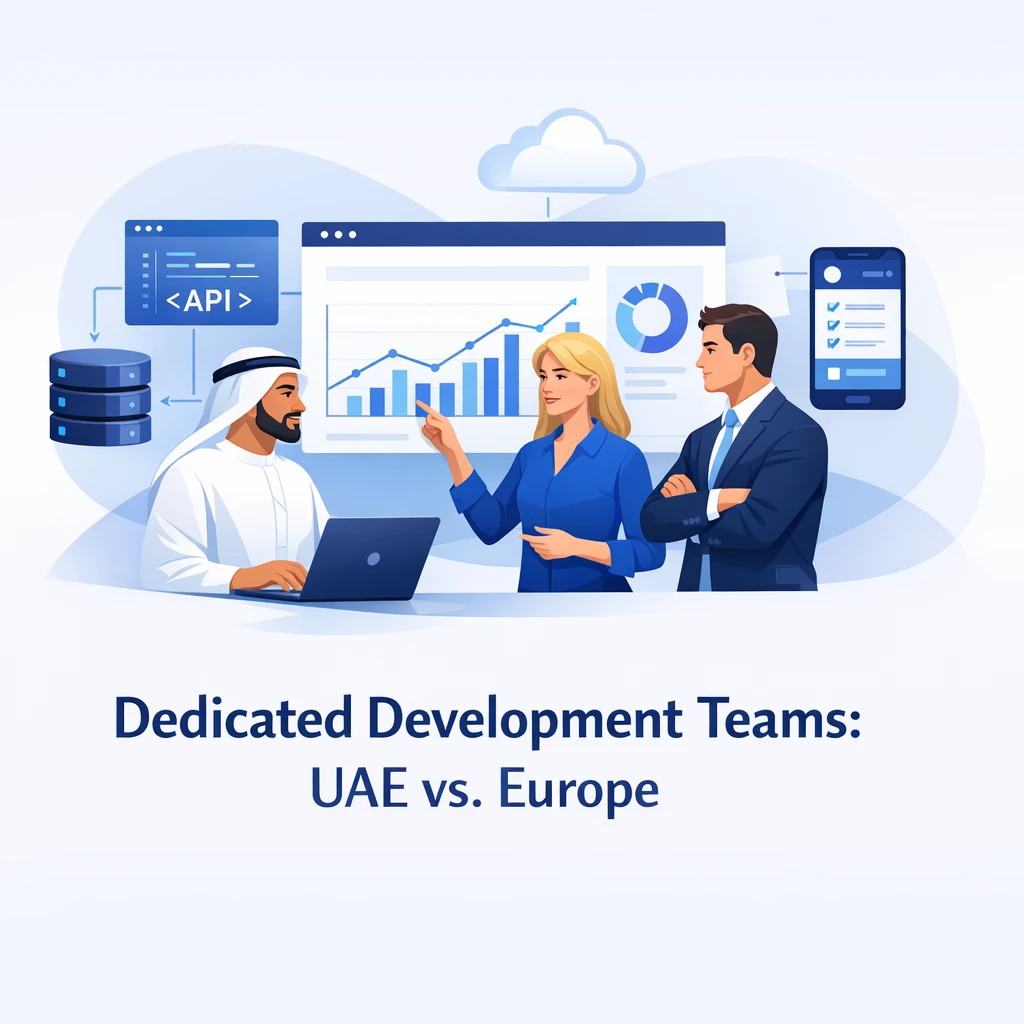
In today’s fast-paced digital economy, SMBs, SMEs, and startups increasingly rely on dedicated development teams to scale product engineering without bloating fixed overhead. The UAE and Europe present attractive ecosystems for such arrangements, offering a mix of mature tech demand, strong governance standards, and access to diverse engineering talent. This guide explains how dedicated teams work, why they matter in 2026, common challenges, practical implementation patterns, and how a global partner like Triostack Technologies can help you design, build, and maintain scalable software solutions while keeping fixed costs predictable.
Introduction
When you’re translating a product idea into a market-ready solution, the cost and speed of software delivery often determine success. A dedicated development team is a model where a client aligns with a group of engineers who work exclusively on their product, operating under joint governance. The arrangement is designed to mimic an in-house team, but with the flexibility of outsourcing. It helps moderate fixed overhead while still providing the control and continuity required to scale responsibly.
Key regions like Dubai, the UAE, and broader Europe offer both demand and supply stability, regulatory clarity, and mature outsourcing ecosystems. In parallel, global providers enable remote delivery from locations such as India, maintaining high quality through structured processes, modern tooling, and tight security practices. The result is a model suited for projects that range from a few thousand dollars to several hundred thousand dollars, typically within the SMB and SME band and scalable to enterprise needs as they grow.
What is the Topic?
A dedicated development team is a service model in which a client contracts a team of engineers who work exclusively on the client’s project. The team may include a product manager, a tech lead, frontend and backend developers, QA testers, UI/UX designers, data scientists, DevOps engineers, and security specialists. The key characteristics are:
- Full-time alignment with the client’s product goals and backlog
- Defined governance with roles, responsibilities, and decision rights
- Transparent cost structure driven by personnel and tools rather than ad-hoc billing
- Scalability through flexible headcount based on sprint velocity and milestones
- Remote collaboration supported by robust processes and secure environments
In practice, this model contrasts with traditional staff augmentation (where contractors fill gaps for short durations) and with onshore fixed teams (which can be slower to scale and more expensive). A well-managed dedicated team behaves like an internal unit with external advantages: global talent access, predictable costs, and rapid ramp-up or down.
Why it Matters in 2026
Several macro trends shape the value proposition of dedicated teams today:
- Cost predictability: Fixed overhead—salary floors, benefits, office space, and equipment—can become a drag on cash flow. A dedicated team with transparent pricing helps keep budgets stable as you scale.
- Talent accessibility: The global talent pool is broad, but the best engineers are not always in the same city. Remote delivery unlocks access to high-caliber specialists across time zones and regions.
- Faster time to market: An optimally composed team reduces onboarding friction and accelerates sprint cycles, enabling quicker validation of product-market fit.
- Strategic focus: By outsourcing routine or scale-heavy aspects (dev, QA, cloud ops), leadership can concentrate on core business strategies, user experience, and growth levers.
For organizations in the UAE and Europe, the combination of cost discipline, governance maturity, and proximity to regulated markets creates a compelling case for dedicated teams as a scalable delivery model.
Current Industry Challenges
Even with strong growth, teams pursuing dedicated development face several hurdles:
- Hidden overheads: Hardware, software licenses, security audits, and onboarding can accumulate quickly if not managed centrally.
- Talent shortages: Competition for skilled developers, testers, and product managers drives up rates and delays hiring.
- Coordination across borders: Time zone differences, language nuances, and cultural expectations can affect velocity unless properly managed.
- IP and data security: In regulated regions, compliance and data protection plans must be integrated into contract terms and tooling choices.
- Vendor management: Aligning roadmaps, ensuring consistent quality, and maintaining continuity during staff turnover require disciplined governance.
The right managed partner helps mitigate these challenges through proven processes, transparent pricing, and a strong emphasis on security and quality assurance.
How the Technology Works
The dedicated team model relies on a few core mechanisms:
- Team composition: A product-focused unit with clear roles (PM, Tech Lead, developers, QA, UX, DevOps).
- Governance: A shared backlog, sprint cadence, and decision rights documented in a living framework (RACI, meeting cadences, and escalation paths).
- Delivery pipeline: Version-controlled code, automated builds, CI/CD, automated testing, and cloud staging for quick feedback loops.
- Security and compliance: Data handling, access controls, NDA, IP ownership, and regulatory alignment baked into contract terms and tooling.
In a remote delivery arrangement (e.g., delivery from India to the UAE/Europe), emphasis on communication rituals, visibility, and cultural alignment becomes essential to keep velocity high without sacrificing quality.
Architecture Overview
The architecture for a modern, scalable product typically spans frontend, backend services, data stores, and integration layers. The following simplified diagram shows a representative landscape for a SaaS product delivered by a dedicated team.
Notes:
- The API Gateway acts as the single entry point and handles routing, auth, rate limiting, and observability hooks.
- Data stores include relational databases for transactional data and data lakes for analytics/ML workloads.
- AI/ML services enable features like automated anomaly detection, recommendation engines, or intelligent routing.
Step-by-Step Workflow
A typical engagement follows a predictable cadence that aligns with agile delivery while preserving the governance expected in UAE/European contexts.
- Discovery and Scoping: Market research, user interviews, and high-level architecture sketches. Deliverables include a product vision, initial backlog, and a high-level roadmap.
- Team Onboarding: Role definitions, access provisioning, security baselines, and onboarding plan.
- Sprint Planning: Backlog grooming, sprint goals, capacity planning, and sprint commitments.
- Development Sprints: Iterative builds with daily standups, integration with CI/CD, and ongoing QA.
- Reviews and Demos: Regular stakeholder demos to validate direction and adjust priorities.
- QA and UAT: Comprehensive testing, performance benchmarking, and user acceptance validation.
- Release and Deployment: Coordinated production rollout with monitoring, rollback plans, and documentation updates.
- Maintenance and Evolution: Ongoing improvements, security patches, and feature enhancements.
Business Use Cases
Several patterns recur across industries when leveraging dedicated teams. Here are four illustrative scenarios with practical outcomes.
- Dubai-based logistics company: Built a real-time fleet tracking and shipment-visibility portal with mobile apps for drivers and web dashboards for operations teams. Result: 25% faster dispatch decisions and improved on-time delivery rates.
- UAE healthcare clinic: Implemented a secure patient portal with appointment scheduling, telehealth, and EHR integration. Result: 40% reduction in no-show rates and improved patient satisfaction scores.
- Saudi retail business: Modernized an omnichannel CRM and POS integration, enabling unified customer data and cross-channel loyalty programs. Result: 15–20% uplift in repeat purchases and marketing ROI.
- UK SaaS company: Migrated core product to a microservices architecture and introduced CI/CD, feature flags, and automated testing. Result: Faster feature delivery and improved system resilience.
Industry Applications
Dedicated teams are versatile across sectors, including:
- Logistics and supply chain
- Healthcare and life sciences
- Retail and e-commerce
- Financial services and fintech
- Manufacturing and utilities
- Education technology and government software
Whether you’re aiming to build a new product, modernize an existing system, or scale a platform to handle millions of users, a dedicated team provides the structural discipline to deliver consistently.
Benefits
- Cost efficiency: Fixed overhead remains predictable while you scale staff up or down to meet demand.
- Access to global talent: Tap specialized skills that may be scarce locally without sacrificing control.
- Faster time to value: Sprints deliver incremental value, allowing you to validate assumptions quickly.
- Governance and compliance: Clear contracts, IP ownership, NDA, and regulatory alignment protect your business.
- Quality and reliability: Structured QA, automated testing, and robust DevOps practices reduce risk.
Challenges
Despite the benefits, challenges can arise if governance is weak or alignment is lacking:
- Time zone and cultural differences that affect collaboration rhythms
- Maintaining product vision consistency across evolving roadmaps
- Security, privacy, and regulatory compliance across jurisdictions
- Vendor management overhead if roles, SLAs, and escalation paths are poorly defined
Common Mistakes
- Under-investing in onboarding and knowledge transfer, leading to early bottlenecks
- Inadequate product ownership or vague backlog priorities
- Ambiguity around IP ownership and data handling terms
- Insufficient security controls in the early architecture design
Best Practices
- Clear governance: Define roles, decision rights, escalation paths, and acceptance criteria upfront.
- Structured onboarding: Prepare a knowledge transfer plan, code standards, and security baselines before work begins.
- Frequent demos and feedback loops: Keep stakeholders involved with regular sprint reviews and product demos.
- Robust DevOps: Implement CI/CD, automated testing, infrastructure as code, and monitoring from day one.
- Security by design: Embed privacy and data protection practices in architecture and workflows.
Build vs Buy Comparison
| Aspect | Build with Dedicated Team | Buy Off-the-Shelf Solution |
|---|---|---|
| Control over product roadmap | High – managed by client with consistent prioritization | Low to medium – roadmap often constrained by vendor |
| Customization level | High – tailor to exact needs | Limited – customization often expensive or unsupported |
| Time to value | Depends on backlog, typically faster for complex, unique solutions | Usually faster for out-of-the-box needs, slower for extensive changes |
Estimated Development Cost
Pricing is highly contextual, but understanding typical ranges helps you plan better. The following section outlines common project types and corresponding ballpark ranges for SMBs/SMEs. This guidance includes ongoing maintenance considerations typically wrapped into a dedicated team engagement.
| Project Type | Typical Range (USD) |
|---|---|
| Business Website | 5,000–15,000 |
| Customer Portal | 10,000–40,000 |
| CRM | 15,000–100,000 |
| ERP | 40,000–200,000 |
| AI Chatbot | 5,000–25,000 |
| AI Automation | 15,000–80,000 |
| SaaS MVP | 20,000–80,000 |
| Enterprise Web App | 30,000–200,000 |
Pricing factors include scope stability, data complexity, regulatory requirements, integration needs, security posture, and post-launch maintenance expectations. A dedicated team offers cost predictability by aligning headcount with sprint velocity and backlog priorities rather than paying for idle time or broad contracts.
Recommended Technology Stack
Choosing the right stack depends on the problem domain, performance needs, and team capability. A typical modern stack may include:
- Backend: Node.js (Express/Koa), Python (Django/FastAPI), or Java/Kotlin (Spring Boot) depending on scalability and ecosystem.
- AI/ML: Python-based pipelines (TensorFlow, PyTorch), MLOps tooling for model deployment and monitoring.
- Databases: PostgreSQL (relational), MongoDB/Cassandra (NoSQL) as appropriate.
- DevOps/Cloud: AWS/Azure/GCP, Terraform for infra as code, Kubernetes for orchestration.
- Security and Compliance: OAuth2/OpenID Connect, SAML, data encryption, and regional privacy controls.
Triostack emphasizes architecture patterns that scale: modular microservices where appropriate, well-defined APIs, and a secure deployment pipeline. The team structure is designed to adapt as requirements evolve, ensuring long-term viability and maintainability.
Future Trends
What to watch for in the next few years:
- AI-assisted development: AI copilots integrated into IDEs or CI/CD to accelerate coding and testing.
- Intelligent automation: End-to-end automation across dev, test, and deployment to reduce manual toil.
- Security-by-design: Shifting security left in the lifecycle with policy-as-code and automated compliance checks.
- Multi-cloud and edge: Deploying services across multiple clouds with edge compute for low latency use cases.
How Triostack Delivers Projects Globally
Triostack Technologies positions itself as a trusted partner for global software development. The company combines deep engineering expertise with rigorous project governance to deliver complex projects for clients across the UAE, Europe, North America, and beyond. Key differentiators include:
- Dedicated teams with explicit roles, backed by a product manager and tech lead
- Transparent pricing models linked to sprint velocity and clearly defined milestones
- Security-centric delivery including NDA, IP ownership clarity, and regulatory alignment
- Remote delivery from India complemented by overlapping time zones for real-time collaboration
- End-to-end services: Custom Software, Web and Mobile Development, AI/ML, CRM/ERP, SaaS, Cloud Migration, DevOps, UI/UX, API Development, QA, Maintenance, and Technical Consulting
Why Businesses Choose Triostack
Rather than generic outsourcing, Triostack emphasizes a shared vision, governance discipline, and long-term partnership. Clients choose Triostack to:
- Gain scalable access to specialized engineering talent without absorbing full-time headcount costs
- Reduce time-to-market through disciplined agile delivery and mature DevOps practices
- Navigate regulatory and security requirements with a partner who treats compliance as a core capability
- Maintain product ownership and IP control while benefiting from global execution excellence
REMOTE DELIVERY
Triostack’s remote delivery model leverages a disciplined, secure, and transparent approach to cross-border software development from India. This section explains how it works and why it is a good fit for UAE and European clients seeking scale without compromising governance.
Agile and Ceremonies
Teams operate under agile frameworks (Scrum or Kanban) with clear ceremonies:
- Sprint Planning and Backlog Grooming
- Daily Standups
- Weekly Demos (Staging)
- Retrospectives
Collaboration Tools
To ensure smooth communication, Triostack uses a suite of collaboration tools, matched to client preferences:
- Slack or Teams for daily communication
- Zoom/Google Meet for video conferences
- Jira or ClickUp for issue tracking and sprint management
- GitHub or GitLab for version control
- Azure DevOps for integrated CI/CD pipelines where required
- Cloud-based staging environments for testing and QA
Quality Assurance and Security
Quality and security are baked into the process through:
- Automated test suites and performance testing
- Secured development environments with access controls
- Data protection measures and encryption in transit and at rest
- NDAs and IP ownership clarity in contracts
Time Zone and Language Considerations
Time zone overlap helps with daily standups and quick decisions. English is the common business language, and cultural awareness sessions are often part of onboarding to align working styles and expectations.
Why UAE Businesses Outsource to India
Shifting development work to India remains attractive for many UAE-based firms due to several practical advantages:
- Cost Efficiency: Competitive rate cards enable cost-effective scale without sacrificing quality.
- Large Talent Pool: A broad spectrum of engineers across frontend, backend, data, and AI specializations.
- Faster Hiring: Access to experienced teams with mature hiring processes reduces ramp-up time.
- Flexible Team Scaling: Ability to grow or shrink teams in line with project phase without long-term commitments.
- High Quality Engineering: Rigorous processes, code reviews, and testing standards
- Strong Communication: English-proficient teams accustomed to working with international clients
CASE STUDIES
Below are anonymized, realistic examples illustrating how dedicated teams can drive outcomes in different contexts. These cases avoid naming real companies and rely on plausible, industry-relevant outcomes.
Case Study 1: Dubai-based Logistics Company
Objective: Build a real-time fleet visibility platform with driver mobile apps and a back-office dashboard for operations. Scope included integration with ERP for order status and invoicing, plus analytics dashboards for KPI tracking.
- Team composition: PM, Tech Lead, Frontend (React), Backend (Node.js), QA, UX, DevOps, Mobile (React Native)
- Timeline: 9 months to MVP with 3 major releases
- Outcomes: 25% faster dispatch decisions, 15% reduction in average delay time, improved customer visibility
Case Study 2: UAE Healthcare Clinic
Objective: Create a patient portal with appointment scheduling, telehealth, and EHR integration, plus role-based access for clinicians and administrators.
- Team composition: PM, Tech Lead, Backend (Java/Spring), Frontend (Angular), Mobile (iOS/Android), QA, Security Specialist
- Timeline: 12 months to initial release with incremental updates
- Outcomes: 40% reduction in no-shows, improved patient satisfaction, compliant with regional health data regulations
Case Study 3: Saudi Retail Business
Objective: Modernize CRM and integrate with POS systems to enable unified customer data and loyalty programs across channels.
- Team composition: PM, Tech Lead, Backend (Python), Frontend (React), Data Engineer, QA, UI/UX
- Timeline: 8 months to beta, 14 months for full rollout
- Outcomes: 15–20% uplift in repeat purchases, better marketing attribution, streamlined customer service workflows
Case Study 4: UK SaaS Company
Objective: Migrate an on-premise product to a cloud-native microservices architecture with CI/CD and automated testing to accelerate feature delivery.
- Team composition: PM, Tech Lead, Backend (Go/Kotlin), Frontend (Vue), QA Automation, SRE/DevOps
- Timeline: 18 months with staged migrations and feature flag strategy
- Outcomes: Faster release cycles, improved system reliability, easier onboarding of new features
Future Trends
As businesses look ahead, several trends will shape how dedicated teams operate:
- AI-assisted development: AI copilots and automated code reviews to boost productivity
- Platform engineering: Treating the platform as a product with shared services, standardized tooling, and governance
- Security-first design: Security controls embedded in architecture and pipelines
- Multi-cloud strategies: Resilient deployments across providers with centralized observability
Security, Compliance, and IP Ownership
For businesses in the UAE and Europe, legal and regulatory considerations are a constant. Partner contracts typically address:
- IP ownership and background IP allocation
- Data protection and privacy compliance (e.g., GDPR considerations in Europe)
- NDAs and access controls for personnel
- Audit rights and security certifications (where applicable)
- Escrow arrangements and disaster recovery planning
Estimated Development Cost (Recap)
To recap the pricing dynamics for SMB/SME projects, consider the ranges listed earlier and supplement them with ongoing maintenance and support costs. A dedicated team engagement typically includes a monthly person-hour-based cost plus a predictable set of tools and infrastructure expenses. The total annual cost reflects the breadth of the backlog, the complexity of integrations, and the level of automation in testing and deployment.
Key Factors that Influence Cost and Schedule
- Scope volatility and backlog stability
- Data complexity and integrations with ERP/CRM systems
- Regulatory requirements and security posture
- Architecture decisions (monolith vs microservices, cloud-native patterns)
- Automation coverage (testing, deployment, monitoring)
- Talent mix, seniority, and domain expertise
- Language, time zone alignment, and collaboration model
Future Trends (Continued)
Ongoing trends that can influence pricing and delivery in UAE and Europe include:
- Rising demand for AI-driven product features and data analytics capabilities
- Increased emphasis on data sovereignty and localization
- Shifts toward platform-based architectures and service meshes
How Triostack Delivers Projects Globally
Triostack emphasizes disciplined delivery, transparent governance, and a partner-like mindset. Key capabilities include:
- Dedicated teams aligned to product goals with clear roles and responsibilities
- Flexible engagement models to scale headcount without fixed overhead
- Security-first practices, including NDA, IP protection, and regulatory alignment
- Remote delivery from India with overlapping time zones for real-time collaboration
- End-to-end services spanning development, AI, CRM/ERP, SaaS, cloud migration, DevOps, UI/UX, API development, QA, and maintenance
Why This Model Works for UAE and Europe
Dedication to product outcomes, coupled with a governance framework and global delivery capabilities, makes the dedicated team model a strong fit for the UAE and Europe. Benefits include:
- Predictable budgeting through consistent staffing and velocity-based planning
- Improved time-to-market with mature agile rituals and CI/CD
- Managed risk through security, compliance, and IP protection embedded in contracts
- Access to specialized skills and rapid scaling during growth phases
Conclusion
Scaling product engineering without increasing fixed overhead is not a trade-off between speed and discipline; it is a deliberate governance and sourcing choice. The dedicated development team model, when implemented with a reputable partner, offers predictable costs, high-quality output, and the ability to align engineering throughput with business priorities. In regions like the UAE and Europe, this approach helps organizations maintain control, security, and compliance while leveraging a global talent pool and flexible delivery models. Triostack Technologies stands ready to collaborate with SMBs, SMEs, startups, and established enterprises seeking scalable, secure software delivery with a global reach.
Frequently Asked Questions
- What is a dedicated development team?
- A group of engineers and specialists who work exclusively on a client’s project, following shared governance, with a defined product backlog and sprint cadence.
- How is pricing typically structured?
- Pricing is commonly based on headcount, roles, and duration, with predictable monthly costs tied to the team’s capacity and the tools/infra used. Maintenance and support are often bundled into ongoing engagements.
- What are common risks and how are they mitigated?
- Risks include misalignment on priorities, time zone friction, and security concerns. They are mitigated through clear contracts, governance documents, overlapping work hours, security-by-design practices, and regular stakeholder reviews.
- Why consider remote delivery from India?
- It offers access to a large talent pool, cost efficiency, faster hiring, and high-quality engineering, with careful management of communication, governance, and security to ensure alignment with UAE/European requirements.
If you’re planning a similar software project, Triostack can help you design, build, deploy and maintain a scalable solution. Consider starting with a discovery workshop to define your product vision, backlog, and success metrics. A thoughtful, governed approach to a dedicated team can unlock velocity while keeping overhead predictable.
Internal Link References
For more context on related topics, see these placeholders intended for future internal linking: Remote Delivery, Case Studies, Cost Section, Best Practices.
Case Studies (Summary Index)
Jump to the case studies section above for anonymized client stories. You can also navigate to the remote delivery details or cost discussions to understand integration with your business goals.
Featured Visuals
Architecture, workflow, and deployment diagrams are included to help you visualize how a dedicated team operates within a modern tech stack. Use the diagrams below as reference patterns when talking to potential partners.
Triostack Team
Technology Evangelist & Writer
Triostack Team is an experienced writer and technologist, exploring the intersections of AI, cloud architecture, and modern application development. Passionate about turning complex technical concepts into accessible insights.