Dedicated Development Team Pricing in Qatar: Offshore vs In-House Software Engineering Cost Comparison
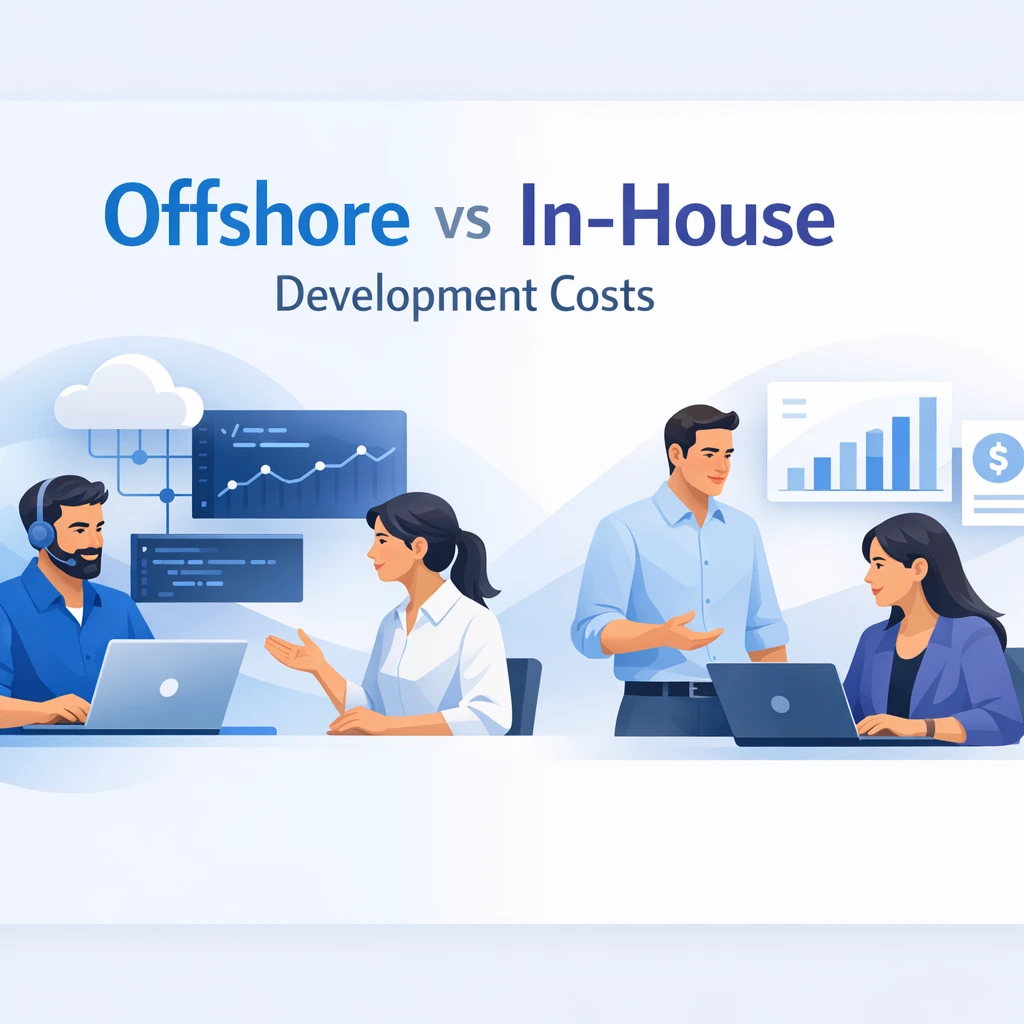
For SMBs, SMEs, startup founders, and digital transformation leaders, choosing the right sourcing model for software development is a strategic decision that impacts time to market, product quality, and total cost of ownership. In the GCC region, with growing demand for local presence and global delivery capability, many organizations in Qatar and nearby markets are weighing two core options: offshore dedicated teams (often located in low-cost regions) and in-house or locally contracted teams (onshore or nearshore). This article offers a practical, data-informed view of dedicated development team pricing, examines the key cost drivers, and provides actionable guidance to help you decide which model fits your software project and business goals best.
What is the Topic?
Dedicated development teams are long-term, cohesive groups that work exclusively on your project. They may be physically located in Qatar or overseas, but what matters is sustained collaboration, a clearly defined governance model, and alignment with your product strategy. When we talk about pricing, we compare the total cost of ownership across models, including salaries, benefits, overlaying costs such as management, communication overhead, infrastructure, and the risks you accept or mitigate.
Why It Matters in 2026
Technology investment remains a top priority for growth in Qatar and the wider Gulf region. With ongoing digital transformation initiatives, the ability to scale software teams quickly while maintaining high quality is a competitive differentiator. The pricing dynamics between offshore and in-house teams influence not just the bottom line, but also risk, speed to market, and product governance. For startups funding rounds and mid-market expansions, predictable budgeting and transparent cost structures are essential. A well-chosen dedicated team model can provide flexible scaling, access to global talent, and reduced administrative burdens, especially when paired with mature project management practices.
Current Industry Challenges
- Rising wage inflation in local markets: Qatar and UAE contractors face increasing salaries and benefits, affecting total cost of ownership for in-house teams.
- Talent scarcity for niche skillsets: AI development, cloud-native architecture, data engineering, and cybersecurity require specialized expertise that can be scarce locally.
- Time to hire and ramp-up: Building new teams internally can take months, slowing product delivery schedules.
- Quality and governance: Maintaining consistent delivery quality with a growing team requires mature processes and clear ownership models.
- Security and compliance: Projects involving healthcare data, financial services, or logistics require robust data protection, NDAs, and regulatory awareness.
How the Technology Works
At a high level, a dedicated development team is assembled to align with your product backlog, architectural standards, and delivery cadence. The team may be co-located or distributed, but success hinges on strong project governance, clear communication rituals, and a robust tooling stack that supports collaboration across time zones. For Qatar-based organizations, nearshore or offshore models often complement local product leadership by providing access to additional capacity, domain expertise, and cost efficiency, while maintaining a strong emphasis on security, IP ownership, and NDA protections.
Architecture Overview
The architecture of a typical dedicated team engagement includes product ownership, technical leadership, delivery management, and a set of professional services that Triostack can provide. The diagram below illustrates a practical, scalable architecture for a web or SaaS product running in the cloud with a dedicated team. It emphasizes modularity, API-first integration, and a secure deployment pipeline.
Step-by-Step Workflow
Below is a practical workflow that a Qatar-based organization can implement with a dedicated development team, emphasizing collaboration, visibility, and quality assurance. The workflow supports Agile delivery, continuous improvement, and predictable cadence.
Business Use Cases
Understanding how dedicated teams apply across industries helps you translate this model into measurable outcomes. Consider the following scenarios:
- New product development: Rapid MVP with a clear feature backlog, enabling faster customer validation.
- Product modernization: Replacing legacy systems with modern microservices, APIs, and cloud-native patterns.
- Digital transformation programs: End-to-end modernization across CRM, ERP, and data platforms with governance and security at the core.
- Geographically dispersed operations: Coordinated teams across time zones to support 24/5 coverage and cost efficiency.
Industry Applications
Across logistics, healthcare, retail, and technology sectors, dedicated teams enable outcomes such as improved customer experiences, better data insights, and more resilient platforms. For example, a Dubai-based logistics company may leverage a dedicated team to build an order management portal and driver app, while a UAE healthcare clinic might implement a patient portal and EHR integration to streamline care coordination.
Benefits
- Faster access to global talent: Tap into specialized skills when local pools are insufficient.
- Scalability and flexibility: Adjust team size with project demand without long-term HR commitments.
- Predictable budgeting: Clear monthly costs tied to team composition and duration.
- Focus on core business: Your leadership can concentrate on product strategy while the team handles development and quality assurance.
- Quality and governance: Mature delivery processes, QA, and continuous integration pipelines minimize risk.
Challenges
- Communication overhead: Distance and time zone differences require disciplined rituals and transparent reporting.
- IP ownership and security: Clear NDAs, data handling policies, and access controls are essential.
- Onboarding ramp-up: Aligning the team to your product vision and domain quickly can take time.
- Vendor management: Selecting a partner with domain experience and robust delivery governance is critical.
Common Mistakes
- Underestimating onboarding time: Skipping a formal intake and knowledge transfer phase leads to misaligned expectations.
- Overly broad scope at start: Starting with a large backlog without a phased plan increases risk and cost overruns.
- Poor alignment on architecture: Ad-hoc architectural decisions create technical debt that compounds over sprints.
- Neglecting security: In regulated industries, security must be foundational, not afterthought.
Best Practices
- Define a clear governance model: Roles, decision rights, and escalation paths reduce friction.
- Adopt a milestone-based roadmap: Weekly demos, sprint reviews, and quarterly releases align expectations with business value.
- Prioritize security and compliance: Incorporate privacy by design and industry-specific controls from day one.
- Invest in enabling tools: Use Jira/ClickUp for planning, GitHub/GitLab for code, Azure DevOps for CI/CD, and cloud staging for pre-production testing.
Build vs Buy Comparison
Choosing between building in-house or hiring an offshore/onshore dedicated team hinges on control, cost, risk, and speed. The table below summarizes typical trade-offs you should consider in a Qatar-focused decision context.
| Aspect | In-House / Onshore | Offshore Dedicated Team | Hybrid Approach |
|---|---|---|---|
| Cost pressure | Higher local salaries, benefits | Lower rate cards, similar efficiency with seasoned teams | Moderate; optimization across regions |
| Time to productivity | Longer ramp-up in new environments | Faster access to talent pool | Depends on onboarding strategy |
| Control & governance | Maximum control | Structured governance via partner PMs | Shared governance |
| Quality consistency | Direct oversight | Bring-in-tested processes and QA pipelines | Balanced quality controls |
| Security & compliance | Full responsibility | NDAs and security audits with vendor | Tailored security model |
Estimated Development Cost
For SMBs and startups, budgeting accurately is essential. The following ranges reflect typical engagement scopes for common software project types. Note that actual prices vary by domain, complexity, technology stack, and team location. The ranges below assume a dedicated team model with a mix of senior and mid-level engineers, project management, and QA support.
| Project Type | Typical Range (USD) | Notes |
|---|---|---|
| Business Website | 5k–15k | CMS integration, custom pages, forms |
| Customer Portal | 10k–40k | Authentication, data sync, dashboards |
| CRM | 15k–100k | Lead management, analytics, workflow automation |
| ERP | 40k–200k | Modules for finance, procurement, HR |
| AI Chatbot | 5k–25k | Rule-based to NLP-based capabilities |
| AI Automation | 15k–80k | RPA-like workflows and data processing |
| SaaS MVP | 20k–80k | Core product with essential features |
| Enterprise Web App | 30k–200k | Complex domain logic, integrations |
Factors Driving Costs
- Team composition: Seniority mix, specialty roles (AI, data engineering, security), and localization needs influence cost.
- Location: Offshore rates may be lower, but travel, communication, and compliance considerations can impact total cost.
- Engagement duration: Longer engagements often yield better unit economics through stable velocity and less ramp-up.
- Infrastructure and tools: Cloud costs, staging environments, security tooling, and license fees add to the budget.
- Security requirements: Compliance regimes (HIPAA, GDPR-like standards, or local regulations) shape the needed controls.
Recommended Technology Stack
A pragmatic stack balances performance, scalability, and maintainability. A typical modern web/mobile stack for a GCC market project might include:
- Frontend: React or Angular, TypeScript, component libraries, responsive design frameworks
- Backend: Node.js or .NET, microservices architecture, API gateway
- Data: PostgreSQL or MySQL, Redis for caching, data pipelines with ETL
- Cloud: AWS, Azure, or Google Cloud with CI/CD pipelines
- AI/ML: TensorFlow/PyTorch, ML services for inference
- Security & DevOps: IAM, secrets management, containerization with Docker/Kubernetes, automated testing
Future Trends
Looking forward, several trends will shape dedicated team pricing and delivery models in Qatar and the broader region:
- AI-driven software: More teams will integrate AI features directly into products, influencing skill requirements and tooling.
- Serverless and edge computing: Costs will shift as workloads move closer to users, affecting hosting and scalability strategies.
- Platform engineering: Enterprises will invest in internal platforms to streamline developer experience and reuse across products.
- Security-first design: Compliance and data protection will be core from the start, raising the bar for initial estimates but reducing risk later.
How Triostack Delivers Projects Globally
Triostack Technologies partners with organizations around the world, including those in the UAE, GCC, Europe, North America, and Australia. Our approach blends global delivery with local product leadership to ensure alignment with regional regulations, business practices, and cultural nuances. We offer services that cover the entire product lifecycle, including:
- Custom Software
- Web Development
- Mobile Apps
- AI Development
- Machine Learning
- CRM
- ERP
- SaaS
- Cloud Migration
- DevOps
- UI/UX
- API Development
- Dedicated Teams
- QA
- Maintenance
- Technical Consulting
Remote Delivery: Triostack’s Model from India
Triostack frequently leverages a robust, secure remote delivery model that taps into India’s large talent pool while maintaining tight alignment with client objectives in Qatar and beyond. The model emphasizes structured governance, transparency, and disciplined execution. Key components include:
- Agile framework: Scrum with fixed-length sprints, product backlog refinement, and continuous delivery.
- Sprint planning & demos: Weekly and per-sprint demos to maintain stakeholder alignment.
- Communication channels: Slack, Teams, Zoom, and optional Google Meet for real-time collaboration.
- Project management: Jira or ClickUp to track progress and visibility across teams.
- Code & collaboration: GitHub or GitLab for version control, CI/CD pipelines via Azure DevOps or GitHub Actions.
- Environment: Cloud staging, production, and comprehensive QA environments.
- Documentation & security: Clear documentation, secure coding practices, NDA, and IP ownership controls.
- Timezone overlap & English: Sufficient overlap to enable daily standups and effective communication.
- Dedicated project managers: Local or regional PMs who coordinate with client stakeholders for long-term support.
- Long-term support: Post-launch maintenance, feature enhancements, and support SLAs.
Why UAE businesses outsource development to India is practical: cost efficiency, a large talent pool, faster hiring, access to high-quality engineering, and a culture of collaboration with strong communication practices. The model also reduces time-to-market pressure while ensuring governance and security responsibilities are clearly defined.
Case Studies
Below are anonymized, realistic implementation scenarios that illustrate how dedicated teams can deliver value across regions. Names and statistics are generalized to protect confidentiality while highlighting outcomes that are typical in practice.
Case 1 — Dubai logistics company
A Dubai-based logistics provider engaged a dedicated team to develop an end-to-end order management portal and companion driver mobile app. The objective was to replace a fragmented, on-premises solution with a modern cloud-native system that provided real-time tracking, automated alerts, and integrated billing. The project leveraged a modular microservices architecture, API-driven integrations with existing ERP, and a secure data layer. Outcomes included faster order processing, improved visibility for customers, and a simpler onboarding experience for partners.
Case 2 — UAE healthcare clinic
A UAE healthcare clinic contracted a dedicated team to implement a patient portal and EHR integration. The scope spanned patient scheduling, secure messaging, appointment reminders, and interoperability with the clinic’s existing EHR system. The engagement emphasized regulatory compliance, encryption of health data, and role-based access controls. The result was improved patient engagement, streamlined care coordination, and better data consistency across systems.
Case 3 — UK SaaS company
A UK-based SaaS company partnered with a dedicated team to accelerate a CRM and analytics platform with multi-tenant architecture. The project included data visualization, opt-in telemetry, and a modular product roadmap to support rapid experimentation. By leveraging offshore capabilities with structured governance and regular client demos, the team achieved faster iterations and a more robust product-market fit.
Conclusion
Dedicated development teams offer a flexible, scalable way to deliver software projects while controlling total cost of ownership. In markets like Qatar and the wider GCC, offshore or hybrid models can complement local leadership, providing access to specialized skills, faster ramp-up, and predictable budgeting. The key to success is a transparent engagement model, disciplined governance, and a focus on security, quality, and long-term value realization. By combining Triostack’s global delivery experience with a clear product strategy, organizations can achieve measurable outcomes while maintaining control over IP and governance.
Frequently Asked Questions
- What is the typical duration for a dedicated team engagement?
- A dedicated team engagement is usually planned in terms of sprints, often spanning 6–12 months for initial product delivery, with options for extension to support ongoing product growth and maintenance.
- How do I compare offshore pricing to local pricing in Qatar?
- Consider total cost of ownership, including salaries, benefits, management overhead, travel, security, and the cost of delayed delivery or rework due to misalignment. Offshore rates may be lower, but additional governance, communication, and security requirements should be accounted for.
- What safeguards protect IP ownership?
- Use robust NDAs, clearly defined IP assignment terms, access controls, and policies for code ownership and repository rights. Align your contract with local regulations and international best practices.
- What governance practices are essential for remote delivery?
- Regular sprint demos, backlog refinement, change control, risk management, and transparent reporting are essential. A dedicated PM coordinates clients and teams across time zones to keep everyone aligned.
- Can Triostack work with onshore teams in Qatar or the UAE?
- Yes. Triostack offers flexible deployment options, including fully onshore, hybrid, or fully offshore models. We tailor governance, communication rituals, and tooling to your location and industry requirements.
Businesses planning similar solutions often benefit from experienced software development partners like Triostack Technologies. If you're planning a similar software project, Triostack can help you design, build, deploy and maintain a scalable solution.
Learn about Triostack dedicated teamsRelated Resources
Triostack Team
Technology Evangelist & Writer
Triostack Team is an experienced writer and technologist, exploring the intersections of AI, cloud architecture, and modern application development. Passionate about turning complex technical concepts into accessible insights.