Custom Software Development Cost in Saudi Arabia: 2026 Pricing, Timelines, and ROI for Growing Businesses
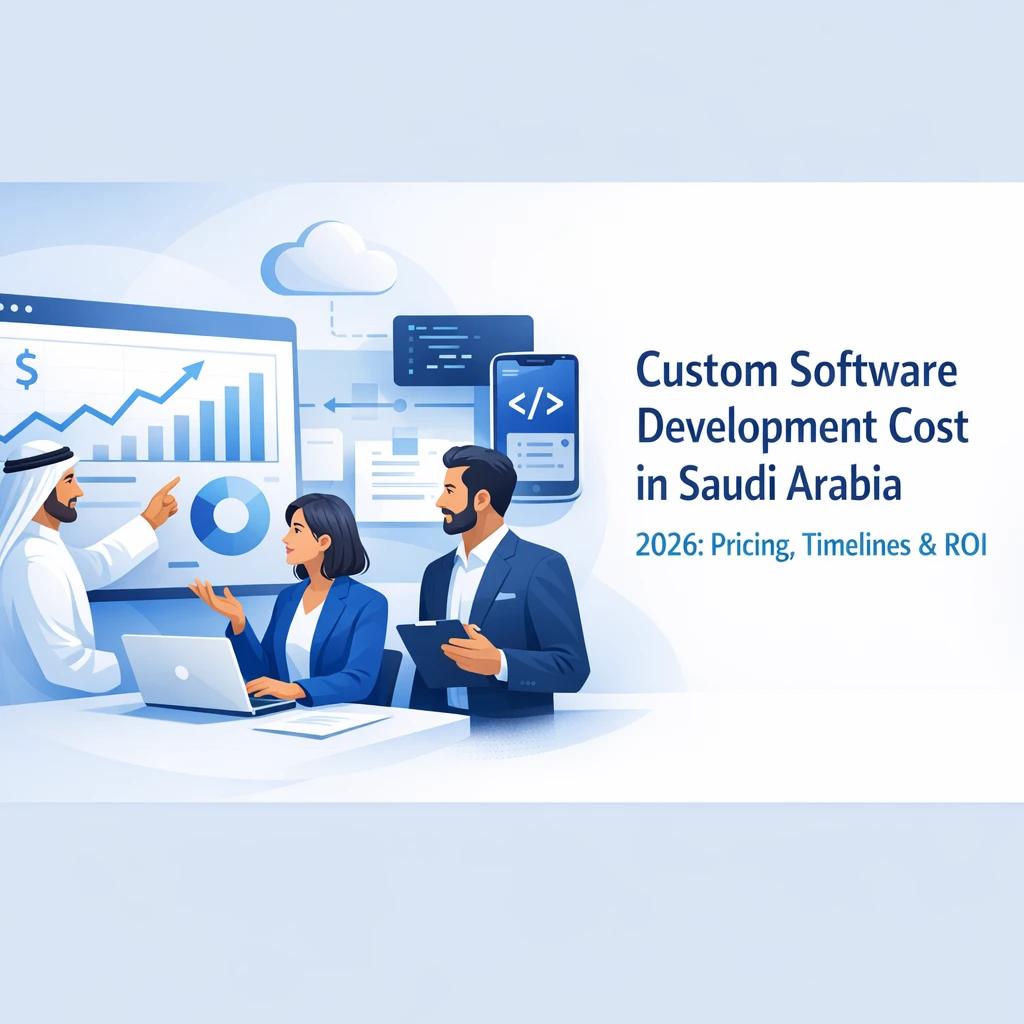
As small and medium businesses in Saudi Arabia and the broader Gulf region accelerate digital transformation, understanding the true cost of custom software projects becomes essential. This guide provides practical, vendor-agnostic insights on pricing ranges, typical timelines, ROI expectations, and how to partner with a trusted software development partner like Triostack Technologies to maximize value while controlling risk.
Introduction
Custom software development is not a one-size-fits-all investment. For growing businesses—whether a Dubai-based logistics firm expanding regional delivery capabilities, a Saudi healthcare clinic digitizing patient journeys, or a UK SaaS company expanding into the Middle East—the cost, timeline, and ROI of software projects hinge on scope, architecture, team structure, and delivery model. This article demystifies 2026 pricing in the Saudi market, outlines practical cost drivers, and presents a repeatable workflow you can adapt with Triostack Technologies as your global software development partner.
What is the Topic?
Custom software development refers to building software solutions tailored to a business's unique processes and data models, rather than purchasing an off-the-shelf product. In 2026, the focus has shifted toward value-driven development: faster time-to-value, scalable architecture, cloud-native deployments, robust security, and ongoing optimization through analytics and AI.
Why it Matters in 2026
Saudi Arabia and neighboring markets are undergoing rapid digital transformation, backed by smart city initiatives, digital government services, and sector-specific modernization programs. For SMBs, this means technology is no longer a luxury but a competitive necessity. The key is balancing upfront costs with long-term ROI—streamlining operations, improving customer experiences, and enabling data-driven decisions across sales, service, and operations.
Current Industry Challenges
- Rapid technology change increases uncertainty about long-term ROI and maintenance costs.
- Talent scarcity in niche skills (cloud architectures, AI/ML, security, regulatory compliance) drives higher contractor rates and longer lead times.
- Complex integration needs with legacy systems (ERP, CRM, HRIS) and multi-cloud environments.
- Security, data privacy, and regulatory compliance obligations across KSA, GCC, and international markets.
- Managing remote, cross-border teams while maintaining effective communication and quality assurance.
How the Technology Works
Modern software development combines structured discovery, modular architecture, and disciplined delivery. Key building blocks typically include:
- Cloud-native backend services, REST/GraphQL APIs, and microservices where appropriate.
- Responsive web apps and mobile apps that deliver consistent experiences across devices.
- Data strategy comprising analytics, data warehousing, and secure data flows.
- Automation via CI/CD pipelines, infrastructure as code, and automated testing.
- Security-by-design, identity and access management, and compliance baked in from day one.
Architecture Overview
A typical project starts with a well-defined target architecture that aligns with business goals. A common pattern includes frontend (web/mobile), API layer, microservices, and data/AI components, deployed on a modern cloud platform with solid DevOps practices.
Step-by-Step Workflow
- Discovery and Requirements: Stakeholders, user journeys, and success metrics are defined. Risk and feasibility are evaluated.
- Architecture and Planning: Define tech stack, data models, integration points, and security posture.
- Design and Prototyping: UX/UI concepts, wireframes, and a clickable prototype to validate ideas early.
- Implementation: Iterative development in sprints with continuous integration and automated testing.
- QA and Security Review: Functional, performance, and security testing with a formal sign-off.
- Deployment and Handover: Production release, documentation, and knowledge transfer to your team.
- Operate and Optimize: Ongoing maintenance, feature upgrades, and performance tuning.
Business Use Cases
Across industries—logistics, healthcare, retail, and financial services—there are predictable patterns in how custom software pays off. Examples include:
- Order orchestration and real-time tracking for a Dubai-based logistics company, reducing manual intervention and improving on-time delivery.
- A UAE healthcare clinic implementing a patient portal with appointment scheduling, telemedicine, and secure records access to improve patient experience.
- A Saudi retailer building an omnichannel order management and loyalty platform to unify brick-and-mottle and e-commerce channels.
- An Australian startup building a scalable SaaS product with multi-tenant architecture and a robust analytics layer.
- A UK software company expanding a software-as-a-service product to international markets with compliance and localization features.
Industry Applications
What you build matters, but how you build it matters more. Key industry applications include:
- CRM, ERP, and HRIS integrations that connect with existing business processes.
- AI-enabled insights for sales forecasting, demand planning, and customer support automation.
- Cloud migrations that reduce on-prem maintenance while improving resilience.
- API-first architectures that enable ecosystem integrations with partners and vendors.
- DevOps and QA practices that shorten release cycles and improve reliability.
Benefits
- Tailored solutions aligned with your unique value proposition and operations.
- Improved efficiency through automation and integrated data flows.
- Faster time-to-market with iterative delivery and early value realization.
- Scalability to support growth, geographic expansion, and new business models.
- Enhanced security, compliance, and data governance as a foundation for trust.
Challenges
- Aligning stakeholders around a common product vision and measurable outcomes.
- Managing scope creep and changing requirements during delivery.
- Ensuring data privacy and regulatory compliance across regions.
- Maintaining quality while balancing cost and speed.
Common Mistakes
- Underestimating the importance of a solid discovery phase and clear MVP definition.
- Choosing technology for the brand rather than the problem it solves.
- Lack of robust data architecture and governance from Day 1.
- Over-customization that leads to maintenance burden and brittle architectures.
Best Practices
- Invest in a clear product roadmap with measurable milestones and success metrics.
- Favor an API-first, cloud-native approach for flexibility and scalability.
- Establish a cross-functional team with dedicated product ownership and governance.
- Adopt a phased delivery plan with a stable MVP, followed by incremental enhancements.
- Integrate security and compliance into every sprint—not as an afterthought.
Build vs Buy: A Practical Comparison
Many SMBs face a decision between building a custom solution or purchasing an off-the-shelf product and adapting it to their needs. In 2026, a pragmatic approach is to consider a hybrid: customize a base platform for core differentiators while integrating specialized modules via APIs. The table below highlights typical trade-offs.
| Scenario | Build Pros | Build Cons | Buy Pros | Buy Cons |
|---|---|---|---|---|
| Unique business processes | Tailored fit, competitive differentiation | Longer time-to-value, higher risk | Faster deployment when a configurable product exists | Limited customization, ongoing licensing costs |
| Regulatory compliance heavy | Control over security posture | Burden to certify and maintain compliance | Built-in compliance features, audits | Possible gaps for niche requirements |
| Rapid market entry | Full control over UX and user journeys | Longer validation cycle | Speed to market with proven platforms | Dependency on vendor roadmap |
Estimated Development Cost (2026) for SMBs
Typical ranges reflect the scope and complexity of software projects for SMBs. The figures assume near-term clarity on requirements, a reasonable number of features, and an MVP-to-mainline delivery approach. Prices vary by region, engagement model, and vendor capabilities.
| Product Type | Typical Range (USD) | Notes |
|---|---|---|
| Business Website | 5k – 15k | Simple CMS, branding, responsive UI, basic SEO |
| Customer Portal | 10k – 40k | Authentication, dashboards, data entry, role-based access |
| CRM | 15k – 100k | Custom workflows, sales automation, integrations |
| ERP | 40k – 200k | Cross-department processes, data migration, security |
| AI Chatbot | 5k – 25k | Natural language understanding, intents, channels |
| AI Automation | 15k – 80k | Process mining, RPA-like automation, decisioning |
| SaaS MVP | 20k – 80k | Multi-tenant, core features, scalable architecture |
| Enterprise Web App | 30k – 200k | Complex integrations, advanced analytics |
Estimated Timelines and Milestones
Timelines vary with scope, regulatory reviews, and stakeholder availability. A typical midsize project might follow these phases:
| Phase | Typical Duration | Key Deliverables |
|---|---|---|
| Discovery & Planning | 2–4 weeks | Requirements, MVP scope, high-level architecture |
| UI/UX & Prototyping | 2–4 weeks | Clickable prototype, design system |
| Core Development | 8–20 weeks | Incremental features, CI/CD setup |
| QA & Security | 3–6 weeks | Test plans, security reviews, compliance checks |
| Deployment & Handover | 1–4 weeks | Production release, documentation, training |
Recommended Technology Stack
Triostack typically recommends a balanced, future-proof stack that supports growth, security, and maintainability. A representative set includes:
- Frontend: React or Vue.js with TypeScript, responsive design, accessible UI components
- Backend: Node.js (NestJS) or Python (FastAPI), microservices where appropriate
- APIs: REST and GraphQL for flexible integrations
- Data: PostgreSQL or MySQL, with data warehouse / lake strategies as needed
- AI/ML: Python-based pipelines, model hosting via managed services
- Cloud: AWS, Azure, or GCP with proper security and cost controls
- DevOps: CI/CD, IaC, automated testing, blue/green or canary deployments
Future Trends in 2026
Expect continued maturation of cloud-native architectures, AI-assisted software development, and more emphasis on regulatory compliance (data localization, cross-border data flows). The Saudi market will likely see stronger localization of solutions, more partner ecosystems, and government-led digital acceleration programs that foster faster time-to-value for SMBs.
How Triostack Delivers Projects Globally (Remote from India)
Triostack operates with a globally distributed delivery model designed to optimize cost, quality, and speed. A typical remote delivery setup includes:
- Agile frameworks with sprint planning, standups, and retrospectives to keep stakeholders aligned.
- Weekly Demos to demonstrate progress and gather feedback early.
- Communication Tools such as Slack, Teams, Zoom, and Google Meet for real-time collaboration.
- Project Management & Tracking with Jira or ClickUp to manage backlogs and milestones.
- Version Control & CI/CD via GitHub, GitLab, or Azure DevOps.
- Cloud Staging & QA environments for tested readiness before production.
- Documentation & Security practices to ensure traceability, compliance, and IP protection.
- NDA & IP Ownership protections and clear ownership terms to provide peace of mind for clients in UAE, KSA, and beyond.
- Timezone Overlap with Gulf business hours to enable meaningful collaboration while leveraging Indian engineering talent for scale and cost efficiency.
- Dedicated Project Managers who act as the single point of contact and coordinate across time zones.
- Long-term Support including maintenance, feature updates, and SLA-backed assistance.
- Why UAE Businesses Outsource to India: Cost efficiency, access to a large talent pool, faster hiring, flexible team scaling, high-quality engineering, and strong communication practices that bridge cultural and time-zone gaps.
How Triostack Delivers Projects Globally
With years of experience serving clients across the GCC, Europe, North America, and Australia, Triostack brings a disciplined, security-conscious approach to distributed software delivery. The team emphasizes transparent governance, documented processes, and measurable outcomes—without sacrificing creativity or product empathy.
Case Studies (Realistic Scenarios, Notable Outcomes)
These examples illustrate typical engagements where Triostack helps businesses move from concept to scalable software, without disclosing confidential names or statistics.
Case Study 1 — Dubai-based Logistics Company
Challenge: A regional logistics operator needed real-time visibility across fleets, automated exception handling, and an integrated customer portal. Approach: Triostack designed a modular platform with a microservices core, GPS-enabled tracking, and a customer self-service portal connected to legacy systems via secure APIs. Outcome: Improved shipment visibility, reduced manual scheduling effort, and a scalable foundation for future expansion into adjacent markets.
Case Study 2 — UAE Healthcare Clinic
Challenge: A multi-site clinic network required a secure patient portal, appointment management, telehealth capabilities, and compliant record handling. Approach: A lean MVP prioritized patient experience, with a HIPAA/GDPR-aligned data model and role-based access controls. Outcome: Streamlined patient interactions, better appointment adherence, and a secure data workflow that supports regulatory requirements.
Case Study 3 — Saudi Retailer
Challenge: An omnichannel retailer sought to unify online and offline channels, optimize inventory, and improve promotions. Approach: Triostack delivered an integrated order management system with real-time stock updates and loyalty features, paired with analytics to guide promotions. Outcome: Unified customer experience and stronger inventory control across channels.
Case Study 4 — Australian Startup
Challenge: A growth-stage startup needed a scalable SaaS platform with robust analytics. Approach: A multi-tenant architecture, governed deployment pipelines, and a data strategy for analytics-led product iterations. Outcome: Rapid scaling with consistent performance and data-driven product decisions.
Pricing Factors for SMBs in 2026
Understanding cost drivers helps you plan effectively. The main factors influencing price include:
- Scope and complexity: number of modules, integrations, and custom workflows.
- Technology choice: framework, database, AI capabilities, and security requirements.
- Team composition: size and seniority of developers, architects, QA, and PMs.
- Location and engagement model: nearshore vs offshore, fixed price vs time-and-materials.
- Data migration and regulatory compliance needs.
- Quality assurance coverage and performance requirements.
- Change management and user adoption strategies.
Deep Dive: A Practical Tech Stack for 2026
For SMBs in the GCC and global markets, a pragmatic stack balances speed and resilience. A representative package might include:
- Frontend: React with TypeScript, responsive and accessible design
- Backend: Node.js (NestJS) or Python (FastAPI) with microservices where appropriate
- APIs: REST and GraphQL
- Databases: PostgreSQL for transactional data; data warehouse for analytics
- Cloud: AWS or Azure with security-by-design and cost governance
- DevOps: CI/CD pipelines, IaC (Terraform), automated testing, monitoring
- AI/ML: Lightweight, deployment-ready models for insights and automation
- Security: IAM, encryption at rest/in transit, regular security reviews
Future Trends: What to Expect in 2026 and Beyond
In the Saudi and regional context, expect demand for higher-velocity digital products, greater emphasis on localization and localization-friendly UX, stronger data governance, and diversified delivery models that combine in-house teams with trusted global partners like Triostack. As AI capabilities mature, we anticipate more AI-assisted development, automated testing, and AI-powered data insights embedded in core applications.
How Triostack Delivers Projects Globally (A Practical View)
Triostack emphasizes collaborative delivery, strong governance, and a focus on outcomes. The company supports clients across the GCC, Europe, North America, and Australia with a blended delivery model that optimizes cost, quality, and speed.
- Dedicated teams aligned to your product goals and roadmap
- Flexible engagement models to fit budgets—from fixed-price MVPs to ongoing managed services
- Transparent cost control, regular demos, and risk-adjusted planning
- Compliance and IP protections built into contracts and processes
Why Businesses Choose Triostack
Triostack is not about hype; it is about delivering scalable digital products with a clear return on investment. The team brings deep expertise in:
- Custom software development across web, mobile, and cloud-native platforms
- AI development, machine learning, and intelligent automation
- CRM, ERP, and SaaS product development
- Cloud migration, DevOps, and UI/UX design
- API development and integration with complex enterprise ecosystems
- Dedicated teams, QA, maintenance, and long-term technical consulting
Conclusion
Investing in custom software in 2026—particularly in the Saudi and Gulf markets—requires a disciplined approach to cost, timeline, and value. By starting with a solid discovery, choosing a pragmatic architecture, and partnering with a capable global delivery team like Triostack, you can accelerate digital transformation while maintaining control over risk and budget. The right partner will help you turn complexity into competitive advantage, whether you are building a CRM, an ERP extension, a data-driven SaaS platform, or an AI-enabled automation solution.
When planning a project in the USD 5,000–200,000 range for SMBs, remember: the focus should be on outcomes, not just features. Look for delivery practices that reduce risk, provide transparency, and enable you to measure real business impact from day one.
Frequently Asked Questions
- What is a realistic software development budget for a Saudi SMB in 2026?
- A realistic budget depends on scope and complexity. For a basic website or portal, you might see 5k–15k USD; for a mid-range CRM or ERP extension, 15k–200k USD; for larger enterprise web apps, 30k–200k USD. Always plan for contingencies and consider phased delivery to realize value sooner.
- How long does a typical SMB project take?
- Most midsize projects span 3–9 months from discovery to first production release, with ongoing enhancements in subsequent releases. Timelines depend on scope, regulatory reviews, and stakeholder availability.
- Is offshore development a risk for Saudi businesses?
- Offshore or remote delivery can be highly effective when paired with strong governance, clear communication rituals, secure data handling, and a dedicated project manager who acts as the single point of contact for your team.
- What is ROI in software projects, and how is it measured?
- ROI is the tangible value generated by software—improved efficiency, reduced manual effort, better customer experience, and increased revenue. It’s measured through metrics such as time saved, error reduction, conversion improvements, and maintenance cost reductions over time.
- Why should I consider Triostack as a partner?
- Triostack offers end-to-end capabilities—from custom software development to AI, CRM/ERP, cloud migration, and DevOps—supported by global delivery, transparent governance, and trackable outcomes. This combination helps SMBs balance cost, risk, and speed to value.
Next Steps
If you're planning a similar software project, Triostack can help you design, build, deploy and maintain a scalable solution. Start with a discovery workshop to align on goals, constraints, and success metrics.
Businesses planning software projects in the USD 5k–200k range often benefit from partnering with experienced software developers who can provide pragmatic roadmaps, realistic pricing, and a path to measurable ROI.
Note: This content is informational and designed to guide decision-making. For engagements, Triostack follows strict NDA agreements and ownership terms to ensure IP remains with your organization.
Triostack Team
Technology Evangelist & Writer
Triostack Team is an experienced writer and technologist, exploring the intersections of AI, cloud architecture, and modern application development. Passionate about turning complex technical concepts into accessible insights.