Custom Software Development Cost in Saudi Arabia: 2026 Pricing, Timelines, and ROI for Growing Businesses
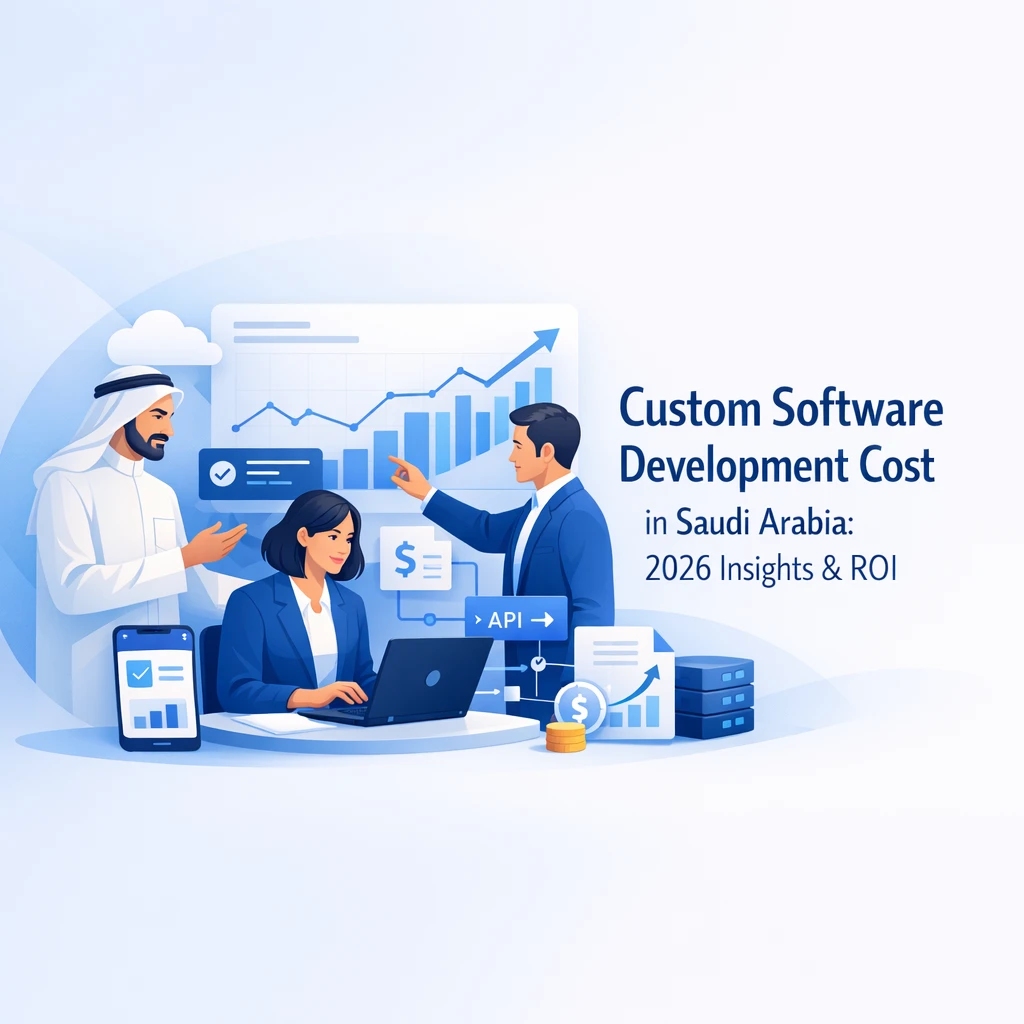
Saudi Arabia and the broader Gulf region are accelerating digital transformation across industries. For SMBs, SMEs, startups, and established brands planning software projects between USD 5k and 200k, understanding cost drivers, realistic timelines, and expected ROI is essential to make smart bets. This guide presents practical insights, real-world patterns, and implementation guidance to help you evaluate custom software projects with confidence. Triostack Technologies serves as a global partner that blends local domain understanding with offshore delivery capabilities to help clients scale quickly while maintaining quality and control.
Note on scope: this article focuses on custom software development within the Saudi Arabia market and nearby Gulf regions, with global delivery considerations for projects that may involve teams in multiple geographies. It is written for decision makers including CEOs, CTOs, founders, product managers, digital transformation leaders, and IT leaders evaluating projects in the USD 5k to 200k range.
What is the Topic
Custom software development refers to building software solutions tailored to your organization’s unique processes, data models, and business rules. Unlike off-the-shelf software, custom development delivers features that evolve with your business, supports regulatory needs, and integrates with existing systems such as CRM, ERP, and data warehouses. In Saudi Arabia, this approach is increasingly popular among companies seeking competitive differentiation, better customer experiences, and more efficient operations.
Typical outcomes include improved speed to market, streamlined operations, enhanced data insights, and the ability to offer new services to customers. In addition, when properly managed, custom software can deliver measurable ROI via cost savings, revenue growth, and risk reduction.
Why it Matters in 2026
In 2026, software projects must contend with rapid change, regulatory evolution, and the demand for seamless omnichannel experiences. For growing organizations in the Middle East and beyond, the following trends drive the value of custom software:
- Digital-native customer journeys: Customers expect unified experiences across web, mobile, and in-store channels.
- Data-driven decision making: Scalable data platforms enable personalized experiences and smarter operations.
- Cloud-native and modular architectures: Microservices and serverless patterns offer agility and resilience.
- Security and compliance: Data privacy and regulatory requirements demand robust governance and secure software.
- Remote and distributed teams: Global delivery models enable access to top talent while controlling costs.
For Saudi Arabia and the GCC, local data residency, localization, and regulatory alignment are essential. Engaging a capable partner like Triostack can help you balance local compliance with global engineering excellence.
Current Industry Challenges
Growing organizations face several common obstacles when planning and executing custom software projects:
- Unclear scope and evolving requirements leading to scope creep
- Talent shortages in specialized areas such as AI, data engineering, and cloud architecture
- Balancing speed to market with architectural quality and security
- Integration complexity with legacy systems like ERP and CRM
- Regulatory alignment and data residency concerns
Partnering with an experienced software provider can help you design a pragmatic path forward, validate assumptions early, and maintain control over cost and timeline.
How the Technology Works
Custom software projects typically follow a structured lifecycle that blends business discovery with engineering discipline. The core phases include:
- Discovery and framing: business goals, user journeys, and success metrics
- Architecture and design: platform choice, data models, and integration points
- Development and testing: iterative sprints with continuous QA
- Deployment and monitoring: production release, observability, and governed changes
- Maintenance and evolution: ongoing improvements and support
Tech choices vary by project but commonly involve web and mobile front ends, a scalable backend, API integration, data stores, and cloud-based infrastructure. Modern projects also weave AI and ML capabilities to automate tasks, extract insights, and optimize user experiences.
Architecture Overview
Below is a representative architecture for a scalable enterprise web and mobile solution that commonly serves SMBs and SMEs in Saudi Arabia and the Gulf region. The architecture emphasizes modularity, security, and cloud readiness, while keeping integration with CRM, ERP, and data platforms in mind.
- Frontend: responsive web UI and mobile apps (iOS and Android) built with modern frameworks
- API layer: RESTful and GraphQL APIs to expose business capabilities
- Backend services: microservices or modular services for domain boundaries
- Data layer: transactional databases plus data lake for analytics
- Integration: API gateways and connectors to ERP, CRM, payment providers, and external partners
- Security and compliance: identity and access management, encryption, and audit trails
- Cloud and deployment: cloud-native deployment with CI/CD and automated testing
Step-by-Step Workflow
A pragmatic path to delivery combines discovery with agile execution. Here is a typical sequence you can adapt:
- Kickoff and discovery: align on goals, success metrics, and high-level scope
- UX research and design: wireframes, user journeys, and early UX validation
- Architecture decision: pick a cloud platform, data strategy, and integration approach
- Incremental development: sprints delivering vertical features
- QA and security review: automated tests plus privacy and security checks
- Staging to production: CI/CD pipelines and blue-green or canary deployments
- Monitoring and optimization: dashboards, alerts, and analytics-based improvements
Business Use Cases
These scenarios illustrate how custom software can address real business needs in the Gulf region and beyond:
- Real-time logistics and delivery tracking for a Dubai-based logistics firm
- Appointment scheduling and EMR-integrated patient management for a UAE healthcare clinic
- Omni-channel retail order management and in-store stock optimization for a Saudi retailer
- AI-powered lead scoring and CRM automation for a UK SaaS company expanding to the GCC
Industry Applications
While this guide centers on the Saudi market, the patterns apply broadly across industries. Common domains for custom software investments include:
- Logistics and transportation
- Healthcare and life sciences
- Retail and e-commerce
- Financial services and fintech
- Manufacturing and supply chain
- Education and public sector
Benefits
Organizations see multiple benefits from well-planned custom software programs:
- Tailored workflows that map directly to unique business processes
- Improved productivity and faster decision making
- Better customer experiences and loyalty
- Stronger data governance and regulatory compliance
- Greater agility to adapt to market changes
In practice, ROI arises from a combination of cost savings, revenue growth, and risk reduction. A well-executed project can reduce manual tasks by a half or more, depending on the domain and starting point.
Challenges
Every project faces potential hurdles. Being aware of these helps you plan mitigation strategies:
- Ambiguity in requirements can stall progress; strong discovery helps lock scope
- Integration with legacy systems can be complex; plan for data migration and adapters
- Security and privacy requirements require deliberate design and testing
- Resource constraints and schedule pressures require disciplined project management
Common Mistakes
Avoid these frequent missteps that erode value and extend timelines:
- Overly ambitious scope without phased delivery
- Underestimating data migration and data quality needs
- Insufficient focus on UX and user adoption
- Underinvesting in security and governance from day one
Best Practices
Adopt these practices to improve outcomes and manage costs effectively:
- Prioritize an MVP that validates core value quickly
- Design for scalability and modularity from the start
- Archive a clear product backlog with measurable acceptance criteria
- Incorporate security by design and privacy by default
- Engage a partner with proven delivery models and local market understanding
Build vs Buy Comparison
Sometimes the decision is not binary; many organizations adopt a bridge approach combining both. The table below contrasts typical considerations:
| Aspect | Build | Buy / SaaS |
|---|---|---|
| Customization | Highest level of customization to fit unique processes | Limited customization; best for standard workflows |
| Time to value | Longer upfront; iterative improvements | Faster to deploy; ongoing subscription |
| Cost structure | Capex upfront; ongoing maintenance | Opex; predictable monthly/annual fees |
| Control & IP | Full ownership of IP | Vendor owns IP; customization may be limited |
| Maintenance risk | Internal maintenance burden or managed services | Vendor-managed updates and support |
In many GCC markets, a hybrid approach works well: core differentiators are built in house or with a trusted partner like Triostack, while non-core functionalities are shared via SaaS where appropriate.
Estimated Development Cost
For SMBs and SMEs working on a range from USD 5k up to 200k, cost is influenced by scope, complexity, and integration needs. The numbers below provide a practical reference for budgeting and vendor conversations. Note that these figures assume a typical multi-month engagement with a small to mid-size team and some external services such as QA and cloud hosting.
| Project Type | Typical Range (USD) | Notes |
|---|---|---|
| Business Website | 5k – 15k | Content management, minor integrations |
| Customer Portal | 10k – 40k | Authentication, data models, support for mobile |
| CRM | 15k – 100k | Custom workflows, integration with marketing and sales |
| ERP | 40k – 200k | End-to-end processes, data migration, reporting |
| AI Chatbot | 5k – 25k | Conversational UI with domain-specific intents |
| AI Automation | 15k – 80k | Robotic process automation and workflow optimization |
| SaaS MVP | 20k – 80k | Multi-tenant architecture and core feature set |
| Enterprise Web App | 30k – 200k | Complex integrations, security, and governance |
Pricing is driven by factors such as architectural choices, data migration scope, integration complexity, security requirements, and regional localization. For Gulf-region clients prioritizing localization, regulatory alignment, and data sovereignty, costs may align with the ranges above while including additional compliance work.
Pricing Factors and Cost Drivers
Several elements influence the final price tag for a custom software project in Saudi Arabia and neighboring markets:
- Scope and complexity: number of features, workflows, and users
- Platform choice and architecture: monolithic vs microservices, cloud vs on-prem
- Data migrations and integrations: ERP, CRM, payment gateways, external data sources
- Security and compliance: data protection, encryption, audit trails
- Localization: language, currency formats, regulatory localization
- Quality assurance: automated testing, performance testing, security testing
- Team composition and location: onshore vs offshore mix, seniority, and hours
- Maintenance and support: post-launch SLAs, monitoring, and upgrades
For Gulf-based clients, pairing a local PM and governance framework with an offshore delivery model can optimize cost while preserving control and quality. Triostack supports such models with dedicated teams, a robust QA discipline, and strict security practices.
Recommended Technology Stack
While every project has unique needs, a typical modern stack for scalable custom software includes:
- Frontend: React or Angular for web, React Native or Flutter for mobile
- Backend: Node.js, Java Spring Boot, or .NET
- APIs: REST and GraphQL
- Database: PostgreSQL or MySQL for transactional data; data lake on AWS or Azure
- Cloud: AWS, Azure, or Google Cloud with managed services
- AI/ML: Python, TensorFlow or PyTorch; AI services for NLP and vision
- DevOps: CI/CD with GitHub Actions or Azure DevOps; IaC with Terraform
- Security: IAM, MFA, encryption at rest and in transit, regular security testing
Triostack specializes in building scalable solutions across these layers, with emphasis on compliance, performance, and maintainability. We also offer API development and SAP/ERP integrations as needed.
Future Trends
Looking ahead to 2026 and beyond, several trends are shaping cost, timelines, and ROI:
- AI-enabled product teams; AI copilots to accelerate development and testing
- Cloud-native architectures with resilient, scalable deployments
- Data-centric design with governance and privacy by default
- Hybrid and remote delivery models optimized for time zones and skill availability
- Higher emphasis on UX and customer-centric design
How Triostack Delivers Projects Globally
Triostack operates with a globally distributed delivery model. We support Gulf-based clients with a hybrid approach that blends onshore governance with offshore execution, enabling cost efficiency without compromising quality. Our remote delivery capabilities are designed to optimize communication, collaboration, and velocity.
Key elements of our global delivery model include:
- Agile delivery with defined sprint cadences and backlog management
- Weekly demos to align stakeholders and validate progress
- Robust collaboration tools including Slack, Teams, Zoom, Google Meet
- Issue tracking and project management via Jira or ClickUp
- Version control with GitHub or GitLab; CI/CD pipelines for automated builds
- Cloud staging environments for realistic testing and QA
- Comprehensive QA and security testing
- Documentation and knowledge transfer for long-term support
- NDA and IP ownership protections
- Timezone overlap to maximize collaboration hours
- Dedicated project managers and client success teams
- Long-term support and managed maintenance
Why UAE businesses outsource development to India is a common pattern: cost efficiency, access to a large talent pool, faster hiring, flexible team scaling, high quality engineering, and strong communication. Triostack leverages this model to deliver high value at competitive prices while maintaining strict confidentiality and regulatory alignment.
Case Studies
Below are anonymized, practical examples that illustrate how typical projects unfold in real-world contexts. These narratives avoid naming specific companies while focusing on outcomes and lessons learned.
Dubai-based logistics company
Challenge: Manual dispatch processes and fragmented data led to delays and suboptimal routing. The company needed real-time visibility into shipments, ETA predictions, and a customer portal for clients to track orders.
What Triostack delivered: A microservices-based logistics platform with a web dashboard, mobile apps for drivers, and an API layer integrating with the company’s legacy ERP. A robust data model supported live tracking, route optimization, and automated alerts. A dedicated team followed an agile cadence with weekly demos and continuous QA.
Impact: Improved on-time delivery rates, faster customer inquiries resolution, and better utilization of fleet resources. The solution was designed to scale to additional distribution centers as the business grew.
UAE healthcare clinic
Challenge: Fragmented patient data, scheduling inefficiencies, and slow access to appointment information impacted patient experience. Regulatory considerations demanded secure data handling and access controls.
What Triostack delivered: An integrated patient management system with appointment scheduling, EMR integration, and secure access for clinicians. The system included role-based access, audit trails, and data encryption both at rest and in transit. The project followed an MVP approach in phases to validate workflows first.
Impact: Shorter appointment cycles, improved patient satisfaction, and a foundation for analytics that supported population health management.
Saudi retail business
Challenge: An omnichannel shopping experience required a unified product catalog, shopping cart, and order management with ERP and payment gateway integrations.
What Triostack delivered: A SaaS MVP that integrated with the existing ERP, enabling real-time inventory visibility, order orchestration across channels, and a responsive customer portal. The project incorporated localization, tax compliance, and secure payments.
Impact: Accelerated time-to-market for new product launches and improved stock accuracy across channels.
Australian startup expanding to GCC
Challenge: The startup needed a scalable platform capable of servicing multiple regions with multilingual support and flexible pricing models.
What Triostack delivered: A modular SaaS platform with multi-tenant architecture, localization for regional markets, and a cloud-first deployment strategy. The program included a roadmap for feature expansions and a plan for ongoing optimization.
Impact: Successful market entry with the groundwork for rapid regional expansion and controlled cost growth.
REMOTE DELIVERY: How Triostack Delivers Projects from India
Triostack leverages a mature remote delivery model designed to deliver high value for Saudi Arabian and GCC clients while maintaining strong governance and clear communication. The model emphasizes agility, transparency, and security, with several practical benefits for SMBs and SMEs:
- Agile and iterative planning with clear sprint goals and reviews
- Weekly demos and continuous collaboration via Slack, Teams, and Zoom
- Virtual standups and structured Jira or ClickUp workflows
- Code management and collaboration via GitHub or GitLab
- CI/CD pipelines and cloud staging environments for realistic testing
- QA rigor, including automation and security testing
- Comprehensive documentation and knowledge transfer
- NDA and IP ownership protection
- Timezone overlap to maximize collaboration hours with UAE teams
- Dedicated project managers and client success managers for continuity
- Long-term support and proactive maintenance
Why UAE businesses outsource to India is rooted in cost efficiency, access to a large talent pool, and the ability to scale quickly. Triostack merges that capability with strong English communication, robust security practices, and a commitment to regulatory alignment in the GCC market.
Frequently Asked Questions
- What is the typical duration of a project in this budget range?
- Most mid-sized projects span four to nine months, depending on scope, integrations, and regulatory requirements. An MVP can be delivered earlier to validate value, followed by iterative enhancements.
- How do you handle data security and regulatory compliance in the GCC?
- We design with security by default, implement data protection measures, and align with local regulations. We can help with data residency requirements and compliance documentation.
- Will I need a big team?
- Not necessarily. A well-structured core team (product owner, project manager, lead developer, QA, and a UI/UX designer) can deliver significant value with scalable offshore support as needed.
- Can you support ongoing maintenance after launch?
- Yes. We offer ongoing maintenance, monitoring, and enhancement services to ensure long-term success.
Conclusion
Planning and budgeting for custom software in Saudi Arabia in 2026 requires a clear view of cost drivers, timelines, and potential ROI. With a phased approach, a focus on security and compliance, and a partner capable of delivering globally with local relevance, SMBs and SMEs can build software that not only meets today’s needs but scales for tomorrow. Triostack combines technical breadth with a practical, outcome-driven mindset to help businesses transform effectively and efficiently. If you are embarking on a similar software project, Triostack can help you design, build, deploy, and maintain a scalable solution that aligns with your strategic priorities.
As you evaluate options, consider how a blended model of local governance and offshore delivery can unlock speed, quality, and cost efficiency without compromising control or security.
Subtle call to action: Businesses planning similar solutions often benefit from experienced software development partners like Triostack Technologies.
If you're planning a similar software project, Triostack can help you design, build, deploy and maintain a scalable solution.
Triostack Team
Technology Evangelist & Writer
Triostack Team is an experienced writer and technologist, exploring the intersections of AI, cloud architecture, and modern application development. Passionate about turning complex technical concepts into accessible insights.