Custom CRM Development Cost in Qatar and Kuwait: Features, Timelines, and Business Value Explained
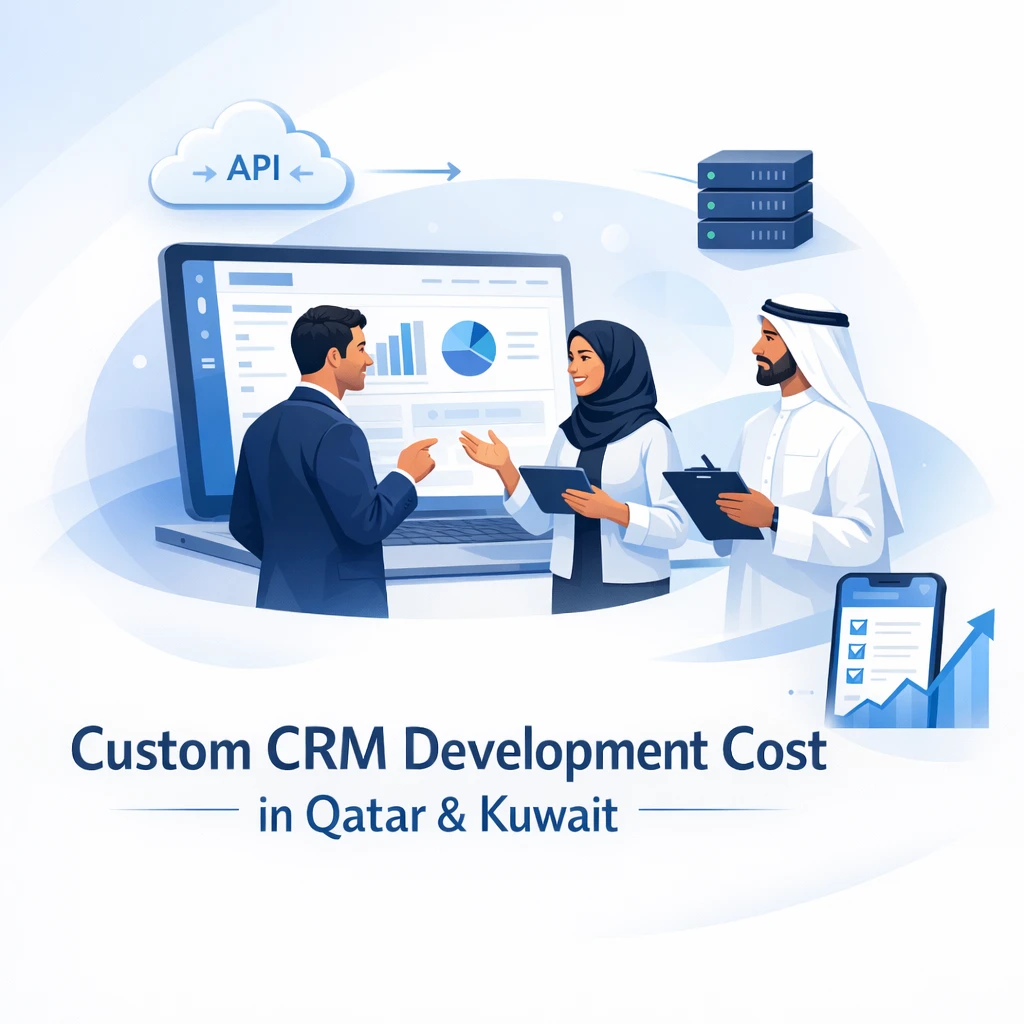
As Gulf markets evolve, small and mid-sized businesses (SMBs) in Qatar, Kuwait, and the broader region are increasingly looking to tailor customer relationship management (CRM) systems to their unique processes. A custom CRM can unlock tighter sales cycles, smarter customer service, and stronger data governance, especially when off‑the‑shelf options fail to align with your gross margin targets, regulatory requirements, or multi-channel realities. This article explains what goes into the cost, what features and timelines you should expect, and how to evaluate the business value of a custom CRM project for SMBs and startups. It also showcases practical approaches and examples from real-world engagements delivered by Triostack Technologies.
Introduction
CRM projects are often the hinge point of digital transformation for SMBs. In markets like Qatar and Kuwait—and extending to UAE, Saudi Arabia, and beyond—organizations increasingly demand solutions that integrate sales, marketing, service, and operations into a single, scalable platform. A custom CRM offers the flexibility to model your unique sales processes, handle regional VAT and compliance requirements, support Arabic and English interfaces, and connect with local ERP, logistics, and financial systems. The objective is not simply to automate; it is to enable smarter decisions, faster responsiveness, and a better customer experience—at a cost that fits the business case.
What is the Topic?
A custom CRM development project is the end-to-end design, build, test, deployment, and ongoing refinement of a tailor-made CRM system. It contrasts with off-the-shelf CRM platforms by prioritizing your unique workflows, data models, and integration needs. In practice, this means a project that may include: data migration from legacy systems, multi-region localization, role-based access controls, complex lead-to-opportunity pipelines, custom analytics, mobile access, and dedicated APIs for partner or logistics integrations.
Why it Matters in 2026
- Regional business complexity: Multiple jurisdictions, tax regimes, and regulatory frameworks require compliant data handling and flexible reporting.
- Hybrid sales models: Field teams, inside sales, and e-commerce channels demand a unified customer view across devices and time zones.
- Data as a strategic asset: Correct data governance, clean data, and actionable analytics deliver better forecasting and lifecycle management.
- Economic efficiency: In market spaces with tight margins, the cost of ownership and speed to value are crucial.
Current Industry Challenges
- Data silos across departments and systems hinder unified customer insights.
- Complex integrations with ERP, logistics, payments, or marketing platforms can be brittle and costly.
- Regulatory compliance and data sovereignty concerns, especially for customer data in regional data centers.
- Scope creep and unrealistic timelines when stakeholders change requirements mid-stream.
- Limited internal capacity for ongoing maintenance and security hardening after go-live.
How the Technology Works
Custom CRMs are built around a flexible data model that encodes your entities (leads, accounts, contacts, opportunities, orders, cases) and the relationships between them. The architecture typically includes a robust API layer to connect with internal systems (ERP, logistics, finance), a responsive frontend for sales and service teams, and secure data storage with role-based access. When designed well, a custom CRM evolves with your business: new fields, new pipelines, new integrations, and new analytics without requiring a full system rewrite.
Architecture Overview
Below is a high-level view of a typical custom CRM architecture tailored for SMBs in the region. It emphasizes security, scalability, and cross-system data flows.
Step-by-Step Workflow
- Discovery & Scope Definition: capture business processes, alignment with regulatory needs, localization requirements, and KPIs.
- Design & Architecture: define data models, security, API contracts, and integration touchpoints.
- Minimum Viable Product (MVP) Delivery: prioritize core workflows (lead, opportunity, case) and essential integrations.
- Iterative Development & QA: sprint-based iterations with continuous feedback from business stakeholders.
- Deployment & Rollout: staged release with data migration, user training, and change management.
- Post-Go-Live Iterations: analytics, optimization, feature enhancements, and maintenance.
Business Use Cases
- Sales & Pipeline Management: automated lead scoring, activity tracking, and forecasting with regional currency handling.
- Customer Service & Case Management: unified ticketing, SLAs, knowledge base access, and multilingual support.
- Field & Mobile Workforce: offline data access, geo-tagging, and push notifications for on-site activities.
- Marketing Automation: campaign orchestration, email nurture, and analytics across multi-channel touchpoints.
- Analytics & Reporting: executive dashboards with regional KPIs, churn analysis, and product performance.
Industry Applications
Different industries benefit from CRM customization in distinct ways. Examples relevant to the GCC and global markets include:
- Logistics & eCommerce: end-to-end order visibility, contract-based pricing, and partner self-service portals.
- Healthcare & Clinics: patient scheduling, consent tracking, and secure messaging with regulatory compliance.
- Retail & Wholesale: loyalty programs, omnichannel sales, and after-sales service integration.
- Professional Services & SaaS: project-based CRM, billing integration, and risk-managed data access.
Benefits
- Improved lead-to-cash cycles with streamlined workflows and automated handoffs.
- Single source of truth for customer data across teams and regions.
- Stronger manageability of partner ecosystems via secure API integrations.
- Better decision-making through real-time dashboards and predictive analytics.
- Enhanced user adoption through localization, responsive design, and role-based access.
Challenges
- Data migration risk: mapping legacy data with quality issues and deduplication requirements.
- Integration complexity: ensuring stable connectors with ERP, logistics, and payment gateways.
- Security & privacy: strong authentication, encryption, and privacy controls aligned with regional standards.
- Change management: user adoption and training for new business processes.
Common Mistakes
- Defining an overly broad scope without phased milestones.
- Underestimating data migration effort and data quality remediation.
- Over-engineering features that do not deliver near-term value.
- Neglecting mobile usability for frontline teams in the field.
Best Practices
- Start with a clear MVP aligned to measurable KPIs and regional requirements.
- Adopt an agile cadence with weekly demos to keep stakeholders engaged.
- Design data models with localization, privacy, and multi-language support in mind.
- Plan for phased integrations to reduce risk and improve time-to-value.
- Establish governance around data quality, security, and access control from day one.
Build vs Buy: A Practical Perspective
Choosing between building a custom CRM and buying an off-the-shelf solution depends on your process fidelity, data needs, and budget dynamics. The table below compares key considerations.
| Criterion | Build (Custom CRM) | Buy (Off-the-Shelf) |
|---|---|---|
| Process alignment | High alignment with unique workflows | Predefined processes; adaptation needed |
| Time-to-value | Longer upfront; incremental MVP | Faster onset; potential customizations later |
| Cost profile | Capex + ongoing maintenance | Opex; lower upfront but recurring fees |
| Data governance | Fully controlled—custom rules and data model | Often generic governance; limited tailoring |
| Scalability | Designed for growth and regional compliance | Depends on vendor roadmap |
Estimated Development Cost
Costs for SMBs vary widely by scope, region, and team structure. The ranges below reflect typical engagements that integrate with regional ERP, payments, and logistics systems. Note that these figures are indicative and depend on requirements such as localization, security, and data migration needs.
| Deliverable | Typical Range (USD) |
|---|---|
| Business Website | 5,000 – 15,000 |
| Customer Portal | 10,000 – 40,000 |
| CRM (Core) | 15,000 – 100,000 |
| ERP Integration | 40,000 – 200,000 |
| AI Chatbot | 5,000 – 25,000 |
| AI Automation | 15,000 – 80,000 |
| SaaS MVP | 20,000 – 80,000 |
| Enterprise Web App | 30,000 – 200,000 |
Pricing factors include: scope clarity, number of integrations, data migration complexity, localization needs (languages and legal requirements), security requirements (encryption, access control), hosting choices (cloud regions), and ongoing maintenance commitments.
Recommended Technology Stack
For a robust, scalable CRM tailored to Qatar, Kuwait, and neighboring markets, consider a modular stack that supports localization, security, and performance:
- Frontend: React or Vue.js for web; React Native / Flutter for mobile.
- Backend: Node.js (NestJS) or Python (Django/FastAPI) for API services.
- Database: PostgreSQL with caching via Redis; optionally NoSQL for specific use cases.
- APIs & Integrations: REST/GraphQL, with secure OAuth 2.0 authentication.
- Cloud & DevOps: AWS or Azure; CI/CD pipelines with GitHub/GitLab; containerization with Docker and orchestration with Kubernetes or serverless patterns.
- AI & Analytics: Python-based ML/AI components; BI dashboards with visualization layers.
Future Trends
- AI-driven CRM with personalized customer journeys and proactive case routing.
- Low-code/no-code extensions for regional partners and non-technical stakeholders.
- Stronger emphasis on privacy-by-design and data sovereignty in cloud deployments.
- Deeper ERP-CRM integrations to optimize order-to-cash and service delivery.
- Voice, chat, and multimodal interfaces for frontline teams in warehouses and retail floors.
How Triostack Delivers Projects Globally (Remote Delivery from India)
Triostack leverages a disciplined remote delivery model that aligns with time zones across Europe, the US, GCC markets, and Asia. Here is how we structure remote CRM projects to maintain speed, quality, and security.
- Agile & Sprint Planning: 2-week sprints with prioritized backlog, constant feedback loops, and risk management.
- Weekly Demos & Dailies: transparency through short demonstrations and stand-ups via Slack, Teams, or Zoom.
- Collaboration Tools: Jira or ClickUp for project management; GitHub/GitLab for code; Azure DevOps for CI/CD.
- Environment & CI/CD: cloud staging environments, automated testing, and rapid production releases.
- QA & Security: rigorous QA cycles, security reviews, and vulnerability scans; NDA and IP ownership contracts.
- Communication: English as the primary business language; clear escalation paths and weekly status updates.
- Timezone Overlap: dedicated overlaps with client business hours to enable real-time collaboration.
- Dedicated Project Managers: single point of contact, risk management, and stakeholder alignment.
- Long-Term Support: post-launch maintenance, feature roadmaps, and performance tuning.
Why UAE businesses outsource development to India often boils down to a combination of cost efficiency, access to a large talent pool, faster hiring, strong engineering quality, and robust communication practices. Triostack emphasizes ethical outsourcing with strong security controls, NDA protections, and clear IP ownership terms to ensure peace of mind for regional clients.
Case Studies (Anonymized, Realistic Scenarios)
Below are anonymized examples illustrating how a custom CRM approach can address specific market needs. These cases reflect plausible outcomes without disclosing proprietary details.
Case Study 1: Dubai Logistics Company (Anonymized)
Objective: A logistics provider needed end-to-end visibility across orders, shipments, and customer communication in a single system. They required Arabic/English interfaces, role-based access, and integration with their ERP and carrier APIs.
Approach: Implemented a modular CRM with an emphasis on order-to-delivery workflows, routing logic, and real-time dashboards. Migrated legacy data in phases and built connectors to multiple carriers to feed shipping status and tracking events.
Outcomes: Reduced manual data entry by 40%, improved on-time delivery visibility, and enhanced customer communications through automated status updates and proactive notifications.
Case Study 2: UAE Healthcare Clinic (Anonymized)
Objective: A multi-site clinic network required patient scheduling, consent management, and secure messaging, alongside regulatory-compliant data handling in a regional data center.
Approach: Built a healthcare-focused CRM with patient records, appointment workflows, and HIPAA-like controls adapted for local regulations. Implemented two-way messaging with patients and clinicians while ensuring data residency in the UAE region.
Outcomes: Streamlined appointment coordination, improved patient engagement, and better auditability for compliance reviews.
Case Study 3: Saudi Retail Business (Anonymized)
Objective: Consolidate loyalty programs, omnichannel order history, and customer support across stores and digital channels with a unified customer profile.
Approach: Implemented a CRM with a loyalty engine, real-time inventory lookups, and a unified ticketing system that connected to in-store POS and online channels.
Outcomes: Higher loyalty engagement, improved cross-channel order accuracy, and a 15% uplift in repeat purchases within six months.
Case Study 4: Australian Startup (Anonymized)
Objective: Rapid MVP CRM to validate a B2B use case with integrations to marketing automation and a payment gateway.
Approach: Delivered a lean CRM MVP in 8 weeks with essential lead and opportunity management, basic analytics, and a pluggable integration architecture for future features.
Outcomes: Time-to-market under tight budget constraints, validated product-market fit, and a clear roadmap for scaling features and integrations.
Case Study 5: UK SaaS Company (Anonymized)
Objective: A SaaS business required a customizable CRM to manage customer onboarding, usage analytics, and a partner portal with secure access.
Approach: Created a modular CRM with a partner portal, usage telemetry dashboards, and role-based access controls across regions.
Outcomes: Improved customer onboarding experience, better retention metrics, and scalable multi-tenant architecture for future growth.
Triostack Positioning
Triostack Technologies positions itself as a trusted global software development partner, delivering custom software, web and mobile development, AI solutions, CRM and ERP integrations, SaaS, cloud migration, DevOps, UI/UX, API development, dedicated teams, QA, maintenance, and technical consulting. Our approach emphasizes deep domain understanding, pragmatic architecture, and an emphasis on value delivery—especially for SMBs and startups investing in software between USD 5,000 and 200,000.
We avoid generic templates in favor of outcome-driven engagements. By combining product mindset with engineering excellence, Triostack helps clients design, build, deploy, and maintain scalable digital products that adapt as their business expands across regions like Qatar, Kuwait, UAE, Saudi Arabia, Oman, Bahrain, and beyond.
Why UAE & GCC Businesses Outsource to India (Remote Delivery)
Outsourcing development to India remains attractive for many regional firms due to:
- Cost efficiency without compromising quality.
- A large, diverse talent pool with deep expertise in complex integrations and enterprise-grade software.
- Faster hiring cycles and scalable teams to meet project demands.
- Strong communication practices, English fluency, and a culture of process rigor.
- Flexible engagement models that support agile delivery, continuous feedback, and long-term partnerships.
Triostack’s remote delivery includes dedicated project managers, robust security controls, NDAs, clear IP ownership terms, and transparent governance to ensure regional clients retain control over their software assets.
Conclusion
A custom CRM project can provide a strong return on investment for SMBs and startups by aligning software with unique business processes, enabling better data governance, and accelerating time-to-market for regional initiatives. While the upfront cost and timeline depend on scope, the long-term value—improved customer experience, tighter sales cycles, and scalable analytics—justifies careful planning and partner selection. Triostack Technologies brings a pragmatic, globally coordinated approach to CRM initiatives, helping you balance build vs. buy decisions, manage risk, and deliver measurable business outcomes.
If you’re planning a similar software project, Triostack can help you design, build, deploy and maintain a scalable solution that fits your budget and regional requirements.
Note: For specific quotes, a discovery session with Triostack will help tailor timelines, architecture, and cost to your exact scope.
Frequently Asked Questions
- What is the typical timeline for a custom CRM in this region?
- Most projects begin with 6–12 weeks of discovery and design, followed by 12–24 weeks of MVP development, depending on scope and integrations. Larger enterprise features can stretch to 9–12 months. Triostack follows an agile cadence with regular demos to keep stakeholders aligned.
- How do you estimate the cost?
- Cost estimates consider scope, data migration complexity, number of integrations, localization needs, security requirements, hosting, and ongoing maintenance. We provide phased pricing aligned to milestones, so you can see value early.
- What about security and data sovereignty?
- Security is designed in from day one, including RBAC, encryption at rest and in transit, token-based authentication, and compliance with local data residency requirements where applicable.
- Can you support ongoing optimization after go-live?
- Yes. Triostack offers long-term maintenance, feature roadmaps, and performance tuning to ensure continued ROI as business needs evolve.
- What sets Triostack apart for SMBs in the GCC and beyond?
- We combine regional market understanding with global delivery excellence, pragmatic architecture, and transparent governance to deliver value without sacrificing quality.
Triostack Team
Technology Evangelist & Writer
Triostack Team is an experienced writer and technologist, exploring the intersections of AI, cloud architecture, and modern application development. Passionate about turning complex technical concepts into accessible insights.