Cloud Migration Cost Optimization for Enterprises: How to Cut Infrastructure Spend While Improving Performance
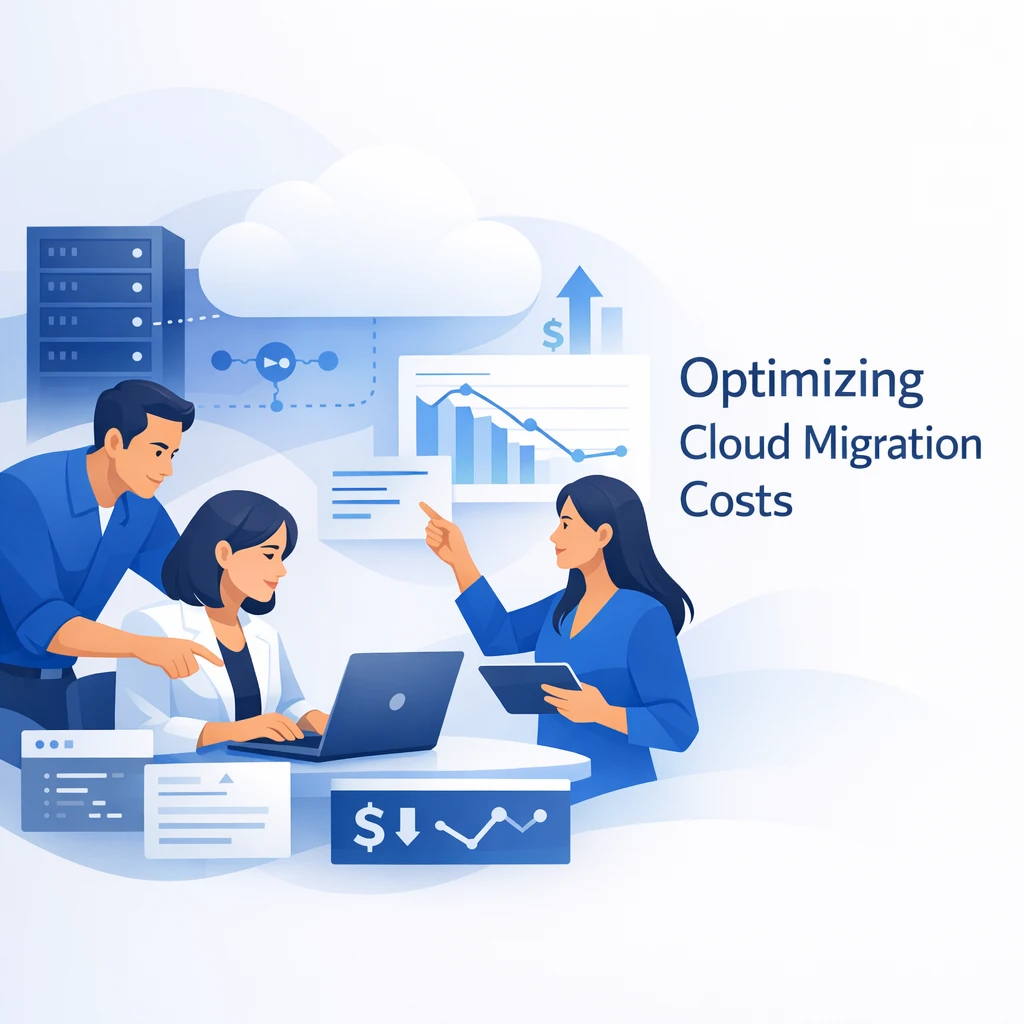
As enterprises pursue digital transformation, migrating workloads to the cloud offers agility and scalability—but without careful cost management, cloud bills can spiral. This guide blends practical, real-world guidance with actionable steps to reduce infrastructure spend while boosting performance. It highlights how Triostack Technologies helps organizations plan, migrate, and optimize cloud-first architectures with a focus on tangible business outcomes.
Introduction
Cloud migration is not just about moving systems from on-premises to a cloud provider. It’s an opportunity to redesign architectures, adopt modern operating models, and implement cost-aware governance. Enterprises in the UAE, GCC, Europe, North America, and beyond face converging pressures: rising cloud spend, shorter time-to-market, and the need for higher reliability and security. The purpose of this article is to provide a structured, vendor-agnostic playbook for optimizing cloud migration costs while improving performance, reliability, and security.
Throughout, you’ll see practical steps, templates, and real-world patterns. Triostack Technologies helps organizations plan, build, and operate cloud-native solutions, with services spanning custom software, web and mobile development, cloud migration, DevOps, AI and ML, and more. The goal is to enable decisions that align with business value rather than technical whim.
What is the Topic?
Cloud migration cost optimization is the discipline of designing, deploying, and operating cloud workloads in a way that minimizes total cost of ownership (TCO) while maximizing performance, resilience, and developer velocity. It encompasses right-sizing compute, selecting appropriate storage classes, choosing sustainable networking patterns, and establishing governance that prevents cost leakage—such as runaway data transfers or neglected idle resources. The outcome should be a cloud footprint that scales with demand and remains predictable in cost.
Why it Matters in 2026
The cloud market has matured, and enterprises now operate multi-cloud and hybrid environments with a mix of IaaS, PaaS, and serverless offerings. In 2026, the key drivers of cost optimization include:
- Advanced autoscaling and event-driven architectures that adapt to demand without over-provisioning.
- Cost-aware design decisions by developers and architects, aided by better visibility and policy controls.
- Data gravity and egress costs that incentivize regionalization and data residency considerations.
- AI-powered optimization tools that continuously analyze usage patterns and suggest changes.
- Security and compliance requirements that constrain how data is stored, moved, and accessed.
Enterprises that view cloud migration as a continuous optimization program—rather than a one-off project—tend to achieve better cost control and faster time-to-deliver for new features and products.
Current Industry Challenges
Many organizations face a familiar set of challenges when migrating to the cloud:
- Cost overruns: Inadequate visibility into usage patterns leads to over-provisioned resources and surprise bills.
- Vendor lock-in risks: Migrating without a clear exit or multi-cloud strategy can limit flexibility and increase total cost of ownership.
- Data transfer and egress charges: Moving data between regions or clouds can be expensive if not designed carefully.
- Performance vs. cost trade-offs: Under-provisioned resources degrade user experience, while over-provisioning wastes budget.
- Governance gaps: Lacking policy-driven controls makes it easy for teams to deploy expensive experiments or duplicate environments.
Addressing these requires a holistic approach that aligns architecture, operations, and governance with business goals. Triostack’s approach blends architecture design, cost modeling, and ongoing optimization to ensure the cloud journey supports strategic outcomes.
How the Technology Works
At a high level, cloud migration cost optimization relies on three pillars: proper architecture, intelligent automation, and continuous cost governance.
- Architecture for efficiency: Embrace cloud-native patterns such as microservices, managed services, autoscaling, and serverless where appropriate. This reduces idle capacity and improves reliability.
- Automation and pipelines: CI/CD, automated testing, and infrastructure as code (IaC) ensure reproducible environments and faster recoveries.
- Continuous optimization and governance: Regular cost reviews, budgets, alerts, and policies keep cloud spend aligned with business value.
Key techniques include:
- Right-sizing compute (CPU, memory) based on actual usage, not peak demands.
- Choosing appropriate storage classes and lifecycle policies to minimize hot storage costs.
- Mixing reserved instances, savings plans, and spot instances for non-critical or flexible workloads.
- Automated shutdown of non-production environments outside business hours.
- Data localization and tiering to minimize data transfer and storage costs across regions.
Architecture Overview
A typical enterprise migration pattern includes a hybrid design that gradually shifts components to a cloud-native stack while preserving critical on-prem or regional data stores for compliance and latency requirements. The reference architecture below illustrates core components and interactions.
Key patterns to consider when designing the target architecture include:
- Use managed services (databases, queues, messaging) to reduce operational overhead and optimize cost.
- Implement multi-region deployment with automated failover for resilience and lower latency for regional users.
- Incorporate data lifecycle policies and archival strategies to minimize storage costs over time.
- Separate production and non-production environments with distinct cost controls and access policies.
Step-by-Step Workflow
Below is a practical, end-to-end workflow you can implement or adapt with a trusted partner like Triostack.
Practical actions you can take in each phase:
- Cost Modeling: Forecast TCO with scenarios for reserved instances, autoscaling, and data transfer costs.
- Migration Plan: Prioritize low-risk pilots, define cutover strategies, and establish rollback plans.
- Pilot: Validate performance, reliability, and security in a controlled environment before full-scale migration.
- Scale & Optimize: Migrate remaining workloads, enforce tagging, and implement governance policies.
- Governance: Create budgets, alerts, and policy-based controls to prevent cost leakage.
Business Use Cases
Across industries, cloud migration cost optimization helps drive tangible business outcomes. Here are representative scenarios and how to approach them:
- SMB/SMEs: A workflow-oriented application with seasonal spikes can benefit from autoscaling, serverless APIs, and a staged data strategy that minimizes run-rate costs while preserving user experience.
- Healthcare: Move to compliant data stores with encryption at rest, region-aware backups, and cost controls around data transfer to ensure patient privacy and regulatory alignment.
- Logistics: Real-time tracking powered by event-driven microservices and a hybrid data strategy to reduce latency while controlling compute and storage spend.
- Retail/Revenue-Generating Apps: Use caching layers, edge delivery, and regional data stores to optimize response times and lower data transfer costs across markets.
Industry Applications
In practice, enterprises across sectors implement cloud migration cost optimization differently depending on regulatory needs, data gravity, and speed-to-market requirements. The following examples illustrate practical considerations in industry contexts.
- Dubai logistics company: Consolidated dispatch and tracking systems to a cloud-native microservices platform enabled dynamic scaling during peak shipping seasons and reduced idle resources by 25–40% after rightsizing.
- UAE healthcare clinic: Migrated patient management and imaging workloads to a compliant cloud segment with tailored data retention policies, achieving predictable costs and improved uptime.
- Saudi retail business: Implemented a multi-region deployment with a CDN, reducing cross-border data egress and maintaining consistent customer experience during promotions.
- Australian startup: Built a SaaS MVP on a cloud framework with autoscaling and a pay-as-you-go database, enabling fast iteration with modest initial spend and scalable growth.
- UK SaaS company: Introduced cost governance and automated environment provisioning to support agile development without runaway cloud bills.
Benefits
- Cost efficiency: Right-sizing, reserved capacity, and autoscaling reduce waste.
- Performance gains: Modern, scalable architectures improve latency and resiliency.
- Operational parity: Automated deployments and IaC accelerate delivery cycles and enable safer changes.
- Security and compliance: Centralized governance, encryption, and access controls align with regulatory requirements.
- Business agility: Faster time-to-market for new features and services.
Challenges
Cost optimization is not a one-time task. Common challenges include:
- Precise measurement of usage across multi-cloud environments.
- Balancing performance requirements with cost constraints for latency-sensitive workloads.
- Maintaining consistent governance across teams and regions.
- Keeping security controls strong while enabling rapid development.
- Managing data localization and regulatory constraints across geographies.
Common Mistakes
- Over-provisioning during the migration to avoid performance risk, resulting in higher baseline costs.
- Neglecting data transfer costs when moving large datasets across regions and clouds.
- Lacking tagging and cost governance, making it hard to attribute spend to teams and projects.
- Underestimating the effort required for ongoing optimization and policy maintenance.
Best Practices
Inventory workloads, data volumes, and interdependencies to inform cost models. Validate performance and cost in stages before broad rollouts. Tagging, budgets, alerts, and automated controls prevent unexpected spend. Favor managed services and serverless where appropriate to reduce operational overhead. Schedule regular cost reviews, performance audits, and architectural refactors as needed.
Build vs Buy
In cloud migrations, teams often face the decision to build custom components or buy managed solutions. The following table summarizes typical considerations.
| Option | Pros | Cons |
|---|---|---|
| Build | Maximum control; tailored to precise needs; potential for competitive advantage | Longer time-to-value; higher ongoing maintenance; greater risk of cost overruns |
| Buy/Reuse managed services | Faster delivery; strong scalability; lower maintenance burden | Potential vendor lock-in; may require compromises on customization |
Cost Section: Realistic Pricing for SMBs
Pricing for cloud migration and related development varies widely based on scope, complexity, data gravity, security requirements, and the level of automation. The ranges below reflect typical engagements for small and medium businesses planning software projects in the USD range you mentioned.
| Project Type | Scope | Typical Range (USD) |
|---|---|---|
| Business Website | Migration + modern web stack | 5k–15k |
| Customer Portal | Authentication, data models, integrations | 10k–40k |
| CRM | Customizations, integration with other systems | 15k–100k |
| ERP | Migration, data modeling, processes, reporting | 40k–200k |
| AI Chatbot | NLU, intents, integration with data sources | 5k–25k |
| AI Automation | RPA/automation workflows | 15k–80k |
| SaaS MVP | End-to-end MVP with core features | 20k–80k |
| Enterprise Web App | Complex workflows, multi-tenant | 30k–200k |
Pricing factors to consider include:
- Data migration scope and complexity
- Identity, security, and compliance requirements
- Number of integrations and dependencies
- Preferred cloud provider and services
- Required performance targets and uptime commitments
- Team location and delivery model (onsite vs remote)
Development Timeline & Technology Stack
For SMBs and SMEs, a typical cloud migration program can be structured into phases spanning a few months, depending on scope. The table below provides a high-level timeline example and milestones.
| Phase | Duration (weeks) | Milestones |
|---|---|---|
| Discovery & Planning | 2–4 | Inventory, cost model, risk assessment |
| Architecture & Design | 3–6 | Reference architecture, security, compliance |
| Migration Pilot | 4–8 | Pilot migration, validation of performance |
| Full Migration | 6–12 | Phased cutover, data synchronization |
| Optimization & Go-Live Support | 4–6 | Cost governance, training, handover |
Recommended technology stack (example):
AWS, Microsoft Azure, Google Cloud - Compute: Kubernetes, serverless (Lambda/AWS Fargate), managed container services
- Data & AI: Managed databases (RDS/Aurora, CosmosDB, Cloud SQL), data lake, ML services
- Security: IAM, Secrets Manager, KMS, WAF
- CI/CD: GitHub Actions, GitLab CI, Azure DevOps
- IaC: Terraform, CloudFormation
Future Trends
As cloud ecosystems evolve, several trends shape how enterprises optimize costs and performance:
- AI-driven cost optimization: AI analyzes usage, suggests right-sizing, and enforces policies automatically.
- Edge and regional modernization: Compute moves closer to users, reducing latency and data transfer costs.
- Policy-as-code: Governance is codified to ensure consistency and repeatability across environments.
- Hybrid AI-enabled data integration: Seamless data movement with cost-aware routing and caching strategies.
How Triostack Delivers Projects Globally
Triostack Technologies has a global delivery footprint, including remote delivery centers in India and engineering hubs in multiple regions. Our approach combines agile practices, structured governance, and transparent collaboration to deliver high-quality software for enterprises around the world.
Remote Delivery: The Triostack Model
Key aspects of our remote delivery model include:
- Agile and Sprint Planning: We organize work in sprints with clear goals and deliverables. Sprint planning involves product owners, developers, QA, and security reviewers.
- Weekly Demos: Regular demonstrations ensure alignment with stakeholders and early detection of issues.
- Communication Platforms: Slack, Teams, Zoom, or Google Meet for daily interactions and weekly reviews.
- Project Management & Collaboration: Jira, ClickUp, GitHub, GitLab, Azure DevOps for issue tracking and code management.
- CI/CD & Cloud Staging: Automated testing, staging environments, and production pipelines with security gates.
- Security & Compliance: NDA, IP ownership, and risk management embedded in contract terms and project governance.
- Timezone Overlap & English Communication: We optimize for overlap to maintain quick feedback loops and clear communication.
- Dedicated Project Managers: Coordinating cross-functional teams and ensuring visibility across time zones.
- Long-term Support: Post-production maintenance, monitoring, and optimization as standard services.
- Why UAE businesses outsource to India: Cost efficiency, large talent pool, faster hiring, flexible scaling, quality engineering, and strong communication.
Triostack’s remote delivery model is designed to reduce risk while enabling access to a broader skill set at competitive rates. It’s not merely about cost savings—it’s about matching the right expertise to the right problem, in a way that preserves architecture integrity and business outcomes.
Case Studies (Realistic Scenarios)
Below are anonymized, realistic examples that illustrate how cloud migration cost optimization can be implemented in practice. The cases reflect common sectors and challenges, with outcomes described qualitatively to avoid misrepresenting any actual client data.
Dubai logistics company: Scaling operations across regions
Challenge: A growing logistics provider needed a scalable platform to manage orders, tracking, and analytics while controlling cloud spend. Approach: We migrated core order management to a cloud-native microservices architecture, using autoscaling for peaks and a centralized cost governance model. Result: The company achieved more predictable spend and significantly improved system reliability during peak season without compromising performance.
UAE healthcare clinic: Compliance-first cloud modernization
Challenge: The clinic required secure patient data handling and regulatory alignment during migration. Approach: We implemented a compliant data store, encryption at rest, and region-aware backups, along with a cost-optimized data lifecycle policy. Result: Improved data security and predictable operating costs while maintaining accessibility for authorized clinicians.
Saudi retail business: Regional deployment for promotions
Challenge: A regional retailer needed low-latency access across markets and lower data transfer costs during promotional campaigns. Approach: Deployed multi-region architecture with a content delivery network and optimized data routing. Result: Consistent customer experience and reduced egress costs during high-traffic events.
UK SaaS company: Cost governance for rapid growth
Challenge: Rapid feature additions led to ballooning cloud spend. Approach: Implemented policy-based governance, automated environment provisioning, and cost-aware design patterns. Result: Faster development cycles with tighter control over cloud spend.
Frequently Asked Questions
- What is cloud migration cost optimization?
- It is the process of designing, deploying, and operating cloud workloads in a way that minimizes total cost while maintaining or improving performance, security, and reliability.
- Why is right-sizing important?
- Right-sizing ensures resources match actual demand. Over-provisioned resources generate unnecessary cost, while under-provisioned resources degrade performance.
- What is the role of governance in cloud cost management?
- Governance enforces policies, budgets, tagging, and alerts to prevent cost leakage and ensure accountability across teams.
- Can cloud cost optimization affect security?
- Yes. Cost optimization should be aligned with security policies; managed services often improve security posture and reduce operational risk.
- How long does a typical migration take?
- Timeline depends on scope. A phased migration with a pilot can range from a few months to six months for larger organizations.
Conclusion
Cloud migration offers substantial opportunities to improve performance and reduce infrastructure spend. The key is to treat optimization as an ongoing discipline—combining architecture, automation, governance, and continuous learning. By planning carefully, measuring diligently, and iterating with a trusted partner like Triostack Technologies, enterprises can realize meaningful cost savings while delivering superior digital experiences for customers and stakeholders.
If you're planning a similar software project, Triostack can help you design, build, deploy and maintain a scalable solution. We’ve supported clients across the UAE, GCC, Europe, North America, and beyond with cloud migration, QA, AI development, and DevOps practices.
Internal links placeholders: Cloud Migration Cost Optimization, Cloud Migration Services, Case Studies
Triostack Team
Technology Evangelist & Writer
Triostack Team is an experienced writer and technologist, exploring the intersections of AI, cloud architecture, and modern application development. Passionate about turning complex technical concepts into accessible insights.