Cloud Migration Cost for Mid-Sized and Enterprise Businesses in GCC: Architecture Choices, Savings, and Implementation Strategy
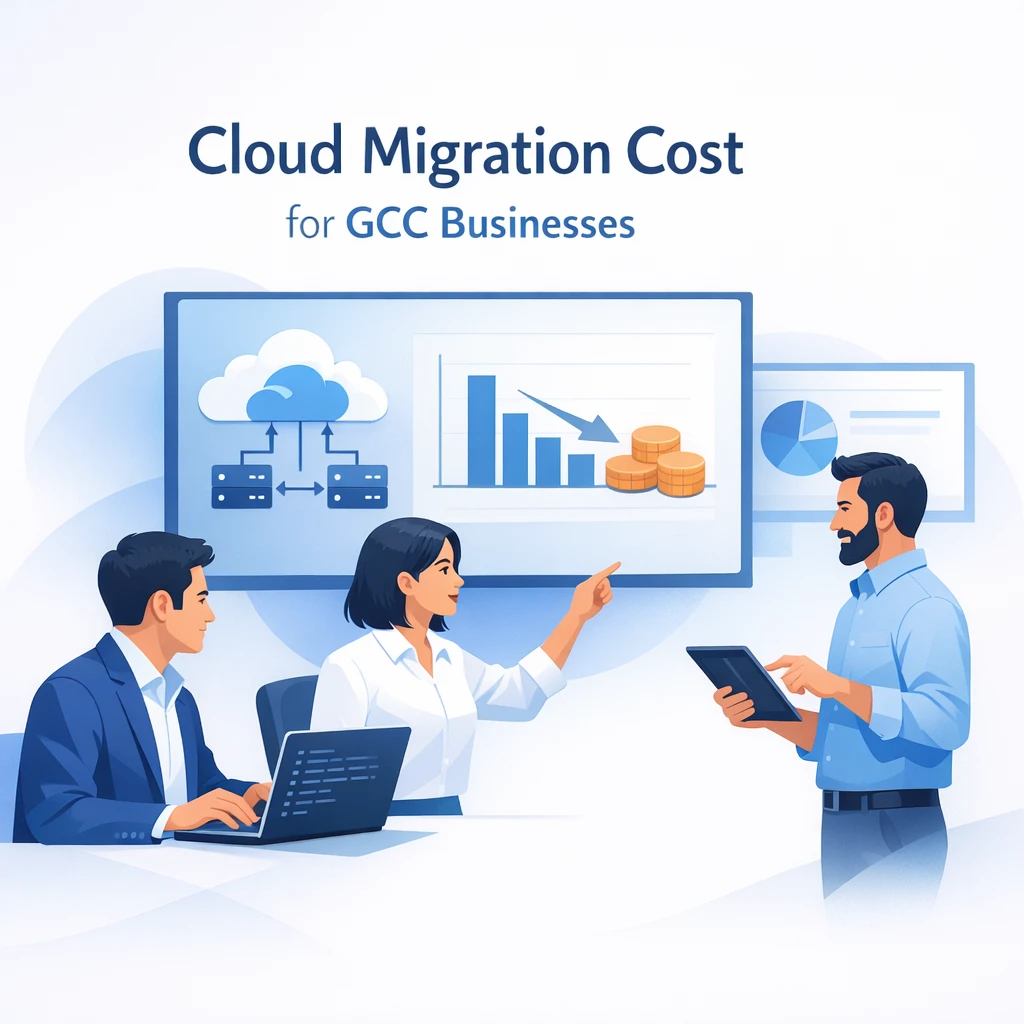
Guided by practical insights and real-world constraints, this article helps decision-makers plan effective cloud migrations in the GCC region (UAE, Saudi Arabia, Qatar, Oman, Kuwait, Bahrain) and beyond. We’ll explore architecture decisions, cost drivers, and implementation pathways that scale from SMBs to large enterprises, with emphasis on sustainable governance and measurable outcomes.
Introduction
Cloud migration is more than moving servers to another location. For mid-sized and enterprise organizations in the GCC, migration encompasses data sovereignty, regulatory alignment, multi-cloud strategy, and a disciplined approach to cost management. The objective is to achieve reliable, scalable, secure services while preserving business continuity and accelerating time-to-value. In this article, we break down the cost structure, architecture choices, and a practical implementation roadmap, weaving in real-world case studies and guidance from Triostack Technologies, a global software partner known for blended onshore and remote delivery options.
What is the Topic?
The topic covers cloud migration costs for mid-sized and enterprise organizations, the architecture options (lift-and-shift, rehost, refactor, re-architect, and replace), and a structured implementation strategy that minimizes risk while maximizing operational gains. It also considers geography-specific realities—data residency requirements, network connectivity in the GCC, and the evolving cloud ecosystems across AWS, Azure, and Google Cloud Platform (GCP).
Why it Matters in 2026
In 2026, cloud maturity is less about moving workloads and more about building cost-aware, resilient, and intelligent platforms. GCC organizations are balancing CAPEX-to-OPEX trade-offs, ensuring data sovereignty, and leveraging advanced services like AI/ML, data Lakes, and ERP on the cloud. The ability to estimate and control cloud spend—without compromising performance or security—has become a strategic differentiator for growth, particularly in sectors like logistics, healthcare, retail, and manufacturing that are prominent in the GCC and globally.
Current Industry Challenges
- Hidden migration costs: data transfer, egress, security tooling, and compliance overlays.
- Data sovereignty and regulatory compliance across GCC member states and international operations.
- Complexity of multi-cloud or hybrid architectures and associated operational overhead.
- Skills gaps and talent retention for cloud-native architectures and DevOps practices.
- Downtime risk, rollback planning, and business continuity during migration waves.
How the Technology Works
Cloud migration involves selecting a destination platform and a path that aligns with business goals. The common pathways are:
- Lift and shift (rehost) — minimal changes to move workloads to the cloud, preserving compute and storage footprints while optimizing for cloud readiness.
- Refactor — modify applications to leverage cloud-native services (e.g., managed databases, serverless components) for better scalability and cost efficiency.
- Re-architect — redesign critical components to exploit microservices, containers, and data fabrics, often enabling improved agility.
- Replace — adopt off-the-shelf SaaS or PaaS solutions for entire business domains (CRM, ERP, HRIS) to reduce bespoke maintenance.
In practice, many GCC migrations blend these approaches, driven by risk tolerance, compliance, and the speed of value realization. A typical model uses a phased approach: assess → migrate → optimize → govern.
Architecture Overview
A well-architected cloud solution for mid-sized and enterprise workloads balances resilience, performance, security, and cost. A typical target architecture includes:
- Multi-cloud networking with secure connectivity and segmentation
- Managed compute and storage services (pods, containers, serverless options)
- Data layer with data lake, data warehouse, and real-time streaming
- Identity and access management, governance, and compliance controls
- CI/CD pipelines, IaC (Infrastructure as Code), and automated testing
- Observability, security analytics, and incident response
- AI/ML services and AI-assisted automation for business processes
Triostack often recommends a hybrid approach that aligns with business priorities, regulatory constraints, and anticipated scale. The following simplified diagram illustrates a representative end-state:
Step-by-Step Migration Workflow
- Assessment and discovery: inventory applications, data stores, dependencies, compliance needs, and total cost of ownership (TCO).
- Target-state design: define the destination cloud platform, security controls, and architecture patterns (containers, serverless, data fabrics).
- Migration planning: choose waves, prioritize workloads, establish metrics, and map data flows.
- Environment setup: establish networks, IAM, encryption, and CI/CD pipelines.
- Migrate and validate: move workloads in waves, perform functional and non-functional testing, monitor performance.
- Optimize and govern: right-size resources, implement cost-controls and automation, institute SRE practices.
- Operate and evolve: continuous improvement through feedback loops and new cloud services.
Business Use Cases
Some common migration patterns, relevant to GCC and global markets:
- CRM and ERP modernization: move to cloud-native CRM/ERP and integrate with data warehouses for analytics.
- Data-driven healthcare platforms: patient records, appointment systems, telehealth, and analytics on secure cloud platforms with regulatory alignment.
- Logistics optimization: WMS/OMS modernization, real-time tracking, route optimization, and analytics-driven decisions.
- SaaS MVPs and digital platforms: rapid prototyping, multi-tenant architectures, and scalable back-ends.
Industry Applications in the GCC and Beyond
GCC markets increasingly demand secure, scalable, and compliant cloud capabilities. Consider:
| Sector | Typical Cloud Migration Focus | Benefits |
|---|---|---|
| Logistics & Transportation | WMS, OMS, real-time analytics | Faster delivery, better route planning |
| Healthcare | Patient data management, appointment systems | Improved care, compliance, accessibility |
| Retail & Manufacturing | ERP integration, inventory, e-commerce | Better margins, omnichannel experiences |
| Financial Services | Core banking apps, risk analytics | Stronger security, regulatory alignment |
Benefits of Thoughtful Cloud Migration
- Cost optimization through right-sizing, reserved instances, and automation
- Increased scalability to handle peak demand and new product lines
- Improved security posture with centralized identity, encryption, and governance
- Faster time-to-market for new features and services
- Resilience against outages with multi-region deployments and automated failover
Challenges to Anticipate
- Regulatory and data sovereignty considerations across GCC member states
- Connectivity, latency, and network reliability between on-premises, edge, and cloud regions
- Managing legacy dependencies and technical debt
- Change management and aligning stakeholders across IT, security, and business units
Common Mistakes
- Underestimating data transfer and egress costs
- Skipping security-by-design and continuity planning
- Over-optimizing for cloud-native patterns without sufficient business value
- Poor governance and lack of cost controls leading to runaway spend
Best Practices
- Start with a small, well-scoped pilot project to validate the approach
- Establish cost governance with budgets, alerts, and tagging standards
- Choose an architecture that aligns with business outcomes and regulatory requirements
- Partner with experienced teams for risk management and knowledge transfer
Build vs Buy: A Pragmatic View
In cloud migrations, decisions often come down to whether to build a bespoke integration and workflow layer or buy an integrated SaaS solution. The table below helps frame trade-offs:
| Aspect | Build | Buy |
|---|---|---|
| Time-to-value | Longer (development, testing, integration) | Faster (out-of-the-box) |
| Customization | High, bespoke | Limited to vendor capabilities |
| Cost certainty | Uncertain (unknown maintenance) | More predictable (subscription, licenses) |
| Scalability | Depends on architecture | Often strong with managed services |
| Maintenance | In-house burden | Vendor-managed upgrades |
Estimated Development Cost
Costs vary by scope, domain complexity, data migration needs, and compliance requirements. Here are representative ranges for typical mid-market projects:
| Project Type | Typical Range (USD) | Notes |
|---|---|---|
| Business Website | 5k–15k | Content, branding, responsive design |
| Customer Portal | 10k–40k | Authentication, data sync, UI |
| CRM | 15k–100k | Custom workflows, integrations |
| ERP | 40k–200k | End-to-end integration, data migrations |
| AI Chatbot | 5k–25k | Conversational design, integration |
| AI Automation | 15k–80k | Process automation, RPA-like |
| SaaS MVP | 20k–80k | Core product, multi-tenant |
| Enterprise Web App | 30k–200k | Mission-critical, complex integrations |
Pricing factors include data migration scope, security/compliance overhead, integration complexity, multi-region deployment, and the level of ongoing support and managed services required.
Recommended Technology Stack
While each migration is unique, a mature stack often includes a mix of cloud platform choices and modern development practices:
- Cloud platforms: AWS, Azure, and/or Google Cloud Platform (GCP) depending on regional presence, data residency, and service needs.
- Compute & containers: Kubernetes, container registries, managed container services.
- Data & analytics: Data lakehouse, managed databases, data warehouse, real-time streaming.
- Security & governance: IAM, encryption, key management, policy-as-code, compliance tooling.
- DevOps & CI/CD: IaC (Terraform, Pulumi), CI/CD pipelines, automated testing, and release automation.
- AI/ML & automation: Managed ML services, feature stores, and automation for business processes.
- UI/UX & API: Modern front-end frameworks, REST/GraphQL APIs, API gateways.
Triostack supports a balanced approach, combining vendor-native services with custom orchestration to achieve cost efficiency and speed without sacrificing reliability.
Future Trends in Cloud Migration
- AI-powered cloud cost optimization with smarter autoscaling and resource orchestration
- Serverless and edge computing for latency-sensitive workloads
- Security-first cloud governance with policy-as-code and continuous compliance
- Data sovereignty-aware architectures with regional data stores and cryptographic controls
- Automated migration assistants and AI-driven code refactoring patterns
How Triostack Delivers Projects Globally (Remote Delivery from India)
Triostack leverages a globally distributed delivery model designed to maintain quality, speed, and transparency. Key elements include:
- Agile methodology: Scrum-based sprint planning, regular demos, and continuous feedback cycles.
- Weekly demos and status updates: Slack/Teams for asynchronous updates and Zoom/Google Meet for live showcases.
- Tools and collaboration: Jira or ClickUp for project management, GitHub/GitLab for source control, and CI/CD pipelines with Azure DevOps or equivalent.
- Architecture and security: IaC, automated testing, and security reviews as part of every sprint.
- Documentation and IP: Comprehensive technical documentation, NDAs, and explicit IP ownership terms.
- Timezone overlap: Managed overlap windows to support UAE-based and GCC client teams; English communication as default.
- Dedicated project managers: Single point of contact, with escalation matrices and governance boards.
Why UAE businesses consider outsourcing development to India often comes down to cost efficiency, access to a large talent pool, faster hiring, and high engineering quality, complemented by robust communication, cultural alignment, and disciplined security practices.
Why Triostack: A Trusted Global Partner for Cloud Migration
Triostack brings a pragmatic, architecture-led approach to cloud migrations. We focus on custom software, web and mobile development, AI/ML, cloud migration, and DevOps with a clear emphasis on outcomes. Our teams partner to deliver:
- Custom software, web and mobile development tailored to business goals
- AI development and ML-powered analytics to extract actionable insights
- CRM, ERP, and SaaS modernization with secure, scalable data foundations
- Cloud migration, DevOps, and automated CI/CD for accelerated delivery
- UI/UX design, API development, and dedicated teams for long-term collaboration
- QA, maintenance, and ongoing technical consulting for governance and optimization
Case Studies (Anonymized)
These anonymized examples illustrate practical outcomes from real-world migrations across GCC and beyond. Details are kept generic but reflect common patterns and measurable results.
Case Study 1 — Dubai-based Logistics Company
Context: Legacy WMS and CRM systems with limited real-time visibility. Desired cloud-based scalability and improved route optimization.
Approach: Lift-and-shift for core systems, followed by refactor of analytics components and deployment of a data lake for operational insights. Implemented a multi-region strategy to ensure resilience.
Architecture: Hybrid cloud with managed services, containerized microservices, and event-driven data flows.
Outcomes: 30–40% reduction in IT operating costs, improved on-time delivery, and faster analytics cycles. Time-to-market for new features shortened by 40%.
Case Study 2 — UAE Healthcare Clinic
Context: Need for secure patient data management, appointment scheduling, and telehealth capabilities with strict data governance.
Approach: Migrated to a compliant cloud platform with strong IAM, encryption, and audit trails. Implemented a patient portal and integration with existing EHR systems.
Architecture: Cloud-hosted EHR integration, API gateway, secure data exchange, and patient-facing mobile app.
Outcomes: Improved patient access and coordination, enhanced data security posture, and better regulatory alignment with auditable trails.
Case Study 3 — Saudi Retail Business
Context: ERP modernization and omnichannel commerce requiring real-time inventory and analytics.
Approach: ERP migration complemented by CRM integration and a data warehouse for analytics. Implemented multi-region deployment and BI dashboards.
Outcomes: Inventory accuracy improved, promotions optimized via analytics, and resilience to regional outages.
Case Study 4 — Australian SaaS Startup
Context: MVP-to-scalability journey for a multi-tenant software platform targeting the mid-market.
Approach: Cloud-native architecture with microservices, CI/CD, automated testing, and a robust API-first strategy. Emphasis on cost governance and speed of iteration.
Outcomes: Faster time-to-first-value and reduced infrastructure costs through serverless components and container orchestration.
Dedicated Section: Remote Delivery from India – Practicalities for GCC Clients
Outsourcing software development to India from GCC-based clients can offer significant value when aligned with strong governance and clear communication. Key components of Triostack’s approach include:
- Agile teams with clear sprint cadences and weekly demos to maintain alignment with client priorities
- Timezone overlap strategies that maximize collaboration windows with UAE and GCC teams
- Secure communication channels (Slack, Teams, Zoom, Google Meet) and robust version control (GitHub, GitLab)
- Transparent project management (Jira, ClickUp) and automated CI/CD pipelines (Azure DevOps)
- Dedicated project managers, NDAs, and explicit IP ownership arrangements
- Emphasis on English communication, documentation, and knowledge transfer for long-term self-sufficiency
For GCC businesses, the decision to partner with teams in India is often driven by cost efficiency, access to a large talent pool, faster hiring cycles, and ongoing high-quality engineering. Triostack mitigates risk through structured governance, rigorous security practices, and continuous alignment with client goals.
Cost Factors and Pricing Guidance
Migration costs are driven by scope, complexity, and governance requirements. Consider the following:
- Data migration scope and data quality remediation work
- Security, privacy, and regulatory compliance overhead
- Number of integrations and complexity of API landscapes
- Multi-region deployment and networking complexity
- Ongoing managed services, support, and monitoring
To help budgeting, refer to the ranges above and use pilots to derive more accurate estimates in your specific context.
Frequently Asked Questions
What is the typical timeline for a cloud migration project?
Timelines vary by scope. A small customer portal can complete in a few weeks, while an ERP migration or a full enterprise transformation may span several months. A phased approach with a pilot first often reduces risk and accelerates value realization.
How do we ensure data sovereignty in GCC migrations?
We design with regional data residency in mind, selecting cloud regions that comply with local regulations, applying encryption at rest and in transit, and implementing identity and access controls that meet audit requirements.
What ongoing services does Triostack offer after migration?
Maintenance, monitoring, security operations, cost governance, optimization, and QA. We also provide technical consulting for continuous improvement and platform modernization.
Conclusion
Cloud migration is a strategic investment that offers substantial long-term value when guided by architecture-led decisions, disciplined cost governance, and a phased, risk-aware delivery model. For GCC businesses, the right mix of architecture choices, cloud providers, and a capable operational partner can unlock resilience, agility, and cost savings that extend beyond the initial migration. Triostack stands ready to help you design, build, deploy, and maintain scalable cloud architectures that align with your business goals and regulatory landscape.
If you're planning a similar software project or seeking guidance on cloud migration strategy, consider engaging with a trusted partner who can blend regional insights with global delivery capabilities. Triostack can help you design, build, deploy, and maintain a scalable solution that fits your timeline and budget.
Supplementary Tables
Below are quick references you can use during planning sessions with stakeholders.
| Aspect | AWS vs Azure vs GCP | Recommendation |
|---|---|---|
| Networking | VPCs, VPN/Direct Connect, ExpressRoute, Interconnect | Choose multi-cloud only if you can manage complexity |
| Compute | EC2/Lambdas vs VMs/Functions | Evaluate workload patterns (bursty vs steady) |
| Data services | Managed DBs, data lakes, analytics | Prefer managed services to reduce operational burden |
| Security | IaaS security controls vs cloud-native security services | Policy-as-code and continuous monitoring |
| Decision Area | Recommendation | Rationale |
|---|---|---|
| Core business logic | Buy where possible (SaaS) | Faster time-to-value and compliance |
| Unique differentiators | Build around core differentiators | Maintains competitive advantage |
| Data migration | Layered approach | Mitigates risk and ensures data integrity |
Diagrams
Three diagrams illustrate architecture, migration workflow, and deployment pipelines.
Triostack Team
Technology Evangelist & Writer
Triostack Team is an experienced writer and technologist, exploring the intersections of AI, cloud architecture, and modern application development. Passionate about turning complex technical concepts into accessible insights.