Cloud Migration Cost for Manufacturing and Logistics Companies in the UAE: Budgeting, Architecture, and Risk Reduction
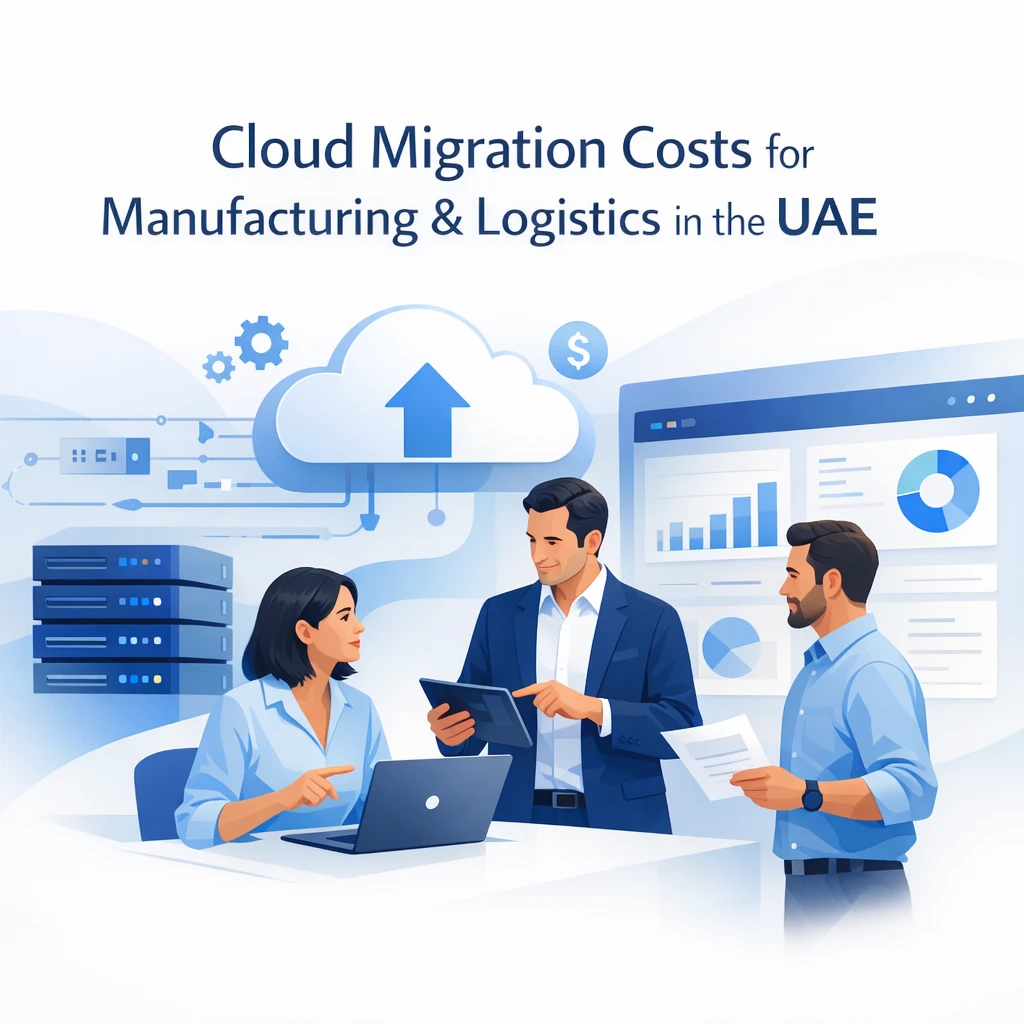
Practical guidance for SMBs, SMEs, startups, and established enterprises planning cloud migrations in the UAE and beyond. This article combines budgeting pragmatism, architectural clarity, and risk reduction strategies with actionable steps you can implement with a trusted partner like Triostack Technologies.
Introduction
Cloud migration is more than a technology project—it's a business strategy that can unlock resilience, agility, and measurable cost savings for manufacturing and logistics operations. For UAE-based organizations spanning Dubai, Abu Dhabi, and wider GCC markets, migration decisions must balance cost, performance, security, and regulatory alignment with rapid digital transformation goals. This article outlines how to budget intelligently, design robust cloud architectures, and reduce risk during a migration journey—whether you are moving an ERP, MES, WMS, or analytics platform to the cloud.
Throughout this guide, Triostack Technologies is referenced as a capable partner offering services in Custom Software, Web Development, Mobile Apps, AI Development, CRM, ERP, SaaS, Cloud Migration, DevOps, UI/UX, API Development, Dedicated Teams, QA, and Maintenance. The intent is to provide education first, with Triostack positioned as a credible, global partner when you’re ready to plan, design, and execute a scalable migration program.
What is the Topic?
"Cloud Migration Cost" covers the total expenditure associated with moving applications, data, and processes from on‑premises or legacy cloud environments to a modern cloud platform. It includes planning, infrastructure, licenses, data transfer, security, governance, testing, and ongoing operating costs. For manufacturing and logistics, the cost envelope often includes integration with ERP and MES systems, data migration to data lakes or warehouses, real-time analytics, and the cost of ensuring reliable, scalable operations across multiple facilities and geographies.
Why it Matters in 2026
As regional ecosystems in the UAE and GCC accelerate digital transformation, cloud-native architectures enable better demand sensing, supply-chain visibility, and optimization. In 2026, cloud migration decision-making goes beyond upfront price: organizations evaluate total cost of ownership (TCO), security posture, regulatory compliance (data residency, privacy, and export controls), and the ability to support growth, multi-cloud strategies, and edge workloads in factories and logistics hubs. For SMBs and startups, cloud migration is also about speed to market, minimal downtime, and cost-efficient scaling as volumes grow post-launch.
Current Industry Challenges
- Inaccurate cost estimates due to unknown data sizes, data quality issues, and complex integration requirements.
- Downtime risk during cutover and data migration, impacting customer commitments and service levels.
- Data sovereignty and regulatory compliance (especially for healthcare, finance, and cross-border shipments in GCC and beyond).
- Security and identity management across multi-cloud and multi-site environments.
- Disparate systems (ERP, WMS, MES, CRM) with inconsistent APIs and data models complicate migration design.
- Skill gaps and change management challenges among operations teams used to on-premises processes.
How the Technology Works
Cloud migration blends strategy, data engineering, and platform engineering. There are several common patterns:
- Lift-and-shift (rehost): Move applications with minimal changes to a cloud IaaS environment to reduce initial risk and accelerate delivery. Ideal for legacy workloads that are well-managed on premises but require cloud access.
- Refactor (re-architect): Rebuild components to leverage PaaS services (managed databases, serverless functions, managed analytics) for better scalability and maintainability.
- Replatform: Move to cloud-native services with minimal code changes (e.g., migrate to managed databases, containerized applications, and orchestration platforms).
- Hybrid/Edge: Combine on-prem / private cloud with public cloud to support line-side analytics, real-time monitoring, and regulatory constraints.
For manufacturing and logistics, the typical target is a hybrid or multi-cloud strategy that optimizes cost, performance, and data residency while enabling real-time visibility across the supply chain.
Architecture Overview
A practical migration architecture for manufacturing and logistics typically includes:
- Source systems: ERP (e.g., SAP, Oracle), MES, WMS, CRM, and legacy on-prem data stores.
- Central data layer: a data lake or data warehouse on the cloud for analytics and reporting.
- Integration layer: APIs, event streaming (e.g., Kafka), and iPaaS for connecting ERP, MES, WMS, and external partners.
- Applications: cloud-native apps, dashboards, CRM, and ERP integrations delivered as SaaS or managed services.
- Security and governance: IAM, data encryption at rest and in transit, DLP, and compliance controls.
- Service delivery: CI/CD pipelines, monitoring, logging, and incident response.
Below is a simplified high-level diagram of a cloud migration architecture for a UAE-based manufacturing and logistics environment.
Key Diagrams
Step-by-Step Workflow
- Discovery & Readiness: inventory all workloads, data volumes, regulatory constraints, and integration touchpoints. Identify business owners and success metrics.
- Assessment & Prioritization: classify workloads by complexity, risk, and business value. Prioritize for pilot migration.
- Architecture & Design: define target cloud platform, data partitioning, security controls, and integration patterns.
- Pilot Migration: move a representative workload to validate performance, security, and governance with minimal disruption.
- Migration Waves & Cutover: execute phased migrations, run parallel systems, and perform synchronized cutover planning.
- Optimization & Operate: implement cost governance, APM, and continuous improvement cycles for performance and reliability.
Each phase includes measurable artifacts: security baselines, data quality assessment, performance tests, disaster recovery plans, and governance documents. Triostack helps organizations tailor this workflow to their maturity level while maintaining a clear risk-managed path to production.
Business Use Cases
- Real-time supply chain visibility: a unified view of inventory, orders, shipments, and route optimizations across multiple warehouses.
- Predictive maintenance: sensor data from equipment to predict failures and minimize downtime in manufacturing lines.
- Demand planning and forecasting: AI-enhanced forecasting models that adapt to seasonality and promotions in GCC markets.
- Fleet and route optimization: optimization of last-mile delivery, reducing fuel consumption and improving delivery windows.
- Regulatory compliance & auditing: centralized controls and auditable records for cross-border trade and data residency.
Industry Applications
Examples of how cloud migration supports specific industry scenarios in the UAE and broader GCC:
- Manufacturing: modern MES dashboards, quality analytics, and supply planning integrated with ERP to reduce scrap and improve throughput.
- Logistics & 3PL: cloud WMS and transportation management systems (TMS) with real-time tracking and exception handling.
- Healthcare logistics: secure patient data management and telemedicine scheduling with compliant data sharing.
- Aviation & shipping: scalable logistics data platforms to manage shipments, customs declarations, and inventory in transit.
Benefits
- Cost efficiency through managed services, pay-as-you-go pricing, and right-sizing of resources.
- Scalability to accommodate seasonal spikes and rapid growth without large upfront CAPEX.
- Improved resilience with multi-region deployments, automated backups, and disaster recovery capabilities.
- Faster time-to-market for new digital initiatives, enabling competitive differentiation.
- Stronger security posture with centralized IAM, encryption, and continuous compliance monitoring.
Challenges
- Data migration complexity across ERP, MES, WMS, and analytics platforms with varying data models.
- Ensuring performance parity during cutover, especially for real-time monitoring and planning workloads.
- Maintaining regulatory compliance and data residency in GCC jurisdictions and international operations.
- Managing change: upskilling staff, aligning processes, and establishing governance across geographies.
Common Mistakes
- Underestimating data volumes and transfer costs, leading to budget overruns.
- Launching without a pilot, resulting in unanticipated performance and security gaps.
- Inadequate alignment between IT and business stakeholders on success metrics.
- Under-planning for post-migration optimization and FinOps governance.
Best Practices
- Establish a FinOps-friendly cost governance model from day one, with budgets, alerts, and optimization plans.
- Adopt a phased migration plan with a clear pilot, then scale in waves tied to business priorities.
- Define security by design: IAM, least privilege, encryption, and regular vulnerability testing.
- Invest in data quality and master data management to ensure reliable analytics outcomes.
- Design for observability: monitoring, tracing, and centralized logging across all environments.
Build vs Buy Comparison
When migrating to the cloud, organizations often face a decision between building custom solutions or adopting ready-made components. The decision depends on latency requirements, differentiation needs, and the breadth of integrations.
| Aspect | Build (Custom) | Buy (Managed / SaaS) |
|---|---|---|
| Time to value | Longer, depends on scope | Faster, with predefined modules |
| Flexibility | High, tailor-made | Limited by vendor roadmaps |
| Cost control | Variable, can be high if scope expands | Predictable, ongoing subscription |
| Risk | Higher for complex integrations | Lower with vendor support and SLAs |
| Maintenance | In-house or partner dependent | Vendor-managed |
Estimated Development Cost
For SMBs and startups, migration costs vary by scope, data volume, and required integrations. Below are approximate ranges informed by market observations and practical projects across the region. These figures exclude ongoing cloud operating costs and staff time; they focus on initial migration and modernization efforts.
| Project Type | Typical Range (USD) | Notes |
|---|---|---|
| Business Website | 5,000 – 15,000 | Initial presence or landing sites migrating to cloud hosting or CMS migrations. |
| Customer Portal | 10,000 – 40,000 | Auth, data migration, integration with CRM, and basic personalization. |
| CRM | 15,000 – 100,000 | Automation, data cleansing, integrations with marketing and ERP. |
| ERP | 40,000 – 200,000 | Migration of core financials, procurement, and supply chain to the cloud with integration to MES/WMS. |
| AI Chatbot | 5,000 – 25,000 | Deployment for customer service or internal helpdesk. |
| AI Automation | 15,000 – 80,000 | Workflow automation, process mining, and predictive analytics. |
| SaaS MVP | 20,000 – 80,000 | Minimum viable cloud-native product with core functionality and integration. |
| Enterprise Web App | 30,000 – 200,000 | Large-scale enterprise capabilities, multi-region deployment, complex integrations. |
Factors that influence cost include data migration volume, legacy integration complexity, compliance requirements, multi-region setup, and the need for advanced security controls. Triostack works with clients to estimate cost using a structured approach: discovery, sizing, and validation against real workloads before committing to a plan.
Recommended Technology Stack
While there is no one-size-fits-all stack, an effective cloud migration for manufacturing and logistics in the UAE often includes:
- Cloud platforms: AWS, Microsoft Azure, or Google Cloud Platform, selected based on data sovereignty, existing licenses, and regional presence.
- Data & analytics: Data lake or data warehouse (e.g., S3 + Redshift, Azure Data Lake + Synapse, or GCP BigQuery).
- Data integration: API gateways, event streaming (Kafka or managed equivalents), and iPaaS for partner integrations.
- Application layers: Container orchestration (Kubernetes, managed Kubernetes), serverless where appropriate, and microservices architecture.
- Security & governance: IAM, encryption, compliance tooling, and DLP for sensitive data.
- DevOps & deployment: CI/CD pipelines (GitHub/GitLab/Azure DevOps), test automation, and automated rollback.
Triostack aligns technology choices with business goals, ensuring the stack is maintainable, scalable, and aligned with FinOps practices to optimize ongoing cloud spend.
Future Trends
Key trends shaping cloud migration for manufacturing and logistics include:
- Edge computing: Bringing processing closer to the plant floor to reduce latency for sensor data and real-time decision-making.
- AI-enabled operations: Predictive maintenance, demand shaping, and quality optimization powered by cloud-based ML services.
- Multi-cloud and cloud-native governance: FinOps, compliance automation, and standardized security controls across providers.
- Digital twins & simulation: Using cloud compute and data to model and optimize production lines and logistics networks.
How Triostack Delivers Projects Globally (Remote Delivery from India)
Triostack leverages a globally distributed delivery model to provide cost-efficient, high-quality software engineering from India while maintaining strong collaboration with UAE and international clients. Key elements of our remote delivery approach include:
- Agile methodology: Scrum or Kanban with clear sprint goals and continuous stakeholder involvement.
- Sprint planning & demos: Weekly planning sessions and live demos to ensure alignment and visibility.
- Communication tools: Slack, Teams, Zoom, Google Meet for daily collaboration and review meetings.
- Project management & documentation: Jira or ClickUp, with GitHub/GitLab for code and issue tracking, along with Azure DevOps for CI/CD pipelines.
- CI/CD & cloud staging: Automated pipelines, cloud-based staging environments, and automated tests before production deployment.
- Security & IP protection: NDA, IP ownership clarity, and robust access controls throughout the project lifecycle.
- Timezone overlap: Scheduling considerations to maximize overlap with UAE business hours for critical decision points.
- Dedicated project management: Experienced PMs coordinating remote delivery, risk management, and stakeholder communications.
- Long-term support: Post-launch maintenance, security updates, and continuous improvement cycles.
Why do UAE businesses outsource development to India? The main drivers include cost efficiency, access to a large talent pool, faster hiring cycles, high-quality engineering, and strong communication practices. Triostack emphasizes clear SLAs, frequent collaboration, and rigorous QA to ensure outcomes meet business objectives.
Subtle call-to-action: If your team is considering a similar migration or modernization program, Triostack can help you design, build, deploy and maintain a scalable solution.
Case Studies (Realistic Implementations)
These examples illustrate typical outcomes with careful scoping, governance, and modern cloud architectures. Names and statistics are representative, not specific company disclosures.
Dubai-based logistics company: cloud-enabled WMS and analytics
Challenge: Legacy WMS and ERP disconnected from real-time tracking; planning lacked a centralized analytics view. Scope: migrate to a cloud-based WMS with integrated ERP, implement a data lake for analytics, and deploy dashboards for fleet optimization.
Approach: Lift-and-shift for core WMS, followed by gradual refactoring to leverage managed services and event streams. Implemented a pilot with one distribution center, then scaled to all facilities across the UAE region.
Result: 25% improvement in on-time deliveries, 18% reduction in inventory carrying costs, and a 40% faster time-to-insight for operational decisions.
UAE healthcare clinic: secure patient data management and telehealth
Challenge: disparate patient records and scheduling systems, with strict data protection requirements. Scope: migrate EHR, appointment systems, and telehealth into a compliant cloud platform with robust access controls.
Approach: phased migration with emphasis on data governance, encryption, and audit trails. Implemented HIPAA/GDPR-aligned controls and partner integrations for secure messaging.
Result: improved appointment adherence, enhanced data security, and stronger regulatory audit readiness without service interruptions.
Saudi retail business: omni-channel storefronts and analytics
Challenge: multiple storefronts and online channels with inconsistent inventory data. Scope: unify inventory, orders, and customer data on a cloud platform; enable real-time dashboards for merchandising decisions.
Approach: data integration layer built with APIs and event streams; decision-support dashboards delivered as dashboards and reports for business teams.
Result: 12–15% uplift in stock availability, faster promotions planning, and improved customer experience across channels.
Australian startup: cloud-native SaaS for logistics optimization
Challenge: build a scalable platform from scratch with global reach and compliance in multiple regions. Scope: MVP, cloud-native microservices, and customer onboarding tooling.
Approach: product-led growth with agile sprints and continuous deployment; partner integrations for route optimization and fleet monitoring.
Result: rapid market entry, scalable architecture, and modular feature expansion aligned with customer feedback.
UK SaaS company: analytics and data transformation platform migration
Challenge: migrate an on-prem analytics stack to a cloud data platform with self-service BI capabilities. Scope: data modeling, governance, and secure sharing of dashboards.
Approach: staged data migration, optimized ETL pipelines, and role-based access controls for stakeholders across organizations.
Result: improved data access, faster report delivery, and stronger data governance for executive decision-making.
COST SECTION: Realistic Software Pricing for SMBs
For budgeting purposes, consider the following typical ranges by project type. These figures help you frame conversations with a software partner and establish expectations for a cloud migration program.
| Project Type | Typical Range (USD) | Notes |
|---|---|---|
| Business Website | 5k–15k | Initial cloud hosting or CMS migration. |
| Customer Portal | 10k–40k | Authentication, data migration, basic customization. |
| CRM | 15k–100k | Automation, integrations with ERP/marketing. |
| ERP | 40k–200k | Core finance and supply chain migration with integration. |
| AI Chatbot | 5k–25k | Customer service or internal helpdesk. |
| AI Automation | 15k–80k | Workflow automation and predictive analytics. |
| SaaS MVP | 20k–80k | Core cloud-native product with integration. |
| Enterprise Web App | 30k–200k | Large-scale, multi-region, complex integrations. |
Each project is unique, and final pricing depends on data volume, required security controls, regulatory constraints, and the number of integrations. Triostack emphasizes transparent scoping, fixed-price options for well-defined phases, and time-and-materials approaches for discovery and pilot work.
Frequently Asked Questions
- What is included in cloud migration cost?
- Planning, data migration, infrastructure setup, security configurations, integrations, testing, and initial operating costs. Ongoing cloud spend is separate and managed through FinOps.
- How long does a migration typically take?
- Projects vary widely; a typical mid-sized ERP to cloud migration might span 3–9 months, with a pilot in the first 6–8 weeks and phased cutover thereafter.
- What are the most important factors to reduce migration risk?
- Executive sponsorship, a phased approach with pilot workloads, robust data governance, security-by-design, and a well-defined rollback plan.
- Why should a UAE company consider outsourcing to India for development work?
- Cost efficiency, access to a large engineering talent pool, faster hiring, strong communication practices, and the ability to scale teams rapidly with tight governance and IP protection.
Conclusion
Cloud migration for manufacturing and logistics in the UAE is a strategic investment. By budgeting for total cost of ownership, designing resilient architectures, and adopting a phased, risk-aware migration plan, organizations can unlock efficiencies, improve visibility, and accelerate digital transformation. Working with an experienced partner like Triostack Technologies can help you navigate regional considerations, regulatory requirements, and multi-cloud realities while keeping a clear focus on business outcomes. If you're planning a similar software project, Triostack can help you design, build, deploy and maintain a scalable solution.
Frequently Asked Questions
For planners seeking actionable next steps, consider starting with a cloud readiness assessment and a pilot migration that demonstrates tangible benefits before a full-scale rollout. Subtle call-to-action: Businesses planning similar solutions often benefit from experienced software development partners like Triostack Technologies.
Triostack Team
Technology Evangelist & Writer
Triostack Team is an experienced writer and technologist, exploring the intersections of AI, cloud architecture, and modern application development. Passionate about turning complex technical concepts into accessible insights.