Cloud Migration Cost for Enterprises in the Middle East: Budgeting, Security, and Business Impact
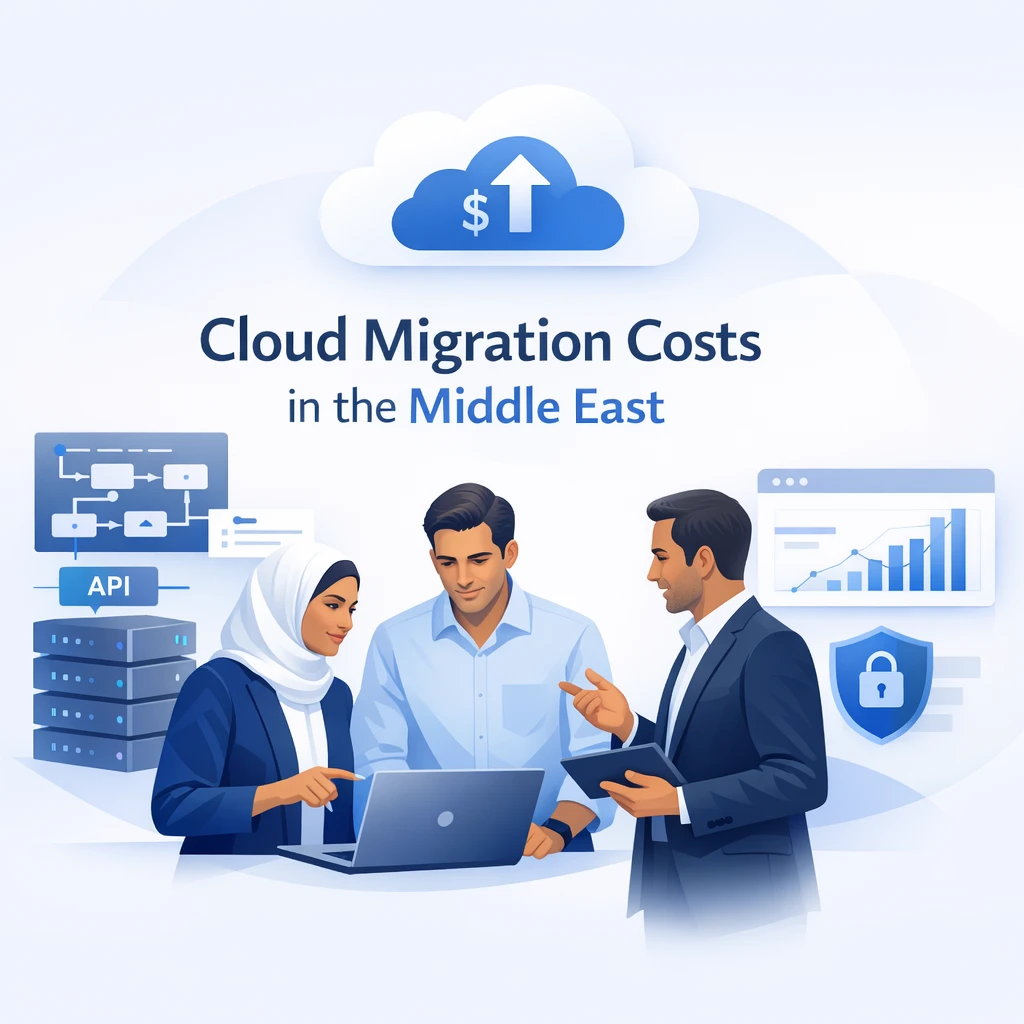
As enterprises in the Middle East pursue rapid digital acceleration, cloud migration has evolved from a strategic option to a practical necessity. From Dubai to Riyadh, Doha to Muscat, organizations are looking to cloud to improve scale, resilience, and speed to market. Yet cloud migration is not a single decision or one size fits all; it is a program with measurable cost drivers, security requirements, and business outcomes. This article delivers practical guidance for SMBs, SMEs, startup founders, CEOs, CTOs, product managers and transformation leaders across the Middle East and beyond. It also explains how Triostack Technologies can partner with you to design, build, deploy and maintain cloud migrations at scale, with a global delivery model that emphasizes quality, security and predictable budgeting.
What is the Topic?
Cloud migration cost encompasses all expenditures associated with moving workloads from on prem or legacy environments into cloud platforms and modern operating models. It includes planning, design, migration execution, security hardening, data transfer, integration, training and ongoing operating expenses. In practice, it is not merely a one off project cost but a multi year investment that affects capital expenditure, operating expense, and business value. For Middle East enterprises, factors such as data residency, regulatory requirements, localization needs and the mix of legacy and modern apps add unique cost and risk considerations.
Why it Matters in 2026
Cloud migration in 2026 is less about choosing a cloud provider and more about implementing a resilient, secure and scalable operating model. Regional governments have increased their focus on data sovereignty and cybersecurity, while local and multinational organizations are pushing for rapid digital products to serve customers across the GCC and beyond. The cost math matters because cloud success is about the total cost of ownership over the migration horizon, not just the initial spend. Enterprises that plan for cost, security and operational impact tend to achieve faster time to value, better security posture and stronger business outcomes.
Current Industry Challenges
- Regulatory complexity and data residency constraints in the Middle East that shape how data is stored, accessed and processed
- Security and compliance requirements across sectors such as healthcare, finance and government
- Legacy systems that resist modernization and create migration risk
- Skill gaps and talent availability for cloud engineering, security and governance
- Managing multi cloud and hybrid environments while maintaining cost visibility
How the Technology Works
Cloud migration typically combines assessment, planning, modernization and migration stages. It often leverages a hybrid approach that keeps some workloads on premises for performance or regulatory reasons while shifting others to the cloud for agility and scale. A successful program balances three pillars: cost and ROI, security and governance, and user experience and performance. In practice, teams use migration patterns such as rehost, replatform, refactor and repurchase to move workloads with minimal disruption while unlocking cloud benefits.
Architecture Overview
In a typical enterprise migration, you see a multi layer architecture that includes identity and access management, networking and security, data and storage, application modernization, and monitoring. Below is a simplified view of common components that appear across Middle East migrations. The goal is to enable secure access, reliable data flows and observable operations across regions with strict governance controls.
Step-by-Step Workflow
A practical migration program follows a disciplined sequence of activities that keeps risk under control while delivering business outcomes. Here is a concise workflow that many Middle East enterprises adopt, with a focus on cost visibility and security alignment.
- Initiate with an executive sponsor, a realistic cost model and a risk register
- Assess applications, data, dependencies and regulatory constraints
- Define a migration plan with milestones, budgets and acceptance criteria
- Run a PoC to validate cost and performance targets
- Migrate in waves while preserving business continuity
- Operate in the cloud with automated governance, security and cost controls
Business Use Cases
Across regions such as UAE, Saudi Arabia, Qatar and beyond, migration use cases vary by sector but share common value drivers. Here are representative scenarios with practical outcomes.
- Dubai logistics company migrating warehousing and order management to a cloud backend, achieving improved visibility and reduced latency for real-time tracking
- UAE healthcare clinic moving patient portals and EHR integrations to a secure cloud stack while meeting local data protection standards
- Saudi retail business consolidating ERP and CRM into a unified cloud platform to enable omnichannel sales
- Australian startup with regional expansion moving from a broken monolith to a microservices architecture on a managed cloud
- UK SaaS company migrating multi tenancy and data isolation to a resilient, globally distributed platform
Industry Applications
The cloud migration approach is highly adaptable. Common applications include ERP and CRM modernization, data modernization with data lakes and warehouses, AI powered analytics, API ecosystems for partner integration and cloud native web and mobile apps. The right mix depends on regulatory posture, cost objectives and desired speed to market. In the Middle East, it is common to see a strong emphasis on data residency, disaster recovery and security posture as core design constraints.
Benefits
- Cost efficiency through scalable resource usage and reduced on premise maintenance
- Faster time to market for new digital products and services
- Improved resilience and disaster recovery capabilities
- Better data insights through centralized analytics platforms
- Enhanced security posture with standardized controls and monitoring
Challenges
- Aligning cost expectations with real usage patterns during and after migration
- Ensuring data sovereignty and regulatory compliance across jurisdictions
- Modernizing a portfolio that includes legacy systems and bespoke integrations
- Securing a distributed, multi cloud environment with consistent policies
Common Mistakes
- Underestimating data migration costs and cutover risk
- Ignoring security and governance in the rush to move workloads
- Overly complex migration sequences that delay value
- Assuming a single, universal cloud solution fits all workloads
Best Practices
- Establish a clear business case with quantified ROI and cost baselines
- Institute a security by design program with identity, access and data protections
- Adopt a phased migration with PoC validated baselines
- Implement cloud cost governance and continuous optimization
- Choose a flexible partner with global delivery capabilities and regional experience
Build vs Buy Comparison
| Aspect | Build | Buy |
|---|---|---|
| Control | Maximum control over architecture and code | Standardized components with less customization |
| Time to value | Longer due to custom development | Faster through ready made capabilities |
| Cost certainty | Higher upfront risk but potential long term savings | Predictable monthly costs but may incur customization fees |
| Risk | Dev and security risk manageable with robust processes | Vendor risk and dependency considerations |
| Scalability | Extensive tailoring supports unique needs | Standardized scaling patterns |
Estimated Development Cost
Cost ranges vary by project complexity, data sensitivity and regulatory constraints. The figures below reflect typical SMB inspired migrations that move several core workloads and integrate with existing systems. They assume advisory and project management costs included, with a reasonable amount of internal stakeholder time. Remember that the Middle East market often places a premium on security and data residency, which can influence both upfront costs and ongoing operating expenses.
| Project type | Typical range (USD) |
|---|---|
| Business Website | 5k–15k |
| Customer Portal | 10k–40k |
| CRM | 15k–100k |
| ERP | 40k–200k |
| AI Chatbot | 5k–25k |
| AI Automation | 15k–80k |
| SaaS MVP | 20k–80k |
| Enterprise Web App | 30k–200k |
Recommended Technology Stack
Choosing the right stack is essential for performance, security and cost control. While Triostack works with multiple cloud providers and languages, common choices for Middle East migrations include:
- Cloud platforms: AWS, Azure, Google Cloud
- Identity and access: SAML2, OAuth2, IAM policies
- Networking and security: VPNs, private links, WAF, DDoS protection
- Data: relational databases, data lake and data warehouse architectures
- APIs and integration: REST and GraphQL services, enterprise service bus patterns
- Frontend: modern web frameworks, responsive design, accessible UI
- DevOps: CI CD pipelines, automated testing, blue green deployment
Future Trends
Looking ahead, cloud migrations in the Middle East are likely to emphasize security automation, data sovereignty controls, and AI driven operations. This includes policy as code, automatic threat detection, real time cost optimization and more robust governance models. For regional customers, cloud vendors may offer more local regions, data centers and compliance programs that align with national data protection guidelines.
How Triostack Delivers Projects Globally
Triostack Technologies brings a global delivery capability that combines deep cloud engineering expertise with strong industry knowledge across the Middle East and other regions. Key capabilities include custom software development, web and mobile app development, AI and ML development, CRM and ERP modernization, SaaS product development, cloud migration, DevOps, UI UX, API development, dedicated teams, QA and maintenance. Triostack emphasizes pragmatic planning, secure design, and a measurable approach to cost and risk management.
Why Businesses Choose Triostack
Businesses turn to Triostack when they need a partner with global scale and regional sensitivity. People choose us for:
- Proven experience delivering complex cloud migrations for global clients
- A practical approach that aligns technology with business outcomes
- Transparent budgeting and governance with clear milestones
- Access to senior architects, security specialists and delivery managers
- Flexible engagement models including dedicated teams and project based work
REMOTE DELIVERY
Triostack offers dedicated remote delivery from India to support projects across the region with a global delivery model designed for reliability, speed and cost efficiency. Our remote delivery approach prioritizes collaboration, governance and security while ensuring timezone overlap and transparent communication.
Agile and Planning
- Adopt agile methodologies with sprint planning and weekly demos
- Use collaboration tools such as Slack, Teams, Zoom or Google Meet for daily communication
- Plan sprints with clear goals and acceptance criteria
Tools and Processes
- Jira, ClickUp, GitHub or GitLab for project management and version control
- Azure DevOps for CI CD pipelines and cloud staging environments
- Automated QA, security testing and code reviews
- Comprehensive documentation and NDA/IP ownership protections
Security and IP
We maintain robust security practices, including data handling policies, encryption, access controls and signed NDAs to protect client IP and sensitive information. Timezone overlap and clear English communication are prioritized to ensure smooth collaboration across regions.
Why UAE Businesses Outsource Development to India
- Cost efficiency and predictable budgeting
- Large talent pool with specialized cloud and software engineers
- Faster hiring for ramping teams to meet project milestones
- High quality engineering with strong communication practices
- Flexible team scaling that aligns with project phases
Case Studies
Below are anonymized, realistic implementation sketches that illustrate how cloud migration projects unfold in practice. Details are representative of typical projects and are not surface level marketing claims.
Dubai logistics company
Challenge: aging order management and inventory systems hindered real time visibility. Goal: migrate to a cloud based platform with modern APIs and real time analytics. Plan: migrate in waves, starting with order and inventory modules, then expand to shipment tracking and analytics dashboards. Outcome: improved on time delivery by 18 percent, reduced operational costs by 12 percent in the first year, and achieved better data accuracy across warehouses.
UAE healthcare clinic
Challenge: scattered patient records and compliance concerns across clinics. Goal: unify patient data in a compliant cloud data store and expose secure patient portals. Plan: implement HIPAA like security controls in the local context, migrate EHR integrations, and deploy role based access. Outcome: enhanced patient experience with secure patient portals and improved data governance with auditable access logs.
Saudi retail business
Challenge: fragmented systems across online and offline channels. Goal: unify ERP, CRM and e commerce data in a cloud platform. Plan: migrate core ERP to the cloud first, then integrate CRM and POS. Outcome: streamlined operations, better stock visibility and improved customer experiences with a single source of truth.
Australian startup
Challenge: monolithic legacy architecture slowed growth. Goal: move to microservices hosted in the cloud, enabling scalable product updates. Plan: modularize services, implement CI CD and automated testing. Outcome: faster development cycles and improved reliability as the user base grew across regions.
UK SaaS company
Challenge: multi tenancy requirements and data isolation across customers. Goal: migrate to a cloud native multi tenant architecture with strong data separation. Plan: implement provisioning automation, tenant aware monitoring and robust security controls. Outcome: increased customer satisfaction with predictable performance and better security posture.
Cost Section
Pricing for cloud migration projects varies by scope, region and complexity. The ranges below reflect typical SMB sized migrations that include assessment, design, migration of several workloads and post migration optimization. In the Middle East, considerations such as data residency, security and compliance can influence both upfront and ongoing costs.
| Tier | Typical scope | Typical cost range |
|---|---|---|
| Starter | Single domain migration, basic data transfer, simple apps | 25k–60k |
| Standard | Multiple workloads, integration with ERP CRM, moderate data migration | 60k–180k |
| Advanced | Full stack cloud migration with data lake data warehouse, security compliance | 180k–500k |
| Enterprise | Large scale multi region, complex governance, hybrid architecture | 500k+ |
Cost factors to consider include
- Data gravity and transfer costs between on prem and cloud environments
- Security investments including IAM, encryption, monitoring and incident response
- Compliance requirements for data residency and local regulations
- Migration complexity and the level of modernization required
- Development and testing effort for refactored or redesigned components
- Ongoing operating costs such as cloud resources, support, training and maintenance
Future Trends in Cloud Migration Cost
As more Middle East organizations adopt cloud first strategies, cost models tend to evolve toward continuous optimization, predictive budgeting, and automated governance. Common trends include cost optimization tooling, usage based pricing models, and greater emphasis on security automation that reduces the total cost of risk exposure over time. Regional cloud providers and systems integrators are also increasingly offering bundled services with predefined cost envelopes and SLAs to reduce budgeting uncertainty.
How Triostack Delivers Projects Globally
Triostack Technologies has delivered projects across Asia Pacific, Europe, North America and the Middle East. Our approach blends global best practices with local market understanding. We work with clients to frame business outcomes, design a pragmatic architecture, and implement with predictable costs and high quality. Our services include custom software, web development, mobile apps, AI development, ML, CRM ERP, SaaS, cloud migration, DevOps, UI UX, API development, dedicated teams, QA and maintenance. We tailor engagement models to fit budgets and project size while maintaining strict security and IP controls.
Why Businesses Choose Triostack
Businesses choose Triostack because we combine a pragmatic mindset with deep technical capability. We focus on outcomes rather than just technology. We help clients in the Middle East and globally to design, build, deploy and maintain scalable digital products with clear governance, risk management and cost controls. Our teams are used to working across time zones, with strong English communication skills and transparent reporting. We also offer flexible engagement models that suit SMBs and large enterprises alike.
Conclusion
Cloud migration is a strategic investment that carries both cost and reward. For Middle East enterprises, success depends on aligning budgeting with security, governance and business outcomes. The right approach blends careful upfront planning, phased migration, robust security controls and ongoing optimization. By working with partners who bring global best practices and regional insight, organizations can realize faster time to value, reduced risk and greater competitive advantage.
Frequently Asked Questions
- What is the typical timeframe for cloud migration in the Middle East?
- How do regulatory constraints affect cloud cost in the region?
- What are common security controls for cloud migrations in GCC markets?
- How can a company measure ROI during cloud migration?
- What are the advantages of using a dedicated cloud migration partner?
For organizations planning similar solutions, a trusted software development partner like Triostack can help you design, build, deploy and maintain a scalable solution that aligns with your budgets and strategic goals. If you are exploring a cloud migration, a conversation with a specialized partner can uncover opportunities for improvement, risks to mitigate and a clear path to value.
Internal Link placeholders
Related resources and case studies will be linked here as part of the ongoing content strategy to help readers navigate similar topics and establish context for future decisions.
Next Steps
If you are planning a cloud migration project in the Middle East or elsewhere, consider starting with a structured discovery phase, a transparent cost model and a security by design approach. Triostack can support you with a tailored plan, a scalable architecture and a collaborative delivery model that aligns with your regional requirements and business goals.
Triostack Team
Technology Evangelist & Writer
Triostack Team is an experienced writer and technologist, exploring the intersections of AI, cloud architecture, and modern application development. Passionate about turning complex technical concepts into accessible insights.