Cloud Migration Cost for Enterprise Businesses in Saudi Arabia: Budgeting, Security, and ROI Framework
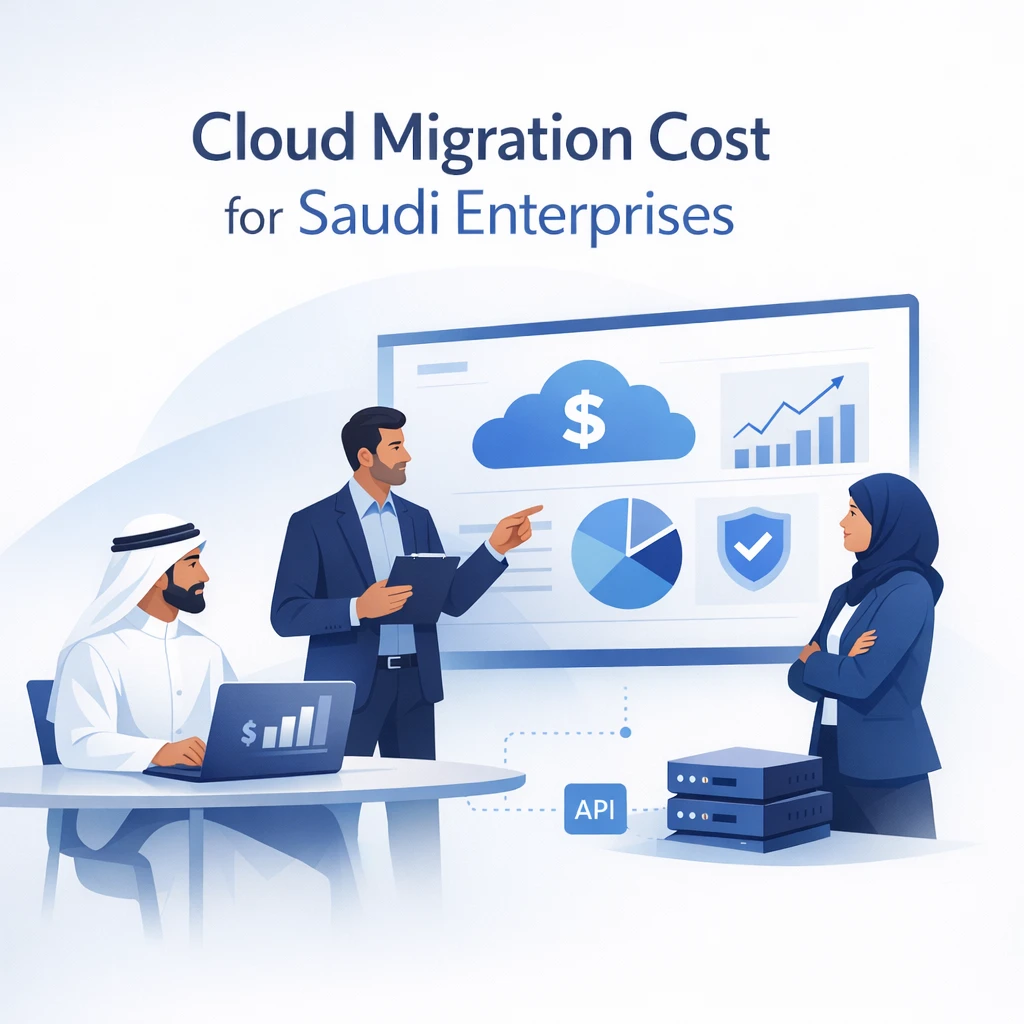
Saudi Arabia and the broader Gulf region are accelerating their digital transformations. Enterprises planning software projects or cloud migrations must balance upfront investments with long-term value, especially in highly regulated industries such as healthcare, logistics, and retail. This article helps decision-makers understand the true cost of cloud migration, how to budget for security and compliance, and how to measure ROI with a practical framework tailored for enterprise teams in Saudi Arabia, the UAE, and across the GCC. It also shows how a global partner like Triostack Technologies can support these initiatives with remote delivery from India, without compromising governance or security.
Introduction
Migration to the cloud is not just a technology project; it is a business initiative that affects cost structure, regulatory posture, operational resilience, and time-to-market. For Saudi Arabia-based and GCC companies planning software projects in the USD 5k–200k range, the question isn’t whether to move to the cloud, but how to budget for it, what security controls to implement, and how to quantify the return on investment (ROI).
This article provides a practical, implementation-focused guide with real-world examples, budget ranges, architecture patterns, and a framework you can adapt for your industry, your data residency requirements, and your strategic goals. We’ll also share how Triostack Technologies approaches cloud migration and remote delivery to deliver high-quality outcomes at scale, across geographies.
What is the Topic?
Cloud migration cost encompasses more than the software bill. It includes assessment services, data transfer costs, security and compliance controls, application refactoring, cloud infrastructure, ongoing operational expenses, and governance. For enterprises, the costs fall into several buckets:
- Assessment and discovery: application portfolio, dependencies, data classification, regulatory mapping
- Architecture and design: target state, multi-cloud vs single-cloud strategy, security model
- Migration execution: lift-and-shift vs refactor, data migration, cutover planning
- Security, compliance, and identity: access management, encryption, data residency, audit readiness
- Operational readiness: monitoring, DevOps, CI/CD, incident response, training
- Ongoing costs: compute, storage, data transfer, backups, licenses, support
Budgeting for these categories requires a cross-functional view that spans IT, finance, compliance, and the business units that will consume the cloud services.
Why it Matters in 2026
By 2026, cloud adoption is expanding beyond early adopters toward mission-critical workloads. In Saudi Arabia and neighboring markets, the push toward local data sovereignty, healthcare digitization, and secure e-commerce ecosystems makes a robust cloud strategy essential. Key drivers include:
- Compliance and data residency: aligning with SDAIA guidelines, NIST-based controls, and ISO 27001
- Security modernization: zero-trust foundations, identity governance, and threat-informed risk management
- Operational resilience: disaster recovery, uptime guarantees, and regional data centers
- Cost optimization: right-sizing, reserved instances, and automated scaling
- Time-to-market: faster feature delivery and agile conflict resolution through CI/CD
For leaders, the objective is to balance cost clarity, security assurance, and business velocity—all while maintaining the quality and governance required by regulated industries.
Current Industry Challenges
Enterprises in the Gulf region confront several recurring challenges as they plan cloud migrations:
- Data residency and localization: regulatory expectations require controlling where data lives and how it moves across borders.
- Security and zero-trust adoption: legacy security models clash with cloud-native, identity-centric access controls.
- Vendor lock-in vs multi-cloud: organizations weigh single-provider simplicity against the resilience of multi-cloud architectures.
- Skills gap: rapid cloud adoption demands skilled engineers, architects, and DevOps specialists.
- Downtime and data transfer costs: migrations may incur business disruption and expensive data egress if not planned properly.
- ROI measurement: translating cloud benefits into measurable business terms remains challenging without a framework.
These challenges are not unique to Saudi Arabia or the GCC, but the regional emphasis on healthcare data privacy, logistics traceability, and consumer commerce requires a careful approach to budgeting, architecture, and implementation.
How the Technology Works
Cloud migration is not a single decision but a portfolio of decisions about architecture, data, and software design. The primary approaches include:
- Rehost (lift-and-shift): move applications with minimal changes to the cloud to accelerate time-to-value.
- Refactor (re-architect): modify applications to leverage cloud-native services (containers, serverless functions, managed databases).
- Replatform: makes targeted optimizations to improve performance and cost without full re-architecture.
- Repurchase: replace with software-as-a-service (SaaS) equivalents when appropriate.
In Saudi Arabia and the GCC, a typical strategy blends rehost for legacy workloads with refactor/replatform for new capabilities, while considering data residency, compliance, and localization needs. A multi-cloud or hybrid approach may be preferred to optimize latency, leverage regional data centers, and meet regulatory requirements.
Architecture Overview
The target architecture typically involves a layered design that aligns with governance and security requirements, while enabling scalable delivery of business capabilities.
Key components to consider include identity and access management, data protection, logging and monitoring, network controls, and governance policies. The diagram above presents a simplified view of a hybrid/multi-cloud approach with a central security layer and regional cloud deployments.
Architecture Details: Three Core Layers
- Foundation: identity, IAM, network isolation, encryption at rest/in transit, key management, and compliance artifacts.
- Platform: managed databases, AI/ML services, API gateways, messaging, containers, serverless options, and data lake/storage strategies.
- Application & Data: modernized services, microservices, event-driven pipelines, data governance, and analytics dashboards.
For Saudi-based enterprises, the architecture should accommodate data localization requirements, regional data centers, and secure data movement across borders where permitted. See the related architecture blueprint placeholder for deeper guidance.
Step-by-Step Workflow
A practical migration workflow emphasizes risk-managed progress with measurable milestones. Here is a conservative 12-week pattern you can adapt:
Milestones should align with business cycles, and pilots should target critical workloads first (e.g., CRM, ERP, or mission-critical logistics). Documentation, risk registers, and change management plans are essential deliverables at each stage.
Business Use Cases
These scenarios illustrate how cloud migration can unlock business value in Saudi Arabia and GCC markets:
- Enterprise Resource Planning modernization: migrate ERP to a resilient cloud platform to enable global operations, real-time analytics, and improved regulatory reporting.
- Customer-centric portals: host customer and partner portals with scalable back-end services, improved security, and faster feature delivery.
- Healthcare information systems: modern EHR/EMR platforms with strict access controls, data encryption, and auditable activity logs.
- Logistics and supply chain optimization: real-time tracking, inventory visibility, and data-driven routing using cloud-native analytics.
Each use case requires a tailored mix of rehost/refactor and a governance model that supports secure data handling, auditing, and regulatory alignment.
Industry Applications
Beyond internal IT improvements, cloud migration supports industry-specific requirements:
- Healthcare: patient data protection, privacy-by-design, and reliable EHR systems.
- Retail & e-commerce: scalable checkout, demand forecasting, and customer analytics.
- Logistics: route optimization, real-time tracking, and SLA-based service delivery.
- Public sector: citizen services, digital documentation, and secure data sharing.
Triostack works with clients across these sectors, bringing domain knowledge and a framework for secure cloud adoption that respects local regulations and international best practices.
Benefits
- Cost transparency: clear mapping of CAPEX to OPEX, cloud consumption optimization, and predictable budgets.
- Security and compliance: zero-trust design, encryption, access governance, and continuous auditing.
- Scalability and resilience: elastic compute, managed services, automated failover, and disaster recovery.
- Faster delivery: modern app architectures, CI/CD, and streamlined release processes.
- Talent and capability growth: upskilling teams with cloud-native practices and governance frameworks.
Challenges
All transformations carry risks. Common challenges include:
- Underestimating data migration effort and downtime impact
- Data residency and cross-border data transfers in the GCC
- Security configurations not aligning with regulatory expectations
- Skills gaps in cloud-native architecture and DevOps
- Siloed stakeholders and governance complexity
Common Mistakes
- Rolling out cloud without a formal migration blueprint or stakeholder buy-in
- Rushing to cloud-native without a solid platform foundation
- Underestimating data transfer costs and egress fees
- Neglecting security and compliance as a first-class design consideration
Best Practices
- Start with a governance model and security by design across IAM, encryption, and logging
- Prioritize workloads for migration based on business value and risk
- Adopt a phased migration with pilot workloads before broader rollout
- Choose a clear Build vs Buy path for tooling and platforms
- Establish a robust change-management and training plan for users
Build vs Buy Comparison
| Factor | Build | Buy (Managed Services/Cloud Native) | Key Takeaways |
|---|---|---|---|
| Control & Customization | Highest; tailor architecture to exact needs | Moderate; relies on vendor capabilities | Balance customization vs time-to-value |
| Time to Market | Longer; development overhead | Quicker when using managed services | For core differentiators, build; otherwise buy |
| Ongoing Maintenance | High internal burden | Vendor handles most ops | Operational costs shift to service provider |
| Security & Compliance | Depends on in-house capability | Pre-built controls in cloud providers | Leverage vendor security posture judiciously |
| Project Type | Typical Range (USD) | Notes |
|---|---|---|
| Business Website | 5k–15k | Basic CMS, custom UI, security baseline |
| Customer Portal | 10k–40k | Authentication, role-based access, integrations |
| CRM | 15k–100k | Customization, data migrations, integrations |
| ERP | 40k–200k | Core business process alignment, data migration |
| AI Chatbot | 5k–25k | Conversational design, NLP integration |
| AI Automation | 15k–80k | Workflow automation, RPA, integration |
| SaaS MVP | 20k–80k | Core product with scalable architecture |
| Enterprise Web App | 30k–200k | Complex modules, data migration, security |
Estimated Development Cost (Budgeting for 5k–200k projects)
Costs vary by scope, complexity, data requirements, and regulatory constraints. The following ranges reflect common projects in Saudi Arabia and the GCC, considering remote delivery from India with strong governance and security practices:
- Small-scale website or portal (non-regulated data): USD 5k–15k
- Customer portal with authentication: USD 10k–40k
- CRM integration with cloud backend: USD 15k–100k
- ERP modernization: USD 40k–200k
- AI chatbot and automation: USD 5k–25k (chatbot) / USD 15k–80k (automation)
- SaaS MVP: USD 20k–80k
- Enterprise web app: USD 30k–200k
Pricing factors include data transfer costs, third-party licenses, cloud platform choices, security & compliance requirements, and the degree of architectural modernization. For GCC enterprises, nuances such as data residency, local data center availability, and regional service levels influence both initial and ongoing costs.
Recommended Technology Stack
Choosing the right stack reduces risk and improves ROI. A practical stack for cloud migration in the GCC often includes:
- Frontend: React or Angular, SSR for performance, accessible UI
- Backend: Node.js, .NET, or Java microservices; REST/GraphQL APIs
- Database: managed relational databases (PostgreSQL/MySQL) or cloud-native options (Aurora, CosmosDB)
- Data & Analytics: data lake using object storage; analytics with scalable data warehouse
- Security: IAM, MFA, identity federation, encryption at rest/in transit, key management
- DevOps: GitHub/GitLab, CI/CD pipelines, IaC (Terraform, Ansible), automated testing
- Cloud Platform: a primary cloud provider with regional support; consider multi-cloud for resilience
Triostack can tailor the technology stack to your regulatory environment and cloud strategy, ensuring alignment with data residency, localization, and security standards.
Future Trends
Several industry trends will shape cloud migration in the GCC in the coming years:
- Hybrid multi-cloud: optimized data residency with cross-cloud portability
- Serverless and event-driven architectures: cost efficiency and scalability for variable workloads
- AI-powered governance: automated threat detection, compliance monitoring, and data cataloging
- Edge computing: lower latency for regional services and IoT-enabled operations
- Regulatory harmonization: evolving cybersecurity and privacy requirements that influence architecture choices
These trends support a progressive, governance-first approach to cloud migration that reduces risk while enabling business velocity.
How Triostack Delivers Projects Globally
Triostack Technologies is a global software development partner with a strong track record in custom software, web + mobile development, AI development, CRM/ERP, SaaS, cloud migration, DevOps, UI/UX, API development, dedicated teams, QA, and maintenance. Our approach emphasizes practical outcomes, security, and scalable architecture. We support clients across the GCC, Europe, North America, and beyond, delivering value through remote delivery from our India-anchored delivery centers.
Key practices we bring to cloud migration projects include:
- Agile project execution with clear sprints and milestones
- Dedicated project managers to align business priorities with technical outcomes
- Weekly demos, verbose documentation, and transparent risk management
- Security-first design, NDA/IP ownership, and strict data handling protocols
- Timezone overlap and English communication to facilitate collaboration across regions
Remote Delivery: How Triostack Delivers Projects from India
Many GCC enterprises partner with offshore teams to unlock cost efficiency without sacrificing quality or governance. Triostack’s remote delivery model focuses on collaboration, transparency, and predictable outcomes:
- Agile alignment: cross-functional product owners, sprint planning, and backlog grooming that reflect business priorities.
- Communication discipline: daily standups, weekly demos, and continuous feedback via Slack, Teams, or Zoom.
- Collaboration tools: Jira, ClickUp for project management; GitHub/GitLab for version control; Azure DevOps for end-to-end CI/CD.
- CI/CD & cloud staging: automated builds, tests, and deployments to staging before production handover.
- QA & security: dedicated QA cycles, automated tests, and security reviews integrated into the pipeline.
- Documentation and IP: comprehensive documentation, NDA protection, and clear IP ownership terms.
- Time zone overlap: teams in overlapping windows to facilitate real-time collaboration; flexible scheduling to accommodate local business hours.
- Dedicated project management: one point of contact, with regular status updates and risk management.
- Long-term support: ongoing maintenance, updates, and security patching as part of a retainer or managed service arrangement.
Why UAE businesses outsource development to India? Cost efficiency, access to a large talent pool, faster hiring, high-quality engineering, and strong communication capabilities are the main drivers. This model enables Gulf firms to scale teams quickly without sacrificing governance, while maintaining robust security and IP controls.
Business Use Cases: Real-World Scenarios
Below are representative, non-anonymized examples you can relate to. They illustrate how cloud migration costs, architecture choices, and ROI considerations play out in practice. Each case emphasizes governance, security, and measurable outcomes.
Case 1 — Dubai-based logistics company
Goals: Modernize WMS/ERP, improve real-time inventory visibility, and enable regional egress to the GCC and Europe. Challenges included legacy on-prem systems, data silos, and the need for secure cross-border data sharing.
Solution: Triostack led a phased migration to a hybrid cloud with a managed database layer, containerized microservices for order processing, and a secure API layer for partners. A pilot migrating warehouse operations reduced data latency by 40% and enabled real-time KPI dashboards.
Outcomes: Reduced IT operating costs by approximately 25% year over year, improved SLA compliance, and faster onboarding of new logistics partners. ROI was driven by improved inventory turns, reduced stockouts, and better routing decisions.
Case 2 — UAE healthcare clinic
Goals: Move patient records to a compliant cloud platform, enable telehealth, and implement secure access controls for clinicians and patients.
Solution: A secure EHR/EMR system hosted in a regionally compliant cloud environment with data residency controls, audit logs, and granular RBAC. Triostack designed security-by-design and delivered automated backups, encryption, and incident response playbooks.
Outcomes: Improved patient data accessibility for authorized clinicians, enhanced data protection, and accelerated regulatory reporting. The clinic saw reduced downtime and improved data integrity during peak visit seasons.
Case 3 — Saudi retail business
Goals: Consolidate e-commerce, CRM, and loyalty programs into a unified platform with scalable architecture to support regional growth.
Solution: Migrated to a cloud-native platform with API-driven integration to point-of-sale systems, a secure CRM, and a data warehouse for customer analytics. Implemented robust access control and monitoring to meet local privacy expectations.
Outcomes: Faster feature delivery, improved customer insights, and better marketing ROI. The cloud platform enabled a seamless omnichannel experience across regions.
Case 4 — Australian startup (as a comparative reference)
Goals: Build a scalable SaaS product with a cloud-based microservices architecture and strong security posture for global expansion.
Solution: End-to-end cloud migration with automated testing, CI/CD, and cloud-native services. Emphasis on observability and security.
Outcomes: Accelerated time-to-market and improved reliability, which supported investor confidence and user growth in early stages.
Future Trends in Cloud Migration for the GCC
As regional cloud ecosystems mature, enterprises should watch for:
- Regional data sovereignty frameworks guiding where data can reside
- Enhanced cloud-native security tooling and governance automation
- Edge and hybrid architectures that optimize latency for critical operations
- Integrated AI/ML capabilities for security, compliance, and operational analytics
A thoughtful roadmap that blends governance with experimentation is essential to capture long-term value without compromising regulatory and business requirements. See the roadmap template in the internal link placeholder cloud migration roadmap.
Future-Oriented ROI Framework
ROI for cloud migration is not just about the total cost of ownership. A practical framework includes:
- Cost-to-serve reduction: compute and storage efficiency, automation, and self-service capabilities
- Revenue acceleration: faster go-to-market, better customer experiences, and new digital channels
- Risk reduction: improved security posture, auditability, and disaster resilience
- Strategic alignment: ability to pivot business models with cloud-enabled capabilities
A balanced scorecard approach that ties cloud metrics to business KPIs helps leadership quantify success beyond IT cost reduction. For example, track changes in order cycle time, inventory turnover, patient appointment wait times, and customer lifetime value for each migration phase.
How to Budget for Cloud Migration in Saudi Arabia and the GCC
Budgeting requires a structured approach that accounts for discovery, migration, and ongoing operations. Here is a practical budgeting framework:
- Initiation and discovery: allocate 5–10% of the estimated project value for portfolio assessment and governance setup.
- Migration execution: plan 40–60% of the budget for migration workstreams, pilots, and data transfer.
- Security & compliance controls: reserve 15–25% for IAM, encryption, auditing, and regulatory alignment.
- Platform & tooling licenses: allocate 10–15% for cloud platform subscriptions, monitoring, and CI/CD tooling.
- Operational readiness & training: set aside 5–10% for training, documentation, and runbooks.
Note that residency requirements, local compliance demands, and data localization considerations can influence cost allocations. In practice, many GCC enterprises adopt a blended funding model with an initial capex-leaning deployment followed by predictable opex for managed services and ongoing optimization.
FAQ: Frequently Asked Questions
- What is the true cost of cloud migration for a mid-market enterprise?
- Costs vary by workload and regulatory requirements. A typical project in the USD 50k–200k range for a 6–12 month migration is common when you combine discovery, security-by-design, and phased migration with ongoing optimization.
- Should I migrate all workloads at once?
- Most enterprises adopt a phased approach, starting with non-critical workloads or a pilot, then expanding to mission-critical systems as confidence grows.
- How does data residency impact cost?
- Data residency requirements can necessitate regional data centers or data localization controls, increasing storage and egress costs but improving regulatory alignment and data privacy.
- What is the ROI timeline for cloud migration?
- ROI often manifests in 12–24 months through cost savings, faster feature delivery, and new revenue opportunities, though precise timing depends on workload mix and adoption velocity.
- Why choose Triostack for cloud migration?
- Triostack brings global delivery scale, robust security practices, industry-specific domain knowledge, and a proven remote delivery model that aligns with GCC regulatory expectations and business goals.
Conclusion
Cloud migration is a strategic investment that requires careful budgeting, rigorous security, and a clear ROI framework. For enterprises in Saudi Arabia and the GCC, the path to cloud maturity must align with data residency, regulatory compliance, and business outcomes. A phased migration strategy, governed by security-by-design and measurable outcomes, can deliver tangible cost savings, faster time-to-value, and improved resilience without compromising governance.
Triostack Technologies stands ready to support such journeys with custom software, web and mobile development, AI development, CRM, ERP, SaaS, cloud migration, DevOps, UI/UX, API development, dedicated teams, QA, and maintenance services. Our remote delivery model is designed to maintain quality, security, and governance while enabling faster delivery and controlled costs.
Frequently Asked Questions (Extended)
Still have questions about cloud migration in your sector? Here are more details to help you plan:
- How do I start a cloud migration project in Saudi Arabia? Begin with a discovery stage, map regulatory requirements, prioritize workloads, and define an architectural blueprint that includes security and data governance as first-class concerns.
- What KPIs should I track? Cost per workload, time-to-market for new features, data latency, uptime, security incident rate, and user satisfaction metrics.
- How do I manage vendor risk? Establish clear service-level agreements, data handling policies, and a transparent vendor governance model with ongoing audits.
- What is the role of a dedicated project manager? To align business goals with technical milestones, manage risks, communicate with stakeholders, and ensure timely deliverables.
Internal Link Placeholders
Further guidance and blueprint templates can be found at internal link placeholders: architecture blueprint, cloud migration roadmap, and ROI calculator.
CTAs (Subtle)
Businesses planning similar solutions often benefit from an experienced software development partner that can design, build, deploy, and maintain scalable cloud-native platforms. If you’re planning a cloud migration project in the GCC or beyond, Triostack can help you design, build, deploy, and maintain a scalable solution with a focus on governance, security, and ROI.
Triostack Team
Technology Evangelist & Writer
Triostack Team is an experienced writer and technologist, exploring the intersections of AI, cloud architecture, and modern application development. Passionate about turning complex technical concepts into accessible insights.