Cloud Migration Cost for Enterprise Businesses in Saudi Arabia: Budget Planning, Architecture and Hidden Expenses
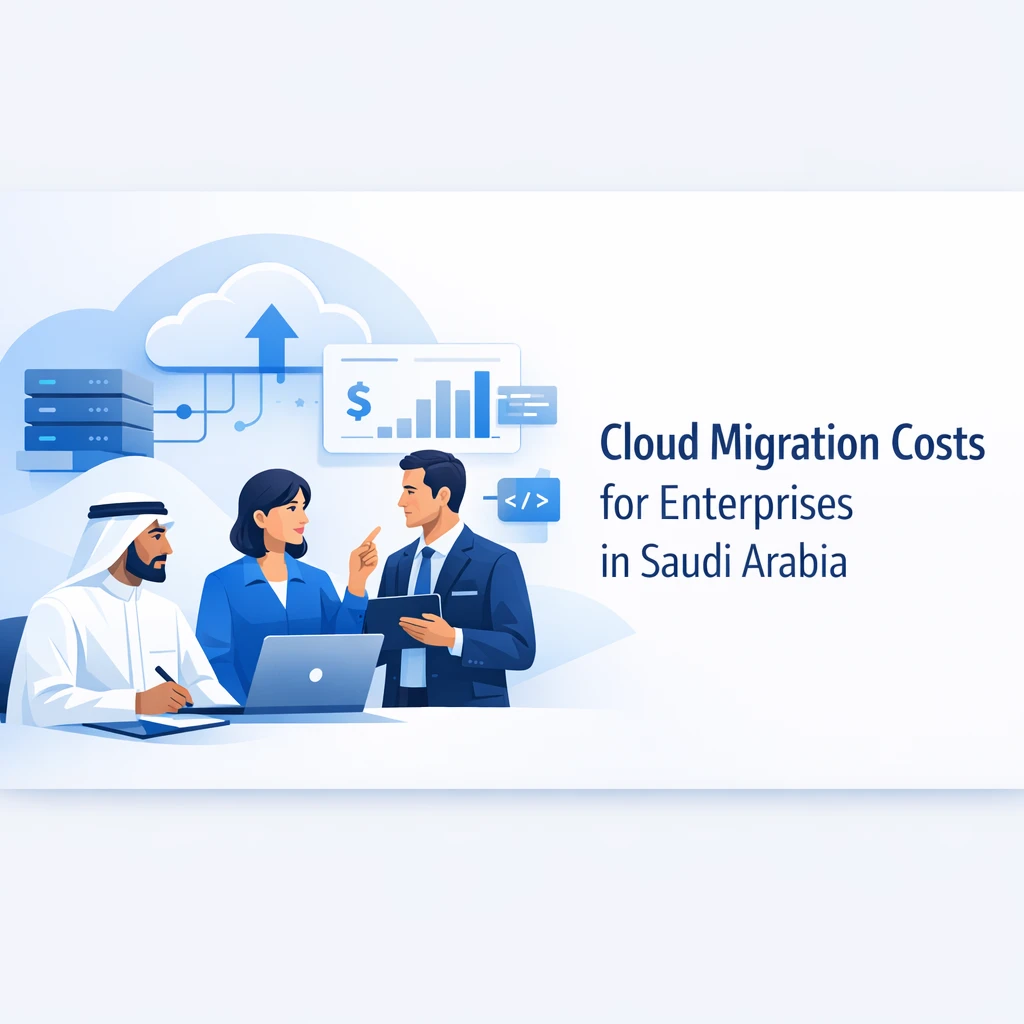
For Saudi Arabia, the UAE, and broader Gulf markets, enterprises are increasingly migrating critical workloads to the cloud to accelerate digital transformation, improve resilience, and unlock data-driven decision making. Yet cloud migration is not a single-price exercise. It involves a mix of upfront planning, architecture decisions, migration pathways, and ongoing operations. Understanding the full cost landscape — including hidden expenses — helps leadership in Saudi Arabia and neighboring regions make prudent bets and set realistic ROI expectations.
This guide is designed for SMBs, SMEs, startup founders, CEOs, CTOs, product managers, and digital transformation leaders planning software projects valued between USD 5,000 and USD 200,000. It provides a practical framework with concrete steps, architectural patterns, use cases, and real-world examples. Throughout, Triostack Technologies is positioned as a global software development partner whose experience spans custom software, cloud migration, DevOps, AI development, CRM, ERP, SaaS, and dedicated teams. The emphasis remains educational, with insights you can apply today.
What is the Topic?
Cloud migration cost refers to the total expense associated with moving applications, data, and workloads from on‑premises or legacy hosting to cloud environments. It encompasses:
- Discovery, assessment, and governance
- Architecture design and technology choices (lift-and-shift, re-platform, or refactor)
- Migration execution (tooling, data transfer, downtime planning)
- Operational readiness (monitoring, security, IAM, compliance)
- Cost governance and optimization (billing, reserved instances, right-sizing)
For Saudi Arabia and the GCC, regulatory compliance, data sovereignty, and local support expectations add specific cost dimensions that are sometimes overlooked in generic playbooks. A well-scoped migration plan aligns business outcomes with technology choices, ensuring that the total cost of ownership (TCO) reflects the long-term value of cloud-native capabilities.
Why it Matters in 2026
In 2026, cloud economics are shaped by:
- Multi-cloud strategies and data residency requirements in the GCC and beyond
- Managed services and serverless options that shift cost from CapEx to OpEx
- Movement towards AI-powered optimization, automation, and self-service IT
- Security and regulatory compliance as ongoing, not one-time, costs
Saudi organizations increasingly want predictable cost curves, transparent billing, and the ability to scale resources up or down quickly to match demand. The right architecture and governance model reduces surprises and accelerates time-to-value, which is particularly important for projects with budgets in the mid-market range (roughly USD 5k to USD 200k).
Current Industry Challenges
Cost planning for cloud migration faces several persistent challenges in the region:
- Hidden and indirect costs: data egress, inter-region transfers, and egress penalties can surprise budgets if not modeled up front.
- Data sovereignty and localization: regulatory requirements impact storage options, latency, and data transfer costs.
- Downtime risk and business continuity: migration windows, cutover plans, and testing cycles influence both cost and risk.
- Skills and staffing: talent gaps can drive external consulting costs or longer project timelines.
- Vendor lock-in and complex pricing: combinations of storage, compute, managed services, and support can create opaque cost structures.
Addressing these challenges requires a disciplined approach to discovery, design, and governance, along with clear partnerships with experienced vendors who can provide transparent pricing models and reliable delivery—like Triostack, which combines global delivery capabilities with deep domain expertise in cloud migration, DevOps, and software architecture.
How the Technology Works
Cloud migration strategies typically fall into three categories, each with distinct cost implications:
- Lift-and-Shift (Rehost): Move applications as-is to virtual machines or containers in the cloud. Faster to start, often cheaper upfront, but may miss cloud-native benefits.
- Re-platform (Lift-and-Reshape): Move with minor optimizations (e.g., managed databases, container orchestration) to reduce maintenance overhead while retaining architecture structure.
- Refactor (Re-architect): Rebuild applications to leverage cloud-native services (serverless, microservices, managed analytics). Highest upfront cost but longest-term efficiency gains and scalability.
Choosing among these options depends on business goals, current architecture, data sensitivity, and the desired speed of value realization. A hybrid approach is common: critical workloads migrate with refactor or re-platform, while less strategic systems use lift-and-shift as a staged approach.
Architectural decisions influence both initial migration costs and ongoing cloud spend. The following sections introduce a practical architecture overview and workflow that help manage costs while delivering value to Saudi and GCC-based enterprises.
Architecture Overview
An effective cloud migration architecture keeps security, data integrity, and performance at the forefront. The diagram below describes a typical enterprise pattern that balances control with cloud-native advantages. In many engagements, Triostack helps design and implement this model for clients in the GCC and globally.
Key components include a secure API gateway, identity and access management (IAM), microservices or serverless compute, a managed data layer, a data lake for analytics, and robust network security with gateway-based access. This pattern supports multi-cloud and regional data residency requirements common in the Gulf region.
Step-by-Step Workflow
Migration programs benefit from a structured, repeatable process. The workflow below reflects best practices used by Triostack on projects across the US, UK, Europe, and the GCC.
- Discovery & Governance: inventory applications, data sensitivity, SLAs, and regulatory constraints. Establish budgets, risk tolerance, and success metrics.
- Migration Design & Roadmap: select strategic patterns (lift-and-shift vs refactor), define data migration plans, and create a staged cutover plan.
- Pilot / Proof of Concept: validate performance, security, and cost targets with a representative subset of workloads.
- Incremental Migration: migrate workloads in waves, applying cost governance and lessons learned from each wave.
- Validation & Cutover: final testing, data reconciliation, and production cutover with rollback options.
- Operate & Optimize: establish monitoring, cost controls, security baselines, and ongoing optimization.
For teams in Saudi Arabia and the region, it is common to run a pilot for a mid-market ERP module or a CRM platform before scaling across the enterprise. This phased approach reduces risk and helps stakeholders see tangible value early.
Business Use Cases
Below are representative enterprise scenarios where cloud migration delivers measurable value. Each example is anchored in real-world needs observed in the Gulf region and beyond.
- ERP Modernization for a Saudi retailer: migrate core finance, supply chain, and sales analytics to cloud-native services with tighter integration to CRM and e-commerce platforms. Outcome: improved forecasting, reduced downtime, and scalable reporting.
- Healthcare data portal for a UAE clinic: secure, compliant patient data with an auditable trail, enabling telehealth and remote patient monitoring while maintaining data residency.
- Logistics operations modernization in Dubai: real-time tracking, route optimization, and analytics on a cloud data lake, enabling better delivery windows and customer transparency.
- Global SaaS platform modernization (UK/US/EU customers): multi-region deployment, CI/CD, and automated testing through a cloud-native stack to reduce MTTR and improve reliability.
Industry Applications
Industry-specific considerations influence architecture and cost decisions. Some notable North Star patterns:
- Financial services and fintech: strict data governance, encryption at rest/in transit, and audit logging while enabling real-time analytics.
- Public sector & healthcare: role-based access control, patient data privacy, and compliance with regional regulations.
- Retail & logistics: demand forecasting, inventory optimization, and scalable storefront APIs with global availability.
- Manufacturing & energy: digital twin workloads, IoT data ingestion, and high-throughput streaming analytics.
Triostack’s approach emphasizes secure, compliant, and resilient architectures that can be deployed across multiple providers (AWS, Azure, GCP) to meet regional requirements and business goals.
Benefits of Thoughtful Cloud Migration
- Cost visibility & control: better forecasting and governance reduce over-spend and idle resources.
- Scalability & agility: on-demand capacity aligns with seasonal demand and growth.
- Security & compliance: standardized controls and automated compliance checks across environments.
- Time-to-value: accelerated development cycles via cloud-native services and DevOps practices.
In practice, enterprises that plan for cost governance from day one tend to realize faster payback and more predictable ROI, particularly when working with a trusted partner who understands regional realities and global delivery methods—such as Triostack.
Challenges
Migration projects can encounter several pitfalls. Anticipating these helps teams stay on budget and on schedule:
- Underestimating data movement: large-scale data migrations require bandwidth planning and may incur egress costs.
- Hidden integration work: connecting legacy systems to cloud services can be more complex than anticipated.
- Security gaps during transition: misconfigurations in IAM, network segmentation, or under-protected APIs amplify risk.
- Vendor and tool fragmentation: multiple tools across discovery, migration, and monitoring can complicate governance.
Common Mistakes in Cloud Migration Projects
- Skipping a formal discovery phase or misclassifying data sensitivity.
- Over-promising quick wins without validating cost-to-benefit in a pilot.
- Failing to align organizational change with technology changes (people and process gaps).
- Not provisioning for ongoing optimization and cost governance after go-live.
Best Practices
- Adopt a cost governance model: set budgets, alerts, and auto-scaling policies; review monthly.
- Design for security by default: apply IAM least privilege, encryption, and automated identity federation.
- Plan incremental migration: avoid bulk cutovers; use pilots and staged waves to validate performance.
- Establish clear SLAs and operational playbooks: incident response, DR drills, and runbooks.
Build vs Buy Comparison
When migrating to the cloud, enterprises often choose between building custom solutions in-house or engaging a partner to design, implement, and operate the migration. The chart below highlights typical considerations.
| Aspect | Build (In-House) | Buy (Partner) |
|---|---|---|
| Timeline | Often longer due to learning curve and staffing | Faster time-to-value with seasoned teams |
| Cost Predictability | Variable, depending on headcount and scope | More predictable with defined SOWs |
| Quality & Expertise | Depends on internal capabilities | Access to proven best practices and global experience |
| Risk | Higher if capabilities are immature | Lower with成熟 governance and oversight |
For many GCC organizations, engaging a partner like Triostack accelerates delivery, reduces risk, and ensures adherence to regional compliance and data residency requirements.
Estimated Development Cost
Below are typical price ranges for common engagement types in mid-market projects. Prices vary by region, provider, cloud platform, and scope. The ranges assume a blended team with architectural guidance, development, QA, and project management.
| Project Type | Typical Range (USD) | Notes |
|---|---|---|
| Business Website | USD 5k–15k | Basic migration of hosting and CMS on cloud; includes basic security and hosting |
| Customer Portal | USD 10k–40k | Moderate integrations; identity and access management; data migration |
| CRM | USD 15k–100k | Customizations, data migration, and cloud hosting |
| ERP | USD 40k–200k | Complex data models; regulatory compliance; multi-module migrations |
| AI Chatbot | USD 5k–25k | Natural language processing integration; cloud-based hosting |
| AI Automation | USD 15k–80k | Workflow automation & RPA in cloud |
| SaaS MVP | USD 20k–80k | Core architecture, multi-tenant support, initial integrations |
| Enterprise Web App | USD 30k–200k | Full migration with security, analytics, and CI/CD |
Pricing factors include: cloud provider choice, data volumes, required compliance controls, data migration complexity, number of integrations, security and identity requirements, and the desired SLA for uptime and support. For GCC-based enterprises, regional data residency, local compliance, and ongoing governance often drive additional configuration and cost considerations.
Recommended Technology Stack
While the exact stack depends on project scope, the following is representative of a resilient, scalable cloud migration architecture used by Triostack in global projects:
- Cloud providers: AWS, Microsoft Azure, Google Cloud Platform (GCP) with multi-region configurations
- Compute & orchestration: Kubernetes (EKS, AKS, GKE) or serverless options (Lambda, Cloud Functions)
- Data: managed relational and NoSQL databases (RDS/Aurora, Cosmos DB, Cloud SQL), data lake (S3/Blob store with Lake Formation/BigQuery), data governance
- CI/CD & DevOps: GitHub Actions, GitLab CI, Azure DevOps; Terraform for IaC; Jenkins as needed
- Security & IAM: IAM, OIDC/OAuth federations, secret management, encryption at rest & in transit
- Observability: monitoring (CloudWatch, Stackdriver, Azure Monitor), logging, tracing (OpenTelemetry), APM
- API & integration: API gateway, managed queues, event-driven architecture
Triostack emphasizes choosing managed services that align with your cost, governance, and compliance goals, reducing operational overhead while enabling faster feature delivery.
Future Trends
As cloud maturity grows in Saudi Arabia and the GCC, several trends are shaping migration strategies:
- Serverless and event-driven architectures: more granular cost control and faster time to value.
- AI-assisted migration tooling: automated dependency analysis, risk assessment, and optimization suggestions.
- Cost governance as code: policy-as-code to enforce budgets, spending caps, and autoscaling rules.
- Data residency-first designs: regional data stores and cross-region replication that comply with local regulations.
Enterprises investing in these patterns can reduce TCO, improve security posture, and accelerate time-to-market for new digital products.
How Triostack Delivers Projects Globally (Remote Delivery from India)
Triostack leverages a distributed delivery model to serve clients across the GCC, North America, Europe, and Asia-Pacific. Our remote delivery approach integrates agile practices, collaboration tools, and robust governance to ensure high-quality outcomes.
Agile & Planning
- Agile framework: Scrum or Kanban, depending on project needs
- Sprint Planning: bi-weekly planning with business stakeholders
- Weekly demos & updates: transparent progress with stakeholders in real time
Collaboration & Tools
- Communication: Slack, Teams, Zoom, Google Meet
- Project & issue tracking: Jira, ClickUp
- Code & CI/CD: GitHub, GitLab, Azure DevOps
- Cloud & staging: cloud environments with separate staging for QA
- Documentation & security: wikis, runbooks, NDA, IP ownership agreements
Quality Assurance & Security
- QA in dedicated cloud staging environments to mirror production
- Security reviews, threat modeling, and vulnerability scanning embedded in sprints
IP Ownership & Legal
Triostack ensures clear IP ownership, non-disclosure agreements, and compliance with regional regulations. Timezone overlap with GCC markets reduces friction in daily coordination and rapid decision-making.
Benefits of Outsourcing to India
- Cost efficiency due to scalable talent pools
- Large pool of high-quality engineers with experience in complex cloud migrations
- Faster hiring and flexible team scaling to match project momentum
- Strong communication and proven governance models
For UAE, Saudi Arabia, and other GCC clients, this model provides access to deep engineering talent while maintaining tight alignment with regional business hours and communication practices. Triostack prioritizes English fluency, clear documentation, and robust project management to ensure smooth collaboration.
Case Studies (Realistic Implementation Scenarios)
These illustrative cases reflect common patterns without fabricating specific company names or statistics. They demonstrate how cloud migration can be executed, with outcomes aligned to business objectives.
Dubai Logistics Company — Cloud-enabled visibility
A Dubai-based logistics provider migrated its order management and route optimization systems to a cloud-native stack. They adopted a lift-and-shift for legacy routing modules while refactoring analytics to a data lake on the cloud. The project delivered near real-time tracking dashboards and improved forecast accuracy for delivery windows. Key activities included data migration planning, secure API integration, and a staged cutover with extensive QA in a cloud staging environment.
UAE Healthcare Clinic — Secure patient portal
A UAE clinic implemented a cloud-hosted patient portal with role-based access, encrypted data stores, and audit logging. The migration included migrating patient records, integrating with appointment systems, and enabling telehealth features. The approach balanced rapid delivery with regulatory compliance and patient data privacy, supported by a robust security model and governance framework.
Saudi Retail Business — ERP modernization
A Saudi retailer migrated core ERP components to the cloud to consolidate finance, inventory, and procurement data. A phased plan combined re-platforming of critical modules with lift-and-shift for less strategic systems, enabling faster reporting, better stock visibility, and scalable analytics across multiple store locations.
Australian Startup — SaaS MVP on cloud
An Australian startup deployed a SaaS MVP on cloud infrastructure with a multi-tenant architecture, automated testing, and continuous deployment. Although outside the GCC region, this example demonstrates how Triostack’s remote delivery model supports fast iteration and international compliance requirements.
UK SaaS Company — Global deployment
A UK-based SaaS company expanded to multiple regions (including GCC) with a cloud-native migration that improved reliability, security, and performance for global customers. Lessons included alignment of data models, global API strategy, and standardized observability across regions.
Frequently Asked Questions
- What is the typical timeline for a mid-market cloud migration?
- Timelines vary, but a phased approach with pilot testing can deliver initial value within 8–12 weeks for a subset of workloads, followed by waves of migration over 6–12 months depending on scope and regulatory constraints.
- How can I estimate hidden costs in cloud migration?
- Hidden costs often include data egress, inter-region traffic, licensing changes, and migration downtime. A thorough discovery phase, cost modeling, and a pilot help quantify these factors early.
- What role does data residency play in cost planning?
- Data residency requirements may dictate cloud region selections, replication strategies, and compliance tooling, all of which influence storage, egress, and compliance costs.
- What are the signs of a successful cloud migration?
- Clear business outcomes realized (faster time to market, improved resilience, cost visibility), controlled spend with governance, and a maintainable, scalable architecture post-migration.
Conclusion
Cloud migration is both an investment in capability and a discipline in cost governance. For enterprises in Saudi Arabia, the GCC, and globally, success hinges on meticulous planning, architectural alignment with business goals, and a managed path to modernization that renders predictable costs and measurable outcomes. Triostack stands ready to help organizations design, build, deploy, and maintain scalable cloud migrations with a focus on regional realities, international best practices, and a robust remote delivery model from India that aligns with UAE, Saudi Arabia, and GCC business hours and communication preferences.
If you're planning a cloud migration project in the 2026–2027 timeframe, consider engaging with a partner who can provide end-to-end capabilities across custom software, cloud migration, DevOps, AI development, CRM, ERP, SaaS, and dedicated teams. Businesses planning similar solutions often benefit from experienced software development partners like Triostack Technologies.
If you're planning a similar software project, Triostack can help you design, build, deploy and maintain a scalable solution.
Contact Triostack to explore a tailored cloud migration roadmap for your organization.
Triostack Team
Technology Evangelist & Writer
Triostack Team is an experienced writer and technologist, exploring the intersections of AI, cloud architecture, and modern application development. Passionate about turning complex technical concepts into accessible insights.