Cloud Migration Cost for Enterprise Businesses in Qatar: Budgeting, Architecture, and Hidden Expenses
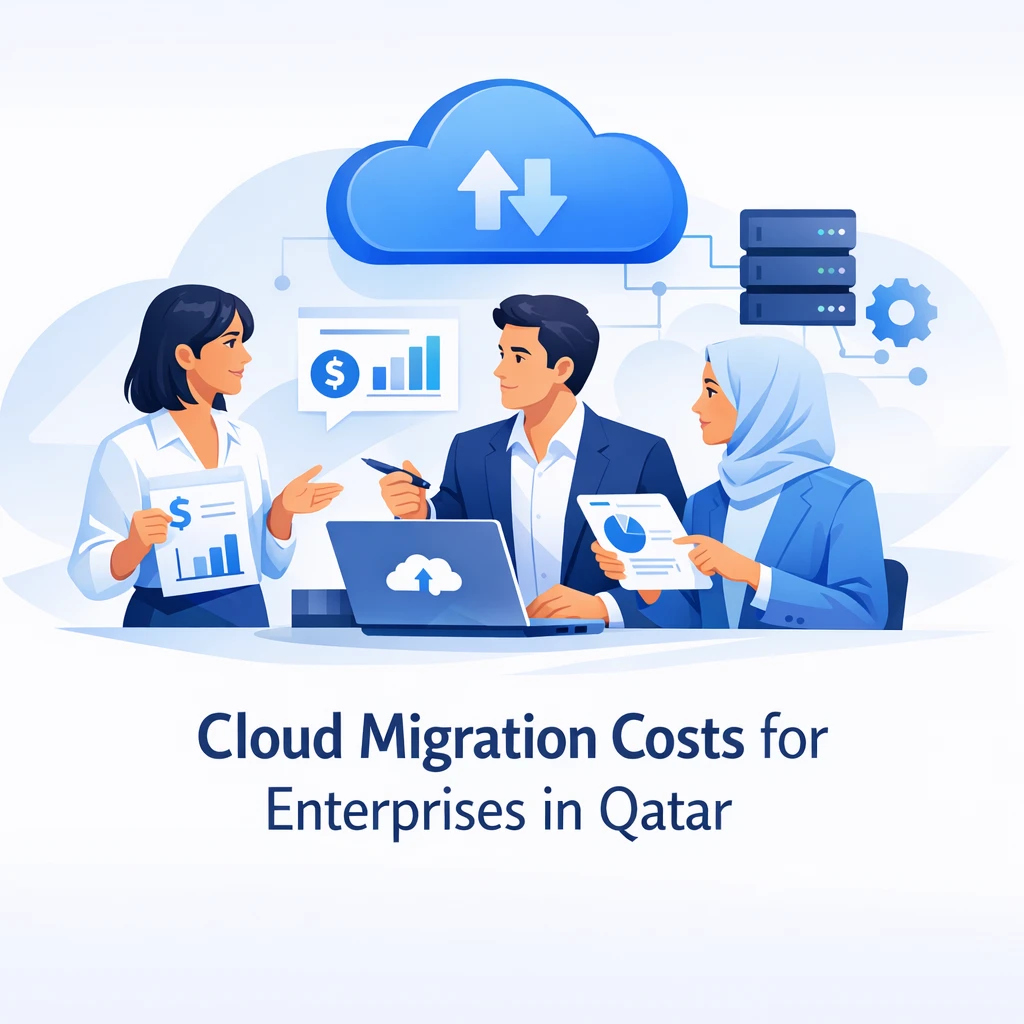
For Qatar’s growing network of enterprises, migrating complex workloads to the cloud is less about a single dramatic move and more about a thoughtful, multi-year journey. The goal is to unlock agility, scale services, and reduce total cost of ownership without compromising security or regulatory compliance. This article offers practical guidance for SMBs, SMEs, startup founders, CEOs, CTOs, business owners, product managers, and digital transformation leaders planning software projects in the USD 5k to 200k range. It blends budgeting discipline with architectural clarity and concrete, real‑world examples to help you design a migration path that aligns with local requirements in Qatar, the Gulf region, and beyond.
Throughout, you’ll encounter practical guidance, implementation notes, and references to Triostack Technologies’ global execution model. The aim is educational: to illuminate common cost drivers, illustrate architecture options, and provide actionable steps you can apply with or without Triostack as your partner. For more on how Triostack supports cloud migrations at scale, see the dedicated sections near the end of this article and our case studies page here.
What is the Topic?
Cloud migration cost is the total investment required to move workloads from on‑premises or legacy platforms to cloud environments and run them effectively thereafter. It includes upfront discovery and design, migration labor, cloud service fees, data transfer, security and compliance, testing, training, and ongoing optimization. In enterprise settings, several hidden costs can appear after the go‑live, including governance overhead, vendor licenses, and ongoing integration maintenance. In Qatar and the wider Gulf region, regulatory considerations such as data residency and industry-specific requirements also shape cost profiles.
Rather than treating cloud migration as a one‑time project, successful cost management uses a phased plan, a clear cost model, and a governance framework that tracks both capital expenditure (CapEx) and operating expenditure (OpEx) over time. A mature plan combines budgeting, architecture, and risk mitigation to deliver measurable business value while avoiding surprise expenses.
Why it Matters in 2026
In 2026, cloud adoption is increasingly tied to business outcomes rather than mere technology modernization. Enterprises in Qatar and the broader GCC are balancing cloud flexibility with strict data protection and regional data sovereignty expectations. Cost efficiency isn’t merely about lower monthly bills; it’s about right‑sizing resources, choosing appropriate service models (IaaS vs PaaS vs SaaS), and implementing robust governance to avoid wasteful overprovisioning.
Key trends shaping the cost equation include multi‑cloud and hybrid architectures, AI/ML workloads, real‑time analytics, and the rising importance of DevOps practices that shorten release cycles while maintaining security and compliance. When approached thoughtfully, cloud migration can unlock faster time‑to‑value for digital transformation programs, even for shops with modest project budgets.
Current Industry Challenges
- Underestimating data transfer and egress costs across regions and cloud providers.
- Data residency and regulatory compliance requirements that constrain architecture choices.
- Skill gaps in cloud architecture, security, and DevOps leading to increased labor costs or delays.
- Vendor lock‑in risk and the complexity of multi‑cloud strategies.
- Hidden costs from security hardening, identity management, and ongoing governance.
- Managing change across complex enterprise environments with legacy systems and mixed tech stacks.
Recognizing these challenges early—before procurement and design—helps teams allocate contingency budgets and adopt architectural patterns that minimize risk and cost overruns. A practical approach uses a phased migration plan, clear cost attribution for each phase, and a framework for ongoing optimization post go‑live.
How the Technology Works
A cloud migration typically unfolds through a structured lifecycle: discovery, plan, migrate, validate, and operate. Each phase has distinct inputs, outputs, and cost implications.
- Discovery: Inventory workloads, performance baselines, data sensitivity, and interdependencies; identify regulatory constraints and security requirements.
- Design: Define target architectures (IaaS, PaaS, or SaaS), data topology, security controls, identity and access management, and cost models.
- Migrate: Execute data and workload transfer using phased cutovers, migration tools, and automation pipelines to minimize downtime.
- Validate: Functional testing, performance testing, and security validation to ensure parity or improvement over baseline.
- Operate: Monitor, optimize, and govern the cloud environment; implement cost controls and continuous improvement.
Architecture Overview
Choosing the right target architecture in Qatar means balancing performance, security, and cost. A common pattern for enterprise migrations is a hybrid approach: keep mission‑critical data on a private or regulated environment while migrating non‑sensitive workloads to the public cloud, or adopt a multi‑cloud strategy to avoid vendor lock‑in. Below is a representative high‑level architecture for a typical enterprise cloud migration:
In Qatar, data residency and cloud localization requirements often steer the design toward a private connection to public clouds and careful placement of data with appropriate encryption, access controls, and audit logs. The following diagram illustrates a more detailed view that you might encounter during migration planning with a partner like Triostack.
Step‑by‑Step Workflow
Below is a practical playbook you can adapt. It emphasizes cost discipline, risk management, and stakeholder alignment.
Key activities include establishing a baseline cost model, defining service tiers, and creating a rollback plan. Each wave should deliver measurable value, such as reduced MTTR, faster time‑to‑insight, or improved customer experience. For teams new to federated governance, start with an initial set of guardrails and incrementally expand them as you mature.
Business Use Cases
- Global commerce platform: Migrating a multi‑region ecommerce backend to a multi‑cloud, elastic architecture to handle seasonal spikes and ensure compliance with regional data laws.
- Smart logistics: Modernizing an order management system with real‑time tracking, data analytics, and a scalable portal for partners and customers.
- Healthcare clinic chain: Deploying a patient portal with secure EHR integration and compliant data handling across clinics in multiple emirates.
- Financial services startup: Rapidly launching a fintech SaaS MVP with secure APIs, identity management, and a modular data model.
Industry Applications
Across GCC markets and beyond, cloud migrations touch multiple sectors. In Qatar and neighboring regions, healthcare, logistics, retail, and government services are common adoption drivers. For each industry, regulatory constraints, integration needs, and data residency requirements influence both the architecture and the cost model. Case studies on case studies illustrate how similar organizations have approached these challenges.
Benefits
- Operational agility: scale resources on demand and accelerate time‑to‑value for new features.
- Cost transparency: align spend with business outcomes using fine‑grained cost governance and tagging.
- Resilience and security: leverage cloud security services, automated patching, and centralized threat monitoring.
- Faster innovation: deploy AI/ML, data analytics, and modern interfaces with streamlined DevOps processes.
Challenges
- Forecasting hidden costs such as data transfer, egress, and cross‑region replication.
- Maintaining performance while controlling wasteful overprovisioning.
- Coordinating multiple vendors and internal teams across time zones and domains.
Common Mistakes
- Underestimating data transfer costs and storage tiers for long‑running analytics workloads.
- Skipping a formal cost governance model that ties cloud spend to business KPIs.
- Overlooking security and compliance requirements during design, leading to costly rework later.
Best Practices
- Start with a phased migration plan and a living cost model that updates with usage patterns.
- Prioritize right‑sizing and autoscaling to avoid overprovisioning.
- Implement governance, encryption, and identity management from day one.
- Adopt a hybrid or multi‑cloud strategy to reduce risk and align with data residency policies.
Build vs Buy Comparison
Choosing to build in house or buy a solution affects both cost and speed to value. Consider the following factors when deciding where to invest your resources:
| Aspect | Build | Buy |
|---|---|---|
| Control | Maximum: full control over architecture and roadmap | Less control; depends on vendor roadmap |
| Time to value | Longer development cycles | Faster access to features via成熟 platforms |
| Cost visibility | Predictable with careful planning, but initial costs higher | Often lower upfront; ongoing licensing and maintenance |
| Risk | Higher risk if talent is scarce | Vendor risk; requires due diligence and SLAs |
| Scale | Dependent on internal capabilities | Leverages cloud provider elasticity |
For many Qatar‑based enterprises, a hybrid approach—combining core bespoke components with configurable third‑party services—offers a practical balance between control and speed. See how Triostack helps teams design architectures that align with business outcomes and cost targets.
Estimated Development Cost
Below are indicative ranges based on typical SMB to mid‑market engagements. These figures assume a mix of custom software development, cloud migration, and integration work. Actuals vary by scope, region, data gravity, and risk profile.
| Project Type | Typical Range (USD) | Key Cost Drivers |
|---|---|---|
| Business Website | 5k–15k | Content, basic CMS, UX design |
| Customer Portal | 10k–40k | Authentication, integration, security |
| CRM | 15k–100k | Business processes, integrations, customization |
| ERP | 40k–200k | End‑to‑end processes, data migration, regulatory controls |
| AI Chatbot | 5k–25k | NLU models, integrations, hosting |
| AI Automation | 15k–80k | Workflow orchestration, data pipelines |
| SaaS MVP | 20k–80k | Core features, multi‑tenant design |
| Enterprise Web App | 30k–200k | Complex integrations, security, compliance |
Pricing is affected by factors such as data governance needs, regulatory compliance, expected traffic, data volumes, integration complexity, the number of regional deployments, and the level of ongoing support required. In Qatar, clients often allocate budgets for privacy impact assessments, security reviews, and governance implementation alongside feature development.
Recommended Technology Stack
The exact stack depends on your domain and requirements, but a pragmatic, scalable choice often includes:
- Frontend: React or Vue for dynamic interfaces; responsive design frameworks; accessible UI patterns.
- Backend: Node.js or Java/Kotlin microservices on a REST/GraphQL API layer; robust caching with Redis.
- Data: Postgres or MySQL for relational data; data lake on a permissive storage tier with lifecycle policies.
- Cloud: Public cloud IaaS/PaaS with managed services, plus networking components for secure, low‑latency access.
- Security: IAM, encryption at rest/in transit, key management, and SOC 2 / ISO 27001 governance.
- CI/CD: GitHub Actions or Azure DevOps; automated testing, code quality gates, and deployment pipelines.
Triostack helps enterprises tailor the stack to fit regulatory requirements in Qatar and across the GCC while maintaining a focus on cost efficiency and long‑term maintainability.
Future Trends
Looking ahead, expect greater emphasis on data sovereignty, edge computing, and AI‑driven optimization. Regional providers and global cloud platforms continue to expand data center footprints to meet regulatory requirements and latency constraints. For migration programs, a shift toward automated governance, policy‑as‑code, and composable architectures will help organizations respond to changing business needs without jeopardizing cost control.
How Triostack Delivers Projects Globally
Triostack Technologies combines domain expertise with a scalable delivery model. Our teams work across time zones to support 24/5 operations when needed, while preserving focused development sprints and localized governance. The core pillars of our approach include:
- Custom Software: end‑to‑end development from discovery to maintenance.
- Web & Mobile Development: responsive, accessible, and secure experiences.
- AI Development & Machine Learning: model building, deployment, and monitoring.
- CRM & ERP: integration and customization to align with business workflows.
- SaaS & Cloud Migration: architecture, security, and scalability for multi‑tenant solutions.
- DevOps & QA: automated testing, CI/CD, and performance validation.
- UI/UX: human‑centered design to maximize adoption and value realization.
- API Development: secure, scalable interfaces for integrations.
- Dedicated Teams: scalable resources with clear governance and SLAs.
- Maintenance & Tech Consulting: long‑term support and modernization roadmaps.
Remote delivery is a cornerstone of Triostack’s model. We operate with a tuned balance of time‑zone overlap, continuous communication, and rigorous governance to ensure project outcomes match your objectives.
Remote Delivery: How Triostack Delivers Projects from India
Many enterprises leverage offshore delivery to access large talent pools, accelerate hiring, and optimize costs. Triostack offers a robust remote delivery framework designed for enterprise‑grade projects. Key elements include:
- Agile governance: iterative planning with clear sprint boundaries and measurable outcomes.
- Sprint Planning: regular previews to align with business priorities and stakeholder feedback.
- Weekly Demos: transparent progress reviews with clients across time zones.
- Collaboration tools: Slack, Teams, Zoom, Google Meet for real‑time communication.
- Issue & project tracking: Jira, ClickUp, GitHub, GitLab, or Azure DevOps for visibility.
- CI/CD & Cloud Staging: automated build, test, and deployment pipelines with staging environments that mirror production.
- QA & Security: comprehensive testing, vulnerability scanning, and compliance checks.
- Documentation & IP ownership: thorough documentation, NDA, and clear IP terms.
- Timezone overlap: optimized for overlapping windows to enable real‑time collaboration with UAE and GCC teams.
- Dedicated Project Managers: single points of contact, risk management, and progress reporting.
- Long‑term Support: post‑go‑live maintenance and iterative improvements.
Why UAE businesses outsource development to India is a combination of cost efficiency, a large talent pool, faster hiring, flexible scaling, high quality engineering, and strong communication practices. This model, when executed with clear governance and robust security, accelerates delivery while maintaining quality standards necessary for enterprise contexts.
Case Studies (Realistic Scenarios)
These examples illustrate how organizations similar to yours have navigated cloud migration costs and architecture choices. They are presented in an anonymized form to reflect typical engagements in the region.
Dubai-based Logistics Company
Challenge: Migrated a legacy order management and tracking system to a hybrid cloud architecture to handle peak seasonal loads. Approach: phased migration with data partitioning, secure APIs, and partner portal integration. Outcome: improved visibility and reduced maintenance overhead; architecture supported scale for multiple regional hubs with predictable costs.
UAE Healthcare Clinic
Challenge: Deploy a patient portal with secure EHR access and compliance across clinics. Approach: multi‑tier security model, data residency considerations, and a private link to cloud storage. Outcome: streamlined patient experience and better data governance across clinics without exceeding budget targets.
Saudi Retail Business
Challenge: Modernize an on‑premises retail platform to support a unified omnichannel experience. Approach: ERP and CRM migration with integration to payment and loyalty services. Outcome: improved operational efficiency and a scalable backend capable of handling growth with controlled costs.
Australian Startup
Challenge: Launch a SaaS MVP with secure APIs and self‑service onboarding. Approach: cloud‑native microservices and automated CI/CD. Outcome: faster time to market and a clear path to scale globally while keeping initial spend in check.
UK SaaS Company
Challenge: Global expansion with data isolation requirements. Approach: structured cloud architecture with data residency patterns and a robust security framework. Outcome: a compliant, scalable platform backed by a scalable partner network.
Each case demonstrates how careful budgeting, architecture choices, and disciplined project management can deliver solid outcomes. For more specifics, explore our public resources and connect with a Triostack consultant to discuss your context.
Cost Factors and Planning Considerations
To manage cloud migration costs effectively, you’ll want to model costs across phases and keep a comprehensive view of both upfront and ongoing expenses. The main cost categories typically include:
- Discovery and design: assessment, architecture design, and governance setup.
- Migration labor: work to lift, shift, and re‑architect workloads; includes data migration and integration work.
- Cloud services: compute, storage, networking, security, and managed services; monthly recurring costs vary with usage.
- Security and compliance: IAM, encryption, threat monitoring, audits, and policy enforcement.
- Data transfer and egress: cross‑region replication, data movement costs, and potential charges when moving data out of clouds.
- Governance and management: cost tagging, policy as code, governance tooling, and ongoing optimization.
- Training and change management: user training and adoption programs to maximize value realization.
- Maintenance and support: ongoing updates, monitoring, and incident response.
In Qatar and the broader GCC, particular attention should be given to data residency, cross‑border data transfer rules, and local regulatory requirements. The cost model should explicitly capture these factors and provide a transparent, auditable trail for stakeholders.
Transparent Pricing and Pricing Factors
Pricing transparency is essential for SMBs and startups to manage expectations and secure funding. When discussing cloud migration costs with a partner like Triostack, consider asking for a phased cost plan that includes:
- Phase‑by‑phase budgets with KPI tied milestones
- Baseline performance and capacity forecasts
- Contingency allowances for risk events
- Cost governance plan with resource tagging and cost alerts
As you plan, remember that hidden costs are often the difference between a project staying on track and facing overruns. A practical approach is to build a cost model that includes both CapEx and OpEx considerations, and to validate the model against real usage once the migration begins. For more guidance, see our cloud migration playbook.
Future Trends
Expect continued emphasis on automate governance, policy‑driven security, and cost optimization. Edge computing will grow more relevant for latency‑sensitive workloads, while AI‑driven optimization will help teams continuously align cloud spend with business outcomes. In Qatar and the Gulf region, the confluence of data residency requirements with regional cloud expansion will create new patterns for architecture and cost management that practitioners should monitor closely.
How to Start: Triostack’s Engagement Model
For organizations considering cloud migration, here is a practical, no‑nonsense approach that can apply whether your project is a small portal or an enterprise‑scale migration. The aim is to balance speed, cost, and control while enabling measurable business value.
- Define objectives and success metrics aligned with business outcomes.
- Establish a phased plan with a clear governance framework and cost model.
- Launch a pilot in a controlled environment to validate architecture and cost assumptions.
- Iterate in waves, expanding scope based on ROI and risk posture.
- Institutionalize cost governance, security, and compliance as ongoing disciplines.
Triostack can support your journey with custom software, web and mobile development, AI development, CRM and ERP integration, SaaS, cloud migration, DevOps, UI/UX, API development, dedicated teams, QA, and maintenance services. Our remote delivery model is designed to provide predictable outcomes with strong governance, which can be especially valuable for cross‑regional teams in the Middle East and beyond.
Businesses planning similar solutions often benefit from experienced software development partners like Triostack Technologies. If you’re planning a project in this budget range, we’re happy to discuss how to design, build, deploy, and maintain a scalable solution that meets regulatory and business requirements.
Frequently Asked Questions
- What is a realistic budget range for a cloud migration project in Qatar? Realistic budgets vary by workload complexity, data volumes, and required security controls. For typical SMB to mid‑market migrations, expect a phased plan starting from tens of thousands to low hundreds of thousands of USD, with ongoing OpEx for cloud services and governance.
- Which architecture patterns are best for GCC regulations? Hybrid architectures with controlled data residency, private connectivity to public clouds, and strong security controls are common, often paired with a multi‑cloud strategy to avoid vendor lock‑in.
- How long does a typical migration take? A pilot or initial wave can take several weeks, with full migration spanning months depending on data gravity and integration complexity. Iterative waves help manage risk and cost uplift more predictably.
- What should I ask a potential partner about cost management? Ask for a phased cost plan, a detailed cost model with CapEx and OpEx, data transfer estimates, governance costs, and a plan for optimizing ongoing cloud spend.
- Why consider Triostack for this work? Triostack brings global delivery experience, a broad services portfolio, and a focus on practical, measurable outcomes. We emphasize education, governance, and collaboration to ensure a successful migration and ongoing optimization.
Call to Action
Businesses planning similar cloud migration projects can benefit from a structured, consultative approach. If you’re evaluating a path forward, consider engaging with a partner who can help you design, build, deploy, and maintain a scalable solution that aligns with your budget and regulatory requirements. Contact Triostack to explore your options and request a discovery workshop tailored to your needs.
Triostack Team
Technology Evangelist & Writer
Triostack Team is an experienced writer and technologist, exploring the intersections of AI, cloud architecture, and modern application development. Passionate about turning complex technical concepts into accessible insights.