Cloud Migration Cost for Enterprise Businesses in Oman: Budget Planning, Hidden Costs, and ROI
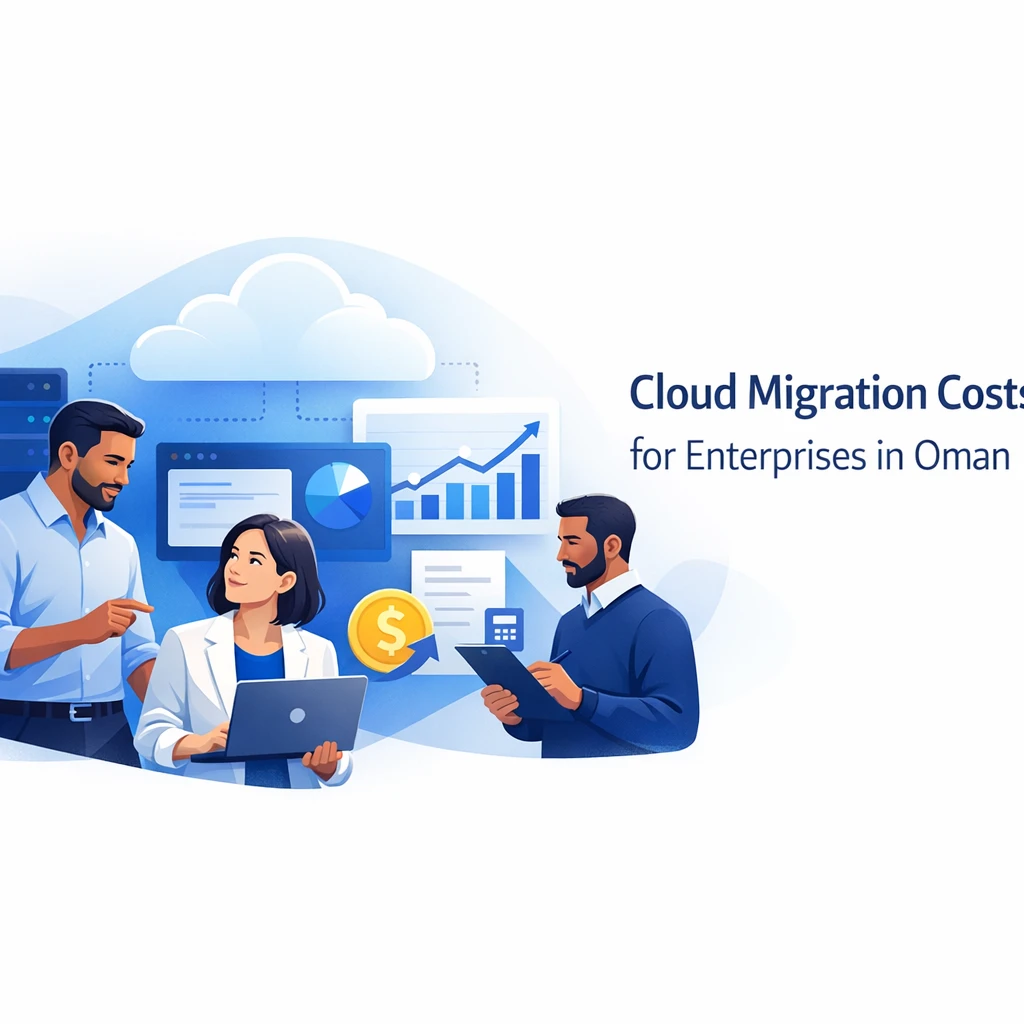
Organizations across Oman, the UAE, Saudi Arabia, and the broader GCC are increasingly embracing cloud migrations to unlock agility, resilience, and digital competitiveness. For SMBs, SMEs, startups, and established enterprises planning software projects between USD 5,000 and USD 200,000, understanding the full cost picture is essential. This guide offers practical budgeting guidance, reveals common hidden costs, and helps leadership measure return on investment (ROI) in real-world terms. It also demonstrates how a trusted global partner like Triostack Technologies can help plan, execute, and sustain cloud migrations with a human-centered, results-focused approach.
Whether you operate in Muscat, Abu Dhabi, Dubai, Riyadh, Jeddah, Doha, Manama, or beyond, the cloud is a global enabler. The challenge is not merely choosing a cloud platform, but building a migration program that aligns with business strategy, compliance, and long-term cost governance. This article blends practical budgeting steps, concrete cost factors, architecture patterns, and real-world case-style scenarios to help leaders make informed decisions.
What is the Topic?
Cloud migration cost encompasses every financial aspect of moving workloads, data, and processes from on‑premises or legacy systems to cloud environments. It includes initial assessment and migration planning, labor, software licenses, data transfer, security and compliance, training, change management, and ongoing operating expenses. The total cost of ownership (TCO) and ROI depend on the migration strategy (rehost, replatform, refactor, etc.), the chosen cloud model (IaaS, PaaS, SaaS), and the operating discipline established during and after migration.
Why it Matters in 2026
Cloud adoption globally remains a strategic priority, but the economics of cloud are nuanced. In 2026, enterprises increasingly demand transparent cost governance, predictable monthly bills, and measurable ROI. For Oman and GCC organizations, several factors are especially salient:
- Data sovereignty and compliance: local data storage requirements and regulatory controls influence architectural choices and data egress costs.
- Multi-cloud and edge considerations: distributing workloads across regions to optimize latency and resilience adds planning complexity, not just cost.
- Operational efficiency: automation, IaC (infrastructure as code), and DevOps practices reduce repeatable labor costs over time.
- Talent and outsourcing dynamics: highly skilled engineers can be scarce locally, driving different pricing models and opportunities for remote delivery.
Pricing realities in regions like Oman often combine local rates with global market dynamics. A well-structured migration program that emphasizes cost governance, phased delivery, and early ROI measurement can dramatically change the financial outcome of digital transformation projects.
Current Industry Challenges
Enterprises migrating to the cloud face a set of common challenges that can inflate budgets if not anticipatied:
- Underestimating data transfer and egress costs: cloud providers charge for data movement both into and out of the cloud, as well as storage over time.
- Security and compliance overhead: configuring identity and access management, encryption, and audit controls adds both complexity and cost.
- Application refactoring needs: legacy systems may require substantial modernization, increasing effort beyond initial estimates.
- Change management: training staff, updating processes, and governance models affect time-to-value.
- Vendor lock-in and interoperability: choosing platforms with strong integration capabilities reduces future migration friction and long-term costs.
Triostack emphasizes practical risk management and governance to help organizations avoid these pitfalls, while keeping the focus on delivering business value. The goal is not simply to move a workload to the cloud, but to create a cloud-native operating model that scales with the organization’s growth.
Current Industry Challenges (Regional Context)
In the GCC and broader Middle East, regulatory, connectivity, and talent considerations shape cloud strategy:
- Data residency: some industries require keeping certain data within regional boundaries, affecting data replication strategies and cost.
- Hybrid environments: many organizations maintain a hybrid mix of on-prem and cloud assets, which complicates visibility and cost tracking.
- Localization needs: language, security, and operational procedures must align with local business practices.
- Supply chain and logistics considerations: latency and data sovereignty influence decisions for manufacturing, energy, and logistics sectors.
Triostack supports customers in Oman and across the GCC by combining global cloud best practices with local regulatory awareness to deliver secure, cost-conscious migrations.
How the Technology Works
Cloud migration uses a mix of migration strategies and service models to align with business outcomes:
- Migrating approaches: rehost (lift-and-shift), replatform (lift-tinker-and-shift), refactor (re-architect), and re-purchase (move to SaaS).
- Cloud service models: Infrastructure as a Service (IaaS), Platform as a Service (PaaS), Software as a Service (SaaS).
- Migration sequencing: prioritize workloads by complexity and business impact, establishing a migration wave plan that aligns with ROI milestones.
In practice, most enterprise migrations blend several strategies across a portfolio of applications and data assets. Triostack’s approach centers on pragmatic cost control, risk reduction, and early value delivery through iterative milestones.
Architecture Overview
Below is a high-level reference architecture for a mid-to-large scale enterprise migration in Oman. It demonstrates how a hybrid strategy can enable data sovereignty, security, and scalable operations.
Key design principles include data residency controls, robust identity and access management, scalable data pipelines, and automated testing and release management. Triostack helps map business requirements to a cloud architecture that is resilient, secure, and cost-efficient.
Architecture Diagram: Deployment and Ops
Step-by-Step Workflow
A pragmatic migration framework helps teams stay on budget and on schedule. Here is a practical, phased workflow that aligns with the 12–16 week patterns often used for SMBs and SMEs planning projects within the USD 5k–200k bracket.
inventory apps, data assets, user base, regulatory constraints, and existing contracts. Establish governance and success metrics. - Cost-Benefit & ROI Modeling: create a business case with transparent assumptions on cost savings, productivity gains, and risk reduction.
- Architecture & Target State Design: define reference architectures for core workloads, security, and data management.
- Migration Planning & Sequencing: prioritize waves, estimate effort, and determine required skills and vendors (potentially Triostack as a trusted partner).
- Execution & Validation: execute migration waves, perform functional tests, security checks, and performance validation.
- Cutover & Transition to Run: minimize downtime, switch users to the new environment, and implement runbooks and SLAs.
- Optimization & Continuous Improvement: implement cost governance, auto-scaling, and security automation to reduce ongoing spend.
Across these steps, Triostack emphasizes frequent communication, transparent cost visibility, and ongoing risk management to keep projects aligned with business goals.
Business Use Cases
Cloud migration can unlock value across functions. Here are representative use cases many Oman and GCC enterprises consider:
- ERP modernization: migrate to a cloud-hosted or SaaS ERP to improve financial controls, procurement, and reporting.
- CRM and customer portals: centralize customer data, enable self-service, and drive personalized experiences.
- Data analytics & AI: centralize data lakes, establish BI dashboards, and experiment with AI-driven insights.
- HR and finance workloads: improved security, audits, and scalable processing.
Industry Applications
Industry-specific considerations matter. For example:
improved route optimization, real-time tracking, and inventory visibility. - Healthcare: secure patient data handling, compliant record-keeping, and telehealth enablement.
- Retail & hospitality: omnichannel experiences, personalized marketing, and scalable e‑commerce.
- Manufacturing: IoT data ingestion, predictive maintenance, and scalable analytics.
Triostack’s domain knowledge across CRM, ERP, AI, and cloud platforms can help organizations design architectures aligned with their sector-specific needs.
Benefits
Moving to the cloud offers tangible and intangible benefits, particularly when guided by a solid cost governance model:
- Cost optimization: pay-for-use models and autoscaling reduce overprovisioning.
- Agility & speed to market: faster onboarding of digital initiatives and improved time-to-value for new products.
- Sustainability & energy efficiency: modern infrastructure often consumes less energy per unit of compute.
- Resilience & disaster recovery: built-in redundancy and faster recovery times.
- Security and compliance: standardized security controls and ongoing compliance monitoring.
Challenges
Despite the benefits, challenges persist:
- Hidden data transfer costs: egress and inter-region transfers can surprise budgets.
- Tooling and skill gaps: teams may require new capabilities in IaC, security, and SRE practices.
- Vendor and technology risk: complexity in choosing a cloud strategy and managing multi-cloud environments.
Common Mistakes
Avoid common pitfalls that commonly derail cloud migration projects:
- Underestimating data gravity: the cost and time to move large datasets is often underestimated.
- Skipping a detailed security plan: security by default is not enough; explicit policies and automation are essential.
- Not establishing measurable milestones: lack of ROI milestones makes it hard to justify ongoing investment.
- Over-customization during migration: refactoring too early or too aggressively can inflate scope and risk.
Best Practices
These practices help organizations achieve cost-effective, predictable cloud migrations:
- Cost governance from day one: implement budgets, alerts, and cost dashboards tied to business outcomes.
- Security by design: embed IAM, encryption, and vulnerability management in every phase.
- Incremental delivery: use small, testable waves with clear ROI triggers.
- Automation & IaC: versioned infrastructure, automated testing, and repeatable deployment pipelines reduce human error and cost.
- Vendor flexibility & open standards: choose platforms with strong interoperability and exit options.
Build vs Buy Comparison
When planning cloud migration, enterprises weigh internal build capabilities against partnering with an external provider. The choice is seldom binary; most organizations adopt a blended model. The table below outlines typical considerations.
| Aspect | Build In-House | Outsource / Partner |
|---|---|---|
| Speed to value | Often slower due to hiring and ramp-up | Faster access to expertise and tools |
| Cost stability | Variable, dependent on headcount | Predictable with fixed engagements or managed services |
| Expertise depth | Incremental; may require multiple hires | Broad, vendor-agnostic experience across platforms |
| Quality & governance | Depends on internal standards | Richer governance, security, and QA frameworks |
| Migration Approach | When to Use | Typical Outcome |
|---|---|---|
| Rehost (lift-and-shift) | When speed is a priority and workload is not yet ready for refactoring | Faster migration with moderate benefits |
| Replatform | When there are opportunities to optimize with cloud-native services | Better performance and cost efficiency |
| Refactor / Rearchitect | When business goals demand cloud-native capabilities | Higher upfront cost but greater long-term ROI |
| Repurchase (move to SaaS) | When core apps are better delivered as SaaS | Lower maintenance burden and faster time-to-value |
Estimated Development Cost
Understanding cost ranges helps businesses set realistic budgets. The following ranges reflect typical project scopes for SMBs and mid-market enterprises planning cloud migrations or modernization in a phased manner. All figures are indicative and can vary by region, complexity, and vendor engagement model.
Typical project size ranges (USD):
- Business Website: 5,000–15,000
- Customer Portal: 10,000–40,000
- CRM: 15,000–100,000
- ERP: 40,000–200,000
- AI Chatbot: 5,000–25,000
- AI Automation: 15,000–80,000
- SaaS MVP: 20,000–80,000
- Enterprise Web App: 30,000–200,000
Prices depend on factors such as data volume, integration scope, security requirements, regulatory constraints, and the level of ongoing managed services. In many cases, a staged approach with clearly defined ROI milestones helps businesses manage cash flow and demonstrate value throughout the migration journey. Triostack supports clients with transparent scoping, phased pricing, and robust governance to keep costs predictable.
Recommended Technology Stack
The right technology stack balances cloud platform choice, security, performance, and vendor flexibility. A typical enterprise migration in Oman may include:
- Cloud platforms: AWS, Microsoft Azure, Google Cloud Platform (GCP) or a multi-cloud strategy aligning with data residency needs.
- Containerization & orchestration: Docker, Kubernetes (EKS/AKS/GKE) for scalable workloads.
- Data & analytics: data lakehouse, Spark or Presto/Trino, managed data services, and BI tooling (Power BI, Tableau).
- Security & IAM: IAM, Key Management Service (KMS), encryption at rest and in transit, WAF, and security posture management.
- DevOps & IaC: Terraform / Pulumi, GitHub Actions / GitLab CI, CI/CD pipelines, and automated testing.
- Applications & APIs: microservices architecture, API gateways, and API design standards (OpenAPI, REST/GraphQL).
- AI & ML: managed AI services for predictive analytics, NLP, and automation capabilities as needed.
Triostack’s technology consultants tailor stacks to business goals, regional requirements, and team capabilities, emphasizing security, maintainability, and cost governance.
Future Trends
As cloud adoption accelerates, several trends are shaping cost dynamics and ROI in 2026 and beyond:
- Serverless and event-driven architectures: reduce idle costs and enable fine-grained scaling.
- Edge computing: processing data closer to source for latency-sensitive workloads, with implications for data transfer costs and architecture.
- AI-assisted operations (AIOps): automated incident response and optimization reduce manual toil.
- Cost governance platforms: enhanced visibility, budgeting, and anomaly detection across multi-cloud environments.
These trends influence decisions on platform selection, organizational design, and future ROI scenarios. Triostack helps clients plan for these shifts with flexible roadmaps and ongoing optimization programs.
How Triostack Delivers Projects Globally
Triostack Technologies operates as a global software development partner with a strong focus on cloud migrations, custom software, AI development, and DevOps. We design, build, deploy, and maintain scalable digital products for clients of all sizes. Our delivery model emphasizes:
- Custom Software & Web Development for enterprise needs, including CRM, ERP, and SaaS products.
- Mobile Apps and responsive UX for modern user experiences.
- AI & Machine Learning to unlock data insights and intelligent automation.
- Cloud Migration & DevOps with secure, scalable, and automated pipelines.
- UI/UX to ensure intuitive, revenue-driving interfaces.
- API Development and integrations for robust ecosystems.
- Dedicated Teams for long-term collaboration and knowledge transfer.
- QA & Maintenance with proactive testing and support.
- Technical Consulting for architecture reviews, security assessments, and governance.
Remote Delivery
Triostack leverages a disciplined remote delivery model to provide high-quality software engineering from India while maintaining strong time-zone overlap, language clarity, and cultural alignment. The model emphasizes:
- Agile & Sprint Planning: tightly scoped sprints with clear acceptance criteria and business value.
- Weekly Demos: regular showcases to stakeholders to ensure alignment and transparency.
- Communication Tools: Slack, Teams, Zoom, Google Meet for daily collaboration.
- Project Management & Traceability: Jira, ClickUp, or equivalent for backlog management and roadmaps.
- Source Control & CI/CD: GitHub, GitLab, or Azure DevOps with automated tests and deployments.
- Environment & Quality Assurance: cloud staging environments, QA automation, and security testing.
- Documentation & IP Ownership: comprehensive runbooks and clear IP rights, with NDAs and robust security practices.
- Timezone Overlap & Communication: optimized schedules to maximize overlap with UAE and GCC teams for real-time collaboration.
- Dedicated Project Managers: single points of contact to ensure accountability and continuity.
- Long-term Support: ongoing optimization, updates, and security patches post-launch.
Why UAE businesses outsource development to India? The primary drivers are:
- Cost efficiency without compromising quality
- Access to a large, highly skilled engineering talent pool
- Faster talent onboarding and scalable teams
- Strong communication and collaborative processes
Remote delivery, when managed with governance and clear expectations, enables organizations to accelerate timelines while maintaining high standards of security and compliance.
Case Studies
Below are anonymized, realistic implementation scenarios that illustrate how cloud migration projects unfold in practice. The cases avoid real company names or unverifiable statistics while showing plausible outcomes and lessons learned.
Case Study A — Dubai-based Logistics Company
Challenge: An expanding logistics SME in Dubai needed to unify legacy warehouse systems with modern analytics and customer-facing portals. It required improved data visibility, route optimization, and real-time inventory status. Budget: mid-range for a 6–12 month phasing plan.
Approach: Triostack designed a hybrid cloud architecture with a core cloud platform and on-prem data hubs for sensitive data. The project included migrating the ERP module, integrating a data lake for analytics, and building a customer portal with APIs for partners. Migration waves prioritized mission-critical workloads first, followed by analytics capabilities.
Outcomes (qualitative):
- Faster access to inventory and delivery status for partners.
- Better forecasting and route optimization using cloud analytics capabilities.
- Improved security posture with centralized IAM and data encryption.
Learnings: Emphasize data residency controls and a staged migration plan to reduce risk and optimize cost. Triostack provided governance, architecture guidance, and a scalable roadmap for future enhancements.
Case Study B — UAE Healthcare Clinic
Challenge: A regional healthcare clinic sought to modernize patient management, securely store medical records, and enable telehealth capabilities. Compliance and data protection were top concerns.
Approach: A cloud-first strategy with a HIPAA-like security mindset (adapted to regional regulations) and a data vault for encrypted patient records. The project included migrating patient management software, integrating with a compliant data analytics layer, and establishing secure access for clinicians and patients.
Outcomes (qualitative):
- Improved data accessibility for clinicians while maintaining privacy and auditability.
- Reductions in hospital downtime and faster response to patient inquiries.
- Clear governance and security controls that align with regulatory expectations.
Learnings: Security, compliance, and auditing must be embedded from the outset, with ongoing monitoring and staff training to realize the full ROI of cloud migration.
Case Study C — Saudi Retail Business
Challenge: A regional retailer aimed to migrate e-commerce and data analytics to the cloud to support seasonal demand spikes and loyalty programs. It required reliable performance and scalable data pipelines.
Approach: Implemented a multi-region cloud architecture with a centralized data lake, a resilient e-commerce platform, and AI-driven recommendation capabilities. A phased migration prioritized critical order processing and customer data stores.
Outcomes (qualitative):
- Improved uptime and faster order processing during peak periods.
- Enhanced customer experiences through data-driven personalization.
- Better cost visibility via centralized cost governance and usage analytics.
Learnings: Align business KPIs with migration milestones and invest in cost monitoring early to prevent overspend during peak seasons.
Case Study D — Australian Startup
Challenge: A growing Australian startup needed to scale its AI-powered product quickly while maintaining a lean cost structure and strong security posture.
Approach: Built a cloud-native MVP with a modular microservices architecture, automated CI/CD, and robust data pipelines. The migration included a phased rollout of AI features and security hardening to support investor confidence.
Outcomes (qualitative):
- Faster iteration cycles and improved product-market fit due to cloud-native design.
- Better data governance and compliance readiness as the product scaled.
Learnings: Start with an MVP in the cloud and iterate; maintain strict versioning, security, and cost budgets to keep the project attractive to investors and customers alike.
Case Study E — UK SaaS Company
Challenge: A UK software-as-a-service provider sought to migrate a key product to a cloud environment with global availability and robust security controls, while keeping costs predictable for a growing customer base.
Approach: Adopted a multi-cloud strategy with a primary provider and regional edge zones. Implemented IaC, automated testing, and a robust incident response plan.
Outcomes (qualitative):
- Improved time-to-market for new features across regions.
- Better governance and compliance posture with standardized security frameworks.
Learnings: Design for failure and invest in observability to maintain service levels as the customer base expands globally.
Future Trends
As cloud environments mature, several trends will shape cost dynamics and ROI for Oman and GCC enterprises:
- Hybrid and multi-cloud architectures: balancing regional data residency with performance and resilience.
- Automation-first operating models: increased use of IaC, pipelines-as-code, and proactive cost governance.
- AI-assisted cloud management: automated optimization of resource usage and cost forecasting.
- Security-centric cloud transformation: evolving threat models and more rigorous compliance regimes.
Triostack stays ahead of these trends by combining practical engineering with governance frameworks that deliver predictable outcomes and sustainable ROI.
FAQ — Frequently Asked Questions
- What is the typical total cost of a cloud migration? It depends on workload complexity, data volume, security requirements, and whether you pursue a phased migration or a big-bang approach. A phased migration with ROI milestones often yields more predictable costs and faster value realization.
- How long does a cloud migration typically take? For a mid-sized enterprise, a phased program can span 3–9 months, depending on scope, regulatory constraints, and readiness of the source systems.
- What is the best way to measure ROI? Define baseline KPIs (uptime, response times, operational costs, staff productivity, revenue impact) and track them after each migration wave. Use a running TCO model to compare pre- and post-migration costs.
- Should we use a local GCC provider or a global partner? A global partner like Triostack can pair international best practices with regional regulatory awareness, ensuring cost efficiency and compliance across markets.
Conclusion
Cloud migration is a strategic investment with the potential to transform operations, speed time-to-value, and unlock new revenue opportunities. For enterprises in Oman and the GCC, the key to realizing ROI lies in disciplined cost governance, a phased and auditable migration plan, and a partner who can translate business goals into technical outcomes. Triostack Technologies offers a practical, globally informed approach to cloud migration, blending custom software development, cloud migration, DevOps, and AI capabilities to deliver scalable digital products and optimized cloud spend. By combining a clear architecture, proven processes, and remote delivery capabilities, Triostack helps organizations move confidently into cloud-native operations while maintaining control over cost, risk, and compliance.
Frequently Asked Questions (Expanded)
- What is the typical price range for a cloud migration project?
- For SMBs planning a phased migration within USD 5k–200k, costs vary by scope. A small migration (single workload, basic security) may land around USD 5k–40k, while larger, multi-workload migrations with integrations and compliance controls can approach or exceed USD 200k.
- How can we control migration costs?
- Key levers include phased delivery, clear scope and acceptance criteria, cost governance dashboards, automated testing, and choosing the right mix of IaaS, PaaS, and SaaS components to reduce maintenance overhead.
- Is outsourcing beneficial for cloud migrations in Oman?
- Outsourcing to a region with strong engineering talent and a mature delivery model can accelerate timelines, improve quality, and provide access to global best practices, while a partner with regional regulatory awareness reduces compliance risk.
Internal Link placeholders
For readers navigating this article, see the following internal sections: Case Studies, Remote Delivery, Cost Section, and Future Trends.
Call to Action
Businesses planning cloud migrations in the GCC or globally can benefit from a structured approach, practical guidance, and a partner who blends global engineering excellence with regional awareness. If you're planning a similar software project, Triostack can help you design, build, deploy and maintain a scalable solution. Subtle, steady progress often yields the best ROI over time.
Remote Delivery (Detailed)
Triostack’s remote delivery model is designed to maximize collaboration and minimize risk. Here’s how we structure remote projects:
- Agile & Sprint Planning: customer-focused planning with sprint goals aligned to business outcomes.
- Weekly Demos: product owners see tangible progress and provide feedback early.
- Communication Platforms: Slack, Teams, Zoom, and Google Meet for day-to-day communication.
- Project Management Platforms: Jira, ClickUp for backlog, milestones, and traceability.
- Code & CI/CD: GitHub, GitLab, Azure DevOps with automated testing, security scanning, and deployment pipelines.
- Cloud Staging & QA: dedicated cloud environments for staging and QA with data masking where appropriate.
- Documentation & Security: architecture diagrams, runbooks, and security policies maintained throughout the project.
- NDA & IP Ownership: formal agreements to protect client IP and data.
- Timezone Overlap & English Communication: designed to maximize overlap with GCC teams for real-time collaboration.
- Dedicated Project Managers & Long-term Support: single points of contact for ongoing governance and post-launch optimization.
SEO Metadata
SEO Title: Cloud Migration Cost for Enterprise Businesses in Oman: Budget Planning, Hidden Costs, and ROI
SEO Description: A practical guide to budgeting cloud migrations for enterprises in Oman and GCC markets, covering cost factors, hidden costs, ROI measurement, and implementation guidance with Triostack Technologies as a global partner.
SEO Keywords: ["cloud migration cost","enterprise cloud migration Oman","budget planning cloud migration","hidden costs cloud migration","cloud migration ROI","GCC cloud strategy","Oman cloud provider","Triostack cloud migration"]
Triostack Team
Technology Evangelist & Writer
Triostack Team is an experienced writer and technologist, exploring the intersections of AI, cloud architecture, and modern application development. Passionate about turning complex technical concepts into accessible insights.