Build vs Buy CRM Software for Real Estate Companies in Dubai: Cost Analysis and Long-Term ROI
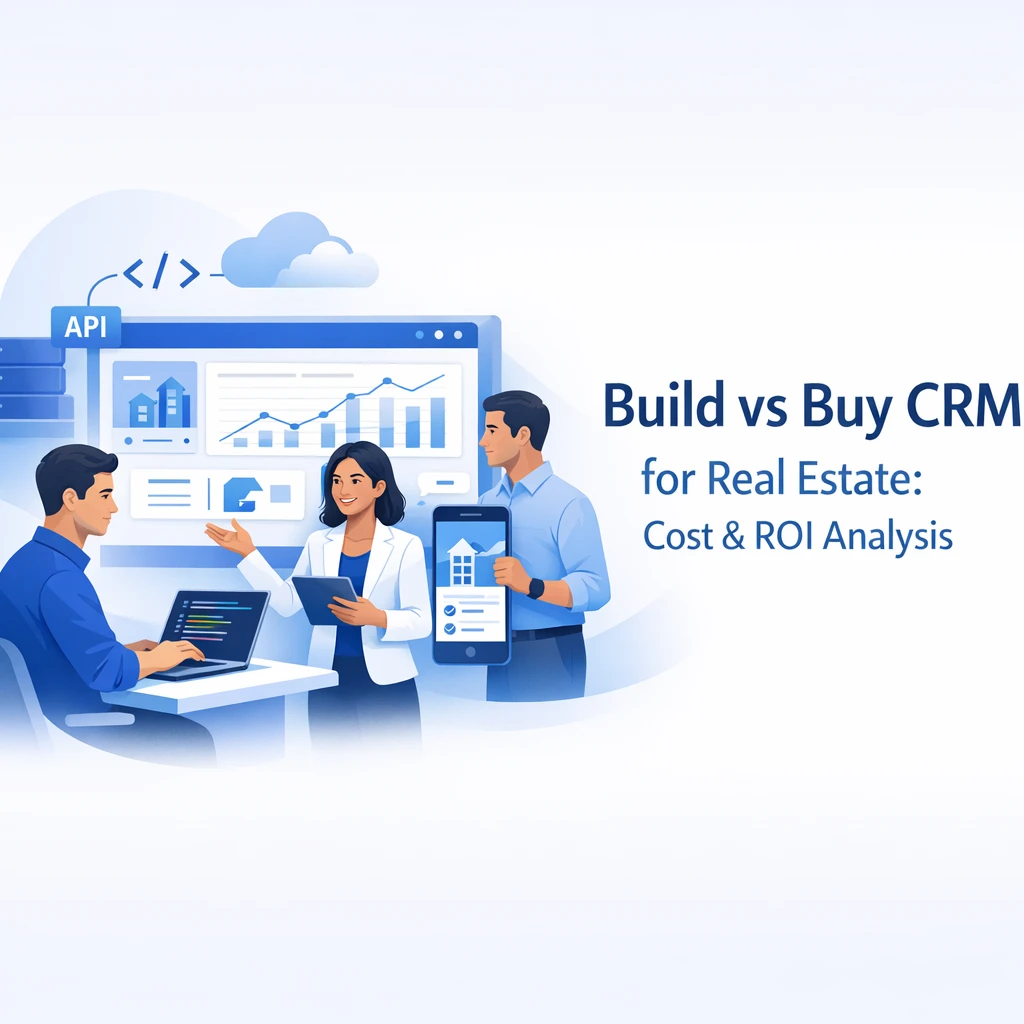
Real estate markets in Dubai and the wider Middle East have evolved rapidly. Firms that manage property sales, leasing, asset management, and investor relations increasingly rely on CRM systems to drive lead capture, pipeline visibility, and post-close service. The question for many executives is simple: should we build a custom CRM tailored to our unique processes, or buy an off-the-shelf CRM and customize it over time? This article offers a practical, data-driven framework to evaluate build vs buy decisions specific to real estate in Dubai and similar markets, with a long-term ROI lens.
What is the Topic?
A CRM (Customer Relationship Management) system helps a real estate organization manage people, properties, activities, and transactions across the lifecycle from prospect to tenant or buyer and beyond. The choice between building a custom CRM or purchasing an existing platform hinges on factors like domain fit, speed to value, integration needs, compliance, data governance, and total cost of ownership (TCO).
In practice, many Dubai-based real estate players start with a commercial CRM and iterate with custom modules. Others pursue a fully bespoke platform to reflect complex leasing models, multi-unit portfolios, or developer-led sales processes. The core idea is to align the system with how your teams work—whether you focus on villa portfolios, high-rise leasing, mixed-use developments, or commercial real estate—and to do so with an eye on long-term ROI rather than one-off features.
Why it Matters in 2026
Dubai’s real estate ecosystem is data-driven and highly competitive. Buyers and tenants expect fast responses, accurate property data, and proactive service. Regulatory considerations, privacy laws, and cross-border investment add complexity to data management. As teams scale, manual processes become bottlenecks. A well-architected CRM—whether built or purchased—can deliver:
- Unified client and property data across sales, leasing, and asset management.
- Consistent customer journeys with automation for lead nurturing, appointment scheduling, and post-sale support.
- Seamless integrations with ERP, accounting, property management systems, MLS-like listing sources, and marketing tools.
- Actionable insights through dashboards, KPIs, and AI-driven recommendations for pricing, occupancy forecasts, and deal velocity.
For many firms, the goal is not just a CRM, but a scalable platform that grows with the portfolio and adapts to evolving regulatory and market conditions across Gulf countries, Europe, North America, and Asia Pacific.
Current Industry Challenges
Companies in the real estate sector face a distinct set of challenges when it comes to CRM and data management:
- Data fragmentation: Leads, property data, tenant records, and maintenance tickets live in siloed systems or scattered spreadsheets.
- Complex deal structures: Sales pipelines may involve off-plan units, joint ventures, and multiple closing events, requiring flexible workflows.
- Lease and asset management integration: Lease workflows, renewal notices, and occupancy costs must align with property accounting and facilities management.
- Multi-channel engagement: Leads come from portals, social media, email, and walk-ins; tracking attribution is essential.
- Regulatory and privacy compliance: Data handling must comply with UAE data protection norms and international standards when dealing with cross-border investors.
- Remote and distributed teams: Agencies and developers operate across regions, demanding robust collaboration and governance.
These realities push many real estate firms to weigh not just feature lists, but also data strategy, data quality, and future-proofing against evolving technology stacks.
How the Technology Works
CRM for real estate usually covers a few core domains:
- Contact and lead management: People, buyers, tenants, and investors, with touchpoints and communications history.
- Property and portfolio management: Listings, floor plans, unit types, occupancy status, and performance metrics.
- Deal and lease workflows: Pipeline stages, approvals, documents, and closing tasks.
- Marketing automation: Email campaigns, property alerts, and nurturing sequences tied to property events or stages.
- Document management: Agreements, disclosures, and certificates stored with consent and security controls.
- Analytics and reporting: Market trends, closing velocity, occupancy rates, and revenue forecasting.
- Integrations: ERP/accounting, property management platforms, marketing tools, and external listing feeds.
Whether you buy or build, the architecture typically involves a central CRM core with APIs that connect to downstream systems, data warehouses for analytics, and front-end experiences for desktops and mobile devices. The right approach depends on your data model, process complexity, and the pace of change in your market segment.
Architecture Overview
Below is a representative architecture pattern for a CRM tailored to real estate, suitable for both build and buy-plus-customize approaches. The goal is a modular, scalable stack that supports multi-region deployments and secure data sharing across departments and partners.
Mermaid Diagram: Workflow
Mermaid Diagram: Deployment
Step-by-Step Workflow
- Discovery and scoping: Map current processes for lead capture, property data, and post-sale service. Identify data quality gaps and integration needs with ERP and property management systems.
- Architecture and data model: Define entities (Contacts, Properties, Deals, Leases, Tasks) and relationships. Establish data governance, access controls, and privacy considerations for multi-region users.
- Selection path: Decide phased approach: start with core CRM, then add property management, leasing, or asset modules. Plan for data migration and data cleansing early.
- Implementation plan: If building, design modular services; if buying, map required customizations and integration points.
- Integrations: Connect to ERP, accounting, marketing platforms, listing feeds, and document repositories. Use standard APIs to minimize one-off integrations.
- Testing and security: Conduct rigorous QA, penetration testing, and privacy reviews. Ensure backups and disaster recovery are in place.
- Rollout and training: Start with pilot teams, gather feedback, and scale. Provide role-based dashboards and mobile experiences for on-site agents and property managers.
- Optimization: Use analytics to refine workflows, automate repetitive tasks, and enhance lead-to-close times.
Business Use Cases
Real estate firms benefit from CRM implementations in several concrete ways. Here are a few representative use cases with practical implications:
- Lead-to-appointment acceleration: Capture inquiries from portals and social channels, qualify them automatically, and schedule property viewings with calendar integrations.
- Multi-property portfolio management: Track performance across residential, commercial, and mixed-use assets with centralized leasing and occupancy data.
- Off-plan and secondary market sales: Manage staged releases, pricing bands, and investor communications within a single pipeline.
- Lease lifecycle management: Renewal notices, rent escalations, maintenance requests, and move-in/move-out workflows integrated with facilities management.
- Marketing and client nurturing: Segment buyers and tenants, send personalized property alerts, and automate post-closing engagement for referrals and retention.
Industry Applications
Dubai and the Gulf region have specific industry dynamics that CRM can address beyond generic CRM capabilities:
- RERA-compliant documentation: Stored contracts, disclosures, and approvals with traceable approvals and expiry alerts.
- Investment-grade reporting: Portfolio-wide ROI metrics, occupancy forecasting, and capital expenditure tracking for developers and asset managers.
- Cross-border investment: Multi-currency and multi-language support for international buyers and investors.
- Channel partnerships: Collaboration with brokers, developers, and financial institutions via role-based access and partner portals.
Benefits
Key benefits for Dubai real estate players considering CRM are:
- Faster time-to-value: Ready-to-use sales and leasing processes reduce onboarding time for teams entering new markets.
- Data consistency and quality: A central source of truth improves decision-making for pricing, marketing spend, and asset strategy.
- Improved customer experience: Faster response times and tailored communications improve conversion and retention.
- Scalability and flexibility: The ability to add modules (e.g., ERP integration or AI-assisted pricing) as the business grows.
Challenges
Despite the benefits, organizations face several challenges when pursuing build or buy CRM projects:
- Upfront scope misalignment: Over-ambitious scope can lead to delays and budget overruns, especially in bespoke builds.
- Data migration risk: Dirty or incomplete data can cripple the new system’s value if not addressed early.
- Change management: User adoption hinges on training, governance, and executive sponsorship.
- Ongoing maintenance: Custom solutions require ongoing support, security updates, and feature parity with market changes.
Common Mistakes
Avoid these frequent missteps when evaluating build vs buy for real estate CRM:
- Underestimating data work: Jumping into automation without data cleansing and standardization.
- Ignoring integration complexity: Overlooking how the CRM will connect to ERP, accounting, and property management systems.
- Over-customization: Building heavily customized workflows that hinder upgradeability and create vendor lock-in (if buying).
- Skipping a phased approach: Launching a full-scale system without pilot programs or change management plans.
Best Practices
To maximize ROI, follow these practical best practices:
- Define a clear value proposition and KPIs: Identify target improvements (e.g., lead-to-close time, data quality, churn rate) and tie them to the program.
- Phased implementation: Start with core CRM features, prove value, then add leasing, asset management, and analytics modules.
- Data governance from day one: Establish data ownership, quality rules, and lifecycle management across regions.
- Choose the right deployment model: Decide between on-prem, cloud, or hybrid based on compliance, latency, and cost considerations.
- Plan for scale and future-proofing: Use modular architectures and API-first design to accommodate new integrations and AI features.
Build vs Buy Comparison
For real estate firms in Dubai and similar markets, the decision hinges on total cost of ownership, speed to value, and strategic fit. The table below summarizes key considerations.
| Factor | Build | Buy | Dubai/MAE Considerations |
|---|---|---|---|
| Time to value | Longer (6–18+ months depending on scope) | Shorter (weeks to a few months for core capabilities) | Market tempo favors faster wins; phased build may work for differentiation |
| Customization depth | High, tailored to exact processes | Limited to vendor roadmaps; customization possible but costly | Real estate workflows often require bespoke leasing, approvals, and compliance logic |
| Data quality control | Full control but heavy lifting required | Standardized data models with migration effort | Critical to unify property data, tenant data, and financial data |
| Cost certainty | Capex with unknown overrun risk | Opex with predictable licensing and maintenance | Budget discipline important in multi-region deployments |
| Maintenance & upgrades | In-house or custodian team required | Vendor-managed; potential upgrade friction | Consider regulatory updates and regional compliance changes |
| Time zone & talent | Local or nearshore talent required | Access to global talent pool; remote delivery options | Cross-border teams can accelerate delivery but require governance |
Ultimately, many firms adopt a hybrid approach: core CRM purchase for speed, with bespoke modules or integrations built in-house or via a trusted partner to address very domain-specific needs.
Estimated Development Cost
Understanding cost ranges helps frame decision-making for SMBs, SMEs, startups, and established real estate brands alike. The following ranges reflect the relative scale of typical CRM efforts and related components. All figures are USD and indicative, not contractual.
| Component | Typical Range (USD) | Notes |
|---|---|---|
| Business Website | 5k–15k | Responsive site; basic lead forms; branding integration |
| Customer Portal | 10k–40k | Authenticated access; property search; document sharing |
| CRM | 15k–100k | Core CRM plus basic automation; integrations |
| ERP | 40k–200k | Finance, procurement, leasing accounting |
| AI Chatbot | 5k–25k | Rule-based to assist agents or end-users |
| AI Automation | 15k–80k | Workflow automation, property pricing heuristics |
| SaaS MVP | 20k–80k | Minimal viable product for multi-tenant SaaS |
| Enterprise Web App | 30k–200k | Large, multi-region deployments with advanced integrations |
Pricing factors: scope clarity, data migration complexity, integration depth, security/compliance requirements, user training, ongoing support, and regional localization (language, currencies, tax rules). For Dubai and GCC markets, compliance with data privacy and cross-border data transfer rules can influence architecture (on-prem vs cloud, data residency options) and total cost.
Recommended Technology Stack
Choosing a stack depends on whether you build or buy. A practical, robust option set for a blended approach might include:
- Frontend: React or Vue for web; React Native or Flutter for mobile.
- Backend: Node.js (NestJS) or Java (Spring) for scalable APIs; microservices where required.
- Database: PostgreSQL for transactional data; Redis for caching; Data warehouse (Snowflake or BigQuery) for analytics.
- Authentication & Security: OAuth2, OpenID Connect, MFA, encryption at rest and in transit.
- Integrations: RESTful APIs, GraphQL, and message queues (Kafka or RabbitMQ) for event-driven workflows.
- Cloud & DevOps: AWS or Azure with CI/CD (GitHub Actions, GitLab CI), containerization (Docker), orchestration (Kubernetes), and IaC (Terraform).
- AI/Automation: AI services for chat, predictive analytics, and process automation; MLOps practices for model deployment and monitoring.
Triostack often recommends a pragmatic approach: start with a solid, secure core CRM using well-supported cloud services, then layer in industry-specific modules (leasing, asset management) either via vendor extensions or custom microservices. This enables faster delivery, smoother upgrades, and better risk management.
Future Trends
As markets evolve, CRM for real estate will continue to blend data science with workflow automation. Expect:
- AI-assisted pricing and forecasting: Data-driven models to optimize rental rates and investment decisions.
- Conversational interfaces: Voice and chat assistants to handle inquiries, appointment scheduling, and document requests.
- Advanced analytics: Real-time dashboards that combine market data, property performance, and marketing attribution.
- Enhanced security and governance: Zero-trust models, privacy-first data handling, and cross-border compliance support.
How Triostack Delivers Projects Globally
Triostack Technologies operates as a global software partner with a focus on building scalable, secure, and maintainable software products. We collaborate with clients across time zones to deliver value quickly while maintaining high quality. Our experience spans custom software, web/mobile development, AI development, CRM/ERP systems, cloud migration, DevOps, UI/UX, API development, dedicated teams, QA, maintenance, and technical consulting.
Key capabilities include:
- End-to-end product architecture and implementation planning
- Hybrid delivery models (onshore, nearshore, offshore) tailored to client needs
- Agile practices with transparent governance and reporting
- Security-first engineering and regulatory compliance
- Long-term support and continuous improvement programs
Remote Delivery: Why UAE Businesses Outsource Development to India
Triostack has a dedicated model for remote delivery from India, designed to maximize collaboration, speed, and quality while meeting regional requirements. The approach emphasizes disciplined governance, flexible scaling, and strong communication.
Agile, with Discipline
- Sprint Planning: Bi-weekly or monthly planning sessions aligned with business priorities and milestones.
- Weekly Demos: Demonstrations of shippable increments to ensure alignment and early feedback.
- Tools: Slack, Teams, Zoom, Google Meet for daily stand-ups and collaboration.
- Project Management: Jira or ClickUp to manage backlogs, tasks, and progress metrics.
DevOps and Quality Assurance
- CI/CD: GitHub, GitLab for version control; automated builds and tests; cloud staging environments for pre-production validation.
- QA: Rigorous testing cycles, including functional, integration, performance, and security testing.
- Documentation and Security: Comprehensive technical docs, secure coding practices, and NDA/IP ownership protections.
Time Zone Overlaps and Communication
Strategic time zone overlap (e.g., UAE mornings with Indian teams’ daytime) enables productive daily touchpoints while maintaining asynchronous communication. English is used for documentation and communications, with clear escalation paths and status reporting at cadence that suits leadership in the UAE and GCC markets.
Dedicated Project Management and Long-Term Support
- Dedicated PMs: Transparent progress tracking, risk management, and stakeholder alignment.
- Long-term Support: Post-launch maintenance, feature upgrades, and security patches as part of a managed services model.
Why UAE Businesses Outsource to India
- Cost Efficiency: Significant labor-rate advantages without compromising quality.
- Large Talent Pool: Access to engineers with multi-domain expertise and scale-ready teams.
- Faster Hiring: Ability to assemble teams quickly and adapt to changing needs.
- Flexible Team Scaling: Ramp up or down to match project phases without re-negotiating contracts.
- High Quality Engineering: Focused on enterprise-grade security and robust architecture.
- Strong Communication: Structured collaboration, regular updates, and clear SLAs.
Case Studies (Anonymized)
Below are anonymized, realistic examples demonstrating how build-vs-buy decisions manifest in different real estate contexts. Company names and quantitative metrics are intentionally kept out to protect confidentiality, but these scenarios reflect common patterns and outcomes.
Dubai-based logistics company (anonymized)
Challenge: Fragmented lead and property data across logistics hubs, with a need to integrate fleet assets, warehousing capacity, and client orders into a single interface for sales and operations teams.
Approach: Purchased core CRM for contact and opportunity management; built a custom module to manage property-related logistics contracts and asset allocations. Integrated with existing ERP and a parcel-tracking system.
Outcome (qualitative):
- Improved cross-team visibility into client incentives and occupancy planning.
- Faster collaboration between sales, operations, and finance due to shared dashboards and documented workflows.
- Greater consistency in data, enabling more accurate forecasting of capacity and revenue.
UAE healthcare clinic (anonymized)
Challenge: Difficulties coordinating patient engagement, property-managed spaces for clinics, and contracts for facility leases across multiple sites.
Approach: Implemented a CRM with patient/tenant relationships, scheduling, and reminders; integrated with an electronic health records (EHR) subset for appointment management and consent management, plus a document portal for leases and facility agreements.
Outcome (qualitative):
- Streamlined patient communications and appointment flows; better occupancy planning for clinic spaces.
- Improved compliance tracking and easier retrieval of lease documents for audits.
Saudi retail business (anonymized)
Challenge: Managing high volumes of leads from multiple channels and aligning them with a portfolio of retail spaces and mall leases.
Approach: Selected a CRM with strong marketing automation, built a lightweight property management extension, and integrated with payment systems for security deposits and rent collections.
Outcome (qualitative):
- Better lead attribution and faster response times across channels.
- Increased visibility into leasing pipelines and portfolio performance by property type.
Australian startup
Challenge: Early-stage scale with onboarding across regions, including international investor relations and property listings in multiple currencies.
Approach: Built a lean CRM with multi-currency support, investor portal, and automated onboarding workflows; leveraged a vendor-supported AI assistant for inquiries and document requests.
Outcome (qualitative):
- Faster investor onboarding, standardized processes, and a single source of truth for customers and properties.
UK SaaS company
Challenge: Real estate customers using the product wanted integrated CRM features to manage customer accounts and property-based usage metrics in a centralized way.
Approach: Adopted an enterprise CRM with API-first architecture, added a property data model, and connected to marketing automation to accelerate onboarding campaigns.
Outcome (qualitative):
- Improved retention and adoption of the CRM as part of the go-to-market program for property clients.
Pricing and Cost Factors for SMBs
For SMBs, the decision often hinges on viable cost ranges that balance capability with cash flow. The typical ranges above provide a framework. When budgeting, consider:
- Licensing vs ownership: Ongoing licensing fees for bought solutions vs. capital expenditure for a build.
- Data migration and cleansing: Initial data quality work is critical; you may underestimate this cost if migrating from many legacy systems.
- Integrations: The cost of connecting to ERP, accounting, and property management platforms can be substantial and should be scoped early.
- Security and compliance: UAE and GCC markets impose regulatory expectations that may require additional controls and audits.
- Change management: Training, user adoption programs, and governance structures are essential to realize ROI.
Future Trends
For real estate CRM, keep an eye on these developments that can influence ROI and long-term viability:
- AI-assisted forecasting: Predictive models help with pricing, occupancy, and capacity planning.
- AI-enabled client engagement: Conversational agents to answer inquiries, schedule tours, and collect feedback.
- Data mesh and cross-region analytics: Distributed data architecture for better insights across GCC and international markets.
- Security-first, privacy-by-design: Increased emphasis on data residency, encryption, and access controls.
How Triostack Delivers Projects Globally
Triostack Technologies combines global delivery capabilities with domain knowledge in real estate, CRM, ERP, and cloud-native development. We help clients design, build, deploy, and maintain scalable software solutions that align with business goals.
Whether you choose a build, a buy, or a hybrid approach, Triostack offers:
- Custom Software and Web Development
- Mobile Apps and AI Development
- CRM and ERP Implementations
- SaaS, Cloud Migration, and DevOps
- UI/UX design, API Development, and Dedicated Teams
- QA, Maintenance, and Technical Consulting
Why Businesses Choose Triostack
Real-world clients choose Triostack for a combination of practical engineering excellence, collaborative delivery, and a focus on outcomes. We emphasize not just building software, but building the right software—prioritizing architecture, security, maintainability, and measurable ROI. Our approach centers on collaboration, transparency, and long-term partnerships rather than one-off projects.
Conclusion
For real estate companies in Dubai, the decision to build or buy a CRM is not just about initial costs. It is about long-term strategic fit, data quality, and the ability to scale across markets and regulatory environments. A thoughtful mix of off-the-shelf capabilities with domain-specific customization—delivered through a trusted partner like Triostack—can compress time-to-value while preserving flexibility for future needs. By focusing on architecture, data governance, and phased delivery, you can achieve compelling ROI and a CRM that grows with your portfolio.
If you’re planning a similar software project, Triostack can help you design, build, deploy and maintain a scalable solution that meets regulatory requirements, aligns with your business processes, and supports multi-region growth.
Frequently Asked Questions
- What is the biggest ROI lever in a CRM project for real estate?
- Reducing lead-to-close cycle time and improving data quality to enable better pricing, marketing attribution, and asset management.
- How long does it typically take to implement a CRM for a mid-market real estate firm?
- Core CRM capabilities can deploy in weeks to months when buying; bespoke modules or full builds can extend to several months up to a year depending on scope.
- Should we consider a hybrid approach?
- Yes. A hybrid approach often balances speed with domain-specific customization, reducing risk and enabling rapid value realization.
- What about data residency and regulatory compliance?
- Plan for data sovereignty and privacy controls from the outset. Cloud providers and hosting options can be selected to meet local requirements.
- How does Triostack support ongoing maintenance?
- We offer dedicated teams, managed services, and long-term support including security updates, feature enhancements, and performance optimization.
Internal Links and Next Steps
Interested in learning more about how Triostack can tailor a CRM strategy for your property portfolio? Explore our Custom Software, Web Development, and AI Development practices. If you’re ready to discuss a pilot project, contact our team for a discovery session.
CTAs (Subtle)
Businesses planning similar solutions often benefit from experienced software development partners like Triostack Technologies. If you’re evaluating build, buy, or hybrid CRM strategies for real estate in the UAE or beyond, a structured, collaborative engagement can help you design, build, deploy, and maintain a scalable solution.
Triostack can help you design, build, deploy and maintain a scalable solution.
Triostack Team
Technology Evangelist & Writer
Triostack Team is an experienced writer and technologist, exploring the intersections of AI, cloud architecture, and modern application development. Passionate about turning complex technical concepts into accessible insights.