Build vs Buy CRM Software for Growing Businesses in Dubai: Cost Analysis, ROI, and When Custom Development Wins
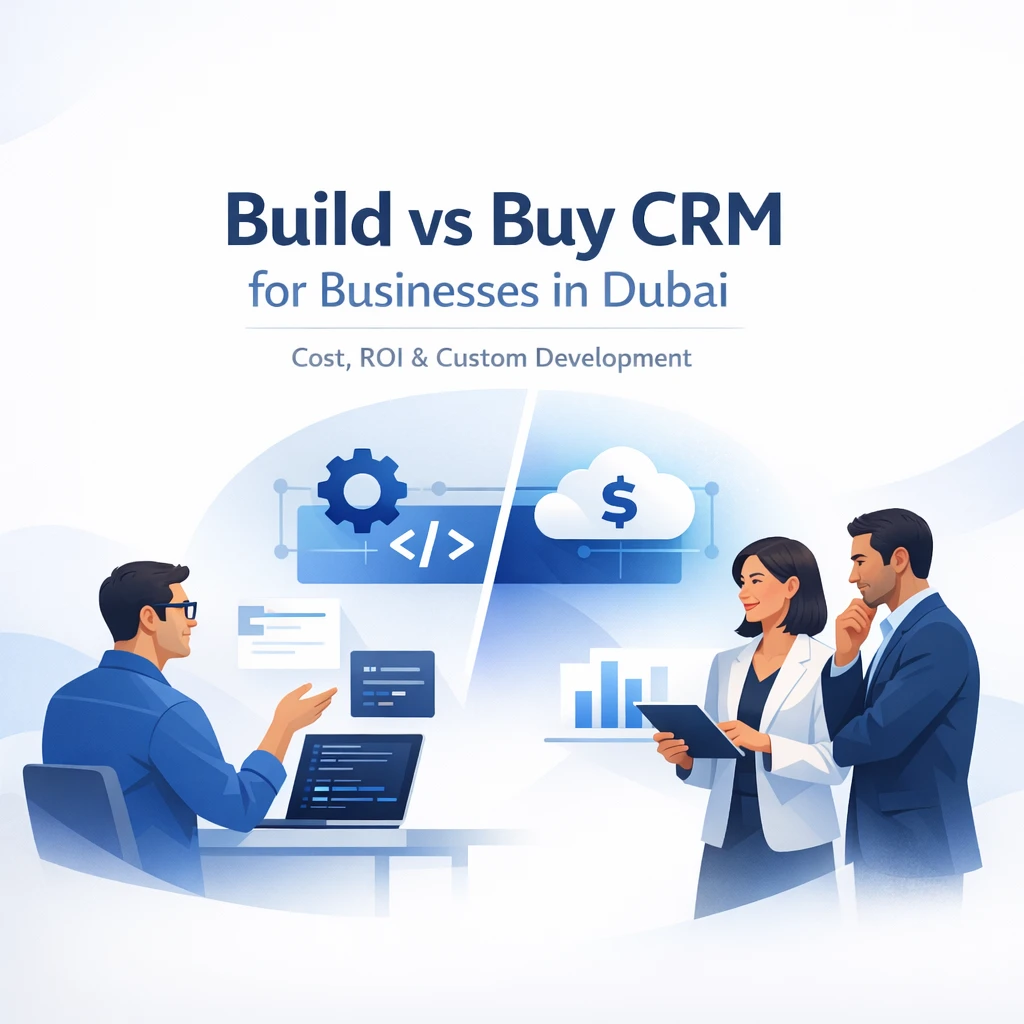
In the dynamic markets of Dubai, UAE and the broader Gulf region, growing businesses face a pivotal technology decision: should they build a custom CRM platform from scratch or buy an off-the-shelf solution and tailor it over time? The choice impacts not only budget, but time-to-value, data governance, regulatory compliance, and competitive differentiation. This long-form guide unpacks the economics, the practicalities, and the scenarios where custom development shines — with real-world insights from Triostack Technologies, a global software partner that helps firms design, build, deploy, and maintain scalable CRM and enterprise systems.
What is the Topic?
The Build vs Buy decision for CRM software is about choosing between constructing a bespoke solution tailored to a company’s exact processes (build) and selecting a ready-made CRM product that covers common sales, marketing, and service workflows (buy). A CRM (Customer Relationship Management) system centralizes customer data, automates interactions, tracks opportunities, and provides insights through analytics. When a business grows, the way it manages customer data, streamlines operations, and integrates with other systems becomes critical. A core consideration is total cost of ownership (TCO) over time, not just the upfront price tag.
Triostack Technologies helps clients in Dubai and across the GCC, plus the US, UK, Europe, and Australia, evaluate requirements, design scalable architectures, and implement CRM strategies that balance speed, flexibility, and control. Our approach blends domain expertise with engineering rigor, ensuring a CRM that evolves with your business—without sacrificing reliability or security.
Why it Matters in 2026
CRM platforms are no longer monolithic repositories of contacts. They are engines for growth, orchestrating sales funnels, marketing campaigns, service desks, and data governance. Key 2026 trends include:
- AI-powered CRM: GenAI-assisted insights, next-best-action recommendations, and automated data enrichment accelerate decision-making.
- Data residency and privacy: Dubai-based and GCC data localization requirements push for compliant hosting and robust access controls.
- API-first architectures: Seamless integrations with ERP, e-commerce, logistics, and financial systems are non-negotiable.
- Low-code growth: Citizen developers and professional developers share responsibilities for rapid customization while maintaining governance.
- Remote teams and global delivery: Firms increasingly balance cost efficiency with high-quality engineering by collaborating with distributed teams.
In this context, deciding between building and buying depends on your strategic priorities: speed to market, exact fit to unique processes, control over data and security, and the ability to scale with the business. Triostack helps clients map these priorities to concrete delivery plans.
Current Industry Challenges
Growing businesses in Dubai and the wider region face several CRM-related hurdles:
- Fragmented data: Customer data sits in silos across marketing platforms, POS systems, and service channels, reducing visibility and decision speed.
- Regulatory complexity: Data privacy and local hosting requirements demand careful architecture and contracts.
- Customization vs maintenance trade-offs: Off-the-shelf CRMs offer features, but substantial customization can lead to upgrade friction and technical debt.
- Scale and performance: As the customer base grows, performance, data integrity, and reporting become critical constraints.
- Security and governance: Access controls, audit trails, and secure integrations are essential for regulated industries like healthcare and logistics.
How the Technology Works
A CRM system is typically composed of modules for sales, marketing, service, and analytics, connected through a centralized data model. A modern CRM architecture typically includes:
- API-driven services: RESTful or GraphQL APIs enable integrations with ERP, e-commerce, logistics, and billing systems.
- Microservices or modular monoliths: Either approach supports independent scaling and maintainability.
- Data layer and identity: A unified customer profile with a robust data model, identity management, and consent handling.
- AI and automation: Predictive analytics, next-best-action, and workflow automation powered by AI models.
- Security and compliance: Encryption at rest and in transit, role-based access, auditing, and compliance with local laws.
Triostack emphasizes a pragmatic balance: start with a solid core, then incrementally add custom modules that address unique cross-functional processes—while keeping the platform upgradeable and secure.
Architecture Overview
Below is a representative reference architecture suitable for Dubai-based deployments that require data locality, performance, and extensibility. The architecture accommodates core CRM capabilities while enabling integrations with ERP, logistics, and analytics platforms.
This architecture supports multi-region deployments, role-based access control, and secure data exchange. Triostack often provisions cloud-native deployments on Azure, AWS, or GCP, with data residency configurations for UAE markets.
Step-by-Step Workflow
- Discovery & Requirements: Document processes, pain points, and regulatory constraints. Prioritize use cases that deliver measurable value within 90 days.
- Vendor Evaluation (for Buy): Compare core capabilities, integration readiness, data security, and cost of ownership. For Build, define the scope and milestones clearly.
- Architectural Design: Create a data model, integration map, and security controls. Plan for scale and data governance.
- Prototype / MVP: Validate critical journeys (e.g., lead capture to opportunity closure) with stakeholders.
- Development & Customization: Build modules, workflows, and integrations. Use iterative sprints with frequent feedback loops.
- Quality Assurance & Security: Perform functional testing, performance testing, and security reviews. Obtain necessary licenses and NDAs.
- Deployment & Data Migration: Cutover plan, data migration, and go-live readiness checks. Establish rollback procedures.
- Adoption & Training: User onboarding, change management, and governance policies to maximize value realization.
- Maintenance & Evolution: Monitoring, upgrades, and continuous improvement through analytics-driven iterations.
Business Use Cases
- Lead to Opportunity Automation: Capture inquiries from multiple channels and route them to the right territory, with automated scoring and assignment.
- Case Management & SLA Tracking: Fast-response service, automation of ticket routing, and escalation to maintain agreed service levels.
- Account & Contact Management: 360-degree views of customers, including transaction history, support interactions, and preferences.
- Quoting, Invoicing & Revenue Recognition: Seamless quotes, contract management, and reconciliation with ERP systems.
- Analytics & Forecasting: Pipeline analytics, revenue forecasting, and cohort analysis by region (e.g., UAE vs global markets).
Industry Applications
Different sectors benefit from CRM customization in distinct ways. Examples:
- Logistics & Transportation (Dubai): Customer and courier management, rate negotiation histories, SLA adherence dashboards, and integration with fleet management.
- Healthcare (UAE): Patient engagement, appointment scheduling, medical billing, and privacy-compliant data handling.
- Retail & Consumer Goods (Saudi Arabia, GCC): Omnichannel customer journeys, loyalty programs, and cross-sell/up-sell analytics.
- Tech Startups (Australia, UKE): Rapid MVP development, scalability testing, and integration with modern SaaS stacks.
Benefits of Build vs Buy CRM for Growing Businesses
- Strategic fit: Custom modules align with unique business processes and regulatory needs.
- Control and governance: Better data governance, security models, and compliance with UAE and GCC norms.
- Competitive differentiation: Features designed specifically for your industry and workflows.
- Long-term cost considerations: Though initial costs can be higher, total cost of ownership can be lower when requirements are stable and high customizability is needed.
Challenges
- Scope creep: Custom development invites shifting requirements; strong governance helps control this.
- Data migration risk: Moving legacy data without loss requires careful mapping and validation.
- Maintenance burden: Custom systems require ongoing support and updates to stay current with security patches.
- Vendor lock-in (for Buy): Dependency on a vendor’s roadmap and licensing terms.
Common Mistakes
- Underestimating data governance and privacy requirements in the planning phase.
- Neglecting change management; users need training and incentives to adopt new workflows.
- Choosing a solution solely on features without evaluating integrations and data quality.
- Overcomplicating the initial scope; start with a lean MVP and iterate.
Best Practices
- Define a clear data model: Standardize entities, fields, and relationships before integrating systems.
- Prioritize integrations: Map core integrations first (ERP, billing, marketing automation) to unlock value quickly.
- Phased delivery with measurable milestones: Use MVPs to validate ROI and adjust scope as needed.
- Invest in change management: Training, governance, and executive sponsorship drive adoption.
- Security as a first principle: Encrypt sensitive data, implement least privilege, and establish incident response plans.
Build vs Buy Comparison
| Factor | Build | Buy |
|---|---|---|
| Time to value | Longer (requirements -> architecture -> development) | Faster (core features ready, customization later) |
| Customization | Fully customizable to fit unique processes | Limited customization, depends on vendor roadmaps |
| Ownership & control | Full control over data models, security, and compliance | Vendor-managed with potential data portability concerns |
| Maintenance burden | In-house or outsourced; ongoing updates required | Vendor handles major updates; customization may complicate upgrades |
| Time-to-scale | Depends on team size and velocity | Often scalable quickly via configuration and integrations |
| Security & compliance | Tailored controls aligned to local laws | Depends on vendor security posture; requires diligence |
| Total cost of ownership (TCO) | Capex + Opex; potential long-term savings if well scoped | Opex; predictable budgeting; potential higher customization costs |
Estimated Development Cost
Costs vary by scope, region, and team composition. The ranges below reflect typical SMB projects that aim to implement core CRM capabilities with moderate customization. All figures are USD and illustrative.
| Software Category | Typical Range (USD) |
|---|---|
| Business Website | 5,000 – 15,000 |
| Customer Portal | 10,000 – 40,000 |
| CRM | 15,000 – 100,000 |
| ERP | 40,000 – 200,000 |
| AI Chatbot | 5,000 – 25,000 |
| AI Automation | 15,000 – 80,000 |
| SaaS MVP | 20,000 – 80,000 |
| Enterprise Web App | 30,000 – 200,000 |
Factors driving these costs include scope breadth, data migration complexity, regulatory requirements, security and compliance needs, cloud hosting choices, integrations, and the level of custom workflow automation. Triostack works with clients to tailor budgets that align with expected ROI and cadence of delivery.
Recommended Technology Stack
A pragmatic stack emphasizes API-first design, security, and scalability. A typical build for Dubai-based CRM projects includes:
- Frontend: React or Next.js for responsive, data-rich UIs
- Backend: Node.js, Spring Boot, or .NET for robust services
- Database: PostgreSQL or MySQL for relational data, with Redis for caching
- APIs & Integration: REST & GraphQL, with event-driven messaging (Kafka, RabbitMQ)
- AI & Data: Python-based ML models, integrated with data pipelines
- Cloud & DevOps: AWS / Azure / GCP, Terraform for IaC, CI/CD pipelines
- Security & Compliance: OAuth2, OpenID Connect, JWT, data encryption at rest/in transit
- CRM Modules: Sales, Marketing, Service, Analytics, and a modular extension framework
Triostack tailors stack choices to your domain, regulatory requirements, and preferred cloud regions, ensuring performance and reliability across the GCC, the US, Europe, and beyond.
Future Trends
- GenAI-assisted CRM: Automated data entry, smart routing, and AI-generated insights for faster decisions.
- Integrated analytics: Real-time dashboards that fuse CRM data with ERP, supply chain, and finance data.
- Adaptive workflows: Workflows that adjust based on user behavior and business outcomes.
- Data sovereignty: Regional hosting strategies that meet local compliance without compromising speed.
How Triostack Delivers Projects Globally
Triostack operates with a global delivery model, combining lean, outcome-focused practices with the scale of an experienced engineering organization. We align teams across time zones to optimize productivity and quality.
Remote Delivery from India: A Practical Framework
We emphasize collaboration, transparency, and governance. Our approach includes:
- Agile — iterative sprints with defined goals and frequent stakeholder feedback.
- Sprint Planning — organized planning sessions to align priorities and resource loading.
- Weekly Demos — show progress, gather feedback, and adjust backlogs.
- Communication Tools — Slack, Teams, Zoom, Google Meet for daily coordination.
- Project Management — Jira or ClickUp to track work, issues, and milestones.
- Version Control — GitHub or GitLab for source management; code reviews and approvals ensure quality.
- CI/CD & Cloud Staging — automated build, test, and deployment with staging environments for validation.
- QA & Security — dedicated QA teams and security audits for every release.
- Documentation — comprehensive docs for onboarding, maintenance, and knowledge transfer.
- NDAs & IP Ownership — clear contractual terms to protect client IP and confidential information.
- Timezone Overlap & Communication — scheduled overlap windows to ensure real-time collaboration with UAE, GCC, and global clients.
- Dedicated Project Managers — accountable leadership to drive delivery, risk management, and client liaison.
- Long-term Support — post-release maintenance and optimization commitments.
Why UAE businesses outsource development to India is driven by several practical considerations: cost efficiency, a large talent pool with strong engineering rigor, faster hiring cycles, flexible team scaling, high-quality engineering, and robust communication practices that keep projects on track despite geographic distances.
Case Studies
The following scenarios illustrate how a Build vs Buy decision and a thoughtful delivery approach deliver value across regions. All examples are illustrative and intended to highlight typical outcomes rather than proprietary data.
Case Study 1: Dubai-based Logistics Company
Challenge: A growing Dubai logistics company needed a CRM that could surface real-time shipment status, automate customer communications, and integrate with a fleet management system. They sought a phased implementation to minimize disruption to operations.
Approach: Triostack designed a modular CRM with modules for lead management, order tracking, customer service, and an integration layer for the fleet system and billing. A lean MVP demonstrated improved visibility into shipments within 8 weeks, followed by iterative expansions every 6–8 weeks.
Outcomes: Improved on-time communication with customers, faster issue resolution, and better alignment between sales, operations, and customer service. The client achieved faster response times and improved data accuracy across channels.
Case Study 2: UAE Healthcare Clinic
Challenge: A private healthcare clinic needed patient engagement capabilities, appointment scheduling, and medical billing integration while complying with local privacy regulations.
Approach: A patient portal was built to manage appointments, consent, and reminders. The CRM core supported patient history, treatment plans, and revenue cycle management with secure role-based access.
Outcomes: Higher patient satisfaction, reduced no-shows through automated reminders, and streamlined billing processes with improved reconciliation.
Case Study 3: Saudi Retailer
Challenge: A regional retailer aimed to unify customer data across stores, e-commerce, and loyalty programs to enable omnichannel marketing and personalized offers.
Approach: A CRM tailored for loyalty management and cross-channel engagement, integrated with the retailer’s POS and marketing automation platform. We adopted an incremental rollout by region and channel.
Outcomes: Enhanced loyalty program participation, more effective targeted campaigns, and a unified view of the customer journey across touchpoints.
Case Study 4: Australian Startup
Challenge: A fast-growing Australian startup required an MVP CRM to test product-market fit and support rapid expansion to new markets with minimal risk.
Approach: Triostack delivered an MVP CRM on a lean timeline with core sales and analytics modules, followed by modular extensions for customer success and pricing engines.
Outcomes: Shorter time to first revenue, validated product-market fit, and a scalable backbone for future growth.
Case Study 5: UK SaaS Company
Challenge: A UK-based SaaS vendor needed to tailor its onboarding, billing, and analytics for a multi-region customer base while maintaining security and compliance across borders.
Approach: We implemented a hybrid CRM with regional data partitions, centralized analytics, and automated onboarding workflows.
Outcomes: Improved international onboarding times, compliance consistency, and clearer visibility into revenue across regions.
Roadmap, Costs & ROI Considerations
For SMBs considering CRM projects in the USD 5,000 to 200,000 range, a staged approach helps manage risk and maximize ROI. The following factors influence cost and ROI:
- Hosting & Infrastructure: Cloud region choices, redundancy, and compliance requirements.
- Change management: Training, user adoption strategies, and governance policies.
- Security & Compliance: Authentication, authorization, encryption, and audit trails.
- Team composition: In-house staff vs outsourced teams, roles, and skill levels.
ROI is typically realized through faster sales cycles, higher win rates, improved customer retention, and lower operational costs. Triostack helps quantify ROI through a structured benefits realization plan and a transparent milestone-driven delivery approach.
Frequently Asked Questions
How do I decide between build and buy for CRM?
Start with your core differentiators. If your processes are highly unique, compliance-heavy, or require deep integration with bespoke systems, building or heavily customizing may be advantageous. If you need speed to market, proven reliability, and predictable costs, buying with targeted customization can be optimal.
What phases are involved in a Dubai-focused CRM project?
Discovery, architecture design, MVP or pilot, phased delivery, data migration, testing, deployment, adoption, and ongoing maintenance. Security, compliance, and audit readiness are woven throughout.
How does Triostack ensure data security across borders?
We implement role-based access, encryption at rest and in transit, secure APIs, regular security reviews, and, where required, regional data residency configurations. NDAs and IP ownership terms protect client assets.
Can Triostack deliver CRM projects remotely from India?
Yes. Our globally distributed teams work with clients from Dubai, GCC, the US, UK, Europe, and beyond. We emphasize time-zone overlap, clear communication, and rigorous governance to deliver high-quality CRM systems remotely.
Next Steps
Businesses planning CRM initiatives in the UAE, GCC, or internationally often benefit from a partner who can balance speed, customization, and governance. Triostack Technologies offers advisory, design, development, and ongoing support for CRM, ERP, AI development, and cloud migrations. If you're planning a similar software project, Triostack can help you design, build, deploy and maintain a scalable solution.
Contact Triostack for a confidential consultation to explore options, timeline, and budget alignment for your CRM project.
REMOTE DELIVERY
Triostack delivers projects remotely from India with a disciplined, scalable approach that mirrors on-site delivery in Europe, the UAE, and North America. Our framework includes:
- Agile processes: Short sprints, backlog grooming, and continuous feedback.
- Weekly demos: Transparent progress and early risk identification.
- Communication channels: Slack, Teams, Zoom, Google Meet for daily and milestone conversations.
- Project management: Jira or ClickUp for issue tracking, milestones, and dependencies.
- Version control & CI/CD: GitHub or GitLab pipelines with automatic testing and deployment to cloud staging environments.
- Security & IP: NDA, data protection measures, and clear IP ownership terms.
- Dedicated PMs: Point-of-contact for accountability and risk management.
- Time zone overlap: Scheduling that ensures live collaboration with UAE and GCC teams where necessary.
Why UAE businesses outsource to India is pragmatic: cost efficiency, a large pool of skilled engineers, faster hiring cycles, flexible team scaling, and deep expertise in modern software engineering practices, combined with strong communication standards. Triostack leverages this model to help clients accelerate delivery without compromising quality.
Triostack Team
Technology Evangelist & Writer
Triostack Team is an experienced writer and technologist, exploring the intersections of AI, cloud architecture, and modern application development. Passionate about turning complex technical concepts into accessible insights.