AI Chatbot Pricing in Dubai for Real Estate, Healthcare, and Retail: What Businesses Should Budget
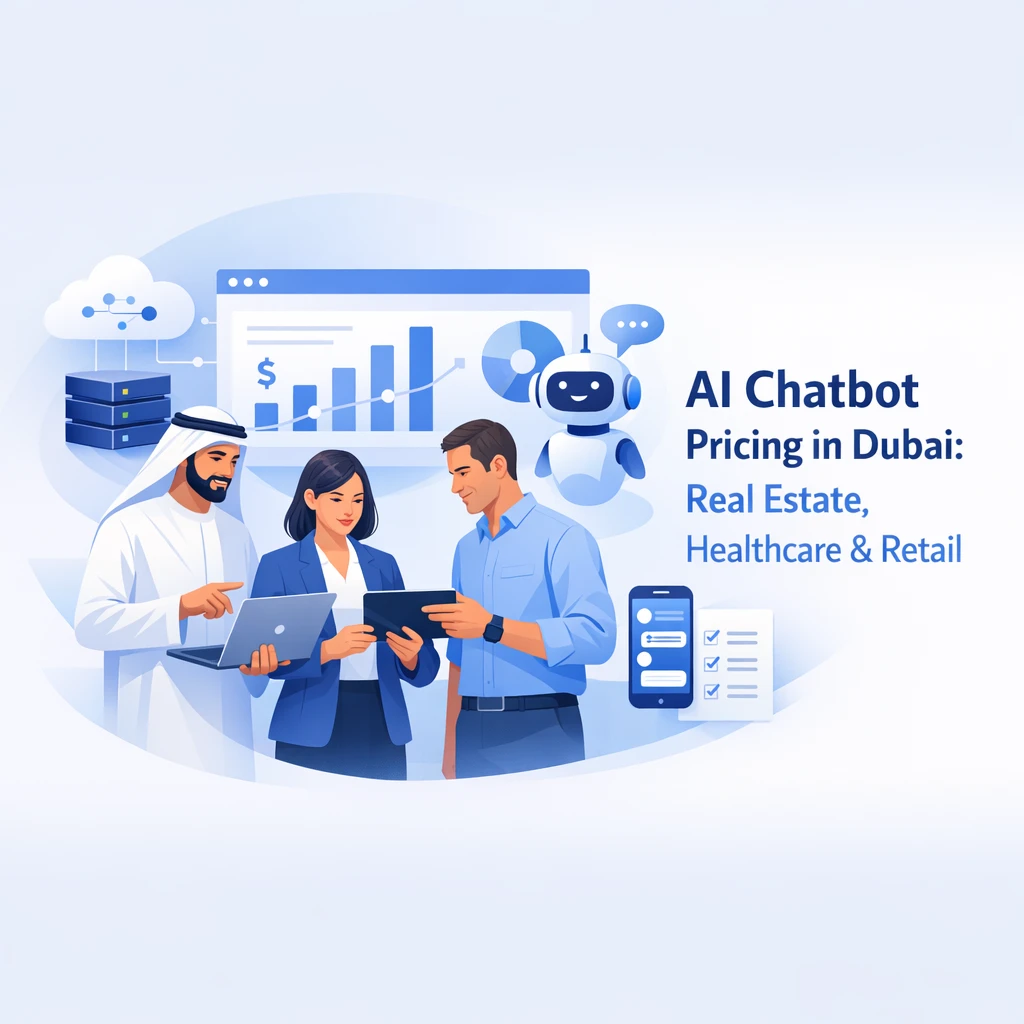
As digital conversations become the front door to customer experience, organizations in Dubai and beyond are exploring AI-powered chatbots to streamline operations, improve engagement, and scale support. This guide provides practical budgeting guidance for SMBs, SMEs, startup founders, CEOs, CTOs, product managers, and digital transformation leaders planning AI chatbot projects in real estate, healthcare, and retail. We’ll cover cost drivers, architecture, workflows, real-world use cases, and how Triostack Technologies can help teams deliver scalable, secure solutions remotely from India.
Introduction
AI chatbots are not a single product; they are a family of capabilities, from rule-based assistants to large-language-model (LLM) powered copilots. In markets like the UAE and broader GCC, businesses must balance language support (Arabic and English), regulatory compliance, data residency, and fast time-to-value. Pricing varies by scope, from a simple customer-portal bot to a full enterprise assistant that pulls data from CRM, ERP, and property listings or clinical records. This article focuses on practical budgeting frameworks for real estate, healthcare, and retail use cases in Dubai and similar markets, with links to global delivery considerations and a transparent view of what a project typically entails.
What is the Topic?
AI chatbot pricing refers to the total cost required to design, build, deploy, and maintain a conversational AI solution. Key components include discovery and design, model usage, data preparation, integrations, hosting, security, analytics, and ongoing maintenance. In real-world projects, you may combine a conversational layer (dialog flows and intents) with a business layer (data from CRM, ERP, MLS systems for real estate, EHRs for healthcare, or product catalogs for retail) to deliver useful, compliant, and scalable experiences.
Pricing is not only about upfront development. It includes ongoing costs for hosting, AI usage (per 1k tokens or per interaction), data storage, monitoring, and periodic retraining or fine-tuning. In regulated markets such as healthcare, additional funds may be allocated for governance, compliance, and secure data handling. Triostack Technologies emphasizes a transparent, phased approach that maps cost to value, ensuring the solution remains scalable as you expand to additional channels or languages.
Why It Matters in 2026
Across real estate, healthcare, and retail, customer expectations for instant, accurate, and multilingual support are rising. In Dubai and the GCC, chatbots are increasingly used as first-contact channels that triage inquiries, qualify leads, and automate routine tasks like appointment scheduling or property viewing requests. The 2026 landscape emphasizes:
- Multilingual capabilities (Arabic and English, with extended dialect support).
- Compliance and data residency aligned with local regulations and corporate policies.
- Seamless integrations with existing systems (CRM, ERP, EHR, property management systems, and payment gateways).
- Scalability to handle seasonal demand spikes in real estate markets or hospital outreach programs.
- Remote development and global delivery models that unlock high-quality engineering at competitive costs.
Current Industry Challenges
Budgeting a chatbot project is not just about the price tag; it’s about aligning funding with risk and ROI. Common challenges include:
- Estimating total cost before architecture and data readiness are fully understood.
- Ensuring robust multilingual support and reliable intent recognition for Arabic-speaking users.
- Integrating with legacy systems and data silos (CRM, ERP, EHR, property databases, or inventory systems).
- Maintaining data security, privacy, and compliance in the UAE and GCC region.
- Maintaining post-launch quality: monitoring, adjustments, and retraining to maintain high accuracy.
How the Technology Works
At a high level, an AI chatbot combines natural language understanding, business logic, integrations, and a delivery platform. A typical architecture includes:
- Channel layer: web chat, mobile apps, WhatsApp, or voice interfaces.
- NLP layer: intent recognition, entity extraction, and language modeling.
- Orchestration layer: conversation flow management, business rules, and routing logic.
- Data layer and integrations: access to CRM, EHR, ERP, property listings, or product catalog data.
- Security and governance: authentication, authorization, encryption, and audit logging.
- Analytics and feedback: dashboards to measure engagement, containment rate, and business outcomes.
Architecture Overview
The following diagram illustrates a practical, enterprise-ready architecture. It shows how a user interacts with a bot across channels, how NLP and business logic interact, and how data and integrations are orchestrated.
Key considerations: ensure data residency, enable multilingual support, and design flows that gracefully escalate to human agents when needed.
In practice, Triostack emphasizes modular architectures that allow you to start with a focused use case (for example, appointment scheduling in healthcare) and gradually expand to full CRM integrations and wider channel coverage.
Step-by-Step Workflow
- Customer initiates a chat on a chosen channel (web, mobile, WhatsApp).
- NLP engine classifies intent (booking, inquiry, feedback) and extracts entities (date, location, service type).
- Orchestrator selects a suitable flow and calls required APIs (calendar, patient records, property data).
- Bot responds with information or guides user to complete actions (schedule, fill form, transfer to agent).
- All interactions are logged and analyzed for continuous improvement and compliance checks.
- If confidence is low or data is sensitive, escalation to a human agent occurs with context preserved.
For a Dubai-based deployment, plan for data sovereignty and Arabic language support. A phased rollout helps manage cost and risk while you learn from early adoption.
Business Use Cases
Below are representative use cases, with practical implementation considerations for real estate, healthcare, and retail in the Middle East and globally.
Real Estate and Property Management
- Lead qualification for property inquiries via chat on websites or property portals.
- Scheduling tours and coordinating viewing times with agents.
- Providing property details, pricing, tax considerations, and mortgage information.
- Automating document collection (KYC, NDA) and follow-ups.
Healthcare and Clinics
- Patient intake, appointment scheduling, and pre-visit instructions.
- Symptom triage and directing patients to appropriate care or telemedicine options.
- Secure handling of patient data and consent capture in line with regional regulations.
- Post-visit follow-ups, reminders, and medication information delivery.
Retail and Commerce
- 24/7 customer support for orders, returns, and product information.
- Personalized recommendations based on purchase history and preferences.
- Store locator, stock checks, and appointment bookings for in-store experiences.
- Post-purchase support and loyalty program engagement.
Industry Applications
Beyond the core use cases, chatbots support cross-functional processes in real estate, healthcare, and retail. They can tie together CRM data with marketing automation, support ticketing, and service workflows. For organizations in the UAE and broader Gulf region, bots can operate in Arabic and English, handle local date formats, and integrate with local payment gateways and compliance programs.
Benefits and Value
- Extended support hours and faster response times without proportional staffing costs.
- Improved data capture and lead/appointment conversion through guided conversations.
- Consistent service quality across channels and reduced agent workload for routine tasks.
- Analytics-driven insights into customer needs, channel performance, and funnels.
- Better language support and accessibility, especially for multilingual markets.
Challenges
- Data quality and integration complexity with legacy systems.
- Maintaining governance, privacy, and compliance in the UAE and GCC.
- Keeping conversational flows natural while enforcing business rules.
- Managing ongoing costs of AI usage, hosting, and retraining.
Common Mistakes
- Underestimating data preparation and cleaning needs before modeling.
- Choosing a single-channel solution without multi-channel expansion plans.
- Neglecting security, data residency, and consent mechanisms.
- Overcomplicating the initial scope instead of delivering a minimal viable product (MVP) for learning.
Best Practices
- Define clear success metrics and a phased roadmap with measurable milestones.
- Start with a well-scoped MVP and plan for multi-language support from day one.
- Design modular intents and entities to enable scalable new use cases.
- Establish security, data governance, and IP ownership early with vendors.
Build vs Buy
Choosing between building in-house, buying a platform, or working with a partner hinges on capability, time-to-value, and cost of ownership. The table below outlines typical considerations.
| Aspect | Build In-House | Buy/Partner |
|---|---|---|
| Time-to-value | Longer if starting from scratch | Faster with existing capabilities |
| Customization | Highest control | Depends on vendor roadmap |
| Total cost of ownership | Capex + ongoing maintenance | Opex with predictable costs |
| Quality and security risk | Depends on team maturity | Mitigated by vendor governance |
Estimated Development Cost
Costs vary by scope, data readiness, integrations, and language support. The ranges below are typical for SMBs, SMEs, and early-stage projects. They reflect a broad market view and practical project sizes suitable for a budget range of USD 5,000 to USD 200,000.
| Solution Type | Typical Range (USD) |
|---|---|
| Business Website | 5k – 15k |
| Customer Portal | 10k – 40k |
| CRM | 15k – 100k |
| ERP | 40k – 200k |
| AI Chatbot | 5k – 25k |
| AI Automation | 15k – 80k |
| SaaS MVP | 20k – 80k |
| Enterprise Web App | 30k – 200k |
Pricing is driven by data readiness, integration complexity, language support, hosting, security, and ongoing maintenance. A pragmatic plan begins with a clearly defined MVP, followed by phased expansions to additional channels and data sources. With Triostack, you can scope a project with a transparent cost model and a staged delivery plan that balances risk and value.
Recommended Technology Stack
The stack below reflects practical choices for Dubai-scale deployments aiming for reliability, security, and rapid delivery.
- Programming languages: Python, Node.js
- NLP/LLM approaches: open-source Rasa or hosted LLMs with guardrails; domain adaptation for Arabic
- Data & storage: PostgreSQL or MySQL; data lake for logs and analytics
- APIs & integrations: REST/GraphQL; connectors for CRM/ERP (Salesforce, HubSpot, Oracle, SAP)
- Frontend: React or Next.js for web; React Native or Flutter for mobile
- Cloud & hosting: AWS or Azure or GCP with regional data residency options
- Security & governance: OAuth2.0, JWT, encryption at rest/in transit, IAM roles
- DevOps & CI/CD: GitHub/GitLab with CI/CD, Terraform for infra as code, Kubernetes or serverless
Triostack emphasizes a pragmatic, compliant stack that can be deployed rapidly and scaled safely as requirements evolve.
Future Trends
- Arabic language understanding and dialect adaptation will improve reliability and user satisfaction.
- Privacy-preserving AI and on-prem or hybrid hosting options will grow in prominence for regulated industries.
- Hybrid human-AI collaboration for complex cases, especially in healthcare and high-value real estate advisory.
- Omnichannel orchestration that unifies messaging, voice, and in-app experiences under a single workflow.
Adopting a flexible architecture and working with experienced partners can help organizations stay ahead in a dynamic technology and regulatory environment.
How Triostack Delivers Projects Globally (Remote Delivery from India)
Triostack follows a robust remote delivery model designed for speed, quality, and governance. Our approach centers on collaboration, transparency, and clear accountability across time zones.
- Agile delivery: We structure work in sprints with clearly defined goals and acceptance criteria.
- Sprint planning: Collaborative planning at the start of each iteration, with involvement from your product team.
- Weekly demos: Stakeholders review progress, validate outcomes, and adjust priorities.
- Communication channels: Slack, Teams, Zoom or Google Meet for daily touchpoints.
- Project management: Jira or ClickUp to track tasks, milestones, and risks.
- Code & collaboration: GitHub or GitLab with branch policies and code reviews.
- CI/CD & deployment: Automated pipelines, cloud staging, and production deployments with rollbacks.
- QA & security: Rigorous testing, security reviews, and penetration testing where required.
- Documentation and IP: Clear documentation, NDAs, and defined IP ownership to preserve business value.
- Timezone overlap: Scheduling that ensures meaningful overlap with UAE business hours for critical milestones.
- Dedicated project managers: Point-of-contact for risk management, milestones, and stakeholder updates.
- Long-term support: Post-launch maintenance, monitoring, and feature expansions to align with business goals.
- Why UAE businesses outsource to India: Cost efficiency, access to a large talent pool, faster hiring, high-quality engineering, and robust communication practices.
Case Studies (Realistic Scenarios)
Dubai-based Logistics Company
A logistics provider implemented an AI chatbot to handle shipment inquiries, appointment scheduling for pickups, and parcel status updates. The solution integrated with the company’s shipment management system and WhatsApp channel to meet expectations for rapid responses. Outcome: automated routine inquiries and improved scheduling accuracy, reducing manual workload on human agents.
UAE Healthcare Clinic
A clinic deployed a patient intake bot that collected symptoms, verified insurance details, and scheduled appointments. It integrated with the clinic’s EHR and calendar system, offering multilingual support and secure data handling. Outcome: smoother patient onboarding and improved appointment adherence, with clinicians receiving better pre-visit triage information.
Saudi Retail Brand
A regional retailer launched a shopping assistant to answer product questions, check stock, and guide users to local branches or delivery options. The bot leveraged the retailer’s product catalog and order management backend. Outcome: higher engagement, faster order processing, and improved cart completion rates.
Australian Startup
An Australian startup used a chatbot to qualify leads, gather required information, and route high-potential opportunities to the sales team. The bot integrated with a CRM and analytics dashboard. Outcome: more consistent lead qualification and better sales handoffs.
UK SaaS Company
A UK-based SaaS firm integrated a support bot across its knowledge base and onboarding journey, cutting response times and enabling 24/7 support for common issues. Outcome: lower support costs and faster time-to-value for customers adopting the product.
Frequently Asked Questions
- What is a realistic budget range for an AI chatbot in Dubai?
- For a starter chatbot with essential integrations, plan on a range from roughly USD 5k to 25k for development, plus ongoing hosting and AI usage costs. More complex deployments with ERP/CRM integrations and multilingual support can exceed 100k USD, depending on scope and data readiness.
- What language support is typically required in the UAE?
- Arabic and English are standard. Depending on the sector, additional languages or dialects may be valuable for regional markets or specific customer bases.
- How long does it take to deploy a minimal viable product (MVP)?
- An MVP can often be delivered in a matter of weeks to a few months, depending on channel coverage and integration complexity. A phased plan enables you to launch the MVP quickly and expand features over time.
- Is remote delivery from India reliable for UAE projects?
- Yes. A well-managed remote model with clear governance, time-zone overlap, and robust communication can deliver high-quality results while controlling costs. A dedicated project manager and structured Agile process help ensure alignment across teams.
- What is the typical cost driver for AI chatbot pricing?
- Major drivers include data readiness, language support, channel expansion, integration complexity, hosting and AI usage, and ongoing maintenance and retraining.
Conclusion
Pricing an AI chatbot project for Dubai and regional markets requires a structured view of immediate needs, long-term goals, and the data and integration landscape. By starting with a clearly scoped MVP, selecting a practical technology stack, and planning for multilingual and compliant operations, businesses can achieve meaningful outcomes within a realistic budget. Triostack Technologies emphasizes a practical, risk-aware approach to remote delivery, helping teams design, build, deploy, and maintain scalable conversational solutions that align with business outcomes and regulatory requirements.
Businesses planning similar solutions often benefit from experienced software development partners that provide end-to-end capabilities—from discovery and architecture to delivery and support. If you're planning a similar software project, Triostack can help you design, build, deploy and maintain a scalable solution.
Triostack Team
Technology Evangelist & Writer
Triostack Team is an experienced writer and technologist, exploring the intersections of AI, cloud architecture, and modern application development. Passionate about turning complex technical concepts into accessible insights.