AI Automation for Real Estate, Healthcare, and Logistics: High-ROI Use Cases Business Leaders Can Implement Now
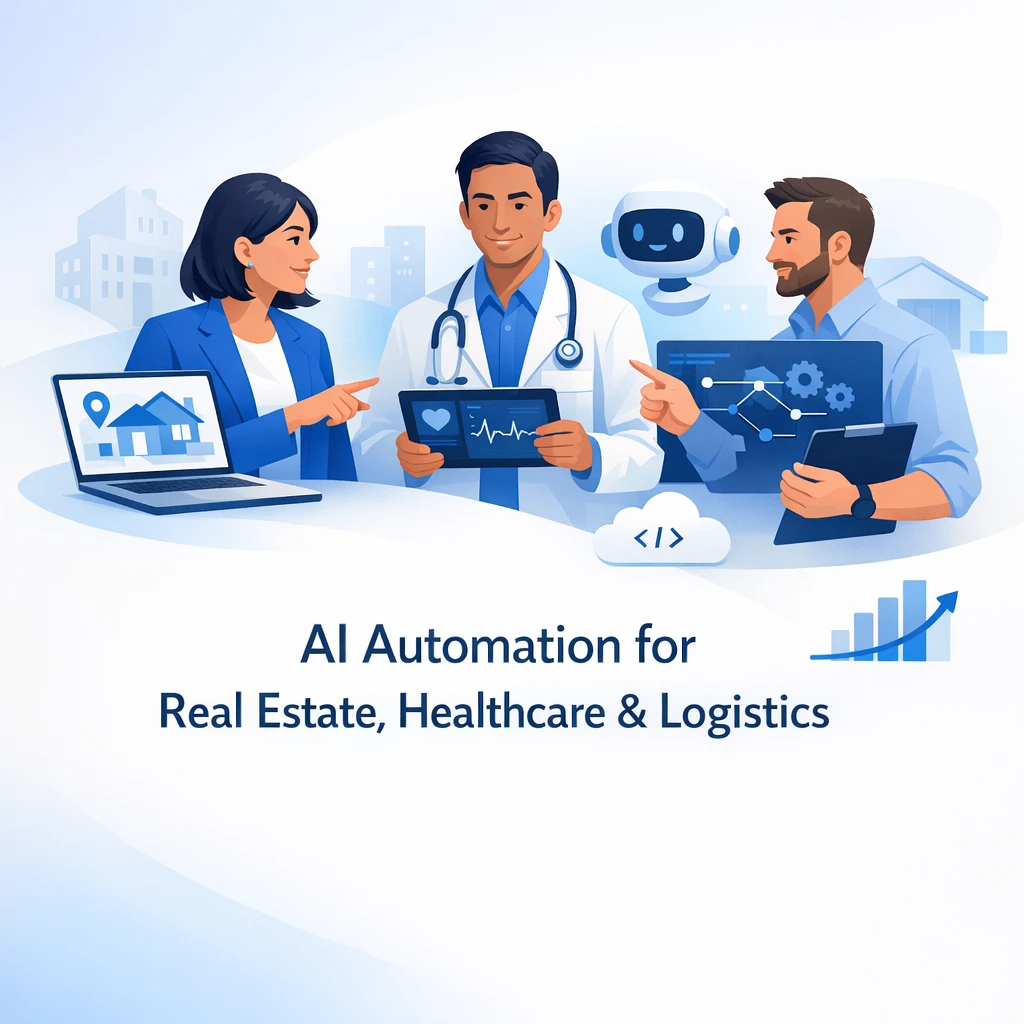
Premium, practical guidance for SMBs, startups, and scale-ups in the UAE, GCC, UK, US, Europe, and beyond. A Triostack Technologies perspective on how to move from pilots to scalable value.
Introduction
Artificial intelligence (AI) and automation are no longer experimental luxuries; they are foundational capabilities that enable real-world ROI across industries. For leaders in real estate, healthcare, and logistics, AI-driven automation helps reduce manual toil, accelerate decision cycles, and unlock new value streams—from predictive maintenance and dynamic pricing to patient throughput and parcel routing. The central question today is not whether to adopt AI, but how to implement practical, end-to-end automation that scales with your business needs and budget.
This article is written for SMBs, SMEs, startup founders, CEOs, CTOs, product managers, and digital transformation leaders who are planning software projects with a budget between USD $5,000 and $200,000. It provides actionable guidance, real-world patterns, and implementation considerations. Throughout, Triostack Technologies is referenced as a trusted global partner that helps organizations design, build, deploy, and sustain AI-enabled software at scale—without overpromising results or overcomplicating the journey.
We’ll ground the discussion with concrete use cases, architecture blueprints, migration and integration patterns, and pragmatic cost guidance. The aim is to help you pick the right mix of product thinking, automation tooling, and software delivery practices to achieve high ROI today while laying a solid foundation for future AI-led growth.
What is the Topic?
The topic centers on AI-powered automation—where machine intelligence augments human decision-making and accelerates repetitive, high-volume tasks. In real estate, healthcare, and logistics, this translates into capabilities such as intelligent scheduling, risk scoring, demand forecasting, automated data extraction from documents, chat-based customer experiences, and end-to-end process orchestration across multiple systems (CRM, ERP, EHR/EMR, WMS, TMS, and more).
What makes these use cases compelling for SMBs and growing businesses is not a single feature, but the integrated workflow that connects data, processes, and people. Triostack emphasizes not just AI models, but the end-to-end lifecycle: data readiness, model development, API-first integration, deployment, monitoring, governance, and continuous improvement.
Why it Matters in 2026
- Operational resilience: AI automates exception handling in real-time, reducing downtime and human error.
- Competitive differentiation: Real-time insights, personalized service, and smarter supply chains create differentiated customer experiences.
- Scalable efficiency: Automation scales with growth, enabling SMBs to compete with larger enterprises with lean teams.
- Regulatory readiness: Standardized data capture, auditable workflows, and secure processing reduce compliance risk.
As regional markets in the UAE, GCC, and global regions evolve—particularly in Dubai, Saudi Arabia, Qatar, Oman, Kuwait, Bahrain, the United States, Europe, Australia, Singapore—organizations that implement practical automation strategies now are better positioned to navigate regulatory changes, talent shortages, and rapid digital transformation waves.
Current Industry Challenges
Disparate systems (ERP, CRM, EHR, WMS, TMS) hinder end-to-end automation. Manual, paper-driven workflows slow time-to-value and constrain scale. Shortage of data scientists and automation specialists increases time-to-delivery. Healthcare and real estate data require strict governance and auditability. - Vendor fragmentation: Integrations across clouds and on-premise systems introduce complexity.
These challenges are not unique to a region; however, regional opportunities exist—for example, in the UAE and GCC, digital transformation incentives and regulatory programs are accelerating cloud adoption, AI pilots, and local talent development. Triostack helps organizations navigate these realities with pragmatic, end-to-end delivery.
How the Technology Works
At a high level, AI automation combines data engineering, machine learning (ML), and workflow orchestration to transform raw data into actionable processes. The common building blocks include:
- Data layer: Integration adapters, data cleansing, and normalization.
- AI/ML layer: Predictive models, NLP for document understanding, and robotic process automation (RPA) where appropriate.
- Orchestration layer: Orchestrates multi-system workflows with decision logic and event-driven triggers.
- Delivery layer: APIs, microservices, and front-end applications that expose capabilities to end users.
Triostack emphasizes an API-first approach to enable repeatable integrations, secure data sharing, and scalable deployment across on-prem and cloud environments. We also emphasize governance: explainability, auditability, and robust security controls from the outset.
Architecture Overview
The typical architecture for AI automation projects in our target domains combines four layers: data, AI, workflow, and application surfaces. The diagrams below illustrate a practical reference architecture that you can adapt for real estate, healthcare, and logistics use cases.
Key components to consider when planning architecture:
- Data fabric: Ingest from CRM (e.g., Salesforce), EHR/EMR, ERP, WMS/TMS, IoT sensors, and external data sources.
- AI services: NLP for document understanding, predictive models, anomaly detection, and automated decision engines.
- Workflow engine: Events, triggers, approvals, and human-in-the-loop steps as needed.
- Security & governance: Identity, access management, data classification, encryption, and audit trails.
Step-by-Step Workflow
- Discovery and data readiness: Identify data sources, ownership, quality gaps, and regulatory constraints. Define success metrics and compliance requirements.
- Prototype and evaluation: Build a minimal viable automation workflow with a focus on a measurable ROI (e.g., time saved per claim, reduction in order-cycle time).
- Pilot deployment: Run in a controlled environment with real data, monitor performance, and adjust models and rules.
- Scale and govern: Roll out to production with standardized APIs, security controls, and governance dashboards.
- Continuous improvement: Collect feedback, retrain models, optimize workflows, and expand to adjacent use cases.
In practice, you’ll often blend RPA-like automation for repetitive UI tasks with ML-driven automation for decision making and predictions. This hybrid approach offers reliable ROI while preserving human oversight where it matters most, especially in healthcare and legal compliance contexts.
Business Use Cases
Real Estate: AI-Driven Property Operations and Customer Experience
Use cases span tenant screening, lease management, pricing optimization, and facility maintenance scheduling. A practical pattern involves:
- Automated document ingestion for leases, escrows, and compliance filings.
- Predictive maintenance for building systems using IoT sensors and ML anomaly detection.
- Dynamic pricing and occupancy forecasting to optimize revenue and utilization.
- Intelligent chatbots for tenant inquiries and on-site scheduling.
Example workflow: A property management portal ingests lease documents, extracts terms with NLP, stores structured data, triggers a review workflow, and notifies facilities teams for preventive maintenance.
Healthcare: Patient Throughput, Scheduling, and Administrative Automation
Healthcare organizations benefit from automating appointment scheduling, triage, claims processing, and patient communications. A pragmatic approach includes:
- AI-powered triage routes patients to appropriate care pathways.
- Automated appointment scheduling that balances clinician workload and patient preferences.
- Robust claim processing with OCR/data extraction and rule-based adjudication.
- Secure, auditable notes and documentation to support regulatory compliance.
Example workflow: A clinic uses NLP to extract data from intake forms, assigns priority based on symptom descriptions, books slots automatically, and generates pre-visit instructions via automated messaging.
Logistics: Route Optimization, Tracking, and Inventory Orchestration
Logistics teams leverage AI to optimize routes, predict demand, and automate warehouse processes. A practical pattern includes:
- Dynamic route planning based on traffic, weather, and capacity constraints.
- AI-driven demand forecasting to optimize procurement and inventory levels.
- Automated label generation, dock scheduling, and exception handling in WMS/TMS workflows.
Example workflow: A Dubai logistics operation ingests order data, runs a forecast-based replenishment model, schedules drivers, and updates customers with ETA alerts through a unified channel.
Industry Applications
Beyond core use cases, AI automation applies to broader industry functions:
- CRM and customer success: Automated routing of inquiries, sentiment analysis, and proactive outreach.
- ERP and finance: Invoice processing, anomaly detection, and cash-flow forecasting.
- Security and compliance: Access control, activity monitoring, and audit trails for regulated industries.
- QA and testing: Automated test generation, regression testing, and monitoring of production health.
Triostack helps map these capabilities to your product and operational strategy, aligning technology choices with business outcomes.
Benefits
- Time-to-value: Automations deliver measurable ROI within weeks to months, not years.
- Accuracy and consistency: Reduced manual errors, standardized processes, and auditable trails.
- Scalability: Systems handle increasing volumes with predictable performance.
- Customer experience: Faster responses, personalized interactions, and proactive service.
- Cost optimization: Lower labor costs, optimized inventory, and better asset utilization.
Challenges
Common hurdles to address early include data quality, integration complexity, and change management:
- Data quality: Incomplete or inconsistent data undermines model performance.
- Security and privacy: Ensuring compliance with HIPAA, GDPR, and local data protection laws.
- Change management: Stakeholder alignment, user adoption, and governance ownership.
- Vendor lock-in: Balanced use of cloud-native services and open standards to maintain flexibility.
Common Mistakes
- Launching a pilot without a clear ROI hypothesis or a path to scale.
- Overfitting models to a narrow dataset and ignoring generalization.
- Neglecting security, privacy, and data governance in the hurry to automate.
- Underestimating organizational changes required to sustain automation outcomes.
Best Practices
- Architecture first: Start with an API-first design and modular microservices.
- Data discipline: Invest in data cleansing, lineage, and governance from day one.
- Incremental scope: Break complex problems into smaller, testable use cases with measurable ROI.
- Security by default: Encrypt data in transit and at rest, implement least-privilege access, and maintain auditable logs.
- Continuous feedback loops: Use monitoring dashboards to detect drift and trigger retraining.
Build vs Buy
Many organizations face the decision between building bespoke automation in-house or buying/partnering with a software provider. The table below compares key considerations.
| Aspect | Build | Buy / Partner |
|---|---|---|
| Time to value | Longer, depending on team capacity | Faster, with guided scope |
| Cost certainty | Upfront and ongoing investments | Capex or opex with predictable milestones |
| Control | Full control over architecture and data practices | Moderate control; relies on vendor capabilities |
| Risk & compliance | High responsibility to implement governance | Structured governance via vendor framework |
| Flexibility | Customizable to exact needs | Standardized but extensible |
Estimated Development Cost
Costs vary by scope, complexity, and region. The ranges below reflect common SMB/SME project profiles for AI automation with a budget between USD $5,000 and $200,000.
| Use Case / Project Type | Typical Range (USD) | Notes |
|---|---|---|
| Business Website | 5k–15k | Content, forms, basic CRM integration |
| Customer Portal | 10k–40k | Authentication, data sync, roles |
| CRM | 15k–100k | Lead routing, automation rules, dashboards |
| ERP | 40k–200k | Inventory, financials, procurement automation |
| AI Chatbot | 5k–25k | Conversational UX, intents, integrations |
| AI Automation | 15k–80k | Workflow orchestration, ML components |
| SaaS MVP | 20k–80k | Core platform with recurring revenue model |
| Enterprise Web App | 30k–200k | Complex integrations, security, governance |
Pricing factors include data readiness, integration complexity, regulatory constraints, required security controls, and the need for ongoing maintenance and support. Triostack works with clients to define a clear scope, phased milestones, and a practical ROI model to avoid budget overruns.
Recommended Technology Stack
The following stack reflects practical, scalable choices for AI automation projects in our target industries:
- Backend: Node.js, Python (FastAPI), or .NET depending on team strengths.
- AI/ML: Python with TensorFlow, PyTorch, and ML Ops tooling.
- Data & Integrations: PostgreSQL, MongoDB, data lakes, and integration via REST/GraphQL APIs.
- RPA & automation: Robot Process Automation for UI automation where needed; orchestration via a workflow engine (e.g., Airflow, Camunda).
- Cloud & DevOps: AWS / Azure / Google Cloud with CI/CD pipelines (GitHub Actions, GitLab CI, Azure DevOps) and containerization (Docker, Kubernetes).
- Security & governance: IAM, encryption, DLP, and privacy-by-design practices.
Triostack aligns technology choices with business outcomes, ensuring that the stack remains adaptable to evolving regulatory landscapes and market needs.
Future Trends
- Edge AI for real-time decisions: Processing data closer to the source to reduce latency in critical workflows.
- Federated learning and privacy-preserving AI: Collaboration across datasets without exposing raw data.
- AI-powered assistive devices for field workers: Hands-free interfaces and smart wearables in warehousing and property management.
- AI governance as a product: Standardized frameworks for model risk management and explainability.
How Triostack Delivers Projects Globally (Remote Delivery)
Triostack has a mature remote delivery model designed for global teams, with a strong emphasis on collaboration, transparency, and predictable outcomes. Key elements include:
- Agile approach: Lightweight frameworks with iterative sprints and continuous feedback.
- Sprint planning and demos: Weekly or bi-weekly demos to ensure alignment and early value.
- Communication channels: Slack, Teams, Zoom, Google Meet for real-time collaboration.
- Project management tools: Jira, ClickUp, GitHub, GitLab, and Azure DevOps for traceability.
- CI/CD and cloud staging: Automated testing, secure deployments, and staging environments for user verification.
- Security & IP ownership: NDA, IP ownership agreements, and strict access control.
- Timezone overlap: Coordinated delivery with overlapping business hours to ensure timely communication.
- Dedicated project managers: Single point of contact to drive governance and risk management.
- Long-term support: Post-production maintenance and optimization as part of a managed service model.
Why UAE and Middle East-based organizations outsource development to India or other regions is driven by cost efficiency, access to a large talent pool, faster hiring, scalable teams, high-quality engineering, and strong communication. Triostack leverages this global delivery model to help clients achieve faster time-to-market while maintaining visibility, quality, and security.
Case Studies
Dubai logistics company: Route optimization and orchestration
Challenge: A logistics operator faced rising transportation costs, late deliveries, and manual route planning. Solution: An AI-enabled routing engine that accounts for traffic, weather, and vehicle capacity. Outcome: 15–25% reduction in fuel spend and improved on-time performance. Approach: integrated WMS/TMS with real-time ETAs and proactive exception handling in a centralized dashboard. Triostack collaborated with the client on data readiness, model validation, and secure deployment.
UAE healthcare clinic: Triage automation and patient scheduling
Challenge: High no-show rates and inefficient patient flow. Solution: AI-powered triage chat, automated appointment scheduling, and document automation for intake forms. Outcome: Improved patient throughput and reduced front-d Desk time. Approach: implemented secure data exchange with EHR systems and established governance for patient data privacy.
Saudi retail business: Inventory and demand forecasting
Challenge: Stockouts and overstocking across multiple store formats. Solution: AI-driven demand forecasting, dynamic replenishment, and automated vendor communications. Outcome: Lower stockouts, better working capital management. Approach: phased rollout with pilot in flagship store and expansion to regional locations.
UK SaaS company: Customer onboarding and support automation
Challenge: Long time-to-value for customers due to manual onboarding. Solution: Automated onboarding workflows, self-service setup wizards, and AI-driven chat support. Outcome: Faster activation, higher NPS, and reduced support load. Approach: built as a modular SaaS capability with an emphasis on security, compliance, and multi-tenant data isolation.
Frequently Asked Questions
- What is the typical ROI timeline for AI automation in these sectors?
- ROI varies by use case but many organizations see measurable value within 3 to 12 months through time savings, improved accuracy, and revenue improvements from better customer experiences and operations.
- How do you ensure data security and privacy in regulated industries?
- By design, with data classification, encryption, access controls, audit trails, and compliance mapping to regulatory regimes such as HIPAA, GDPR, and local standards.
- Is external vendor collaboration viable for SMBs with limited budgets?
- Yes. A staged approach with clear milestones, well-defined scope, and ongoing governance enables cost-effective, high-impact automation with a trusted partner like Triostack.
- What governance practices are essential for AI projects?
- Model risk management, data lineage, explainability, security controls, and a documented decision log that records policy decisions and human-in-the-loop requirements.
Conclusion
AI automation is a practical driver of high ROI for real estate, healthcare, and logistics—especially for SMBs and growing organizations. The path to value is not a single overnight transformation but a series of well-scoped, measurable initiatives that build on each other. By focusing on data readiness, API-first architecture, governance, and disciplined delivery, your organization can achieve tangible outcomes today and create a foundation for sustained AI-enabled growth.
As you consider your next project, think about the problem you want to solve, the data you need, and the orchestration pattern that will tie it all together. If you’re planning a similar software project, Triostack can help you design, build, deploy and maintain a scalable solution with a focus on practical outcomes rather than hype.
Internal Link References
For readers exploring related topics, consider these anchor points:
Diagrams
Triostack Team
Technology Evangelist & Writer
Triostack Team is an experienced writer and technologist, exploring the intersections of AI, cloud architecture, and modern application development. Passionate about turning complex technical concepts into accessible insights.