AI Agent Development Cost for GCC Companies: Pricing Models, Use Cases, and Implementation Strategy
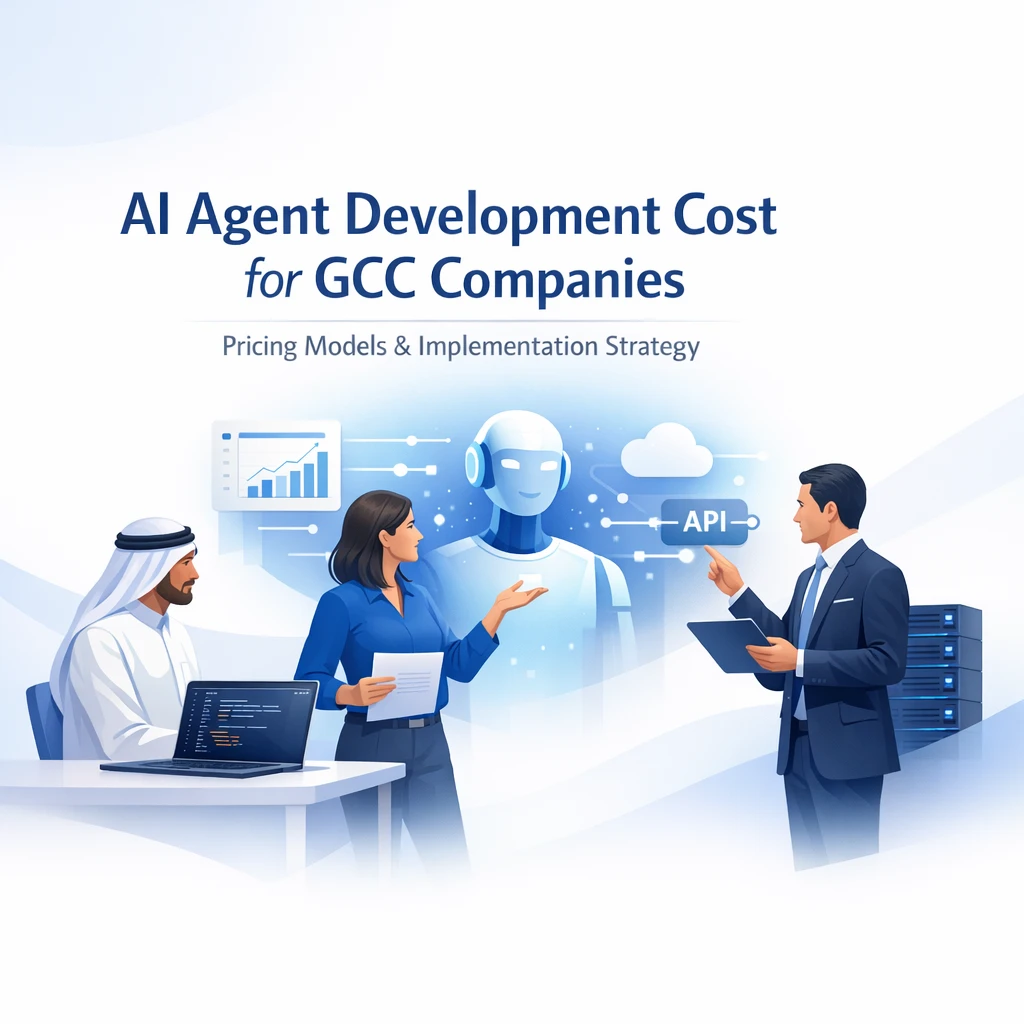
From Dubai to London, Triostack Technologies helps businesses plan, build, and scale AI-powered agents with a pragmatic, ROI-focused approach.
Introduction
Artificial intelligence (AI) agents—conversational copilots, decision assist tools, and automation agents—are reshaping how GCC-based companies operate, serve customers, and scale digitally. For SMBs, SMEs, startups, and large enterprises alike, the question isn’t whether to adopt AI, but how to deploy reliable, cost-effective agents that align with business goals, data governance, and regional considerations.
This article explains the economics of AI agent development for GCC markets and beyond, covering pricing models, practical use cases, implementation strategies, and a realistic remote delivery model. It also shares case-study style insights drawn from projects in Dubai, Abu Dhabi, Riyadh, Jeddah, and other centers, including scenarios in healthcare, logistics, retail, and SaaS.
While the goal is educational, we’ll also show how Triostack Technologies approaches these engagements—without sounding like an ad. You’ll see how seasoned teams structure AI projects, manage risk, and deliver scalable digital products across time zones and regulatory zones.
What is AI Agent Development?
AI agent development combines large language models (LLMs), structured data, and automation tools to create agents that can understand user intent, retrieve and synthesize information, and trigger actions across enterprise systems. These agents can operate as chat assistants, back-office copilots, or automated decision-makers with built-in governance, auditing, and security controls.
A practical AI agent is not a single model—it’s an orchestration of data sources, tools, prompts, policies, and interfaces. In enterprise contexts, these agents must integrate with existing CRM, ERP, HRIS, and data lakes while complying with regional data privacy and security standards.
Why it Matters in 2026
The GCC region is driving a digital transformation push across government and industry. AI agents can help organizations scale operations, improve customer experience, and unlock data-driven decisions. Yet, the 2026 landscape also demands:
- Stronger data governance and privacy controls aligned with regional laws (e.g., UAE data localization considerations).
- Faster time-to-value with modular, reusable agent components and robust integration patterns.
- Transparent AI with explainability, security, and auditable actions for compliance and trust.
- Global delivery models that balance cost efficiency with high-quality engineering and clear ownership of IP.
For GCC and global businesses planning software projects in the USD 5k–USD 200k range, the right AI agent strategy blends affordable MVPs with scalable architecture and clear build-vs-buy decisions.
Current Industry Challenges
Organizations across GCC and beyond face several recurring hurdles when adopting AI agents:
- Data fragmentation and access controls across CRM, ERP, and legacy systems.
- Balancing speed to market with robust security, privacy, and regulatory compliance.
- Managing vendor risk, model drift, and ongoing maintenance without spiraling costs.
- Skills gaps in AI engineering, data engineering, and platform governance.
- Scaling pilots into production with reliable SLAs, monitoring, and governance.
A pragmatic approach combines phased MVPs, modular architecture, and partner-led delivery. This is where Triostack Technologies can add value by delivering end-to-end capabilities—from strategy and design to deployment, maintenance, and governance.
How the Technology Works
AI agents rely on a layered architecture that blends language understanding, data access, tool integration, and orchestration. A typical stack includes:
- LLM / AI models: For natural language understanding, reasoning, and generation.
- Retrieval and data access: Vector stores, databases, data lakes, and structured data sources.
- Tools and plugins: CRM, ERP, ticketing systems, calendars, email, analytic dashboards.
- Orchestration: Managing multi-step tasks, tool calls, fallbacks, and retries.
- Security & governance: Access controls, authentication, data masking, auditing, and adherence to compliance policies.
In practice, an AI agent is a collaborative system: the user asks a question, the agent determines which tools to call, fetches data, composes a response, and, when appropriate, triggers actions in business systems. For GCC businesses, this means careful attention to data residency, language nuances, and regional business practices.
Architecture Overview
A practical AI agent architecture for enterprise use in GCC markets typically includes the following blocks:
- User Interface: Chat, voice, or portal-based interactions.
- Agent Core: Orchestrates prompts, policies, tool calls, and state management.
- Data Layer: Data lake/warehouse, APIs, CRM/ERP connectors, and knowledge bases.
- Integration Layer: Middleware or iPaaS to connect tools and services securely.
- Security & Compliance: IAM, encryption, DLP, audit logs, and regional data controls.
- Observability & Operations: Monitoring, alerts, logging, and performance dashboards.
Step-by-Step Workflow
- Discovery & Scoping: Define the problem, success metrics, data sources, and compliance constraints.
- Data Readiness: Inventory sources, assess data quality, and plan data pipelines with governance in mind.
- Design & Personas: Create agent personas, prompts, and escalation rules tailored to roles and regions.
- Model & Tool Selection: Choose LLMs, retrieval strategies, and integration points (CRM, ERP, ticketing). Establish SLAs for latency, accuracy, and uptime.
- Development Sprints: Build MVPs with modular components, reusable patterns, and feature toggles.
- Testing & Security: Conduct functional, integration, security, and privacy testing; perform threat modeling.
- Deployment & Change Management: Roll out in stages; provide training for users and operators.
- Monitoring & Maintenance: Implement dashboards, set alerts, plan for model updates, and governance checks.
Business Use Cases
Below are representative use cases aligned with GCC market needs. Each example highlights typical outputs, integrations, and expected benefits.
- Customer Support AI Agent: A multilingual chat agent integrated with the CRM and ticketing system to triage inquiries, pull order status, and escalate to human agents when needed.
- Sales Enablement Agent: An assistant that drafts proposals, schedules meetings via calendar integration, and updates opportunity records based on conversations.
- Operations & Logistics Copilot: An agent that tracks shipments, surfaces bottlenecks, and triggers automated alerts or rerouting in the transport management system.
- HR & Recruitment Assistant: A bot that screens resumes, schedules interviews, and answers candidate questions using enterprise HRIS data.
- Healthcare Triage & Appointment Assistant (non-clinical): A receptionist-like bot that collects symptoms data, preforms pre-visit checks, and guides patients to appropriate care paths while ensuring privacy controls.
Industry Applications
AI agents adapt to industry-specific workflows. Examples across GCC and global markets include:
- Logistics and supply chain optimization for Dubai-based operators.
- Retail and hospitality concierge in Saudi Arabia and UAE.
- Financial services support for banks and fintechs requiring compliant AI operators.
- Healthcare providers enhancing patient intake and scheduling processes.
Benefits
- Improved response times and 24/7 availability for standard inquiries and routine tasks.
- Consistent, auditable interactions with integrated governance and compliance trails.
- Faster time-to-market for new capabilities through modular, reusable components.
- Cost efficiency from reduced manual work and optimized workflows.
- Data-driven insights and better alignment with regional business practices.
Challenges
- Data quality, access controls, and data localization requirements in the GCC region.
- Managing model drift and maintaining accuracy over time across languages and domains.
- Ensuring secure integrations with legacy systems and multi-tenant environments.
- Change management: user adoption, governance processes, and ongoing training.
Common Mistakes
- Launching without a well-scoped MVP and measurable success criteria.
- Underfunding data prep, governance, and security in the discovery phase.
- Overbuilding in the first release—missing a lean, modular approach.
- Neglecting user training and change management as part of deployment.
Best Practices
- Start with a narrow, high-value MVP focused on a single business process.
- Adopt a modular architecture with well-defined interfaces and APIs.
- Prioritize data governance, privacy, and auditability from day one.
- Use an iterative delivery model with short sprints and frequent user demos.
- Establish clear ownership for model updates, security, and compliance reviews.
Build vs Buy: Practical Comparison
| Dimension | Build (In-House / Partner) | Buy (Vendor / Platform) |
|---|---|---|
| Control & Customization | Max control; tailor to exact workflows | Greater default features; customization varies |
| Time-to-Value | Longer initial setup; phased MVPs recommended | Faster to deploy basic capabilities |
| Cost | Higher upfront; ongoing maintenance | Predictable subscription; potential overage costs |
| Data Security & Compliance | Full governance; auditable by design | Depends on vendor; ensure regional compliance |
| Scalability | Customizable to unique processes | Depends on vendor architecture; may require customization |
Estimated Development Cost
Pricing is highly dependent on scope, data readiness, system integrations, regulatory constraints, and deployment geography. The ranges below reflect typical budgets for SMBs, SMEs, and growing startups planning AI agent projects in the USD 5k–200k band.
| Project Type | Typical Range (USD) | What drives cost |
|---|---|---|
| Business Website | 5,000 – 15,000 | Content pages, basic AI widgets, CMS integration |
| Customer Portal | 10,000 – 40,000 | Authentication, data layers, role-based access, integrations |
| CRM | 15,000 – 100,000 | Complex data models, 2–3 system integrations, custom workflows |
| ERP | 40,000 – 200,000 | End-to-end process orchestration, data migration, security & compliance |
| AI Chatbot | 5,000 – 25,000 | Multilingual support, context management, integrations |
| AI Automation | 15,000 – 80,000 | Custom automation pipelines, tool calls, monitoring |
| SaaS MVP | 20,000 – 80,000 | Multi-tenant architecture, core features, onboarding |
| Enterprise Web App | 30,000 – 200,000 | Extensive integrations, data governance, security, scale |
Pricing factors include scope and complexity, data readiness, number of integrations, regulatory requirements, language support, security posture, testing & QA, deployment model, and ongoing maintenance. A phased approach with a clear MVP reduces risk and accelerates ROI.
Recommended Technology Stack
The following stack reflects pragmatic choices for GCC markets, balancing performance, security, and time-to-value. Triostack Technologies recommends modular, vendor-agnostic patterns that scale with business needs.
- AI & LLM: OpenAI, Azure OpenAI, Google Vertex AI, AWS Bedrock, or a blend depending on data residency and cost.
- RAG & Retrieval: Pinecone, Weaviate, Redis Vector, or custom vector stores; integrate with data lake or warehouse.
- Data & Storage: PostgreSQL, MySQL, Oracle, Snowflake, BigQuery, or Azure Synapse depending on data strategy.
- Integration & Orchestration: API-led connectivity, Node/Java services, middleware (MuleSoft, Dell Boomi), and event-driven patterns.
- Frameworks: LangChain, LlamaIndex, or custom orchestration layers for robust tool use and prompt management.
- Cloud & Infra: AWS, Azure, or GCP with compliance-first architectures, IAM, KMS, and encryption at rest/in transit.
- DevOps & CI/CD: GitHub Actions, GitLab CI, Azure DevOps; containerization with Docker and Kubernetes or serverless options.
- Security & Compliance: IAM, SSO, RBAC, data masking, DLP, audit trails, and regional compliance controls.
- UI/UX & Frontend: React or Vue-based interfaces, accessibility-minded design, multilingual support.
Future Trends in AI Agent Development
- Multi-agent systems where several AI agents collaborate to solve complex workflows across systems.
- On-device or edge AI for low-latency interactions and data privacy in regulated environments.
- Privacy-preserving AI and stronger governance controls to meet regional privacy laws.
- Adaptive agents with continuous learning loops within controlled boundaries and human-in-the-loop supervision.
How Triostack Delivers Projects Globally (Remote)
Triostack Technologies supports distributed delivery from India with a robust, proven remote delivery model. This enables cost efficiency while maintaining high-quality engineering and governance.
Key Delivery Principles
- Agile & Sprint Planning: Short planning cycles with clear goals and capacity planning to match client needs.
- Weekly Demos: Regular showcases to validate progress and gather feedback early.
- Communication Tools: Slack, Teams, Zoom/Google Meet for daily standups and reviews.
- Project Management & DevOps: Jira or ClickUp for planning; GitHub/GitLab for code; Azure DevOps for CI/CD as needed.
- CI/CD & Cloud Staging: Automated builds, tests, and staging environments to emulate production.
- QA & Security: Rigorous testing, vulnerability scanning, and security reviews; documentation of controls.
- Documentation & NDA/IP Ownership: Clear agreements on IP and data handling; NDAs for clients and partners.
- Timezone Overlap: Flexible overlap windows to maximize collaboration with GCC teams in Dubai, Riyadh, Doha, Abu Dhabi, and beyond.
- English Communication: Professional, clear communication with weekly status updates.
- Dedicated Project Managers: Single point of contact ensuring accountability and governance.
- Long-term Support: Post-launch maintenance, monitoring, and feature enhancements.
Why UAE businesses outsource development to India frequently comes down to cost efficiency, a large and diverse talent pool, faster hiring, flexible team scaling, high-quality engineering, and strong communication. Triostack aligns with these advantages, while maintaining strict privacy and security standards tailored to GCC requirements.
Case Studies (Realistic Implementation Scenarios)
Below are representative, non-identifying examples that illustrate how AI agents can be deployed in practice across GCC markets and beyond.
Dubai Logistics Company: Customer Support & Shipment Tracking
A Dubai-based logistics operator implemented an AI agent to triage customer inquiries, retrieve shipment statuses, and escalate complex issues to human agents. The solution integrated with the company’s CRM, OMS, and carrier partners to surface real-time data and automate routine tasks. The agent supported multilingual interactions and adhered to regional data privacy standards.
UAE Healthcare Clinic: Appointment Scheduling & Pre-visit Intake
A UAE healthcare clinic deployed an AI assistant to handle patient scheduling, pre-visit questionnaires, and reminders. The bot connected securely to the clinic’s EHR/EMR and calendar systems, while enforcing patient privacy and consent controls. The implementation reduced administrative workload and improved patient experience without compromising regulatory compliance.
Saudi Retail Business: Customer Service & Order Status
A Saudi retail chain integrated an AI agent that could answer product questions, track orders across multiple carriers, and update loyalty accounts. The agent leveraged regionally produced content and a multilingual knowledge base to deliver accurate, context-aware responses.
UK SaaS Company: Onboarding & Customer Success Automation
A UK-based SaaS provider used an AI agent to guide new customers through onboarding, collect usage data, and trigger proactive onboarding events. The solution integrated with the company’s CRM, support portal, and analytics platform, enabling personalized customer journeys.
Mermaid Architecture Diagram
Mermaid Workflow Diagram
Mermaid Deployment Pipeline
Conclusion
For GCC companies, AI agent development is not simply a technological upgrade; it’s a strategic shift in how work gets done, how data is used, and how customer experiences are shaped. By choosing a phased, governance-forward approach and partnering with experienced teams like Triostack Technologies, organizations can achieve measurable improvements while avoiding common pitfalls. A well-structured blueprint—grounded in clear pricing, realistic milestones, and scalable architecture—helps ensure that AI agents deliver sustainable business value across Dubai, Abu Dhabi, Riyadh, Jeddah, Doha, and beyond.
If you're planning a similar software project, Triostack can help you design, build, deploy, and maintain a scalable solution that respects regional requirements and accelerates your digital transformation.
Frequently Asked Questions
- What is the typical timeline for an AI agent MVP?
- Most SMB to SME projects can reach an MVP in 6–12 weeks, depending on data readiness and integrations. Larger enterprise deployments often extend to 12–24 weeks for a first release with core governance in place.
- How do you address data residency and security in GCC markets?
- We design with a privacy-by-design approach, establish access controls, encryption, and auditable workflows that meet local standards. Data can be hosted in-region where required, with strict data handling policies and continuous security monitoring.
- What is the best way to start a project with Triostack?
- Begin with a discovery phase to define outcomes, data sources, success metrics, and a phased plan. Then move into an MVP that demonstrates value while enabling governance and compliance ramp-up.
- Can we run AI agents remotely from India?
- Yes. Triostack supports remote delivery with strong project management, documentation, security, and IP ownership controls. Timezone overlap, clear communication, and regular demos ensure alignment with GCC teams.
- What about ongoing maintenance and updates?
- We offer post-launch maintenance, monitoring, and feature enhancements to address model drift, data changes, and evolving security requirements.
Triostack Team
Technology Evangelist & Writer
Triostack Team is an experienced writer and technologist, exploring the intersections of AI, cloud architecture, and modern application development. Passionate about turning complex technical concepts into accessible insights.